Parenting has a way of exposing the parts of ourselves we thought were long buried. In trying to raise children with gentleness, honesty, and emotional safety, many adults find themselves confronting the beliefs and behaviours inherited from their own upbringing. The process of raising a child often becomes a parallel journey of unlearning, questioning what was normalised, healing what was silenced and choosing what deserves to be carried forward.
In this conversation, four parents share what parts of their upbringing they are still unlearning, the lessons their children are teaching them, and how they are redefining parenting for the next generation.
What is one thing you wish had been done differently when you were a child?
Nimesh: Despite facing financial challenges, I am deeply grateful that my parents provided me with everything a child needs. However, I sometimes wish they had set aside a bit of time to take me to different places. Not just for the experiences themselves, but for the chance to connect more deeply as a family. More than anything, I wish my father had made it a priority to show me that the world is much bigger than I thought it was. I am not sure how possible that would have been given our financial situation at the time. Still, it was never about luxury, I simply wish he had taken me more often to anywhere, even somewhere nearby.
Grace: As children, we are often guided, sometimes too tightly toward what is “right,” “proper,” or “expected.” And while that guidance comes from care, it can quietly teach us to second-guess our instincts, to seek approval before expression, to shrink certain parts of ourselves to fit into what feels acceptable. If I could change one thing, it wouldn’t be the structure or discipline, but the space within it. Space to question, to choose, to make small mistakes without fear, and to discover who I was without constantly measuring it against who I was supposed to be.
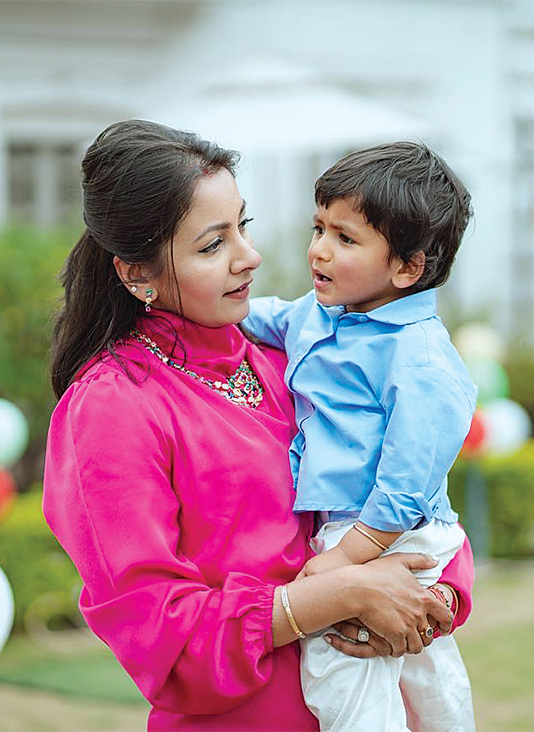
Grace Rauniyar , Investopreneur, Capital Markets
Aayusha: Truly? Nothing. I grew up in a home full of presence, warmth, laughter and structure, and that combination is rare. My parents gave us something priceless: they showed up every single day. If I could go back, I wouldn’t change anything. I would simply pause longer in those moments, sit a little more still in the magic of it all. That childhood became my compass, and I carry it into every decision I make as a mother today.
Sunita: I had an extremely happy and fulfilling childhood in my village, among the hills. The only thing I wish I had more of was access to opportunities and knowledge, especially learning English. As a content creator now, when I use different platforms and try to expand my network, I realise how valuable that early exposure would have been. It’s the one privilege I feel I missed out on.
Is there something your parents did that you are consciously choosing to do differently?
Nimesh: There are many things I choose to do differently. Our generation of parents has been exposed to a deeper understanding of the emotional impact certain behaviours during our upbringing can have. Because of that, my wife and I make a conscious effort never to argue in front of our child, as we don’t want him to see us as aggressive individuals. It’s very important to me that he learns healthy ways of expressing himself, rather than turning to anger. Additionally, I believe children first learn the meaning of love at home, through their parents. I want to ensure that what he sees is love grounded in respect, not two people disrespecting each other.
Grace: Certainly. If I were to distill it to one conscious choice, it would be this: I am choosing presence over mere provision. My parents, in their own way, ensured everything was in place structure, discipline and stability. And
I hold deep respect for that. However, I have come to realise that what often lingers in a child’s memory is not just what was provided, but how it felt.
I am intentionally more expressive, more available, and more attuned not only to achievements, but to emotions, questions, and even the quiet, in-between moments that shape a child’s inner world. I do not wish for love to be assumed; I prefer it to be unmistakably experienced.
There is also a conscious shift towards allowing individuality to unfold without undue moulding. Guidance, yes, but not at the cost of identity. In essence, I am not rewriting my upbringing, I am refining its legacy, with a greater emphasis on emotional presence, open dialogue, and the quiet assurance that my child is seen, heard, and valued exactly as they are, while still being gently guided towards who they can become.
Aayusha: Not differently, more intentionally. My parents were masters at something the modern world has almost forgotten: the art of balance. Love without losing authority. Freedom without losing structure. My mother, a school vice principal, brought quiet discipline into our home that never felt like a cage, it felt like a foundation. I am choosing to honour that with Kiaan, while being fiercely protective of his childhood in this digital age. Less screen, more sky. Less noise, more imagination. I want him to know the joy of being bored on a summer afternoon and inventing an entire world out of nothing. That’s where the magic lives.
Sunita: I intentionally choose to teach my kids about everything, whether it is emotional understanding, practical skills or everyday life lessons. I believe that the core values, learning, and experiences my child needs should primarily come from us as parents. While others can certainly offer love, care and support along the way, I feel it is important and fulfilling to take an active role in her overall development. I am happy to independently guide and teach her as she grows, so she learns directly from us while still being surrounded by love and encouragement from the people around her.
What emotional lesson – about anger, love, or discipline – are you relearning as a parent?
Aayusha: That love and discipline are not in conflict. They are partners. My parents lived this truth effortlessly, and I am relearning it every single day. What I am adding to that legacy is openness. I want Kiaan to walk up to me with anything, his anger, his fears, his wildest dreams, and feel completely safe doing so. No filters, no hesitation. A child who knows they are truly heard grows up knowing their voice matters. That, to me, is the greatest emotional gift a parent can give.
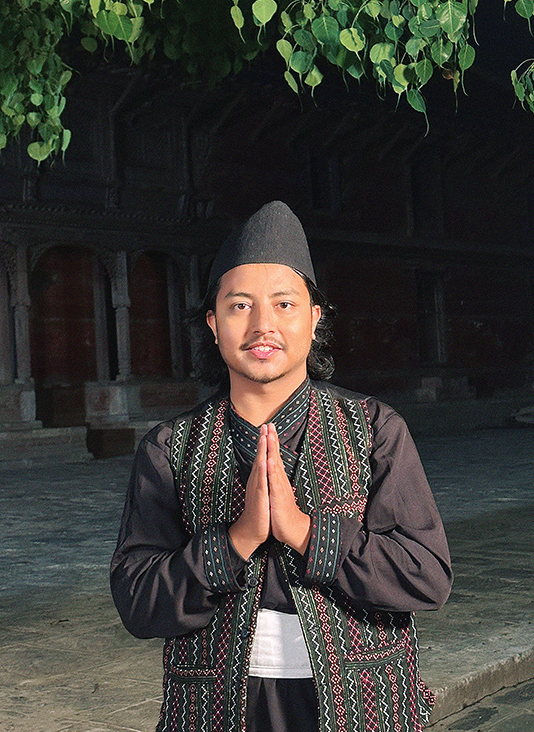
Nimesh Shrestha , Filmmaker, Content Creator
Nimesh: In many Nepali households, anger is often normalised, with frustration or displeasure commonly expressed by raising one’s voice. As a parent, I am relearning that this doesn’t have to be the norm, there are healthier, calmer ways to communicate and express emotions. I am also rediscovering the meaning of love through my son. The way he reacts when I spend time with him feels like the purest expression of love. I can see in his face how much he values those moments together.
My father didn’t have the opportunity to spend as much time with me, and he may never have experienced that in the same way, but I still deeply respect the circumstances he was navigating.
Grace: One emotional lesson I find myself consciously relearning as a parent; it is the true nature of discipline. For a long time, discipline felt synonymous with correction; swift, firm, and often authoritative. Yet, parenthood has refined that understanding into something far more nuanced. I am learning that discipline, at its best, is not about control, but about guidance; not about silencing a reaction, but about teaching a child how to understand and regulate it.
Equally, I am relearning that love need not be measured through perfection in behaviour. A child does not require flawless responses; they require consistent reassurance that even in correction, they are secure, respected, and deeply valued.
In essence, I am unlearning the idea that authority must be rigid, and embracing the notion that the most enduring discipline is delivered with calm clarity, emotional intelligence, and an unwavering sense of connection.
Sunita: When I was a daughter myself, the meaning of love didn’t feel as deep as it does now when I experience it for my own daughter. Becoming a parent has changed my perspective in many ways. I have consciously chosen to be calmer and kinder; not only towards others, but also towards myself. She can learn and absorb those qualities early on. This shift has also made me more disciplined in how I approach daily life and responsibilities. In many ways, parenting has helped me grow into a more mindful, balanced, and intentional version of myself.
What have you learned from your child that helped you unlearn parts from your own childhood?
Nimesh: When I had my son, I finally understood what my mother meant when she used to say, “You will understand my love when you have children of your own.” Experiencing the depth of love I feel for my child has made me realise that my parents must have felt the same way about me. It has given me a new perspective on my upbringing and helped me reflect on it with more empathy. In many ways, becoming a parent has allowed me to unlearn lingering resentment or dissatisfaction from my childhood and replace it with a deeper appreciation for my parents and the love they gave me.
Grace: If I am to be candid, my child has taught me the quiet audacity of being unapologetically oneself. Children do not negotiate with their emotions; they express joy without restraint, disappointment without pretence, curiosity without hesitation. In witnessing this, I have had to unlearn the subtle conditioning of my own childhood that equated composure with suppression, and maturity with emotional restraint. I am learning, through my child, that authenticity is not something to be refined out of us, but rather protected. That it is entirely possible to be both composed and expressive, both guided and free.

Ayusha Karki , Founder, Meraki Nepal, Nail Life Art Nepal and Align Pilates & Wellness Studio
Aayusha: Kiaan has handed me back the present moment. Children are the most honest teachers. They don’t perform joy; they just live it. Watching him explore the world with complete wonder has reminded me to slow down, to look up, to stop rushing through the beautiful ordinary. He’s taught me that children don’t need more, they need deeper. Deeper connection, deeper play, deeper freedom to just be. In raising him, I have fallen in love with my own childhood all over again. He’s not just my son; he’s my reminder of what really matters.
Sunita: I have often heard my mother say that I have it much easier now, and I do agree. Not just in terms of resources, but I see it as a privilege to be able to unlearn parts of my childhood through my own child. In many ways, becoming a parent has given me a new meaning of life, one that I feel my parents may not have had the space or opportunity to experience in the same way.
Looking at the times we are living in, how have parental roles evolved since the time your parents were raising a child?
Nimesh: Parental roles have evolved quite a bit since the time our parents were raising children. In many ways, the dynamics are different. For example, my wife tends to be calmer, while I often find myself worrying about many things related to our son, which might seem unconventional compared to earlier generations. Today, we also have access to an overwhelming amount of information about parenting, which can be both helpful and stressful. If I had a message for other parents, it would be to spend as much time with your child as possible. When you return home after being away all day, you can often sense their quiet ways of showing they missed you.
Whether it’s making a paper plane together, talking about their day, watching a movie, or reading a book, those simple moments matter the most.
Grace: Parental roles today have evolved from authority and provision to a far more nuanced balance of guidance, emotional intelligence and conscious presence. Where once structure and discipline were paramount, modern parenting calls for dialogue, adaptability and an appreciation of a child’s individuality in an increasingly complex world.
If I may offer a message to parents: lead with clarity but temper it with empathy. Provide direction yet allow space for identity to unfold. In an age of constant noise and influence, a child’s greatest anchor remains with a parent who is not only instructive, but deeply present, perceptive, and unwaveringly supportive.
Aayusha: Our parents raised us with something quietly revolutionary: simplicity. Community, instinct, presence, and the unshakeable belief that a child needs roots before they need anything else. Today we’re parenting in a world that is louder, faster, and more distracting than ever before. The children who will thrive are the ones who were given less screen and more sky, less perfection and more presence. My message to every parent is this: trust the old ways. Go outside. Put the phone down. Let them be bored because boredom is where imagination is born. Give your child a childhood they will spend the rest of their life drawing strength from. That is the most forward-thinking thing you can do.
Sunita: The times are very different now. Many of the things my parents did are almost impossible to replicate with our own child today. We grew up in the Terai region, where the environment itself shaped a very different kind of upbringing. Much of our childhood was spent alongside our mothers, who worked while growing crops, and it was undoubtedly a difficult time for them.
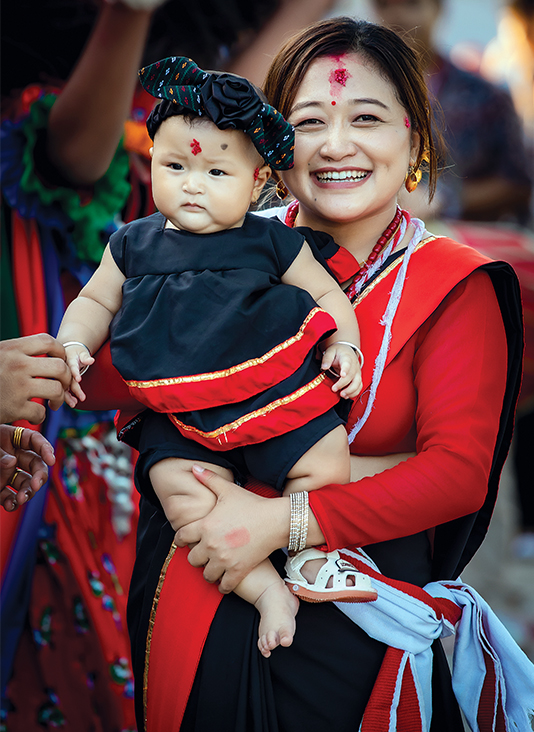
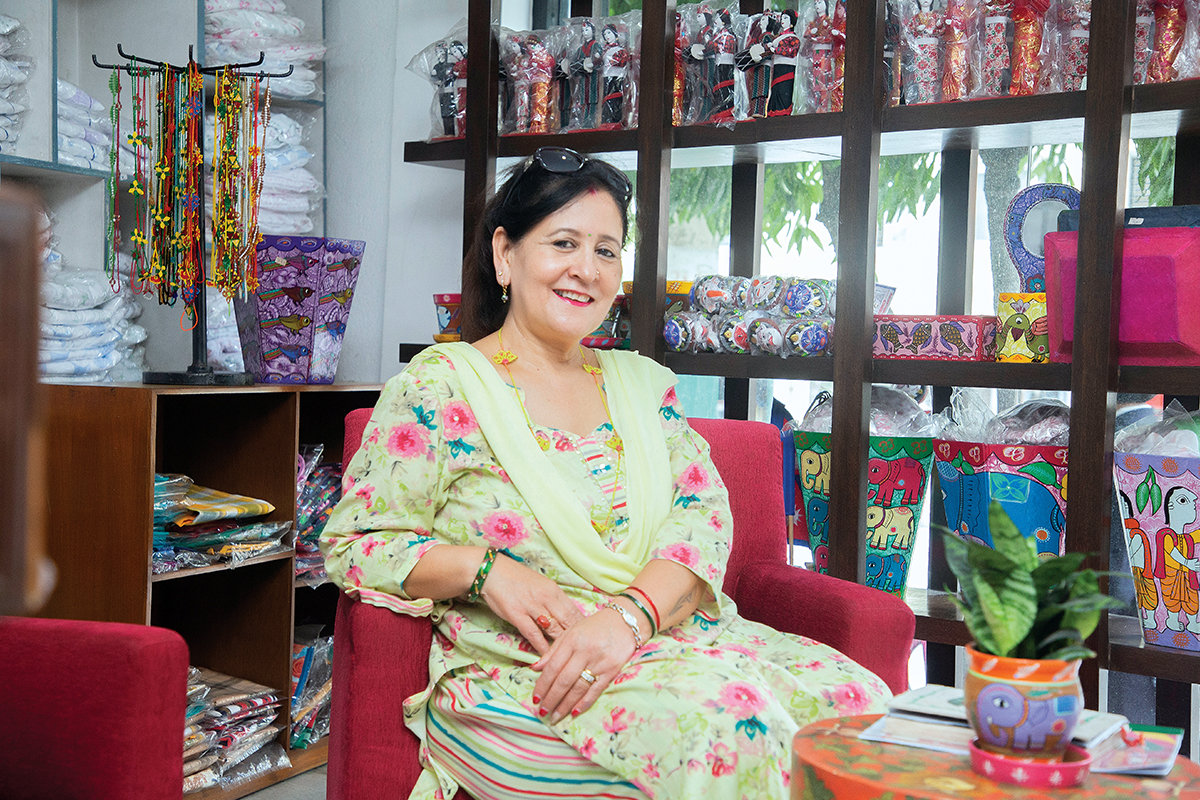
Sunita Rai Shrestha, Content Creator
My mother brought me up without diapers, partly due to financial constraints and also because they simply weren’t readily available in the Terai at that time. Parenting was shaped very differently by circumstances, resources and environment. Looking back, I realise how much parents had to adapt and manage with what little they had. Today, I recognise the contrast in my own parenting journey where such essentials are easily accessible. It makes me appreciate both their resilience and the differences in the times we are living in now, and it deepens my respect for how they raised us.
Text: Kreenjala Pyakurel