In a city growing taller by the day, The Garden Project offers something far more luxurious than spectacle: space. Conceived as a living ecosystem of dining, design and community, this newly opened destination is quietly redefining what hospitality can feel like in Kathmandu.
There is a particular kind of silence that only gardens know. Not the absence of sound, but the soft layering of it. Leaves shifting in the wind. Glasses clinking from a distant table. Conversations unfolding without hurry. At Garden Project, Kathmandu’s newest hospitality destination, that silence becomes part of the architecture itself.
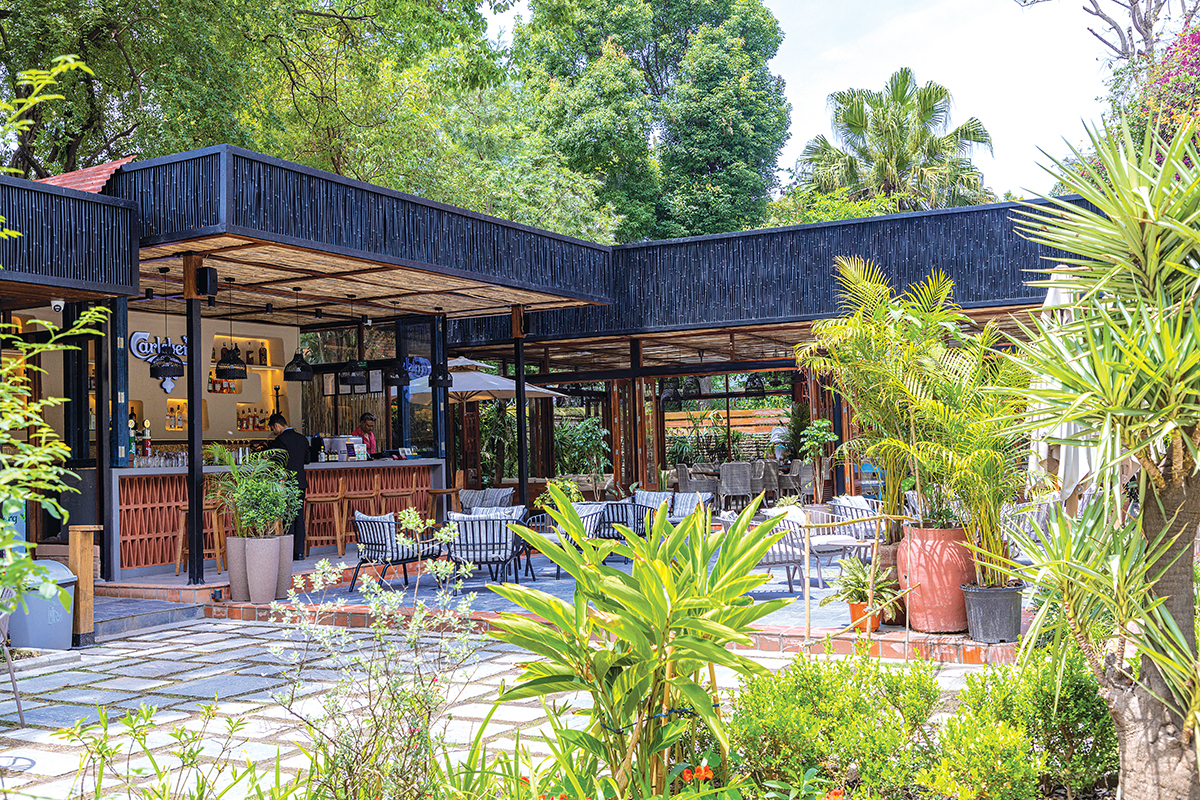
Spread across a thoughtfully restored property, Garden Project is not merely a restaurant. It is an ecosystem. A space where dining, retail, leisure and eventually short stay living exist in conversation with one another. At the centre sits Soul Square, the project’s multicuisine restaurant, accompanied by an outdoor bar, a beer garden and 13 independent retail spaces woven into a landscape rich with old trees and open skies.
In Kathmandu, where hospitality increasingly competes on excess, Garden Project chooses restraint instead. It does not shout for attention. It invites pause. For Co-owners Pooja & Ranjan Kayestha, Prakash & Apekchya Khatri, Anil Agarwal and Sunaina & Rishi Saraf, the vision was never about opening another restaurant in the city’s growing food scene. It was about creating an emotional experience rooted in nature and community.
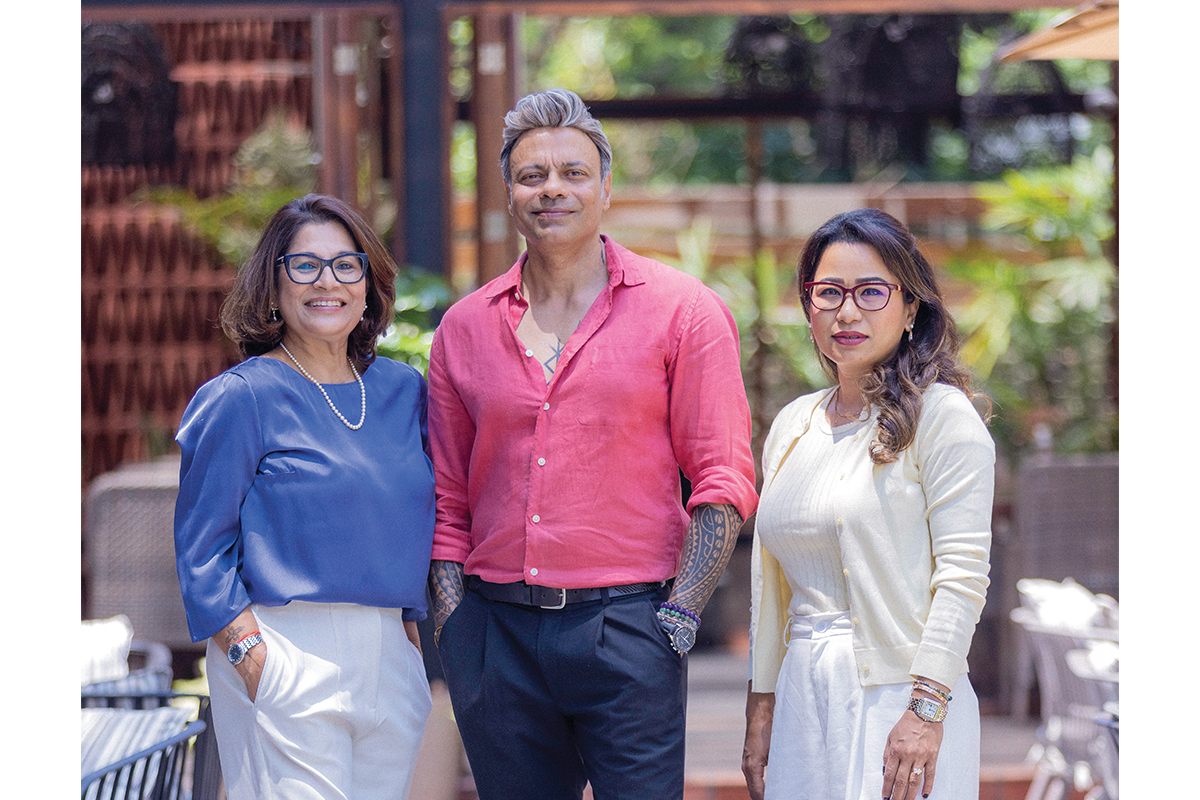
“Kathmandu’s restaurant culture is indeed undergoing a transformation, and Garden Project fits into this landscape as a pioneering ecosystem,” co partners Sunaina and Pooja explain. “We offer Soul Square, a multicuisine restaurant with a casual but vibrant experience, an outdoor bar and a first of its kind beer garden alongside 13 unique shops that cater to diverse customers’ needs all under one roof. But beyond the dining experience, what truly defines this space is its environmental appeal. The presence of lush greenery and centuries old trees fosters a sense of tranquility that is becoming increasingly rare in Kathmandu.”
Designed by Rishi Saraf, the project’s visual language feels deeply aware of its surroundings. Nothing appears forced into place. Instead, the design unfolds gently around what already existed.
“When envisioning Garden Project, several elements were completely non-negotiable,” says Rishi. “The most important was integration with nature. The design had to reflect a seamless connection with the landscape. We also wanted community focused spaces that encouraged social interaction. The ecosystem needed to accommodate various experiences, from dining and retail to leisure, while maintaining a cohesive design language.”
And cohesion here comes not from uniformity, but sensitivity. One of the project’s strongest design decisions was choosing preservation over expansion. In a city where development often comes at the cost of memory, Garden Project resisted the temptation to maximise commercial space.
“We refused to compromise on the quality of materials and the greenery,” Rishi explains. “We made sure we did not cut any trees. In fact, we planted more. We could have added more retail outlets, but we chose not to because preserving the natural landscape and the historical trees, some over 150 years old, mattered more. Respecting the existing home on the property, which is more than 70 years old and carries history for both the owners and the neighbourhood, was equally important.”
That philosophy is visible in the details. Local bamboo, or nigalo, appears throughout the space. Traditional Nepali telya tiles ground the architecture in familiarity, while bamboo and wood elements soften the lighting and furniture design. Contemporary aesthetics exist here, but they never overpower the soul of Kathmandu.
“Many global design trends today focus on sustainability and communal spaces,” says Rishi. “We wanted the project to have an international appeal through contemporary retail design and innovative dining concepts. But the heart of the design remains deeply rooted in Kathmandu’s character. The materials, forms and stylistic features reflect local culture and traditions. Our vision was always to integrate the old with the new.”
That balance between modernity and memory is perhaps what makes Garden Project feel emotionally resonant. It understands that luxury today is not only visual. It is experiential. It is the feeling of openness in a crowded city. The comfort of spaces designed with intention. The quiet reassurance that beauty does not always need to be manufactured from scratch.
For the owners, sustainability also extends beyond environmental consciousness. The project was imagined as a long term cultural and social hub, one that evolves with the community around it.
That future includes plans to introduce apartment style stays and bed and breakfast experiences, allowing guests to fully immerse themselves in the Garden Project ecosystem. But even in its current form, the space already feels immersive.
When asked what they hope visitors leave with after spending time here, the answer comes without hesitation. “We want people to leave with a sense of rejuvenation and connection. Whether it is enjoying a meal, shopping, hosting events or simply relaxing with friends and family, we want people to have meaningful experiences here.”
And maybe that is Garden Project’s greatest achievement. In the middle of a restless city, it offers Kathmandu something unexpectedly tender: room to exhale.
Text: Ankita Jain
Photos: Ripesh Maharjan