If I had to name one thing that my gender studies education has given me, it would be the confidence and inner peace to enjoy my own company, to not depend too much on other people’s schedules, interests or availability in order to pursue the things I enjoy. One of those things is going to the movies by myself whenever time permits.
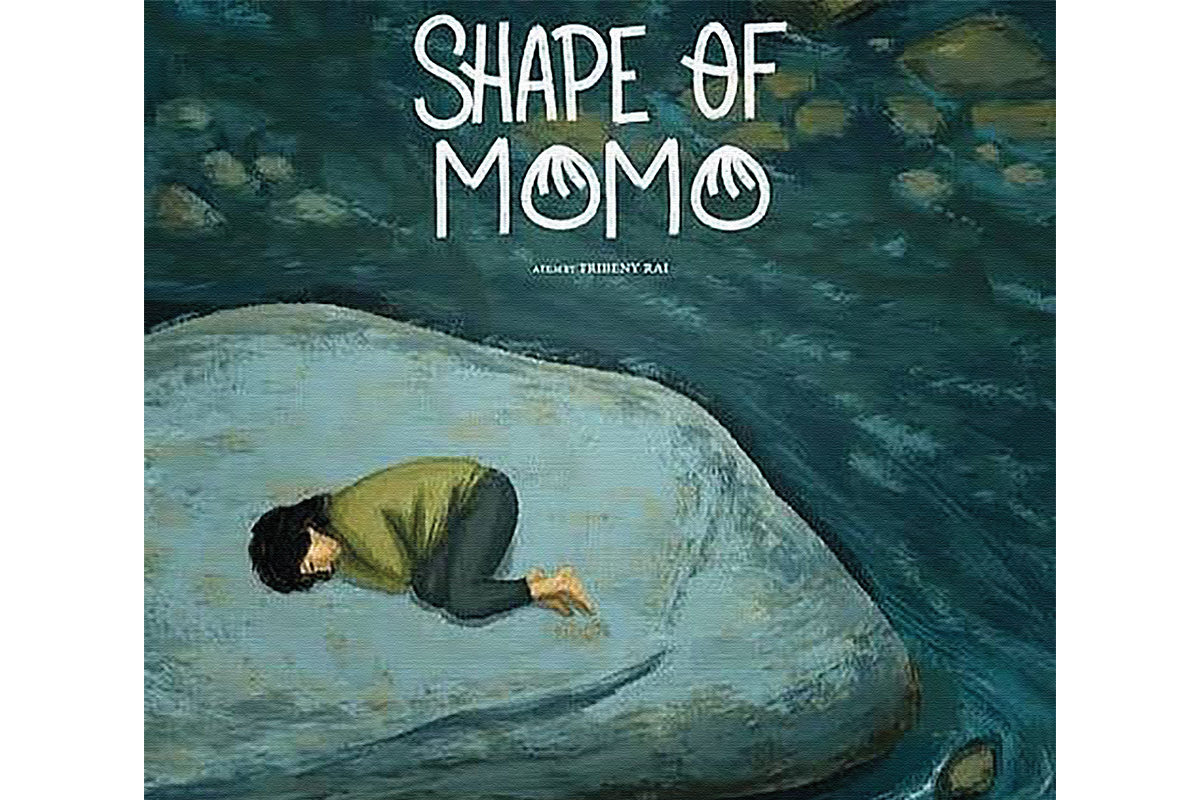
So, last month when I found out Shape of Momo had been released in Nepal, I decided to go. The movie critics I usually follow had already said wonderful things about it. Hence, the decision was made, but the timings were such that nobody could accommodate my schedule. So, I booked my ticket online, left my office on time, reached the theater, and enjoyed the movie.
And what a movie it was! And what an experience it turned out to be.
Directed by a woman, Tribeny Rai from Sikkim, and made in the Nepali language, I could skip reading subtitles which doesn’t happen often when I watch internationally acclaimed films that have traveled across festivals.
I am not a movie critic, nor do I claim to have the right vocabulary to dissect and review a film in this piece, and I am not even trying to do that.
What I am trying to express here is how this movie helped me feel okay with my way of living life, instead of seeing it as a flaw or shortcoming. As a woman, if I don’t do something that is “supposed” to be done by a woman, it has never been taken as just a fact or my choice of living but rather something to be ashamed of.
It was comforting to find solidarity in the rage we go through every day against misogyny and patriarchal views that people usher in so casually. Small incidents in the movie like a mother needing to hang men’s clothes to let migrant workers know there was still a man in the house even though there wasn’t, or a woman choosing to run on her terrace instead of using the hills of her village to jog, or how a man’s voice alone is enough to stop a stalker from harassing a woman, or how Bishnu, the main protagonist, is teased and mocked for being the only one in the family who doesn’t know how to make a perfectly shaped Momo, all carried weight.
Throughout the movie, it keeps on showing us how women are told to shrink, to accommodate, to endure so that people don’t gossip about them, or they are not seen as troublemakers, and they are allowed to merely survive.
The scene towards the end, where men sitting in the house to give condolences claim how lonely the deceased mother was because her two sons weren’t around when she died, even though she was cared for by her daughter-in-law and grand-daughters and had lived a loved life, was enough to show how women are viewed in our society. For me, the movie had very nuanced ways of showing how women are made invisible or considered of no value without a man in their lives.
The society we live in tries so hard to put us into boxes of what it means to be a man or a woman. Qualities such as being rational, assertive, financially independent, and ambitious are often placed in the “man” box. So, when Bishnu, the younger daughter in her family, displays any of these qualities, she is repeatedly told, “chora jastai” (just like a son)!
On the other hand, when a man in the movie poses for a photograph, he remarks with a certain contempt that he looks like a woman “keti jastai”, in the picture, as if anything associated with women is somehow inferior. The comment is brief, but it reveals how deeply ingrained misogyny can be.
So, when women challenge these ideas or question the status quo, society often tells us that we are “wrong” or even “difficult women” for wanting things to be fairer, for choosing lives we want to live, for understanding who we are, or simply for refusing to conform to expectations that were never ours to begin with.
I wish I had movies like this while growing up. I wish I had not only seen films where a girl needs a man to rescue and protect her, and without him, has no meaning in life. I wish I had grown up seeing characters like Bishnu, who, in her subtle ways, shows us that fitting in is not worth sacrificing one’s peace and sense of self.
What I appreciated most was that the movie does not try to glorify Bishnu. She is a young woman with her own prejudices and privileges. She is allowed to make mistakes. She does not fit the conventional beauty standards that so often define female protagonists on screen. Instead, she reminds us that women can have our own journeys of growth, self-reflection, and becoming better versions of ourselves.
I hope mothers of this generation do not only take their daughters to watch movies that glorify toxic masculinity, promote irrational nationalism, or justify violence. Two seats away from me sat a mother and daughter. The hall was sparsely occupied. I found myself wishing there were more mothers bringing their daughters to films like this – showing them that they support their journeys of self-discovery and will love them regardless of whether they can wrap a perfectly shaped Momo.
For women of my age, perhaps we can take comfort in the fact that movies like this remind us that even if we do not fit into society’s idea of womanhood, we are not alone. We may not always meet others who share our experiences, but knowing they exist somewhere is enough to bring a sense of comfort. In that hall, with only a handful of people present, many of us remained seated even after the credits rolled, as though the film had reflected parts of our own lives back to us. For that, I will always be grateful to Tribeny for making a film that not only entertained but also helped us see ourselves, our mothers, and the women around us more clearly.
Tribeny and I may never meet, but I take solace in the thought that her making films like Shape of Momo and my choosing to watch them alone are, in some small way, acts of solidarity across distance. I hope she, and many other women filmmakers, continue to tell stories like these, so that women like me always have films worth watching and reasons to feel at peace with who we are, and even with the way we wrap our Momo!