Artificial intelligence has moved from being a futuristic concept to becoming an indispensable workplace companion. It drafts emails, analyses data, generates presentations, writes code, creates marketing campaigns, summarises meetings and even helps make strategic decisions. For businesses, the gains are undeniable: faster execution, lower costs and unprecedented productivity. Employees can accomplish in hours what once took days. Yet beneath this surge in efficiency lies a more complex question: are we becoming more capable, or simply more reliant?
History has shown that every transformative technology reshapes human behaviour. Calculators reduced mental arithmetic, GPS weakened our sense of direction, and smartphones changed how we remember information. AI may be triggering an even deeper shift—not just in what we do, but in how we think. As algorithms increasingly perform tasks requiring creativity, judgement and analysis, there is growing concern that critical thinking, problem-solving and independent decision-making could gradually erode.
Let’s as individuals from different backgrounds what role AI has in their lives.
Looking back, how different was your life before AI, and do you think those changes have made life better or simply more convenient?
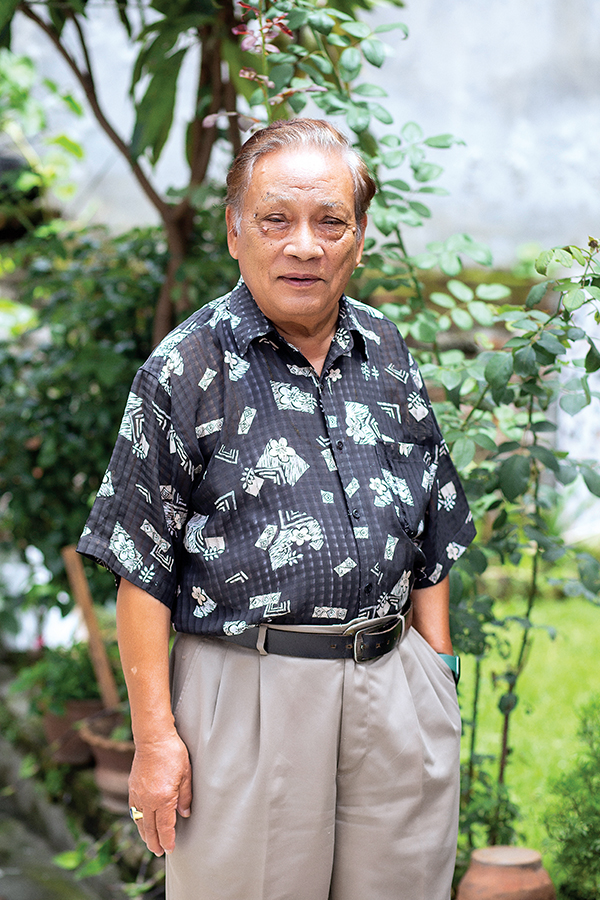
Muni Bahadur Shakya
Nepal’s first computer scientist, Programmer, Founder and Managing Director of High Tech Pioneer
Muni: Before AI, the world had limitations to what technology could achieve. The knowledge that circulated in the world was limited. But now, not just people from your surrounding are on the same page but the entire globe is. I am sure life has become more convenient and international because of AI. Easy access to what is happening on the other side of the world has become more possible because of AI. If people can utilise AI in a constructive way and as a source of knowledge, in the upcoming days, AI can make everyone’s life better and also more convenient. The use of AI is getting inevitable day by day and keeping up with the utilisation is what we can do as humans.
Kristina: Before AI, simple tasks took longer. As someone who runs businesses and also writes music, I spent hours brainstorming, writing, researching and organising ideas. Those parts of the process weren’t necessarily difficult but they were time-consuming. AI hasn’t made me more creative or given me ideas I wouldn’t have had otherwise, it has simply created more space for me to focus on the things that only I can do. Whether that’s writing a song, connecting with people, mentoring women or developing new ideas. Those are the parts of my work that matter most. I see AI as a tool that helps remove some of the friction, rather than replacing the creative process itself. So, has it made life better or just more convenient? I would say both. The convenience has given me back something far more valuable than efficiency: time. And for me, more time means more opportunities to create, reflect, be present, and actually enjoy life instead of constantly feeling like I am catching up.
Sandhya: Looking back, AI has definitely made my life easier over time. It has helped me learn faster, made it easier to source information, and simplified the process of searching for things I would otherwise have spent hours looking for. More importantly, it has helped me take the chaos in my head and structure it into a clearer, more coherent idea. That said, I do not think I have used AI anywhere near its full potential. For me, it has mostly been about efficiency, cleaning up my writing, and helping me search for a few things, rather than something genuinely transformative in how I work or think. If AI had not existed, I do not think my day to day life right now would look drastically different, although it would have definitely helped my studies more during earlier years. I am glad that I managed to get through many days without depending on it for extra effort, which tells me that my reliance on it is not as deep as it could easily become if I let it be.
Aneel: Yes, working in the creative industry, I can confidently say that life has been very different since AI became mainstream, especially Generative AI. I would say using AI has made my life easier because it helps visualise the result beforehand, especially by generating quick moodboards, concept arts etc. Oftentimes than not, use of AI has opened possibilities in my work that I would not have thought of myself. This has helped save hours if not days from my work. Also, having AI assisted tools in post production has helped to create better output with very minimal resources and limited team members. What AI has done is remove a lot of repetitive processes, allowing me to spend more time thinking creatively rather than getting caught up in technical groundwork.
The creative decisions, however, still come from experience, instinct, and the stories I want to tell. So for me, AI has made the journey more convenient, but the outcome still depends on the human behind the work.
Where do you draw the line between using AI as a helpful tool and being dependent on it?
Muni: AI has become a part of our lives, not just mine but everybody’s. As someone who works with machines, I have an engagement with AI most of the time.
We have been working on robots with artificial intelligence, something that could teach me more about the world than I have learnt in my whole life. I talk to it on a daily basis and it keeps telling me about what’s happening around the world. For me AI is a major part of who I am and what I do. But of course, there are times where I draw a line where human emotions are heavily influenced.
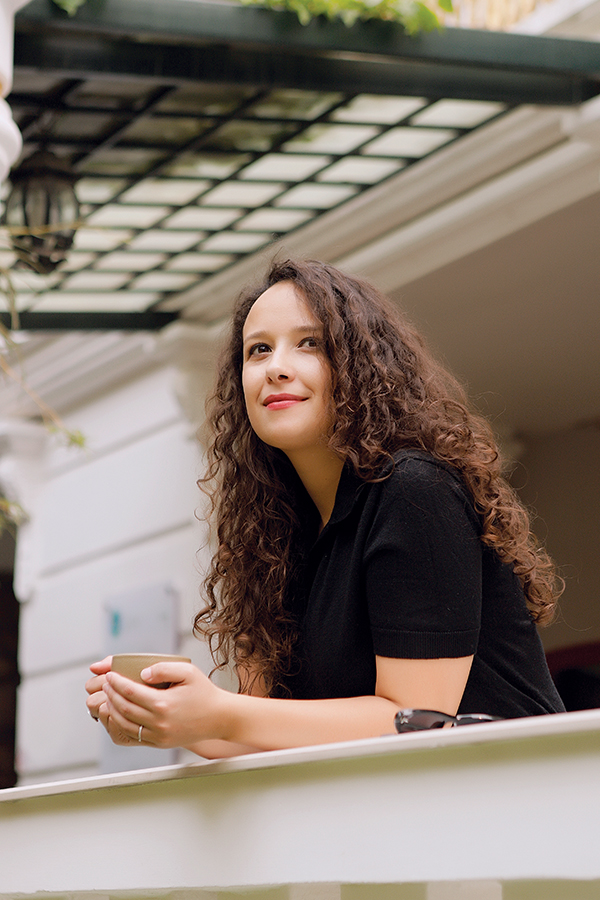
Kristina Allen
Singer, Songwriter, Spoken word artist
Kristina: In my opinion, AI should amplify your own thinking, not replace it. I use it to organise ideas, structure content, brainstorm, and sometimes challenge my own perspective, but the vision, emotion, and lived experience still have to come from me. As a musician especially, I don’t believe you can outsource authenticity. A song isn’t powerful because the lyrics are technically perfect; it’s powerful because someone lived what they are singing about. I feel the same about business and content creation. AI can help me communicate more clearly or save me time,but it should never become the source of my voice. The moment I stop questioning its suggestions or rely on it to think for me, that’s when it becomes dependency rather than support. I think we all have a responsibility to continue developing our own ideas, critical thinking, and creativity instead of handing those things over to technology.
Sandhya: I draw the line at where the idea originates from. Whenever I use AI, I make sure I already have my own idea or input in mind and I only turn to AI to help refine, polish or improve that existing thought. I draw a firm line at asking AI to generate an idea for me entirely from scratch. In my view, the first spark of an idea should always come from me as a person, not from a machine.
AI should function as a helping hand that improves what I already have, rather than something that creates content out of nothing on my behalf. This distinction matters a great deal to me because it preserves ownership over my own thinking and creative process. Once AI starts producing the original idea instead of just helping me shape one, I feel that the work stops being genuinely mine, and that is the point where helpful assistance turns into a form of dependency I want to avoid.
Aneel: As a filmmaker, rather than using AI for the final work, I try to limit it to pre-visualisation. I would use online images through Google search or Pinterest anyway even before AI. So, it has not affected my output, just saved time arriving in the desired references. The rest of the production process still very much depends on my team and my hard work. As of now, AI cannot replace the on-field work that we do so the line is drawn automatically I guess. Filmmaking is ultimately a collaborative and human process. There are countless moments on set that require communication, improvisation, and emotional understanding, things that no software can truly replicate. AI may help things get done efficiently, but it cannot recreate the human chemistry between people working together toward a shared vision. For me, as long as AI remains something that supports my thinking instead of replacing it, I know I am using it in the right way.
If AI suddenly became unavailable, how much would your daily routine be affected?
Muni: Honestly, I cannot see the possibility of AI disappearing from the world. But since it is a hypothetical question, I would say it would affect my life in an unimaginable way. As I mentioned before, I have dedicated my years into developing AI robots, if it were to disappear, all my visions and growth I can see in the technological world would collapse. The development possibilities in all sectors, may it be medicine, engineering, the broadening of the knowledge will come from AI and it is hard to imagine it being unavailable.
Kristina: I would notice it because I do use AI but I don’t think my life would change dramatically. My workflow would slow down, especially when it comes to writing, planning or organising ideas, but I would still create, build businesses, write music and enjoy life in exactly the same way. I was doing all of those things long before AI existed, so I know they are not dependent on it.
If AI disappeared tomorrow, I would simply go back to the methods that had already worked for me for years. It would probably require a bit more patience, but it wouldn’t stop me. I think that’s an important distinction. AI is a useful assistant, not the foundation of my creativity or my business. At the end of the day, it’s still my ideas, my experiences, and my decisions that shape the work I put into the world. AI just helps me get there a little faster.

Sandhya Byanju
Content Creator, Law Student, Official Cultural Ambassador for Kora Bhaktapur 2026
Sandhya: To be honest, my daily routine would not be affected all that much. I am a law student and someone working in a creative field, so a large part of my work depends on original thought, reading and research rather than constant AI assistance. I have not used AI extensively for my research specifically, since many of the sources I need for my studies and cultural work are simply not digitised yet and require manual searching through physical or archival material. The one area where I would notice a difference is in my writing, since I do rely on AI somewhat to structure my thoughts and make my writing clearer, so this answer, for example, might come out less organised without that help. Beyond that, though, my core responsibilities as a law student and as a cultural content creator would continue largely unaffected, since the foundation of that work has always depended more on my own effort than on any digital tool.
Aneel: If I were to wake up to a world where AI is suddenly unavailable, it would take a slight adjustment to get back to the old ways but having said that, it wouldn’t be so hard since I’m not completely dependent on AI. Many of the skills I rely on today were developed without it. It’s just another tool to tell my stories. Storytelling has always been about adapting to the tools available at the time. Whether it’s AI or traditional methods, the desire to create remains the same. If one tool disappears, another process simply takes its place. The stories don’t stop because technology changes. Even if the internet would become unavailable, I would not waste time to find other ways to tell my stories. It is undeniable that creativity existed way before AI.
Do you think AI is changing the way we think, create and solve problems, for better or for worse?
Muni: Sometimes, I feel like I am ignorant. Ignorant enough to think I am knowledgeable about things which I am not. The more time I spend with AI, I get to know that I know much less than what I should at my age. When I am communicating with the AI robot, it makes me feel as if I am a child who is learning from the bottom. I think rather than changing the way we think and create, AI opens a space for you to learn more, visualise the impossibilities. AI provokes you into thinking the more you learn, there is much more to learn; it is never enough. Rather than letting AI change your creation and thinking entirely, humans should focus on enhancing on the informative side and find your own creative impossibilities coming to life.
Kristina: I think it’s doing both. On one hand, AI is making knowledge, learning, and research more accessible than ever before, and that’s incredibly exciting. It can help people get started, learn and solve problems much faster. But I also think we are at risk of becoming too reliant on instant answers. As a songwriter, I have learned that some of the most meaningful ideas come from silence, reflection, and simply living life. They come from a lived life, joy, sadness, travel, conversations and moments that no algorithm can truly experience. AI can recognise patterns and imitate creativity, but it hasn’t lived a human life. That’s an important difference. I believe creativity comes from something much deeper, whether you call it intuition, consciousness, or divinity. For me, it’s one of the most uniquely human things we have. AI can support that process, but I don’t believe it can ever replace where genuine creativity comes from.
Sandhya: I think the answer genuinely depends on how people choose to use it, which makes this a question of intention rather than the technology itself. If someone uses AI to save time and then reinvests that saved time into improving their work further, refining their thinking, or exploring ideas more deeply, that is a real and meaningful benefit to how we think and create. However, when I look around, there is a clear negative side emerging as well. Many people are not using AI to enhance their own original work, but instead are letting AI produce the work for them entirely, which means the final output stops being authentically theirs. This shift changes not just the quality of what is created, but also the habit of thinking itself, since people may gradually lose the patience or ability to work through problems on their own. So overall, AI is changing how we think and solve problems, but whether that change is for better or worse depends entirely on the user.
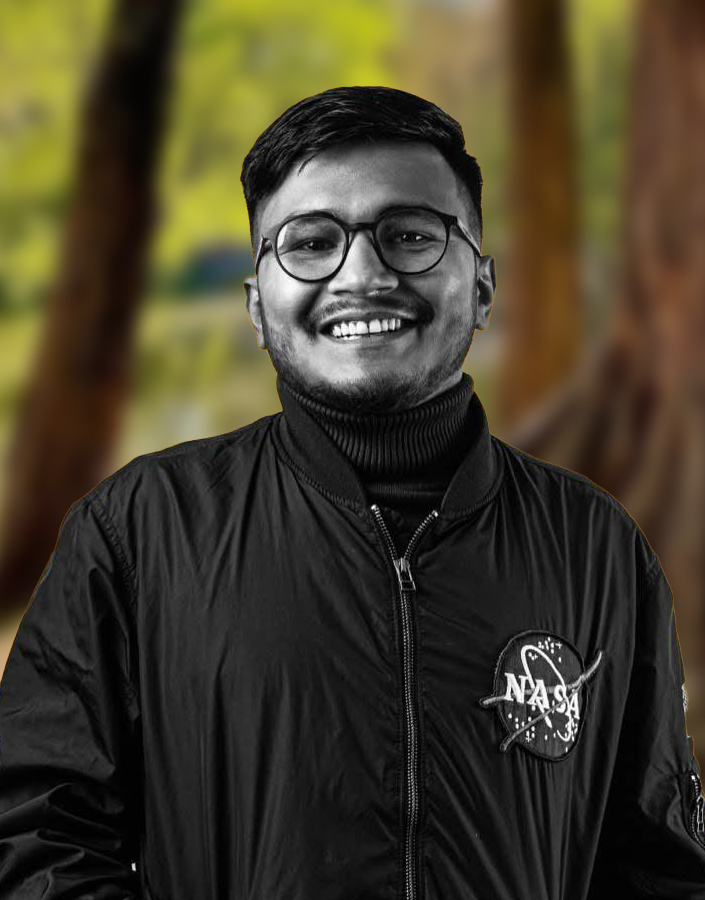
Aneel Neupane
Filmmaker, Chief Executive Officer, Co-Founder, and Director Of Jazz Productions, Co-Founder and Creative Director Of Qi Studios (Qi Animation)
Aneel: It’s a double-edged sword. We are definitely benefiting a lot by the use of AI but at the same time it’s also making us lazy. But that’s the nature of any innovation, I guess. We would still be walking our way to every place if not for the invention of vehicles which has made us lazier and less healthy but that does not mean cars and bikes are totally bad. The challenge isn’t the technology itself but how we choose to use it. If it encourages us to think less and rely on shortcuts for everything, that’s where problems begin. It’s just a matter of adapting and adjusting to the ever changing world while being true to oneself and our creativity. Creativity has never been about using the newest tool; it’s about the perspective behind the work. As long as we don’t lose that perspective, AI can remain something that enhances creativity rather than replacing it.
What’s one question about AI that you think society isn’t asking enough?
Muni: We are all in the learning process. We learn, invent and relearn all over again. As a society we should be asking how different uses of AI can affect humankind; how the intentions of the creator and user can vary the perception of AI.
Whether it be the destructive side or the innovative one, how we want the world to move forward is in our own hands. This is why every creator and user must understand the utility of AI should always come from a mind focusing on the development and the spreading of knowledge. Everyone should be able to have access to the knowledge of humanity to cultivate more efficient inventions and creators.
Kristina: Instead of constantly asking, “What can AI do?”, I think we should also be asking, “What parts of being human should never be outsourced?” We spend a lot of time talking about what AI is capable of, but much less time talking about what we want to protect. Things like creativity, intuition, empathy, meaningful relationships, and the wisdom that comes from lived experience are qualities that I believe should always belong to us. I would also add another question: “How far are we willing to take this?” Technology is evolving incredibly quickly, and while progress is exciting, I don’t think progress should happen without thoughtful reflection. Just because something can be automated doesn’t necessarily mean it should be. I hope AI continues to make our lives easier, but not at the cost of losing the very things that make us human. The real challenge isn’t building smarter technology; it’s making sure we don’t lose sight of how dangerous it can actually be to our own existence.
Sandhya: I think one question society is not asking enough is why AI is being offered to us for free and what that really means in the long run. We have all heard the saying that if a product is free, then we are the product, so it genuinely feels like something is being quietly set up for the future, whether that involves how our data, our habits, or our creative work is eventually used or monetised. At the same time, I do not want to dismiss the fact that AI has been genuinely helpful on a large scale, improving access to information and support for people who may not have had it otherwise. So instead of only asking whether this tradeoff is good or bad, I think the more useful question society should be asking is which specific aspects of this exchange we should be paying closer attention to, so that the benefits are not quietly outweighed by consequences we are not yet prepared for.
Aneel: I think we should discuss more about ownership of art since AI can imitate any art and style perfectly. Today, great creative directors, filmmakers, designers and animators are valuable because they consistently make better aesthetic decisions than others. If everyone has access to an AI that can produce technically polished work in seconds, technical execution becomes cheap. This needs to be discussed more before coming to a viable conclusion that does not kill the spirit of the artists. Art is shaped by lived experiences, personal struggles, and individual perspectives, things that cannot simply be generated. The conversation shouldn’t be about resisting technology, but about making sure it develops in a way that respects the people whose creativity has shaped the visual and artistic world in the first place. Finding that balance will be one of the biggest creative challenges of the years ahead.