
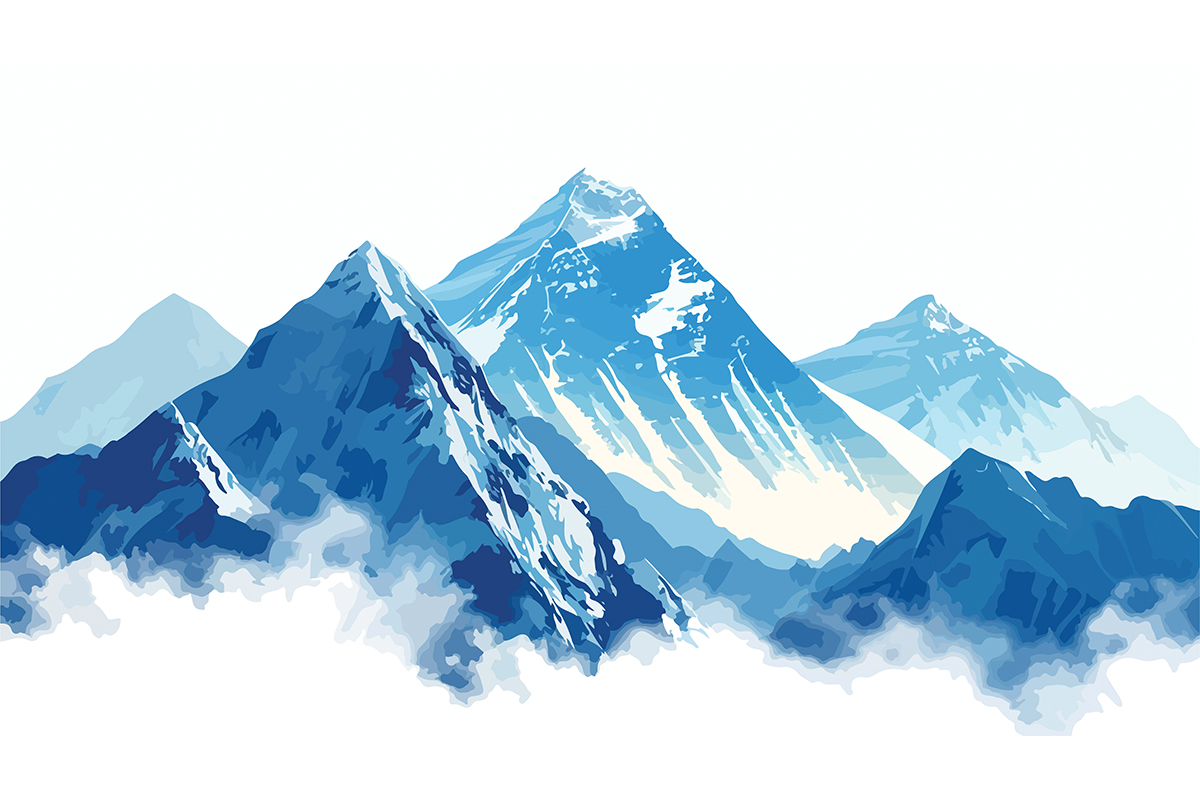
Tracy K. Smith, Paul Muldoon, and Jean Hanff Korelitz were in Kathmandu for the Himalayan Literature Festival and Writers’ Workshop 2026, which brought together acclaimed international and Nepali writers under the theme of healing, creativity, and cultural dialogue. Held across Kathmandu and the Valley, the festival featured immersive workshops, poetry readings, and thought-provoking literary conversations. Beyond the formal sessions, visiting authors explored Nepal’s rich cultural and spiritual heritage through curated visits to historic landmarks and sacred sites, offering them a deeper connection to the country’s traditions, stories, and living history
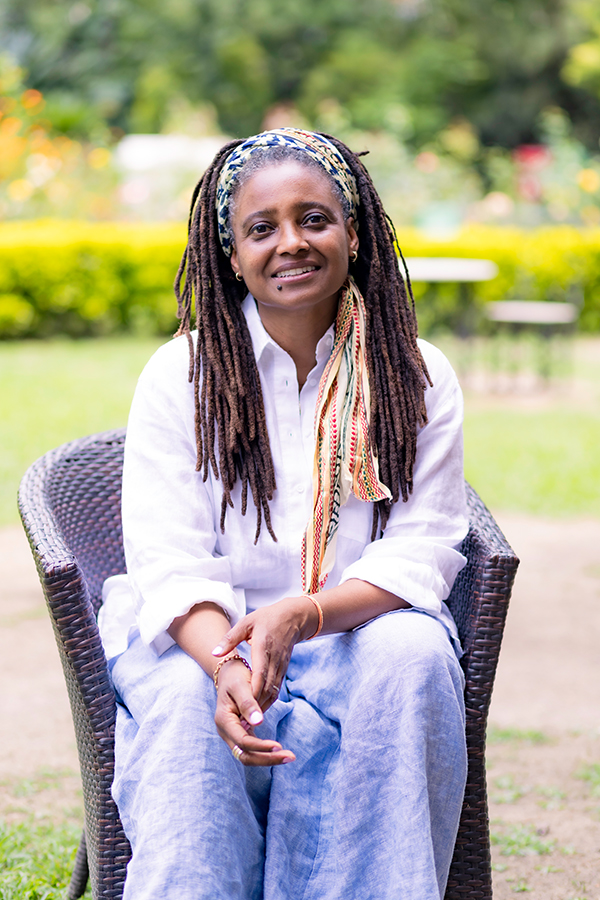
Tracy K. Smith on Poetry, Politics and Empathy
The Pulitzer Prize-winning poet speaks to WOW in Kathmandu about the inner life, public responsibility and why poetry remains a powerful way of meeting the world.
For Tracy K. Smith, poetry has never existed apart from life. Across collections such as Life on Mars and Wade in the Water, the Pulitzer Prize-winning poet has returned to the page as a space where the intimate and the political are constantly in conversation. Her work moves between family, race, grief, history and power, but always with the same underlying question: what do we owe one another?
That question felt especially resonant during her visit to Kathmandu for the Himalayan Literature Festival & Writers’ Workshop 2026. Set against a city where spirituality, history and daily life exist side by side, the festival became an apt backdrop for a writer increasingly interested in healing, vulnerability and the possibility of a larger human belonging.
For Tracy, poetry is not a retreat from politics, but one of the places where politics begins. Not in slogans or declarations, but in the intimate space where one life encounters another. “If we are alive in the world, we are interacting with the politics of that fact.”
She resists the idea that poets must write in one fixed political mode, but she is equally clear that no poem exists in isolation from the world around it. The private self, memory, family and love all carry us towards the lives of others, and it is in that overlap that her poetry often lives. “At the intersection of the self and other, politics begins.”
That belief gives her work its emotional force. Even when a poem begins in solitude, it rarely stays there. Tracy is drawn to the ways poetry can make us more receptive to other people, loosening fear and teaching us to sit with lives that are not our own. “Poems bring us into what feels like an intimate conversation with another voice and another life.”
Lately, that curiosity has led her towards spiritual language and the idea of a shared human family, even as she continues to confront war, violence and social fracture in her work. She speaks movingly about trying to disrupt the easy divide between “us” and “them”, and about what it might mean to stop insisting upon distance from those we consider adversaries. “We are all us. This is a human family. So, what happens if I stop insisting upon distance?”
That idea seemed to echo through her time in Nepal as well. Kathmandu, with its layered histories, sacred spaces and slower invitation to reflection, offered more than a literary stopover. It became part of the larger conversation around art, empathy and cultural exchange that shaped the festival itself.
If there is one thing Tracy returns to again and again, it is the belief that poetry changes us not through certainty, but through attention.
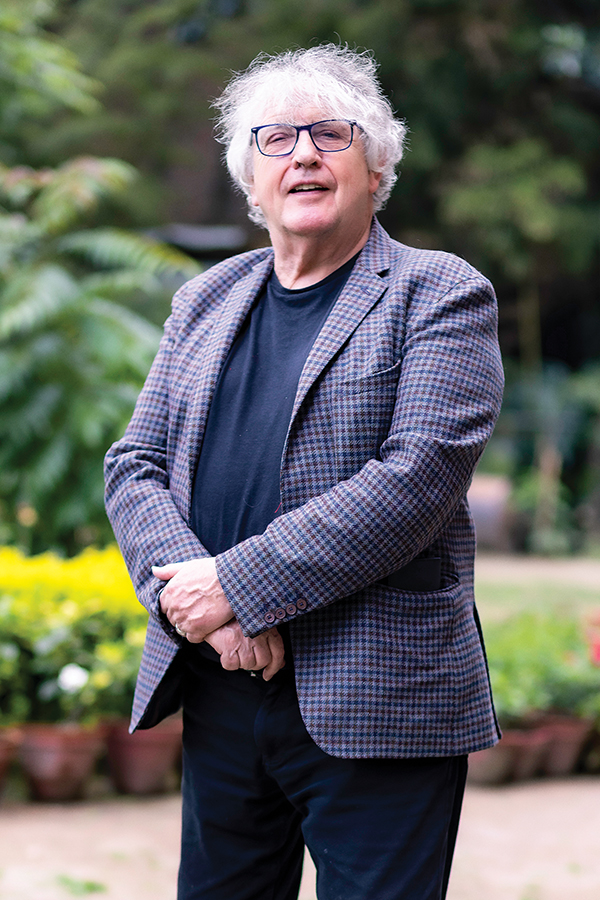
Paul Muldoon on the Precision of Poetry
The Irish poet speaks to WOW about exact language, family words, folklore and why Nepal feels less like a surprise than a place his imagination had already visited.
Paul Muldoon has spent decades proving that poetry can be both playful and exacting, intimate and expansive. One of the most celebrated Irish poets of his generation, the Pulitzer Prize-winning writer has built a body of work marked by wit, formal brilliance and a near-obsessive precision with language. His poems are full of unexpected words, mythic creatures, family inventions and sudden leaps across geography and memory, yet nothing in them feels ornamental. In a Paul poem, language does not decorate meaning. It becomes the meaning.
That is perhaps why his work can sometimes feel like an act of preservation, as though it is rescuing words from extinction and giving them new life on the page. Paul, however, resists that idea. He does not see himself as a guardian of old language, nor as a poet collecting unusual words for display. For him, the task is simpler and far more exacting than that. “I don’t really feel as if I’m a preserver. I’m interested in the right word being used at the right time.”
It is a distinction that says everything about his writing. A word like obsidian may seem unusual in everyday speech, but Paul’s loyalty is not to rarity. It is to exactness. If a strange word appears in the poem, it is because that is the word the moment demands. No more, no less. Poetry, in his view, is not about dressing language up. It is about allowing the precise word to arrive when nothing else will do. “It’s the right word for the moment and it may turn out to be a strange word. And there are no other words to be used under the circumstances.”
Born in County Armagh and raised in rural Northern Ireland, Paul grew up in a world that now feels almost impossibly distant from the present: open fires, outdoor loos, no telephone for years, a household shaped by the rhythms of a peasant culture and a language particular to that way of life. The vocabulary of his childhood was inseparable from place, class and community, and it remains one of the quiet undercurrents of his work. “The world I was brought up in was a very different world to this one. And the language that they used was quite different.”
That sense of linguistic inheritance runs through Paul’s poetry, though never in a sentimental way. He is interested in how language carries memory, intimacy and geography, but also in how it keeps moving. One of the most beloved examples is Quoof, the title of one of his best-known poems. It sounds strange enough to be an archaic relic, but Paul is quick to clarify that it is nothing of the sort. It is a family word, an invented household term for a hot water bottle. “It tells you in the poem what it is, a family word for a hot water bottle. I think many families have words like that.”
And then there is the Yeti. In Quoof, Paul writes of a “one-off spur of the Yeti or some shy beast”, a line that feels particularly resonant in Kathmandu, where myth and mountain are never entirely separate. Asked whether he ever imagined, while writing it, that he would one day be in Nepal, the home of the Yeti, Paul laughs at the thought. No, he says, he certainly did not write the line with that future in mind. Yet Nepal does not feel entirely foreign to his poetic imagination either.
He recalls being raised on a wide range of stories and cultural references, including those connected to South Asia. In the world he grew up in, the Yeti sat comfortably alongside Bigfoot and the fantastic creatures of Irish folklore. Paul’s imagination has always made room for these crossings, where one mythology brushes up against another and distance begins to collapse.
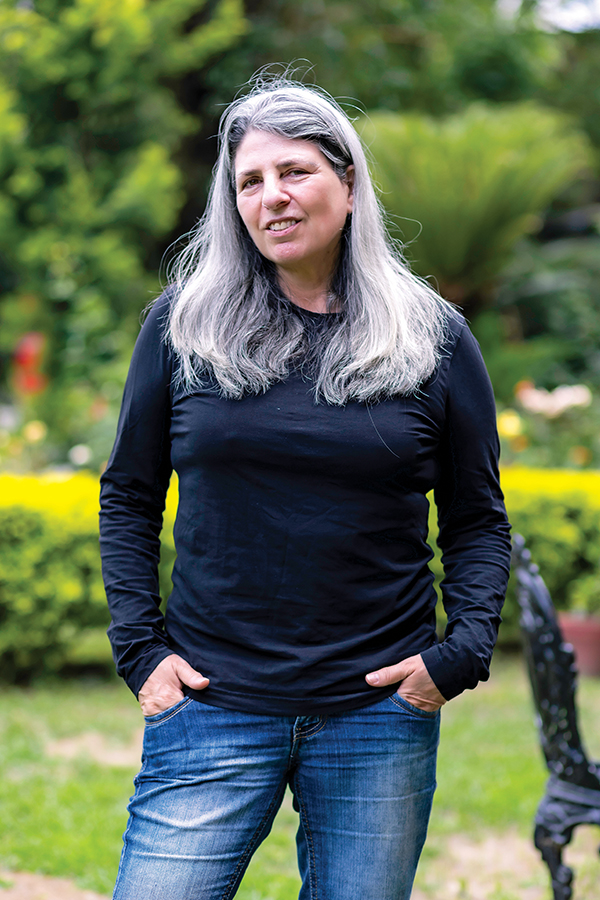
Jean Hanff Korelitz on Fiction’s Dark Side
The American novelist and playwright speaks to WOW about liars, literary villains and the irresistible pull of morally grey characters
Jean Hanff Korelitz has long been fascinated by what happens when civility conceals something darker. Across novels such as The Plot and The Sequel, the American novelist and playwright has built stories around deceit, ambition and the unnerving ease with which people can live beside moral compromise. Her fiction returns, again and again, to characters who lie, manipulate and disturb the order of things, yet still manage to hold our sympathy. It is this tension, between repulsion and fascination, that makes Jean such a compelling observer of human behaviour.
Her novels are less interested in innocence than in what lies beneath it: envy, performance, betrayal, appetite. The people at the centre of her stories are rarely straightforwardly admirable, but they are impossible to look away from. There is always a lingering question in her work: why do we continue to root for people we know are not good?
Some of that fascination can be traced back to her childhood. Jean’s mother was a psychologist and, while always discreet, she still gave her daughters a vivid sense of the danger hidden behind ordinary lives. “She wanted me and my sister to be afraid, basically. To have a sense of the dangers out there.”
That sense of danger was not entirely abstract. Her father’s business was embezzled from twice, both times by long-term employees he trusted completely. The betrayal left a lasting impression, not simply because of the crime itself, but because of how quietly it had lived inside everyday life. That idea, that treachery often arrives in familiar clothing, runs through her fiction with unnerving precision.
Looking back at her body of work, Jean sees patterns she did not consciously set out to create. One of the clearest is the figure of the liar: the person who causes mayhem with little remorse and no real discomfort in deception.
“One of the elements that appears over and over in my work is liars, people who lie, people who just cause mayhem and feel no moral grey area about it. They lie because they’re liars.”
The irony, of course, is that Jean describes herself as almost constitutionally incapable of lying well. She does not claim moral perfection, but she admits she hates dishonesty. It makes her uncomfortable, even physically so.
Her friends, she says, know she is a terrible liar. Yet fiction gives her a way into the minds of people for whom deception is instinctive. That contradiction, between personal aversion and creative obsession, sits at the heart of her work.
Jean describes America as a young country, almost adolescent in its tendency to act out while still insisting on its own exceptionalism. Yet she remains attached to the ideal it claims for itself, the story of decency and honour beneath the noise. That tension between national myth and moral failure mirrors the tension in her novels, where appearances and reality are rarely aligned.
Her time in Nepal, though brief, has offered a welcome change of scene, even if not a break from work. She is still writing, still deep inside the world of her current book. Yet there is an unmistakable delight in finally being somewhere she had long imagined from afar. “I have always wanted to come here. I have always wanted to see the Himalayas. It’s kind of incredible to be here.”
Text: Ujeena Rana/Paresh Khetan
Photo: Ripesh Maharjan