

From the outside, the world of insects might seem small and easily overlooked. But for Nisha Subedi, it is a universe of discovery, responsibility and possibility. She is breaking new ground as an emerging scientist and researcher in entomology, a branch of zoology consisting of the scientific study of insects. Nisha is driven by a simple yet powerful goal: helping farmers find sustainable ways to protect their crops while preserving nature.
Born and raised in Bharatpur, Chitwan describes herself as a disciplined and focused child. Her early years were shaped by a strong sense of responsibility towards education and a deep curiosity about the world around her.
These traits, she says, became the foundation for the researcher she is today. “Growing up, I was very disciplined about my studies and always eager to learn new things,” she recalls. That patience and curiosity would later prove invaluable in the laboratory. Research, particularly in entomology, demands careful observation, persistence, and attention to detail, qualities she began developing long before she entered university.
Nisha’s fascination with insects began during her Bachelor of Science in Agriculture. While studying various agricultural subjects, one field stood out to her more than the others. “Entomology truly captured my interest,” she says. “Everything from memorising scientific nomenclature to understanding the nature of insect damage and the strategies used to manage them felt incredibly fascinating.”
As she continued with her studies, she began to realise that insects were not just pests to be controlled but complex organisms that play crucial roles in agriculture and ecosystems. One of the biggest misconceptions she often encounters among farmers is the belief that every insect found in the field is harmful. In reality, many insects are beneficial and play important roles in maintaining ecological balance. “Most farmers are still unaware of the difference between harmful and beneficial insects,” Nisha explains. “There is also limited knowledge about alternatives to chemical pesticides.”
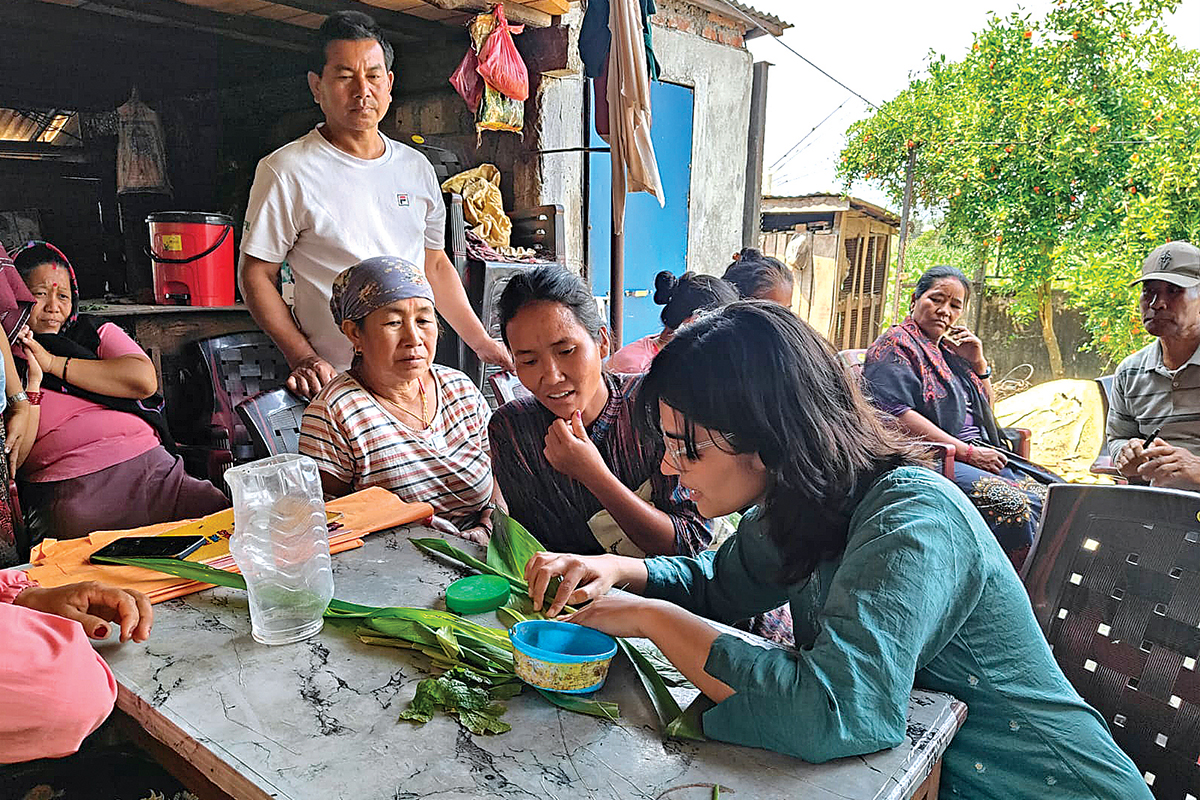
To address this gap, she has been actively involved in awareness programmes based on her research. Through these initiatives, she works with farmers to help them understand insect behaviour and adopt more sustainable pest management practices. The importance of studying insects extends far beyond academic curiosity. According to Nisha, insects are deeply connected to the health of ecosystems and the stability of global food systems. In agriculture, many insects act as pollinators, helping crops reproduce and thrive. Others function as natural enemies of pests, reducing the need for chemical pesticides. One promising approach she highlights involves entomopathogenic fungi such as Metarhizium rileyi, which specifically targets certain crop-damaging pests while leaving beneficial organisms unharmed. Beyond pest control, insects also serve as nature’s recyclers, breaking down organic matter and enriching the soil. They are a vital part of food chains and contribute significantly to biodiversity. “Understanding entomology helps us develop sustainable pest management strategies,” Nisha says. “It also supports biodiversity conservation and ensures long-term food security.”

For young students who may be curious about entering the field, Nisha encourages them to start with something simple: observation. “Begin by watching insects in their natural environment and developing genuine curiosity about their behaviour and their role in ecosystems,” she advises. She also believes students should think beyond the idea of a career alone and consider how their knowledge can address real-world challenges in agriculture and environmental conservation. With the availability of digital learning resources, aspiring researchers can connect with experts, access new knowledge, and gain hands-on experience through farms and research settings.
For Nisha, the journey into entomology is not just about studying insects; it is about creating solutions that benefit both farmers and the environment. In the quiet buzz of the insect world, she has found a purpose that reaches far beyond the laboratory.