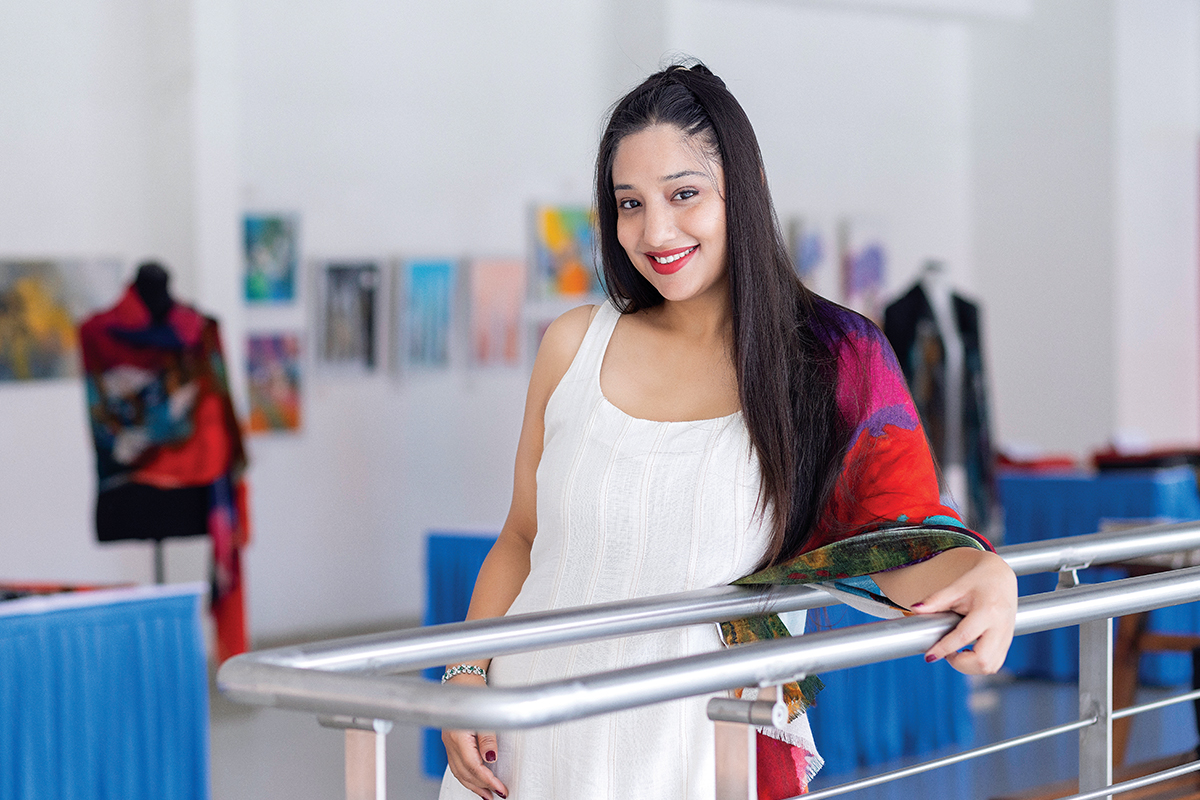
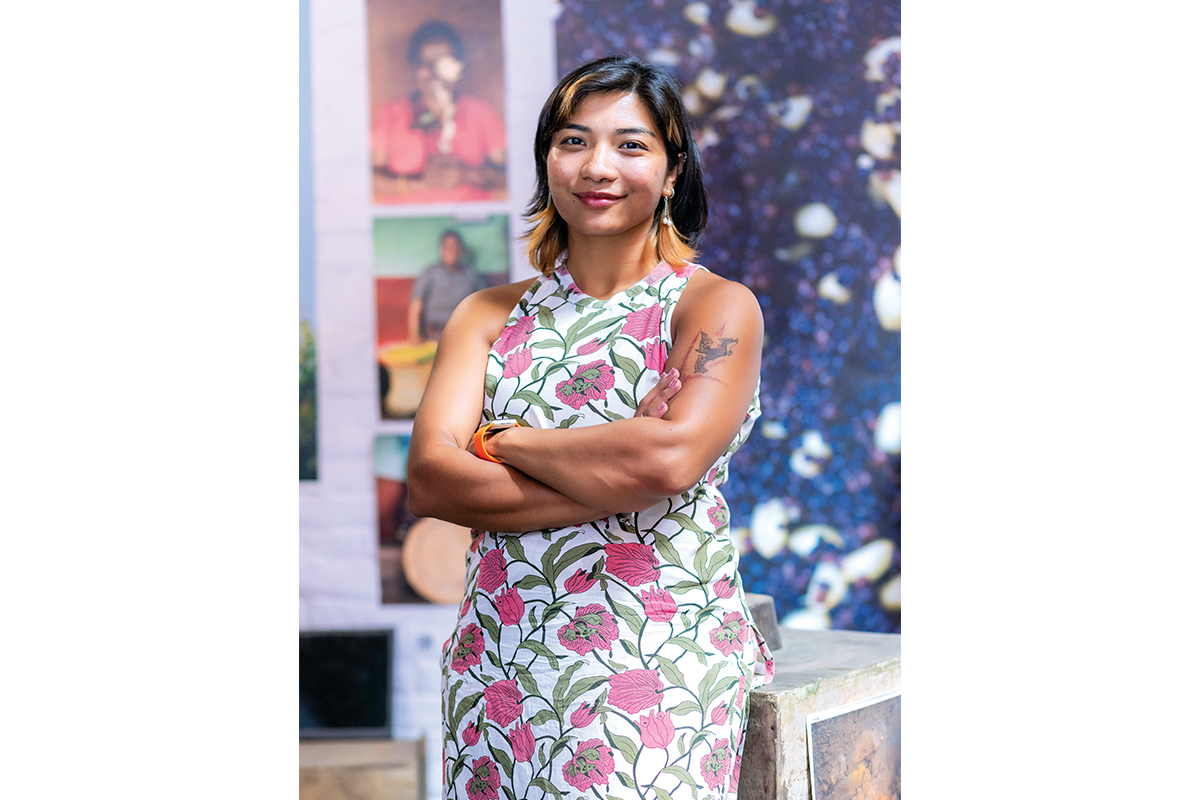
Photographer and visual artist Jyoti Shrestha always knew she was going to be an artist. That conviction has now taken her to what is often called the “Olympics of the art world.” Her work, Chhyake, is currently being showcased at the Venice Biennale collateral exhibition Personal Structures – a milestone that has brought international recognition to the Nepali artist whose practice explores identity, memory, gender and belonging through deeply personal narratives.
The invitation followed her success in Blurring the Lines, an international competition organised by the Urbanautica Institute, the European Cultural Centre and the Paris College of Art. The competition brought together nominees from 32 schools across 24 countries and featured 132 projects. Jyoti was selected as one of just three winners.
When the organisers later informed her that they wanted to showcase her work at a Venice Biennale collateral exhibition, the news felt almost unreal.
“I was stunned,” she recalls. “I knew I was a good photographer, but I didn’t know I was good enough for my work to be regarded alongside artists who have spent decades mastering their craft. It’s exciting.”
Jyoti’s relationship with art began long before she picked up a camera. Her father, a prosthetist who later spent 27 years designing coins at Nepal Rastra Bank, played a significant role in shaping her imagination. Some of her earliest memories involve visiting his workplace and discovering discarded coin designs.
“The fact that someone’s imagination could be held in people’s hands fascinated me,” she says. “The coins were first made on paper and then became something everyone carried on the streets.”
That fascination led her to painting and mandala-making. Yet despite her passion for art, she initially chose a more practical path, spending six years working in the social sector. Over time, however, she became increasingly frustrated by what she describes as the “surface-level” nature of the work. At the same time, she was engaging deeply with questions surrounding gender and identity.
A turning point came when Kaalo.101, an all-femme and queer-run independent art space and community hub, first opened and invited her to create work for an exhibition.
“Ever since I knew I was a queer individual, Kaalo.101 has been a safe space where I could open my heart and put it into my art without being questioned,” she says.
For her first exhibition, Jyoti decided to explore a deeply personal narrative.
“My brother was never corrected for behaving in feminine ways when he was a child but if I cut my hair short, people would ask why I had a ‘boy cut’,” she explains.
She translated those experiences into a photographic series featuring her brother.
“People reacted strongly to the work, and that’s when I decided this is how I am going to make a difference.”
Although Jyoti never received formal training, one of her exhibitions at Kaalo.101 introduced her to members of Photo Circle, who encouraged her to join a storytelling workshop. “It was life-changing because, back then, very few people were doing this kind of photography in Kathmandu,” she says.
Much of Jyoti’s work is rooted in questioning inherited histories and identities. As a member of the Newar community, she became increasingly aware of the cultural and linguistic gaps in her own upbringing.
“I was not taught Newa Bhasa,” she says. “I wanted to understand why.”
That question led her to explore the broader historical forces that contributed to the language’s marginalisation.
“A lot of times we think politics, global issues, and personal narratives are separate,” she says. “But when you zoom out, you realise they are interconnected.”
The resulting feelings of loss and disconnection became recurring themes in her work.
Family stories, too, often find their way into her art. One piece was inspired by an ancestral account of carrying a sacred rock representing the family deity while fleeing during an attack. “There are many inspirations like this from the people and environments around me,” she says.
At the heart of all her projects lies personal storytelling.
“Of course, there is a theme and an idea,” she explains, “but the most important thing is the personal narrative. That initiates conversation with the wider community.”
Her acclaimed project, Chhyake, exemplifies this approach. The work centres on her mother’s freckles and the word “chhyake,” a term often used to describe a skin condition. “My mother would use that word to describe her freckles, and I started to internalise it too,” Jyoti says. “Then I realised how inaccurate it was.”
The project evolved into a reflection on beauty standards, patriarchy and the ways social norms shape perceptions of the body.
Beyond the Venice Biennale exhibition, the coming months are packed with projects. These include a workshop hosted by Kaalo.101 in partnership with Outburst Queer Belfast, participation in the Asia Expo Exhibition in Dali, China, and a collaborative book project with five South Asian artists.
Despite the excitement surrounding her Venice Biennale debut, Jyoti speaks candidly about the lack of institutional support available to artists representing Nepal abroad.
“People are saying, ‘Wow, a Nepali artist on a global platform,’ but what does that representation mean when there is no support from the government?” she says. “I have been emailing people, trying to fund my trip and make everything work.”
For Jyoti, the achievement is undoubtedly significant. But it also highlights a larger reality: many artists continue to carry the burden of representation largely on their own.
“The challenge,” she says, “is feeling an empty sense of pride in achieving something like this when the country has not really supported
me.”
Text: Kreenjala Pyakurel
Photos: Ripesh Maharjan