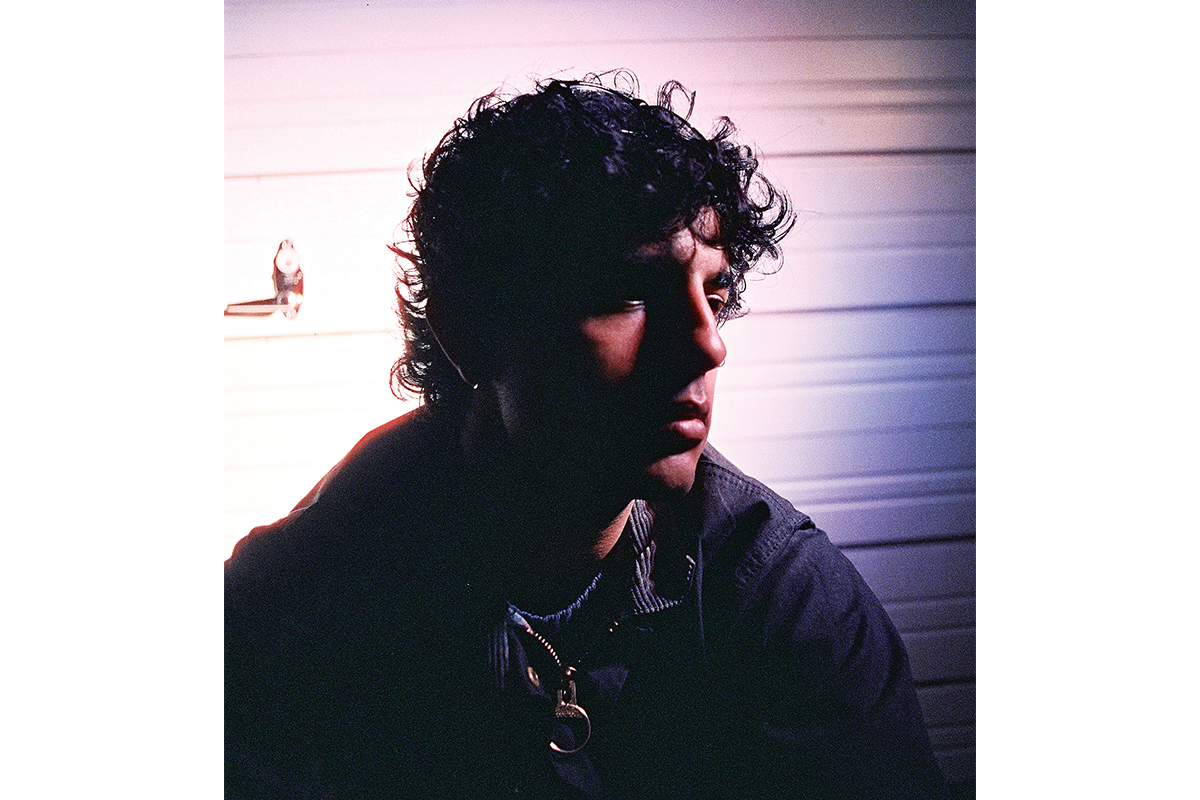
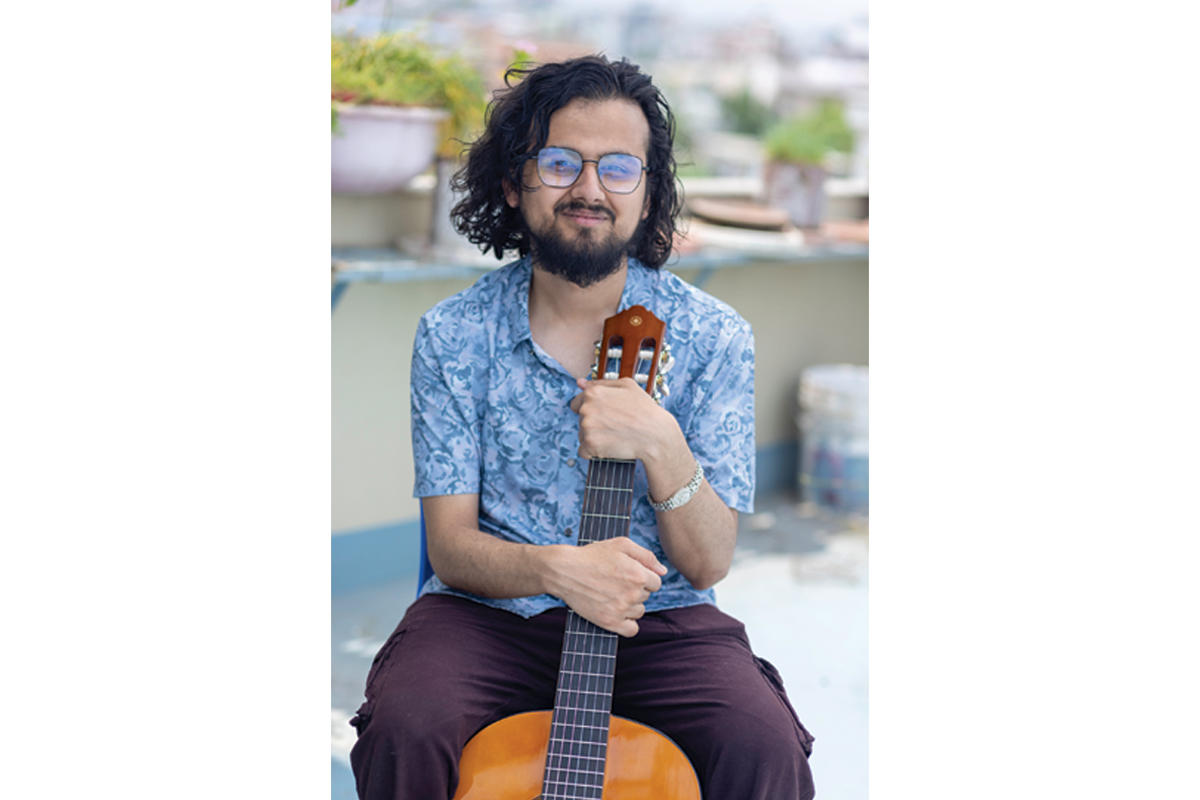
In the restless rhythm of Kathmandu, where traffic hums like an endless chorus and people move through their days in a constant race against time, singer Ujjwal Sagar voice asks: “Sunana, Timi Khusi Ta Chhau Ni?”
In an age shaped by algorithms, endless scrolling, and the pressure to keep moving, this line comes like a gentle interruption: a moment of reflection in a city that rarely pauses. While Kathmandu rushes ahead in a blur of noise, deadlines and neon lights, Ujjwal’s music arrives softly, offering something increasingly rare: stillness.
His voice does not compete with the chaos around it. Instead, it cuts through with quiet honesty, asking the kind of question many people have stopped asking themselves.
“We are slowly forgetting to check in on ourselves. If we asked people today what they had for breakfast, they wouldn’t remember by lunch. Yet we are running after our dreams without knowing what’s going on within ourselves. I wrote this song as a gentle reminder,” Ujjwal says.
A sense of introspection has become a defining characteristic of his music. Long before he emerged as an independent artist, Ujjwal’s relationship with music was rooted in discipline and devotion. His journey into classical music began during his early school years, when a childhood curiosity gradually evolved into a lifelong commitment.
After Grade 6, he moved to Allahabad (now Prayagraj), India, where he enrolled in the prestigious Sangeet Prabhakar program at the historic Prayag Sangeet Samiti. Immersed in the world of ragas, rhythm and classical traditions, he spent years developing the foundation that would later shape his artistic identity.
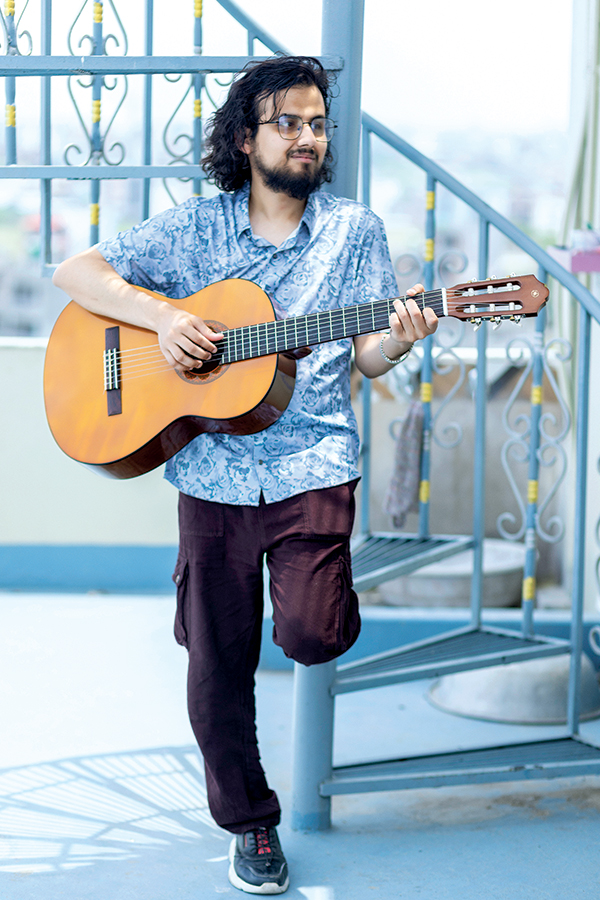
By the time he completed Grade 12 in Jhapa, he had also earned the six-year Sangeet Prabhakar certification, one of the most respected qualifications in Indian classical music and dance.
“I began learning music during my school days, gradually picking up instruments like the harmonium, guitar, tabla and others. After Grade 6, I went to Allahabad for further studies where I completed the Sangeet Prabhakar in classical music,” Ujjwal shares. “Later, I returned to Nepal and completed my Bachelor’s degree at Ratna Rajya Campus, majoring in Music and Nepali Literature.”
For Ujjwal, music is a way of understanding life. His songs travel through the emotional landscapes that define the human experience: love and longing, spirituality and philosophy, joy and grief, silence and emptiness.
Listening to his music often feels less like attending a performance and more like being invited into an intimate conversation.
In Sannata, one of his most reflective compositions, he sings:
“Jamchha Paani, bagdain, ra ta baraf banchha
Dukhchha mutu, dekhinna, ra ta haraf banchha
Suna yo chupchap dil le banchha
Yo sannata timilai sunaune man chha”
Melancholy and contemplation are woven into the lyrics of Sannata which explores loneliness, unspoken emotions, and the longing to express feelings that often remain trapped beneath every day silence.
Ujjwal’s music gives language to emotions many struggle to articulate: the sadness hidden behind laughter, the exhaustion concealed beneath ambition, and the quiet ache of existing in a world that rarely slows down long enough to listen.
“After all, we are human beings. We go through different stages of life: sometimes happy, sometimes sad, sometimes stuck inbetween,” he says.
His songs reflect this understanding of emotional complexity, drawing not only from personal experience but also from his broader outlook on life. Beyond music, Ujjwal describes himself as someone deeply interested in spirituality and literature.
“Most of the time, after doing music, I read,” he says. “I am spiritual.”
His perspective shapes both his art and his approach to life. Unlike many artists navigating the pressures of visibility and expectations, Ujjwal appears remarkably unburdened by the need to chase success on anyone else’s terms. “I am doing all of the things that I love, and I am doing them all on vacation mode,” he says with a smile.
Perhaps that is what makes his music so comforting. There is no sense of performance in his honesty. Instead, there is a rare authenticity that feels increasingly valuable in an era dominated by trends, algorithms and viral moments.
Over the past six years, Ujjwal has released 23 Indie songs through his YouTube channel, steadily building a body of work that reflects both artistic curiosity and cultural rootedness. He is particularly optimistic about the future of Nepal’s independent music scene and the growing interest among artists in incorporating traditional instruments into contemporary soundscapes.
“Lately, the growing Indie music scene has been so beautiful to experience in Nepal. And it’s going to become even more beautiful. Many of today’s Indie artists are exploring our own instruments, like the madal, flute, and others. In the next few years, all of these instruments will be trending,” he explains.
That spirit of experimentation is evident in his latest release, Madhur Jhankar, which he describes as Nepal’s first electronica-classical composition. Blending the melodic richness of Raag Khamaj with contemporary electronic production, the song creates a bridge between tradition and modernity.
In the song, Ujjwal sings:
“Madhur Jhankar Timro Prem Ko Paae,
Paae Jhankar Paae
Sab thok bhuli sab thok chhodi
Timi mai ramae, timi mai ramae
Ramae timi mai
Madhur Jhankar Timro Prem Ko Paae”
The lyrics express devotion and surrender, of being immersed in another person.
On a parting note, Ujjwal sings:
नगर बन्द मनको दैलो उघारी मा आऊँला
जेजे छन् हामी बीचका खटपट मिलेर मिलाउला
The lines embody the essence of his music: openness, reconciliation and connection. Ujjwal’s voice reminds us to listen, to reflect, and, above all, to ask ourselves the question that inspired it all: “Sunana, Timi Khusi Ta
Chhau Ni”
Text: Sushmita Baniya
Photos: Sanjay Maharjan