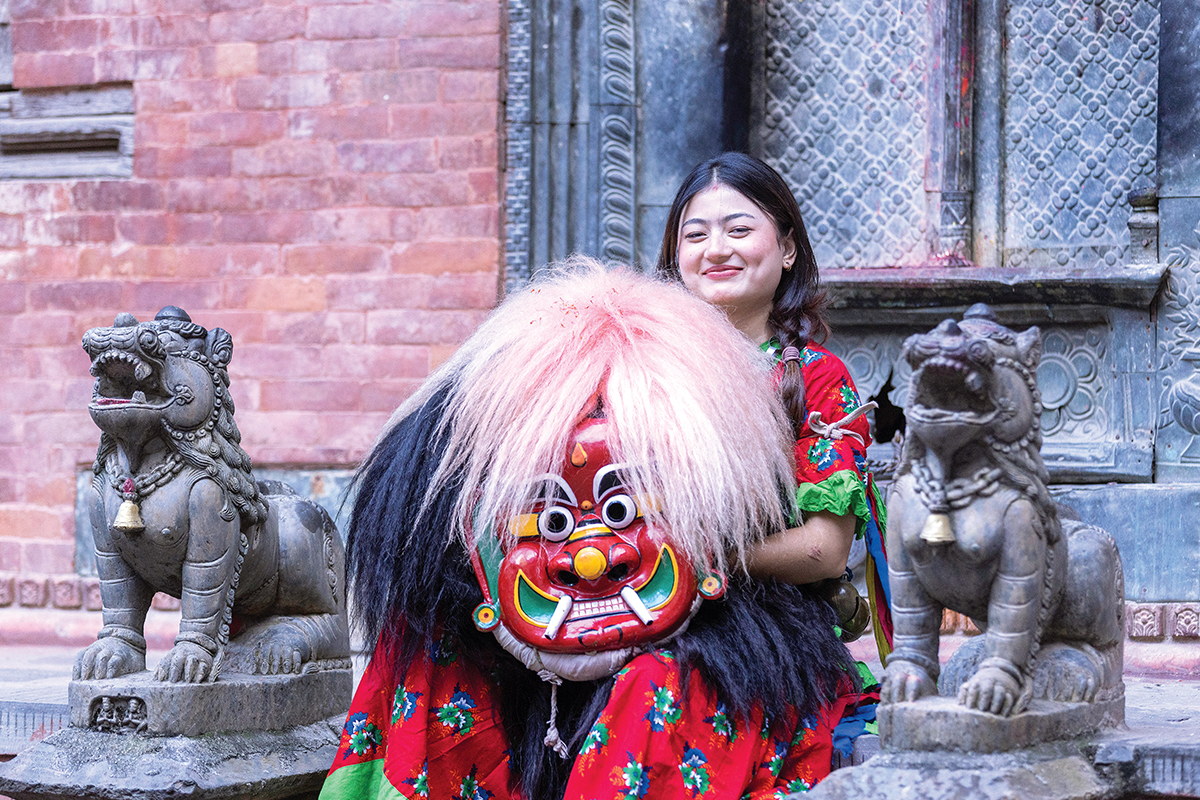
For Suprina Pradhan, stepping into the formidable presence of the Lady Lakhey is more than performance. It is an act of belonging, one that honours heritage while quietly challenging who gets to carry it forward.
There is something transformative about putting on a mask. For Suprina Pradhan, that transformation is physical, emotional and deeply personal.
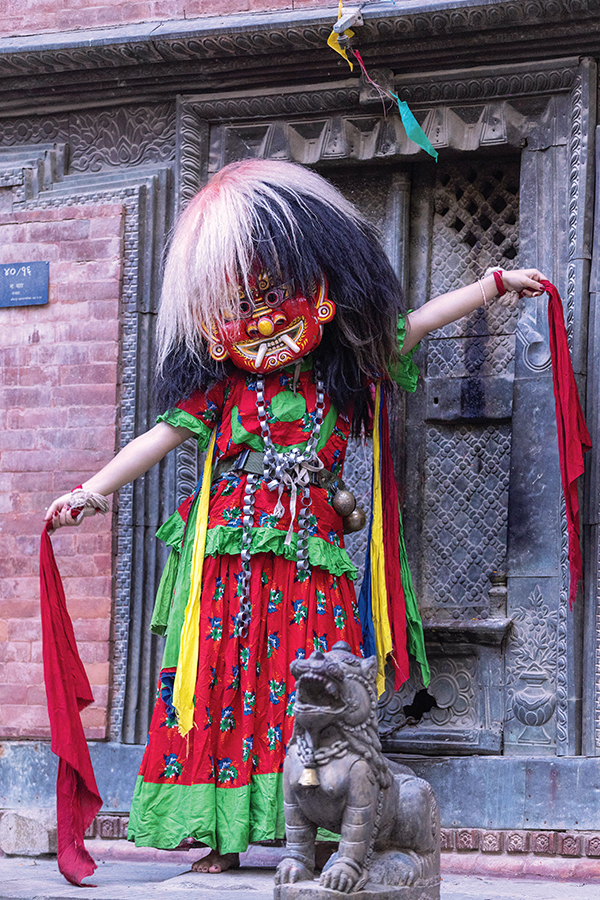
Behind the fierce expression of the Lakhey, beneath the elaborate costume and the commanding movements, is a woman who grew up surrounded by the sounds and rituals of tradition. Originally from Dharan and now living in the Kathmandu Valley, Suprina performs as Lasin, or Lady Lakhey, a role that places her within a cultural tradition long dominated by men. It is a tradition she has known almost all her life.
Growing up in Dharan, festivals, music, dance and community celebrations were woven into the rhythms of Suprina’s childhood. Among them, Lakhey held a particular fascination. The striking mask, the music, the energy of the movement and the powerful symbolism of the character captured her imagination early on.
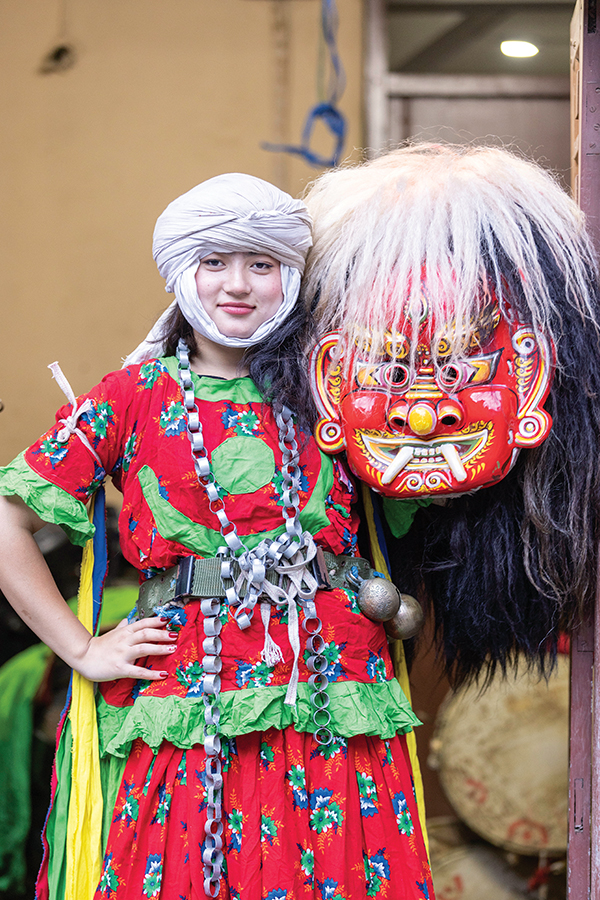
Years later, fascination would become participation. For the past 15 years, the Dharan Purbeli Lakhey, Kathmandu initiative has been keeping that cultural connection alive in the capital. Led by members of the Dharan community living in the Kathmandu Valley, it began with a simple but powerful desire: to preserve the identity, traditions and heritage of home, even while living away from it.
Suprina is part of the generation carrying that legacy forward. But in stepping into the role of Lady Lakhey, she is also subtly reshaping it.
“Being a woman in a role traditionally associated with men would not always be easy,” she reflects.
There were questions. Could a woman summon the physical strength the performance demands? Could she sustain its energy and intensity? Could she inhabit a character audiences were accustomed to seeing performed by men?
Suprina chose not to let those questions define her. Nor does she frame her journey as a contest between women and men. What interests her is something more nuanced: the possibility of making room within tradition without diminishing the tradition itself. “For me, being Lady Lakhey is not about competing with male performers; it is about representing our culture while creating space for women within it,” she says.
Her decision to take on the role came from equal parts curiosity and belonging. She was drawn to the sheer presence of the Lakhey – its strength, symbolism and theatrical power – but she also found herself questioning why certain cultural roles should remain the preserve of men.
What began as performance gradually became something more profound.
Each time Suprina puts on the mask and costume, she feels the weight of what came before her: generations of people who practised, protected and passed down a tradition so that it could continue to be experienced today.
“It reminds me that I am not simply performing a dance or wearing a costume; I am carrying a part of our cultural heritage forward,” she says.
That distinction matters to her. Lakhey is not simply spectacle – the dramatic mask, costume, music and movement that an audience sees. Beneath it lies a deeper story of history, identity, community and collective memory. The character embodies strength and protection, but also cultural pride. For Suprina, performing it is both an artistic expression and a responsibility.
It has also led her to consider what preservation really means. Tradition, in her view, does not survive by remaining untouched. It survives when people understand it, feel connected to it and choose to keep practising it. Her own presence within Lakhey is part of that conversation.
Suprina believes cultural traditions deserve respect and that their meanings must be understood before they are reinterpreted. But respect, she suggests, need not mean restricting participation according to assumptions inherited from another time. “Breaking stereotypes takes patience, dedication and courage,” she says.
There is a quiet confidence in that statement, much like Suprina’s approach to the role itself. She is not interested in discarding convention for the sake of novelty. Instead, she sees cultural evolution as something more organic: a tradition remaining recognisably itself while making room for the people who will inherit it.
Increasingly, those people include women. Suprina has watched women step into cultural spaces and roles once associated almost exclusively with men. Their presence, she believes, does more than broaden participation. It introduces different perspectives while ensuring that traditions continue to have meaning for another generation.
And perhaps this is where the image of Suprina behind the Lakhey mask becomes most compelling. The mask is ancient in its symbolism; the woman wearing it represents possibility. Neither has to cancel out the other.
Culture, after all, does not live only in archives or memory. It lives through bodies, movement, music and ritual. It survives because someone chooses to learn it, practise it and pass it on.
Suprina hopes that seeing a woman inhabit the formidable presence of the Lady Lakhey might allow other women and girls to imagine themselves differently within their own cultural traditions, not merely watching from the edges, but becoming part of the story.
“Preserving culture is a shared responsibility, and every generation has a role to play in keeping it alive,” she says.
And when Suprina puts on the mask, she is doing precisely that: carrying something old forward, while making just enough room for something new.
Text: Bijaya Shiwakoti
Photos: Ripesh Maharjan