When photographer Aayush Shrestha and his team encountered Nepali sculptures at the Victoria and Albert Museum and the British Museum, the sense of familiarity was immediate. He recognised the forms, gestures, ornaments and stories. Yet seeing these sacred figures displayed behind glass was deeply unsettling.
“These objects were never created to be separated from people,” Aayush says. “They were meant to be worshipped, touched and experienced as part of everyday life. Seeing them inside a museum made me question how they travelled so far from home and what happens to their meaning when they are displaced.”
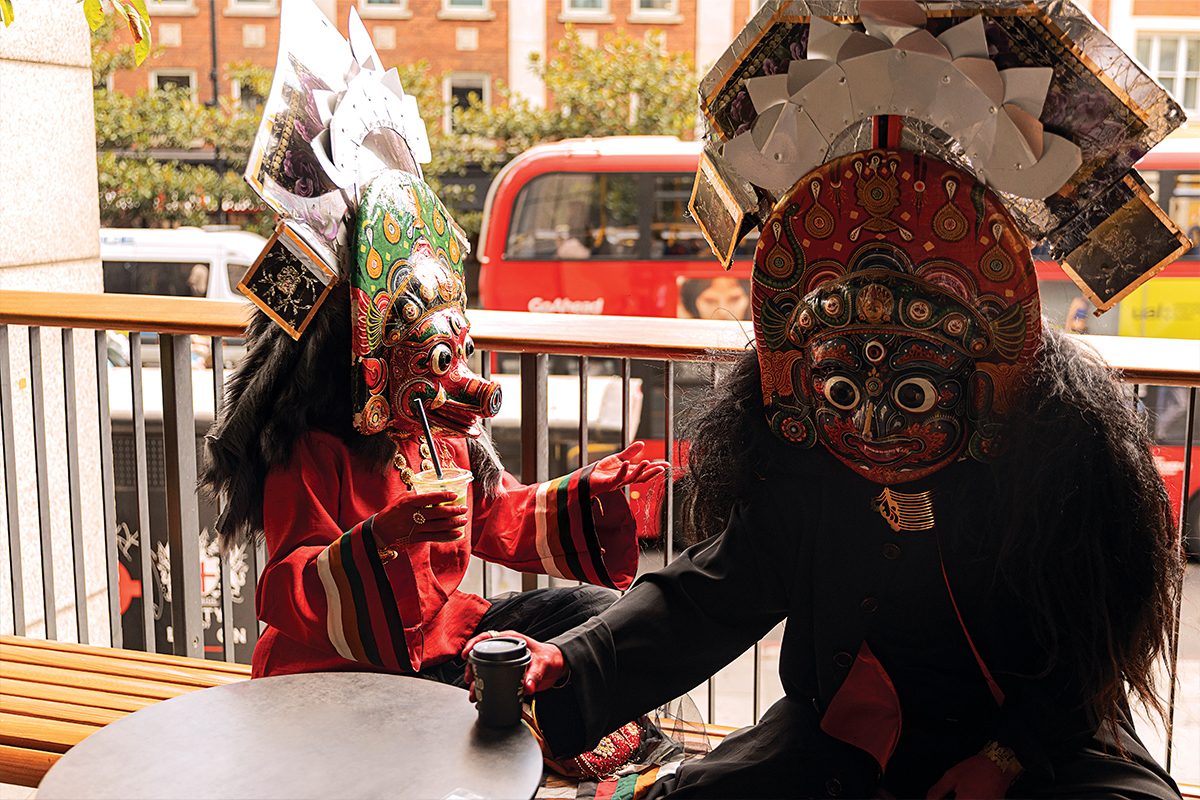
These questions became the foundation for The Unwilling Travellers, a visual photobook that imagines what might have happened if the gods themselves had travelled alongside the sacred sculptures taken from Nepal.
For centuries, the Kathmandu Valley has been a centre of artistic and spiritual expression. Newar artisans created extraordinary representations of Shiva, Vishnu, Buddha, Avalokitesvara and Tara, among countless others. Crafted in stone, metal, wood and paint, these figures were not simply works of art. They were embodiments of faith.
“When we look at these sculptures today, we often describe them through their craftsmanship, age or historical importance,” Aayush explains. “But for the communities that created and worshipped them, they were living presences. They were gods.”
Nepal’s opening to the outside world after the 1950s brought increased international interest in its cultural heritage. Kathmandu became part of the Hippie Trail, attracting travellers, researchers and collectors. Alongside cultural exchange came the trafficking of sacred objects, with sculptures disappearing from temples and shrines and eventually finding their way into international collections.
“The loss is not only about an object disappearing,” says Aayush. “It is about a relationship being interrupted. When a sculpture leaves a temple, something changes. The physical object remains, but its connection to the community is broken.”
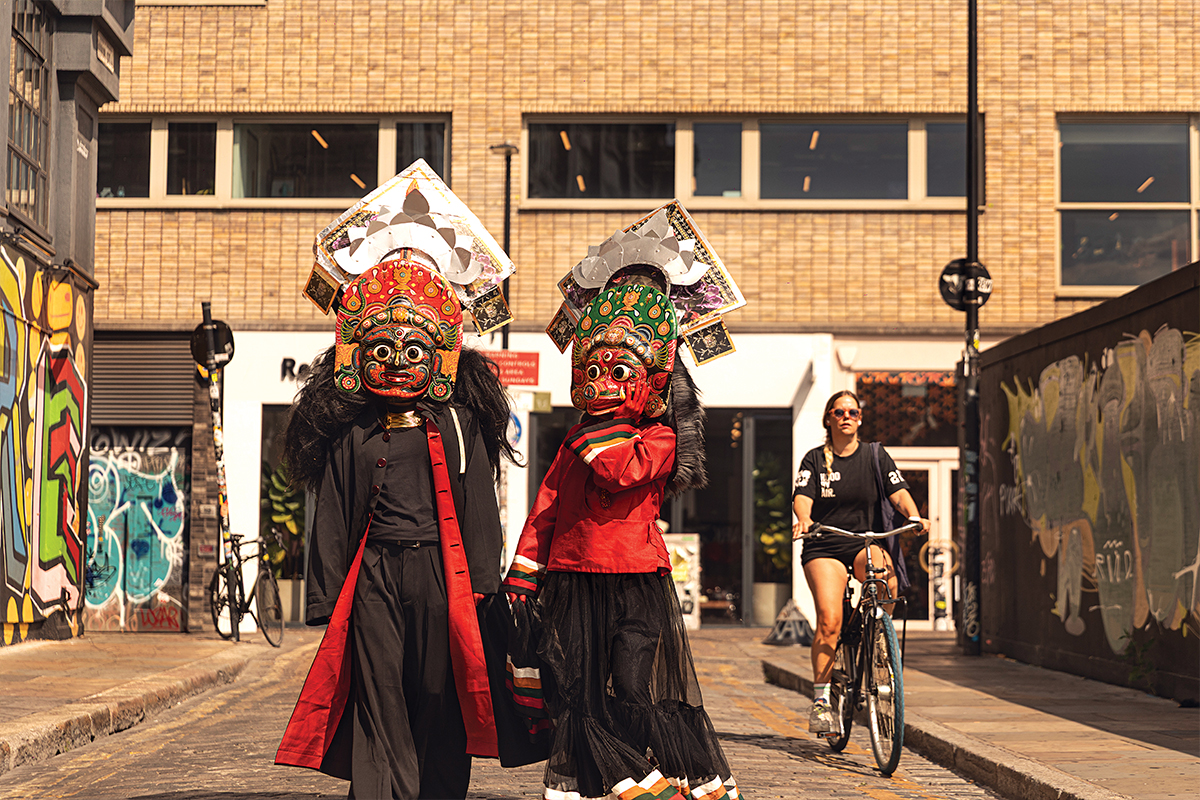
His project does not attempt to recreate the missing sculptures. Instead, Aayush asks a more imaginative question: what if the gods had gone with them?
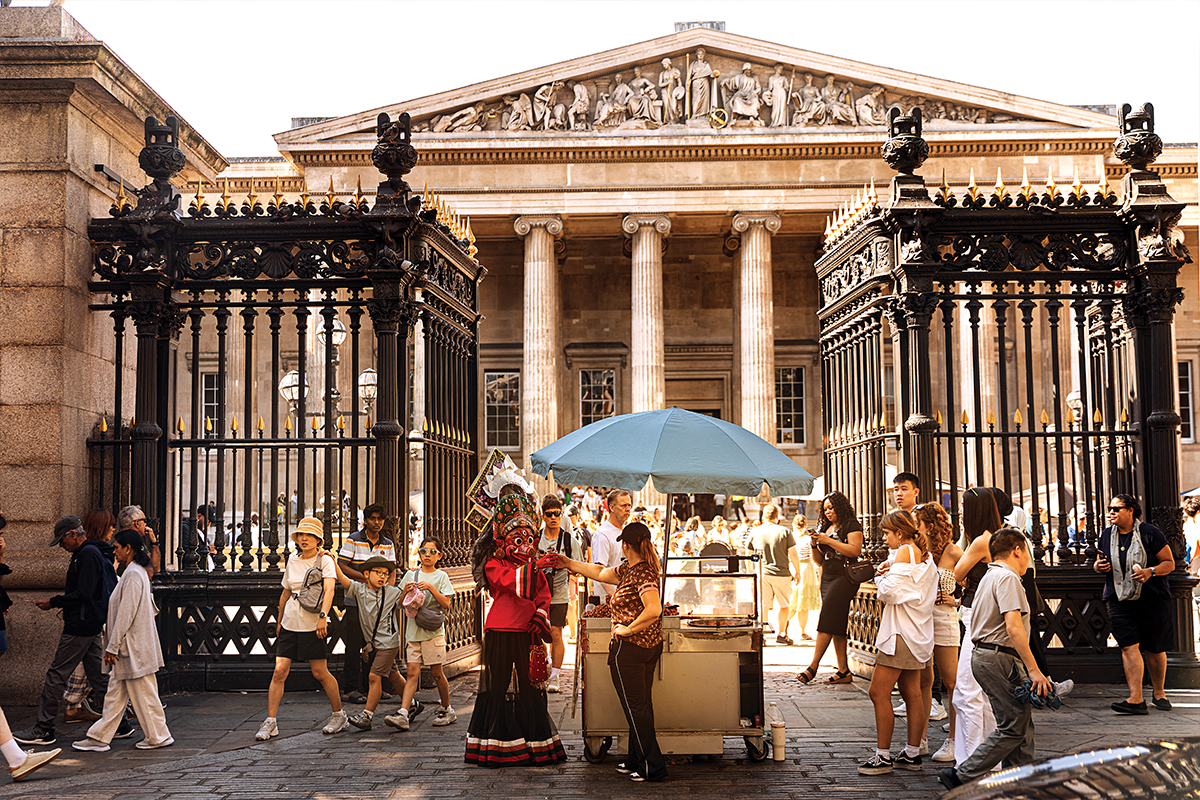
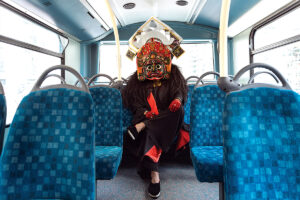
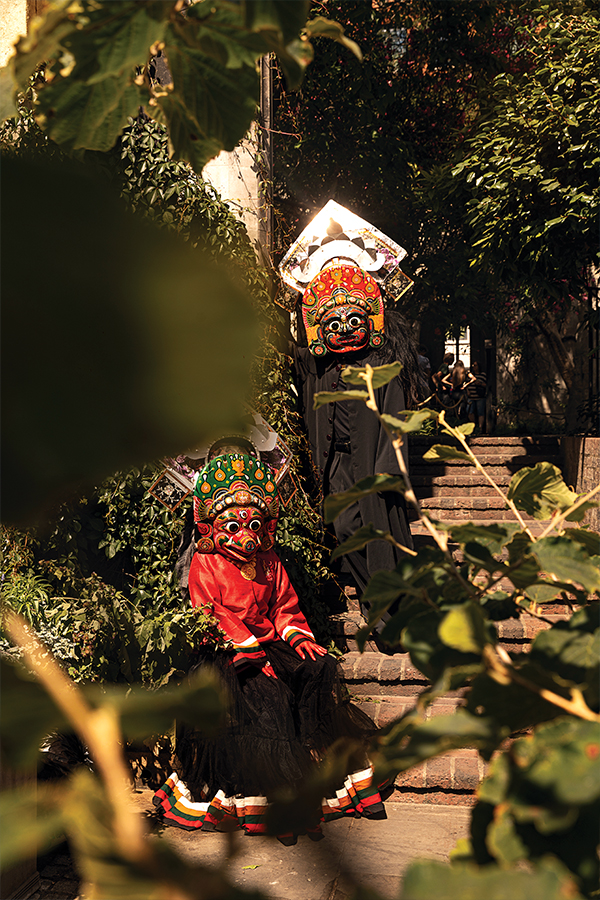
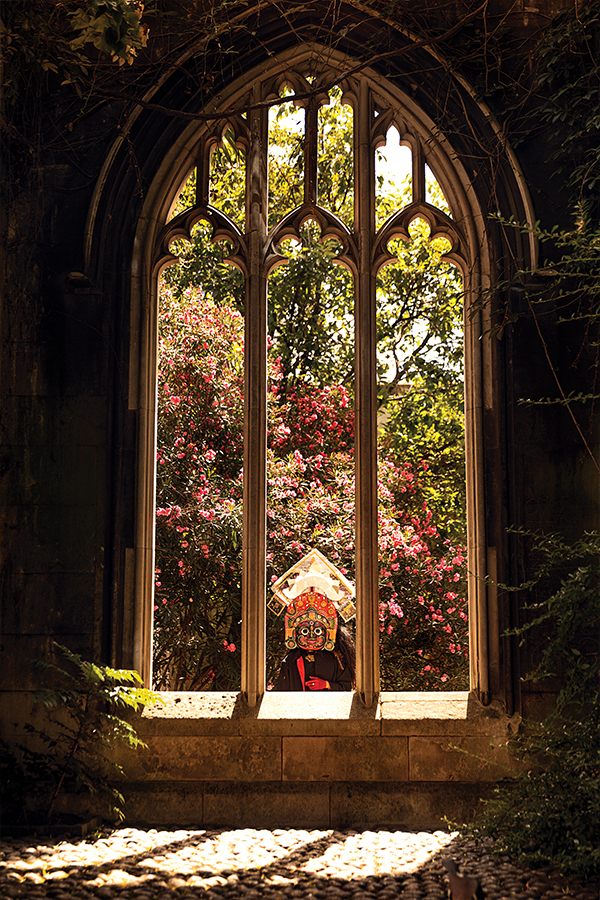
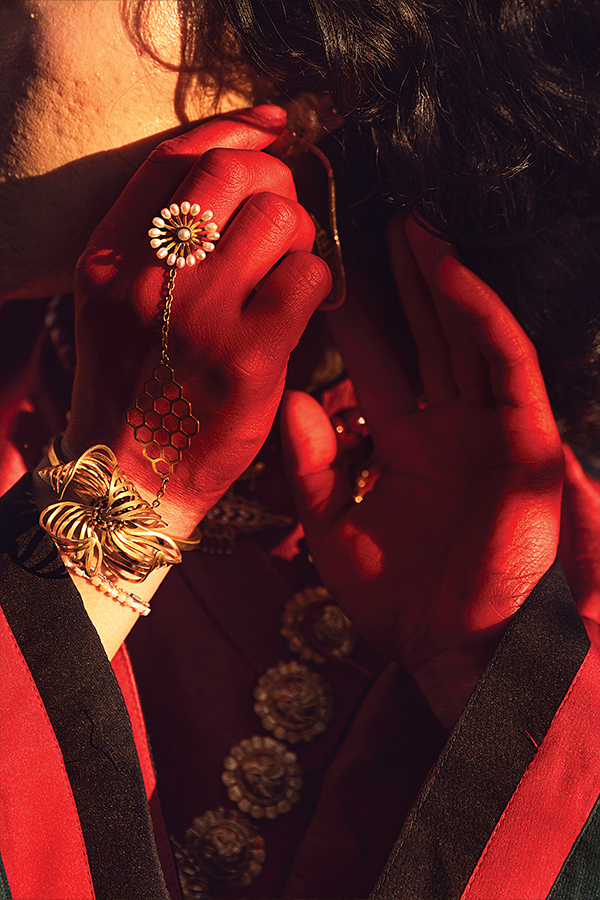
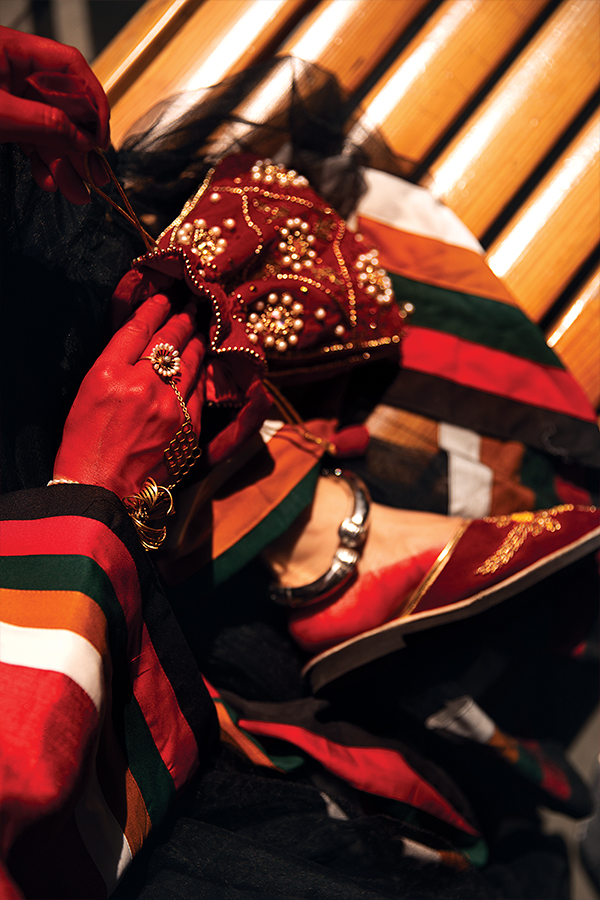
In his photographs, masked deities move through contemporary Western life. They drink coffee, ride buses and bicycles, walk through city streets and spend time in parks. Their traditional masks and handcrafted jewellery retain a connection to Nepal, while contemporary clothing and unfamiliar surroundings place them firmly in another world.
“I wanted to imagine them as unwilling travellers,” he says. “They did not choose to leave. They were taken, and now they have to negotiate a life somewhere else.”
The contrast is deliberately striking. The deity is at once familiar and displaced, sacred and ordinary, connected to one culture while physically existing within another.
The masks themselves are central to the project. In Nepali ritual traditions, masks are not merely costumes. They can serve as vessels through which divine beings are believed to manifest. They are crafted with care, ritually blessed and activated through performance.
“Putting the mask in an everyday setting changes how we look at it,” Aayush says. “You begin to wonder whether the sacredness belongs to the object itself, to the ritual, to the place, or to the people who believe in it.”
Ultimately, The Unwilling Travellers is less about objects that have been lost than about identities that refuse to disappear.
“These gods may be far from Nepal, but they still carry where they came from,” Aayush reflects. “The project is about displacement, but it is also about memory. Even when something is removed from its home, its story can continue.”
And perhaps that is where the gods are now: somewhere between the museum and the temple, between memory and modernity, still travelling, still carrying Nepal with them.
Models
Bindiya Chongbang
Dhuksang Lama
Cinematographer
Bikal Thapa Magar
Photographer
Aayush Shrestha
Assistant Photographer
Rupesh Maharjan
Photo Documentation
Pranuj Shrestha
Designer
Manish Rai
Jewellery
AAMO By Aayusha Shrestha
Location
House of Kush Kush
Palungo Nepali Restaurant
President of Pasa Pucha Guthi UK
Sushil Prajapati
Text: Ankita Jain