

One left Nepal in pursuit of bigger dreams. The other arrived as a traveller and unexpectedly found a place to call home. At first glance, Arick Bir Bikram Thapa and Elise Cunin could not have more different journeys. Yet, their stories converge in a profound way, revealing that home is not always where you are born, nor solely where your career takes you. Sometimes, it is the place that quietly transforms your identity and leaves an indelible mark on your soul.
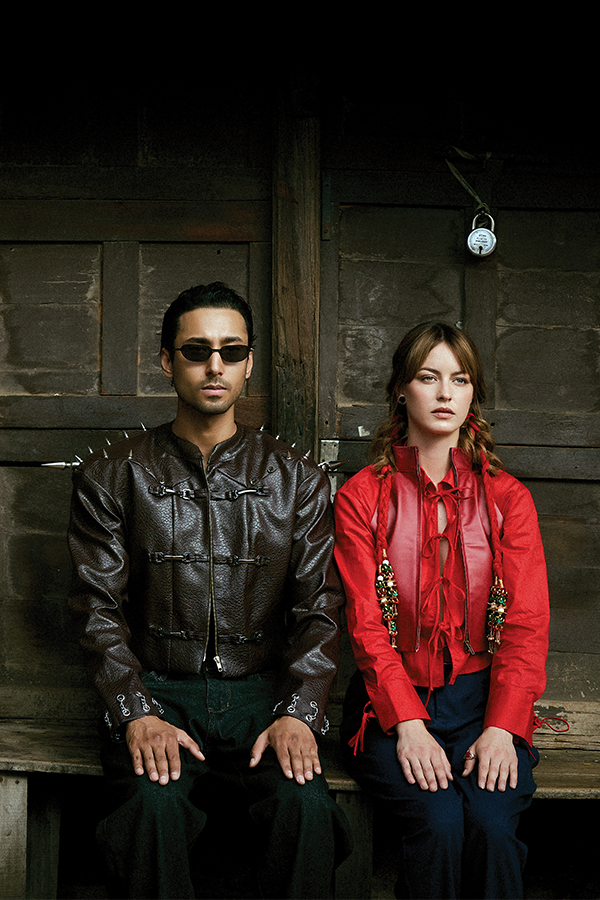
As Nepal watches many of its young people venture abroad in search of opportunity while simultaneously drawing people from around the world who choose to stay, Arick and Elise embody two sides of the same narrative. One sought the world beyond Nepal’s borders; the other discovered a world within them. Together, they offer a compelling reflection on ambition, identity, belonging and the quiet magnetism of a country that has an extraordinary ability to change those who experience it.
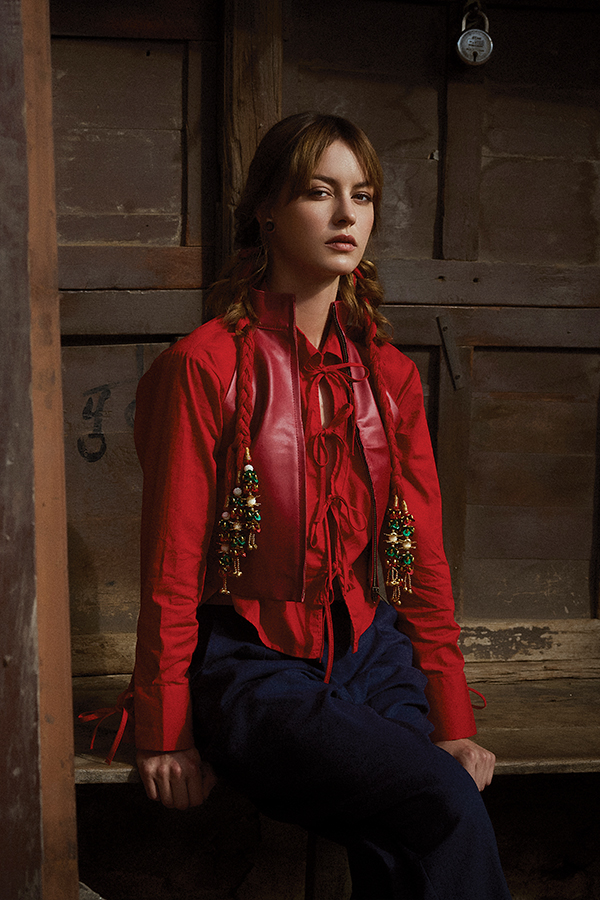
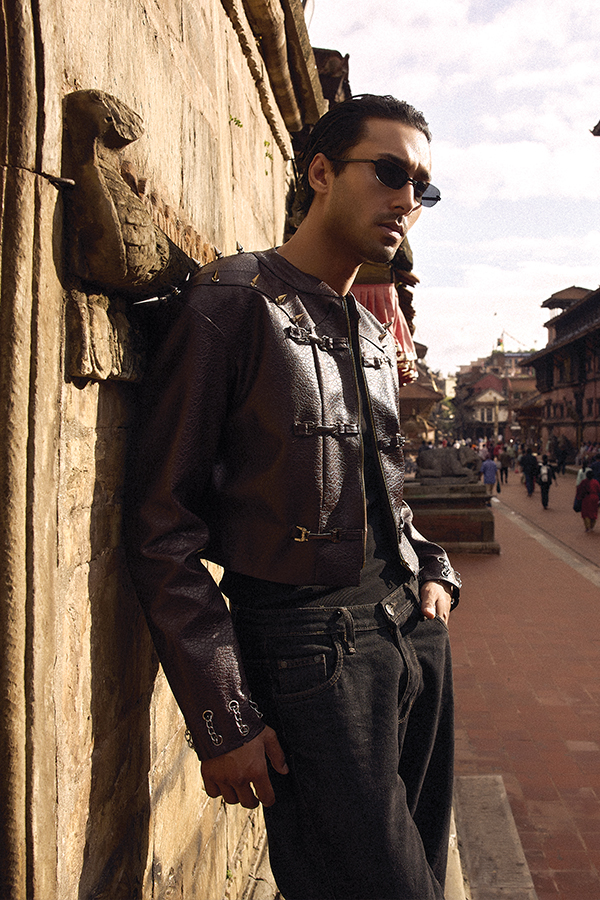
Elise Cunin
Some places leave you with photographs. Others leave you with a new version of yourself. For French model Elise Cunin, Nepal became both.
There is a certain kind of traveller who arrives with an itinerary and leaves with souvenirs. Then there is this traveller who arrives with a return ticket, only to discover that somewhere between unfamiliar streets, shared meals and unexpected conversations, the destination quietly becomes home. French model and graphic designer Elise Cunin belongs to the latter.
When she first landed in Nepal, she had no grand plan. It was simply another stop on a journey, another country waiting to be explored. One month was all she had intended to spend. Instead, that month stretched into six. She found work, rented her first apartment in Kathmandu and slowly began building a life that no guidebook could have predicted.
Today, the 27-year-old calls Kathmandu home, balancing modelling assignments with her graphic design business while embracing a rhythm of life that is unmistakably Nepali. Her story is deeply personal, yet strangely familiar. It mirrors the experiences of countless foreigners who arrived in Nepal searching for adventure but found something far more lasting: a sense of belonging.
“I love the culture,” she says simply. “I love the mess. I love the soul. The city is impossible to explain to someone who has never experienced it. It is chaotic yet comforting, ancient yet constantly evolving. Prayer flags flutter above tangled electrical wires. Sacred temples stand beside busy cafés. The scent of incense competes with roadside momo stalls. Kathmandu rarely tries to impress. Instead, it quietly grows on you,” she adds.
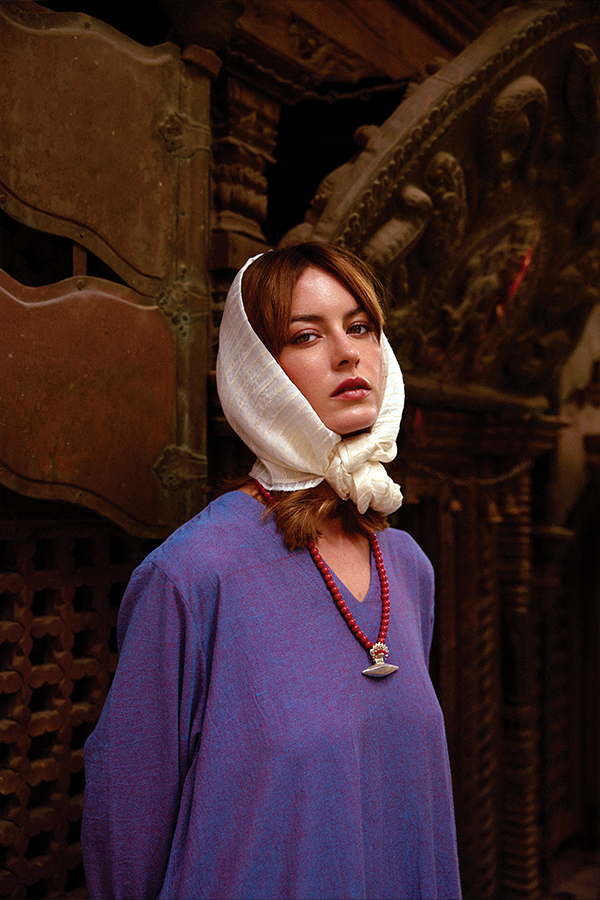
For Elise, that quiet pull was impossible to ignore. Unlike many Europeans who spend years planning trips across Asia, Nepal was her first journey outside Europe. “Travelling alone, armed with little more than curiosity and limited English, I stepped into an entirely unfamiliar world. I just wanted to travel,” she recalls.
During her first extended stay, Elise joined Alliance Française, working in communications while teaching classes and helping with cultural programmes. It was more than employment. It offered her a doorway into everyday Nepali life, introducing her to friendships, routines and a community that made the city feel less foreign with each passing week.
“I later returned to Nepal after falling in love with a Nepali guy who works in the hospitality industry. Together, we have spent time between Kathmandu and the mountains, where I am also involved in supporting his hotel business,” she shares. Alongside this, Elise continues to run her own graphic design company, specialising in branding and visual communication for tourism businesses, including hotels, restaurants and travel experiences.
It is a career that beautifully bridges her European education in tourism development with her creative instincts. “I wanted something more creative,” she says of the decision to become a designer. That creative spirit also led her into modelling.
Unlike many models who grow up chasing fashion campaigns, Elise stumbled into the industry almost accidentally. “A photographer in France asked if I would be interested in doing a shoot. One session turned into another, and before long, there were many I had signed for,” she shares.
Her move to Nepal introduced an entirely new visual landscape. “Here, fashion photography unfolds against centuries old temples, mountain skylines and streets bursting with colour. The country offers a canvas unlike anywhere else. Here, modelling is less about glamour than storytelling,” she smiles.

It reflects something much larger happening across Nepal’s growing creative industries. Kathmandu has quietly become a meeting point for artists, photographers, designers, filmmakers and entrepreneurs from around the world. Many arrive intending to stay briefly before discovering opportunities they never anticipated. Some launch businesses. Others collaborate with local creatives. Many simply fall in love with the slower pace of life, the warmth of community and the freedom to build something meaningful.
Ask them why they stayed and the answers are always emotional. For Elise, the answer lives in the city’s contradictions. “I loves the colours, the smells and I love the spirituality which I am discovering,” she says.
She does not claim to know everything about the country. She continues to learn and explore. “From the Annapurna region to Manang, I have spent time trekking through landscapes that have captivated travellers for generations. I am equally fascinated by the ordinary moments: living with a Nepali family, sharing dal bhat around the dining table, navigating neighbourhood life and building friendships that extend beyond tourism,” she explains.
Food, unsurprisingly, became another bridge. “Everything,” she laughs when asked about Nepali cuisine. Having lived with local families, dal bhat became less of a national dish and more of a daily ritual, one that symbolises hospitality in its simplest form. It is often these seemingly ordinary experiences that change visitors the most.
Of course, loving Nepal does not mean ignoring its challenges. Elise speaks candidly about the city’s air pollution, describing it as one of Kathmandu’s biggest problems. She also wishes the visa process were easier for foreigners hoping to contribute professionally and creatively within the country.
“You know, these concerns are echoed by many members of Nepal’s international community. Yet remarkably, they are rarely enough to drive people away. Perhaps that says more about the country’s emotional pull than any tourism campaign ever could,” she says.
For decades, Nepal has attracted mountaineers, backpackers and spiritual seekers. Increasingly, however, it is also attracting entrepreneurs, digital creatives, remote workers and artists who find themselves unexpectedly rooted here. Elise’s story reflects that quiet shift.
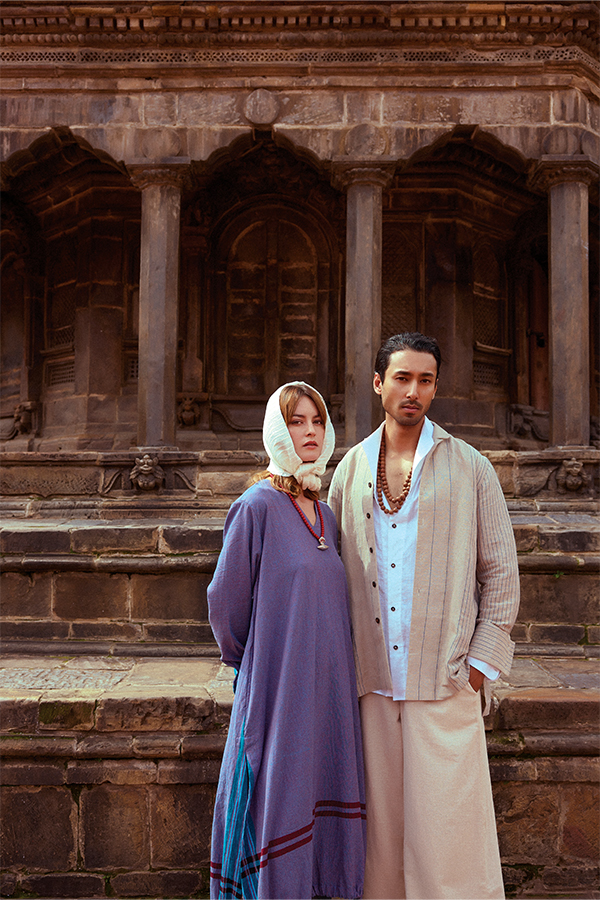
For someone working within visual industries, Elise could easily choose almost any global city as her base.
Paris, Milan or London might appear more obvious choices. Yet she has chosen Kathmandu. “Success is no longer measured solely by geography. Sometimes the right place is simply the one that makes you feel most alive,” she adds.
As Nepal’s fashion industry continues to evolve, international models like Elise also represent an exciting exchange of perspectives. They bring global experience while embracing local aesthetics, creating collaborations that enrich both communities.
When asked what does home mean to you, Elise puts it beautifully, “Home is sometimes less about where you were born and more about where your life naturally unfolds. For me, that unfolding continues in the streets of Kathmandu, among the cafés, creative studios, mountain escapes and familiar faces that now shape my everyday life.”
She still does not know exactly how long she will stay. “If I can stay, I will,” she says.
Arick Bir Bikram Thapa
For generations of young Nepalis, boarding a flight abroad has been seen as the ultimate milestone. But for model Arick Bir Bikram Thapa, leaving Nepal was never about leaving home behind. It was about returning one day with something meaningful to offer.
There is a familiar photograph in almost every Nepali family album today. A young son or daughter stands at Tribhuvan International Airport surrounded by tearful parents, marigold garlands around their neck, holding a passport that symbolises possibility. The destination may be London, Sydney, Toronto or New York, but the story is often the same. Going abroad has become more than migration. It has become a measure of success.
For many young Nepalis, it is seen as the biggest achievement of all. Arick Bir Bikram Thapa understands that aspiration better than most. Today, he is building a modelling career in London, balancing fashion with business ventures and a growing interest in technology. From the outside, his journey resembles the dream so many chase. Yet speaking to him reveals a perspective that is refreshingly different.
Success, he insists, is not defined by geography. “The growing aspiration to move abroad reflects the realities many young Nepalis face today. Limited career opportunities, low wages and uncertainty about the future have led many to view overseas education and employment as the most promising path to growth. While this perspective is understandable, success should not be defined solely by where one lives.”
It is a thought that lingers. Because while thousands leave Nepal each year searching for opportunity, Arick’s story is less about escaping and more about evolving.
Modelling was never part of a carefully designed life plan. Arick found fashion almost by accident. “Modelling wasn’t a childhood dream of mine. It was something I gradually grew into.” His earliest memories are not of runways but of watching his uncles, who were involved in Nepal’s fashion scene. Their confidence, effortless style and presence fascinated him long before he understood the industry itself. “They showed me that fashion was more than just clothes. It was a form of self-expression and identity.”
That quiet admiration slowly became curiosity, and curiosity became purpose. “Looking back, I don’t think I found modelling as much as modelling found me.” This reflects the way many careers unfold, not through rigid planning but through unexpected encounters that slowly reveal themselves as destiny.
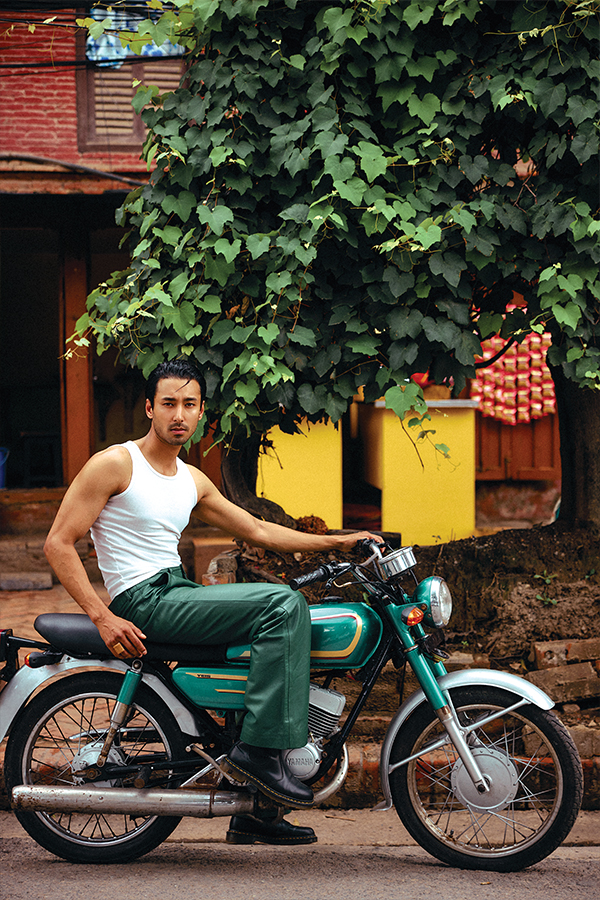
Today, Arick walks into photoshoots and fashion campaigns with the same discipline that first drew him to the profession. Yet he is quick to dismantle the illusion that social media often creates. Behind polished editorials and carefully composed photographs lies a far less glamorous reality. “Social media often captures the highlights, the runways, photoshoots and glamorous moments.
But my everyday life in the UK is much more grounded. It’s filled with hard work, early mornings, staying disciplined, balancing different responsibilities and constantly investing in myself.
Behind every photo is a lot of preparation, patience and perseverance.”
London has become both his classroom and his testing ground. Living alone in another country has taught him independence in ways he never expected. “Being away from home pushed me out of my comfort zone and made me rely on myself, adapt to new cultures and embrace uncertainty. It also gave me a deeper appreciation for where I come from. The farther I am from Nepal, the more proudly I carry my roots.”
Perhaps that is one of migration’s greatest paradoxes. Distance often deepens identity. “The farther people travel from home, the more fiercely they protect the traditions they once took for granted. Dashain and Tihar become sacred dates in the calendar. Nepali food tastes richer after months abroad. Familiar songs suddenly carry unexpected emotion,” he says.
Arick admits that his demanding schedule means he cannot always stay closely connected with the Nepali community in Britain. Yet festivals remain non-negotiable. “Whenever I miss home, especially during festivals like Dashain and Tihar, I make an effort to join the programmes organised by the Nepali community. Those moments allow me to reconnect with my culture, spend time with my people and feel a sense of home, even while living abroad.”
Ask him what fashion means, and he quickly replies, “Fashion, to me, is a powerful form of self-expression.
It’s not just about what you wear. It’s about confidence, identity and the story you tell without saying a word. Coming from Nepal, fashion also gives me the opportunity to represent my roots on a global stage and show that talent has no boundaries.”
That desire to represent Nepal internationally appears repeatedly throughout his journey. And he looks forward to building an ecosystem for others. “If I had the opportunity, I would establish a professional modelling agency that creates a direct pathway between Nepali talent and the global fashion industry.”
“For me, this is not just about fashion. It is about building a foundation, changing perceptions and showing the world that Nepal has stories, talent and creativity that deserve a global platform.”
That sense of responsibility also shapes his ambitions outside modelling. Having completed his Master’s degree, Arick is exploring business opportunities, developing interests in the technology sector and even hopes to pursue a pilot’s licence. “I believe success is not about reaching one destination. It’s about having the courage to keep evolving.”
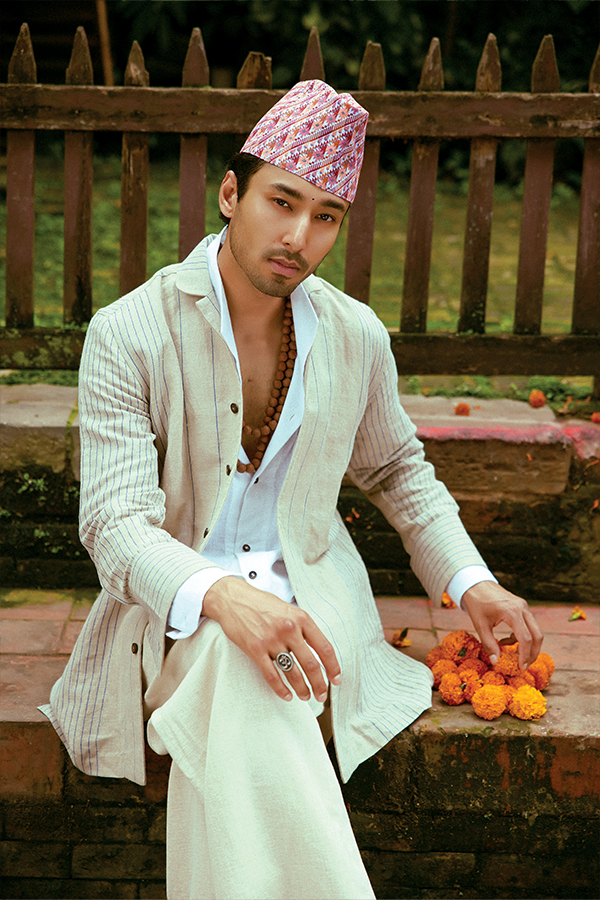
Even after years abroad, however, home remains his greatest source of strength. “Home is not just a place. It is my strongest pillar of support, my source of strength and my safest space. The values I carry, humility, respect, discipline and gratitude, come from the foundation my family has built for me.”
When asked about the greatest challenge of living overseas, his answer is immediate. “The hardest sacrifice has been missing the small moments, celebrations and the everyday presence of the people I love.”
And despite building a life in Britain, his future remains closely tied to Nepal. “Of course, I would love to return to Nepal permanently. Nepal will always be my home. Over the years, I have gained valuable knowledge and experience abroad, and my goal would be to bring that back to Nepal. I hope to create job opportunities, inspire young people and contribute to building an environment where innovation and skills can drive the country’s economic growth.”