Shivangini Rana
“If my work can touch a heart, awaken a forgotten memory, or offer even a brief moment of peace, then the painting has fulfilled its purpose.”
For Shivangini Rana, art is not about recreating what she sees, it is about expressing what she feels. Every canvas is deeply personal, reflecting a lived experience, a lesson learned, a wound transformed into strength, or a hope she continues to hold onto. Through colour, texture and movement, she invites viewers into an emotional journey that is uniquely her own.
Based in Kathmandu, Shivangini has carved a distinctive space for herself in Nepal’s contemporary abstract art scene. Interestingly, her creative path began far from the studio. A graduate of the prestigious Les Roches International School of Hotel Management in Switzerland, she built a successful career in Nepal’s hospitality industry before making the courageous leap into the world of art.
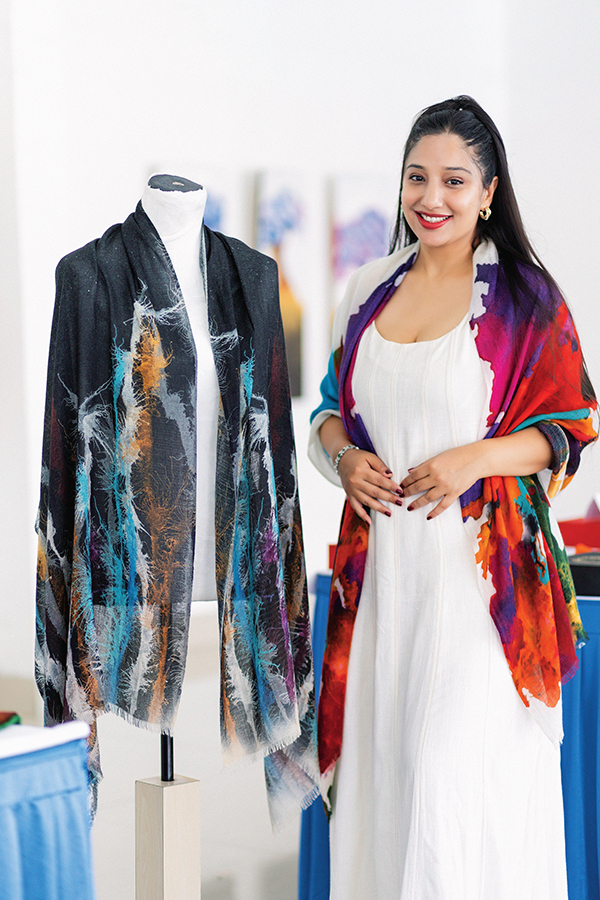
“Transitioning from hospitality to becoming a full-time artist was challenging,” she reflects. “People in Nepal were not very exposed to abstract art.” Yet she was able to turn a lifelong passion into a profession, proving that conviction can be as important as talent.
Her earliest artistic influence was her mother who introduced her to glass painting during childhood. What started as a shared hobby soon revealed unexpected possibilities when people began offering to buy her work. As interest grew internationally, Shivangini shifted her focus to canvas paintings, making it easier to ship her creations abroad. That decision marked the beginning of a new chapter.
The turning point came during the global lockdowns. Amid the stillness and isolation, Shivangini rediscovered painting with renewed purpose. Free from the distractions of everyday life, she immersed herself in translating emotions, memories and inner experiences onto canvas. In 2021, she held three consecutive solo exhibitions.
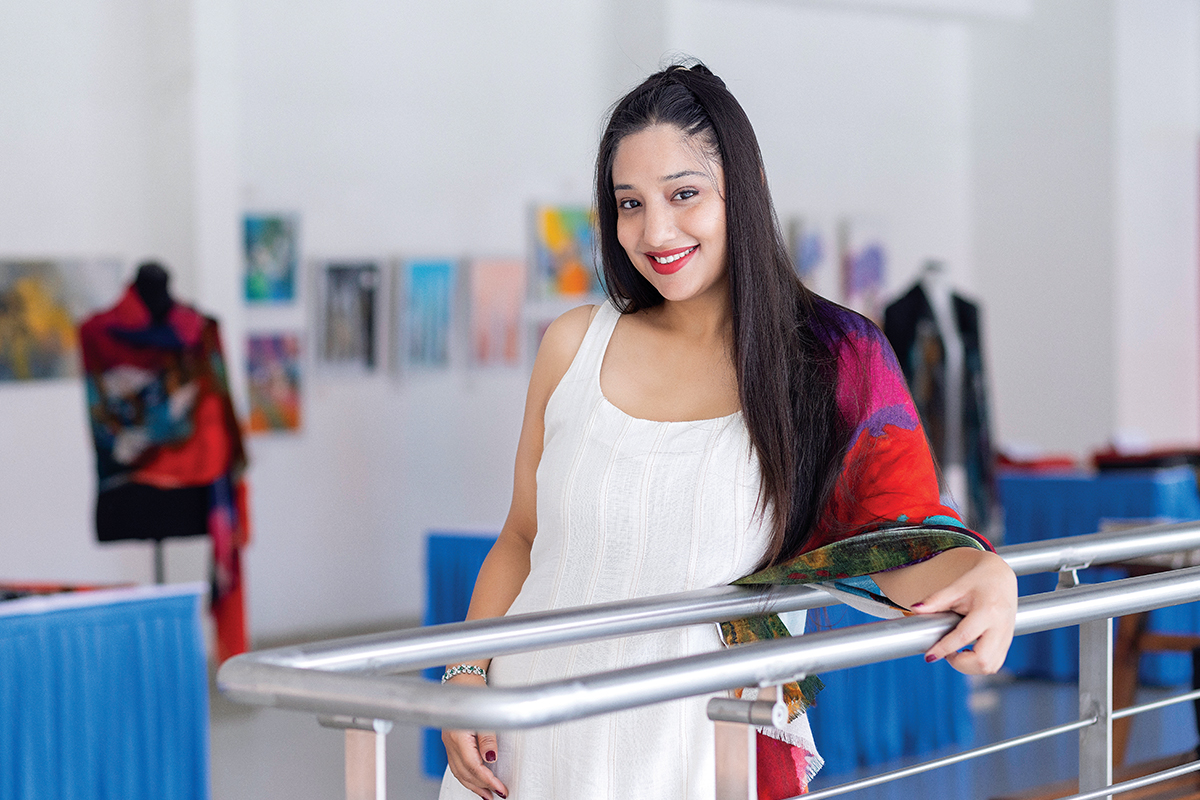
Today, her creative expression continues to evolve beyond traditional canvases. About five years ago, Shivangini began exploring the idea of wearable art using textiles handcrafted in Nepal. “I always wondered what it would be like to have original art on shawls authentically made in Nepal,” she says.
That idea finally took shape in December 2025 when she produced her first collection of hand-painted silk pashminas. “I made my first batch and, to my surprise, everything sold out. That gave me the confidence to continue,” she shares.
The response confirmed that people were drawn not only to the beauty of the pieces but also to the idea of wearing original art as a reflection of personal style and individuality. Demand has grown rapidly, inspiring Shivangini to transform the concept into a dedicated brand backed by extensive research, craftsmanship and thoughtful design.
For Shivangini, abstract art is still an evolving conversation in Nepal. “Around the world, abstract art is immensely valued. Nepal hasn’t reached that stage yet, but I hope people will begin to see its true worth,” she says.
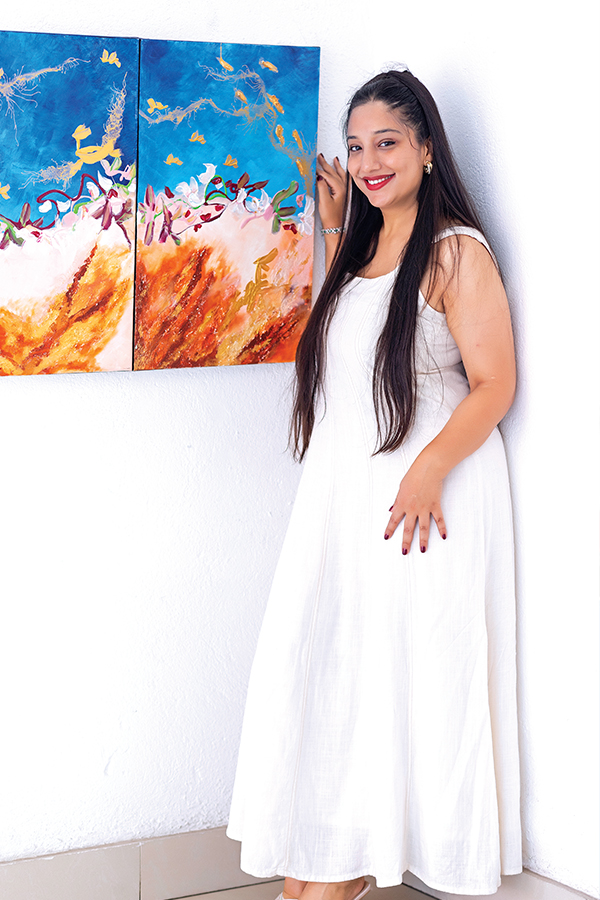
She believes abstract art offers viewers the freedom to interpret rather than simply observe. Like poetry, it evokes emotion without prescribing meaning, allowing each person to discover their own connection with a piece.
“My objective is to create artworks that help people pause, forget life’s ups and downs for a moment and simply feel,” she explains.
She also views art as far more than decoration. To her, every painting is an investment, one that carries emotional, cultural and lasting value, capable of being cherished and passed down through generations.
“If my work can touch a heart, awaken a forgotten memory, or offer even a brief moment of peace,” Shivangini says, “then the painting has fulfilled its purpose.”
Text: Bijaya Shiwakoti
Photos: Ripesh Maharjan