It had been raining every morning since the beginning of May. So, when I received an invitation to a program on a Sunday morning, I was a little skeptical about confirming my participation. But when I woke up that morning, it was a fine day, as if the sky, clouds and sun had decided together that it was a day of celebration and they needed to cooperate.
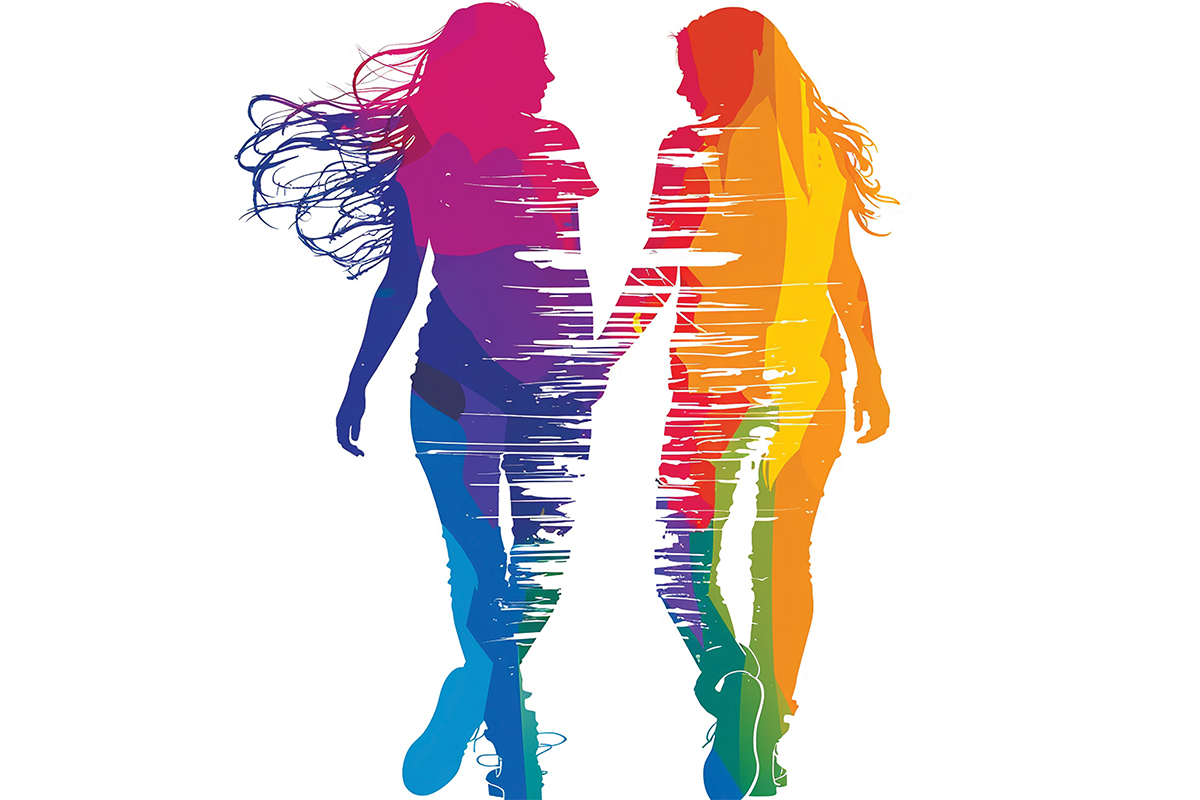
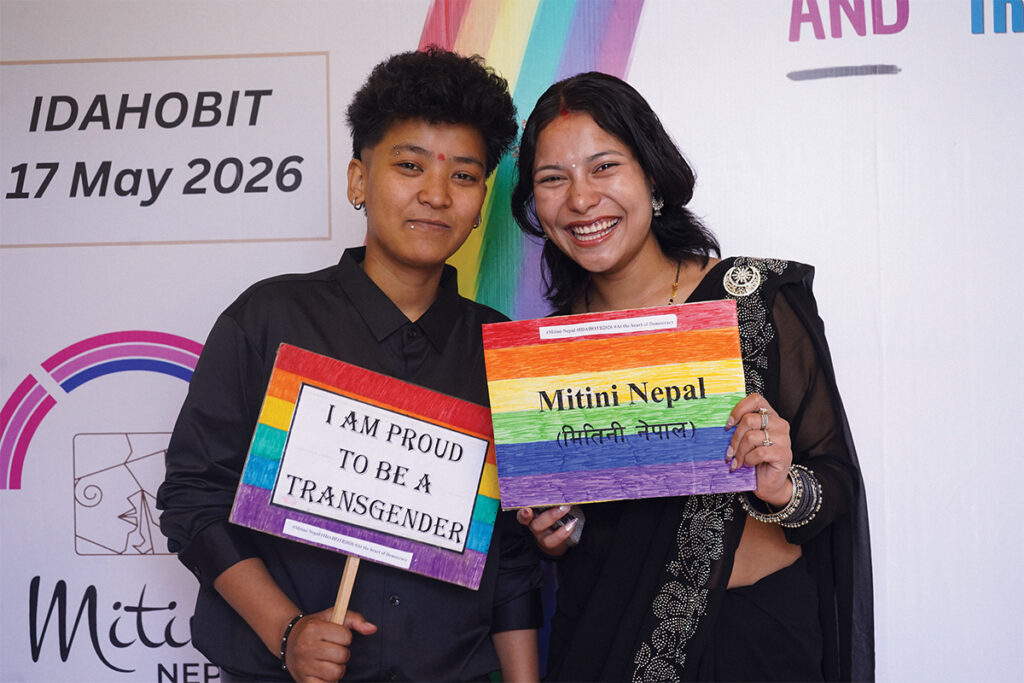
When I reached the venue, the place was buzzing with people, colourful dresses and photo sessions. I was at Smart Durbar Banquet on a Sunday morning to attend and celebrate the day. It was May 17, marked as the International Day Against Homophobia, Biphobia and Transphobia (IDAHOBIT). It was only in 1990 that the World Health Organization (WHO) removed homosexuality from the list of mental illnesses and declared it a natural phenomenon of human sexuality. Members of the queer community and their allies across the world celebrate this day with great enthusiasm by organizing various events.
It was Mitini Nepal who had sent me the invitation, the same organization that had helped me identify three couples and organize my interviews back in 2025 when I did a story on love stories beyond binaries. Since then, they have been inviting me to their different programs and events.
But this gathering was especially meaningful for me, as it was the first time I had the opportunity to reunite with all of my respondents from that piece. I met all six people from those three couples, and seeing them happy, in love and celebrating the day together made me feel proud that we live in a country where such celebrations are organized with pride.
I was feeling hopeful and optimistic that day. To witness a stage where we had a woman minister from the recently renamed Ministry of Women, Children, Gender and Sexual Minorities and Social Security, two elderly civil servants, and a queer rights activist who had dared to declare her queer identity in Nepal when nobody else had, was truly inspiring. To see them on stage, all of them wearing multicolored khadas to commemorate the day, was indeed heartwarming. It showed that the state was taking accountability and demonstrating its allyship by observing and celebrating the day together. Having them share the stage while pledging to make our communities and country safer, more accepting, and open for everyone showed that, although we still have a long way to go and many shortcomings to overcome, we can also dare to dream and remain hopeful.
Hopeful that no matter how the world decides to digress, we can hold our own and strive to make our society and country truly democratic, where democracy is not only about elections, ministers, and institutions, but also about whose voices are heard and whose humanity is recognized. For the first time in years, the number of countries criminalizing same-sex acts has actually risen to 65 UN states, driven by a wave of authoritarian, anti-rights policies worldwide. In such a context, organizing a program where not only ministers and dignitaries made speeches, but also two significant publications relevant to the issues were launched and outstanding individuals of the community were honored, was indeed a day of triumph and celebration.
The second part of the program was filled with songs, dances and coming together through various art forms. The first song performed was “Paschim Kohi Purba Ghar” by Gopal Yonjan. It celebrates unity among Nepalis from the east and west, emphasizing that despite our differences, we all are citizen of the same nation. The theme of this year’s IDAHOBIT, “At the Center of Democracy”, was beautifully reflected by the young community members of Mitini Nepal, who showed us that it didn’t matter who they identified as or where they came from, as long as their right to exist, to flourish, and to call themselves Nepali was not diminished by their queer identities.
There were many other performances. Among them, the one I remember most was a poem recitation by a member of Mitini Nepal. The poem told the story of a child who wished their loving father were around to meet the love of their life and appreciate their love story. Instead, father gone too early and they were left alone to face trials and tribulations from relatives and society. The poem moved everyone deeply – I could see many eyes filled with tears and silence fell when the recitation ended. It resonated with many community members who have experienced rejection from their families and the daily struggle of pretending to be someone they are not. Yet, for that day, in that hall, everyone felt free to be themselves, to dance, to celebrate and to belong!