A spark of inspiration can mark the beginning of an artist’s journey, while for others it becomes something they live with every day. For Sagar Manandhar, inspiration began at home.
Born in 1985, Sagar spent much of his childhood watching his father, renowned Nepali artist Kiran Manandhar, work in the studio. He observed the way his father approached the canvas, the patience and intensity behind every brushstroke. That quiet discipline became a constant source of fascination. “The studio became more than a physical space,” he says. “It became my reality.” What began as the curiosity of a young observer – accompanying his father to exhibitions and art events from an early age – eventually evolved into a lifelong artistic journey of his own.
After completing his Intermediate in Fine Arts at Sirjana College of Fine Arts, Sagar travelled to Varanasi to study at Banaras Hindu University, where he earned both his Bachelor’s and Master’s degrees in Fine Arts. Living in one of India’s oldest cultural centres immersed him in diverse artistic traditions, spiritual philosophies and contemporary practices, broadening the way he approached painting. Today, alongside his own artistic practice, he serves as an Assistant Professor at Kathmandu University’s School of Art, Department of Art and Design. In many ways, he now finds himself passing on what he has learnt while continuing to evolve as a practising artist.
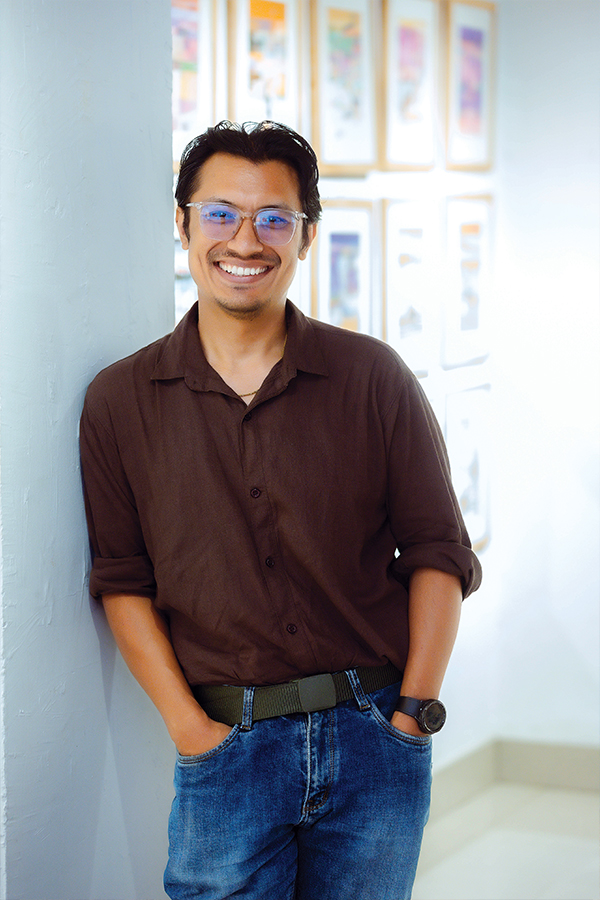
For Sagar, inspiration begins each time he steps outside. “I find myself drawn to the smallest, most ordinary moments of daily life,” he says. Kathmandu, with its vibrant energy, layered cultures and ever-changing rhythm, continues to shape his creative process. Its colours, sounds and the valley’s distinctive light all find their way into his work. A passing conversation, the shifting afternoon light, crowded streets or the quiet gestures of strangers become part of the visual diary he carries within him.
Yet inspiration, for Sagar, is never solely external. It is equally about looking inward and allowing his own experiences and emotions to become part of his artistic language. His paintings emerge as an honest conversation between what he observes in the world and what he discovers within himself.
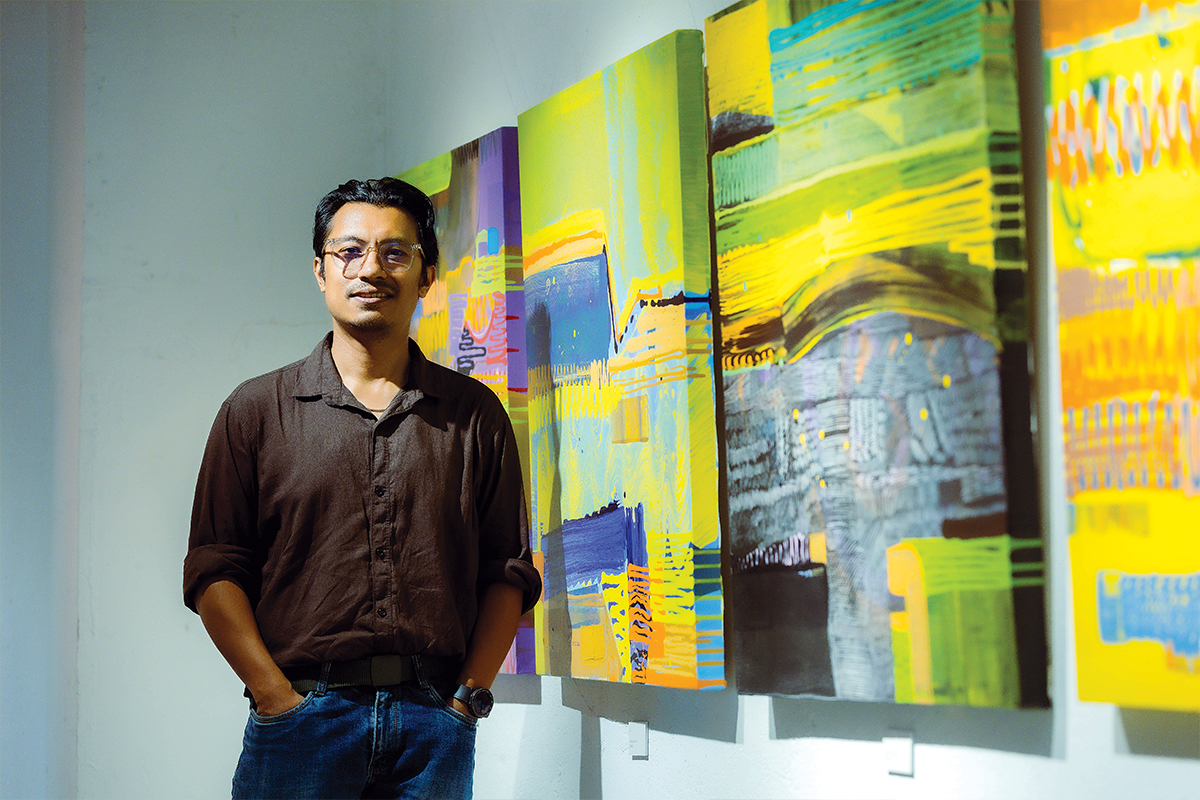
In a world that rarely slows down, his paintings invite viewers to pause. “More than anything, I want my work to offer viewers a moment of stillness,” he says. He believes abstraction creates space for people to bring their own experiences into a painting. What one person sees may be entirely different from what another discovers, and that openness is precisely what interests him. “There is a dialogue between the known and the unknown,” he explains. Rather than guiding viewers towards a single interpretation, his work encourages quiet reflection. It leaves room for uncertainty and self-discovery, a small pause carved out of a fast-moving world where one can simply be present with oneself. That same openness reflects the way he speaks about his own artistic journey.
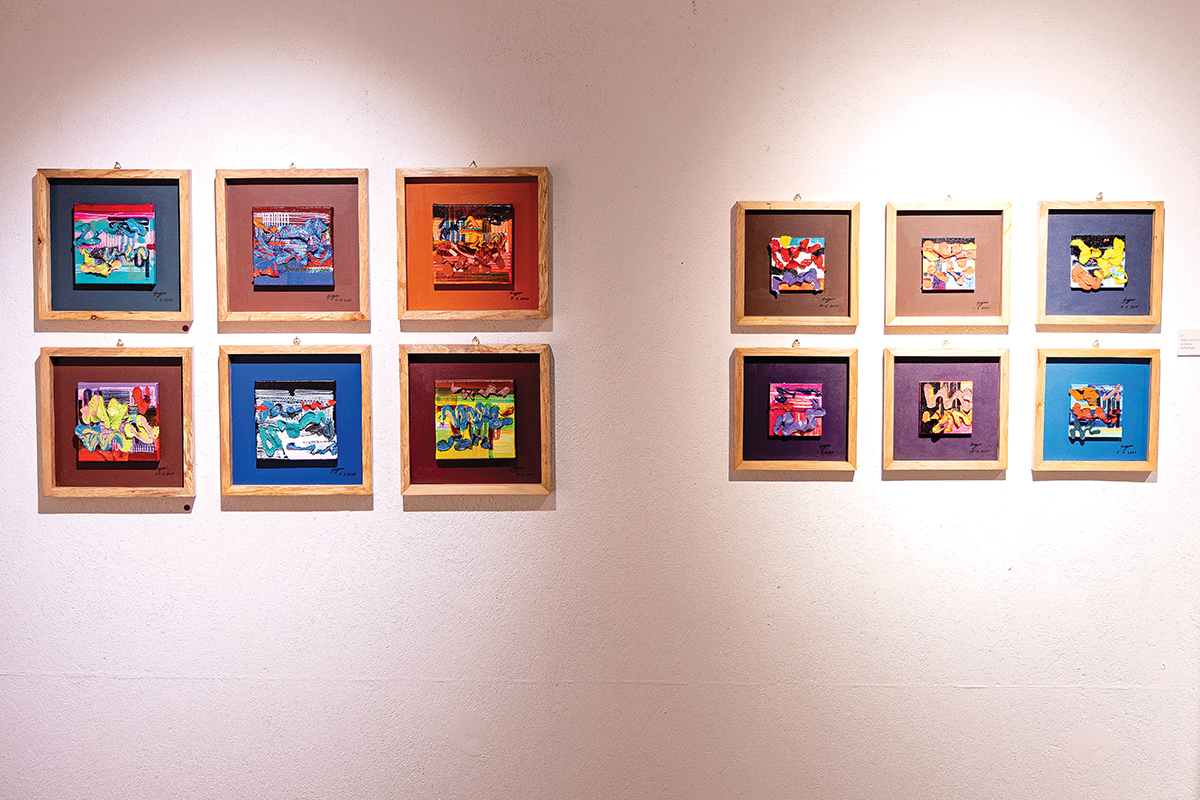
For Sagar, art has never been about reaching a destination. Painting has taught him to explore rather than settle, and to keep questioning even when he feels he has arrived somewhere. “The longer I have worked, the more I have come to trust my own process,” he reflects. Art has become a mirror, a way of encountering and expressing emotional truths that could not have been accessed through any other means. It has shaped how he understands people, approaches conversations and experiences everyday life. It has encouraged him to remain curious rather than certain, open rather than fixed. Perhaps that is why his work feels less like a statement and more like an invitation. Over the years, not only his art but the studio itself has become much more than a workplace.
It has taught him the discipline of listening closely to what a work is trying to become and responding to it honestly. It is a space where he learnt the value of communication beyond words, one that has profoundly shaped how he moves through the world. He hopes emerging artists, too, will discover that same sense of purpose through their own creative journeys.
As someone who now mentors young artists, Sagar hopes the next generation will resist the temptation to retreat when the creative process becomes difficult or uncertain. Instead, he encourages them to stay committed, believing that growth often lies within those very moments of struggle. “Never lose your hunger to work and create,” he says. His advice is simple yet enduring: keep exploring, keep questioning and, above all, remain honest in the way you see the world.