Because life rarely fits in a single box
Nepal’s political space feels like standing on shifting ground.
As we prepare for another election cycle, the air feels heavier than usual; it is thick with noise, rage, certainty, and performance. Alliances rearrange like chess pieces. Narratives multiply like wildfire. Everyone has an opinion. Everyone has a slogan. Everyone has a saviour.
And yet, nothing feels steady.
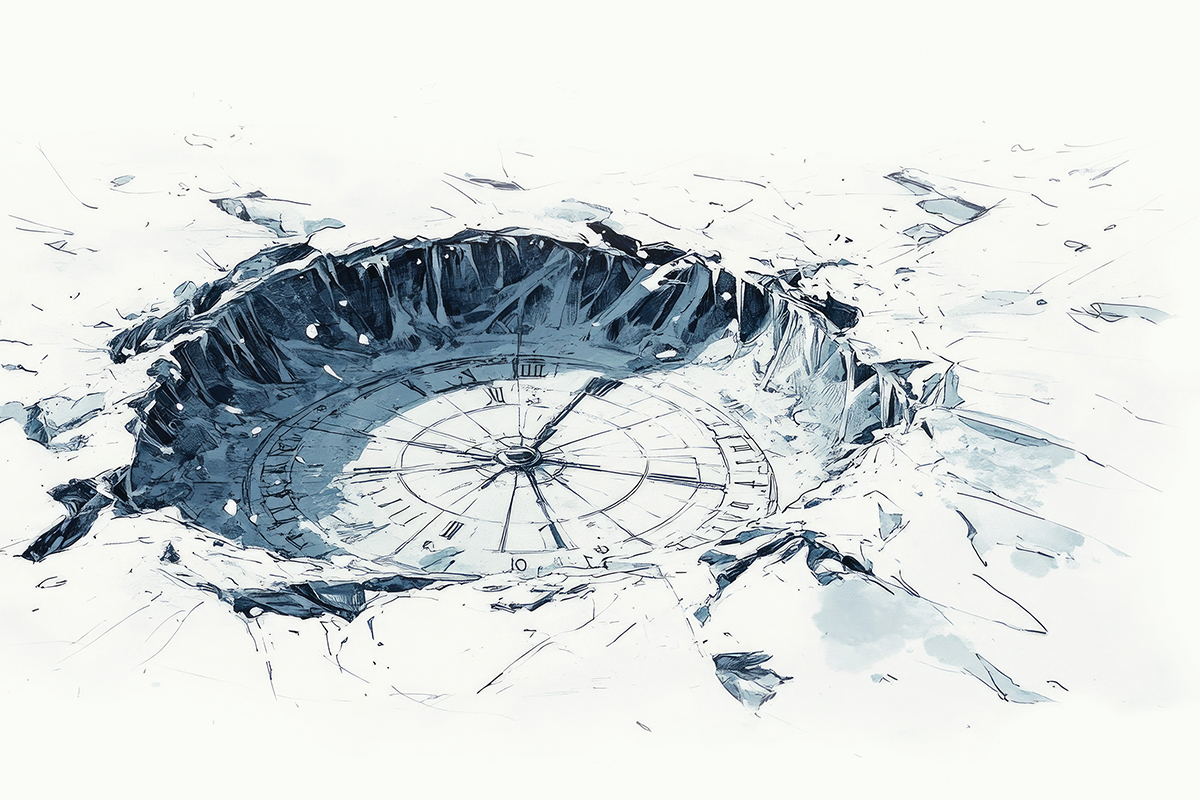
I keep returning to one question: what happens when our political, social, and moral compasses break?
A working compass offers direction. Even when the journey is difficult, even when the road is unclear, it tells you where you are headed. But when a compass breaks, it spins. It leans everywhere. It loses its north. What follows is not just confusion, it is chaos. A loss of control. A quiet collapse of both moral and political conscience.
This is what anarchy looks like in real life. It is not always fire and sirens, or the riots on the street. Sometimes, it looks like broken trust, exhausted citizens, institutions that no longer function with dignity, and people slowly withdrawing from public life because they no longer believe it belongs to them. That kind of anarchy is the most dangerous because it arrives gradually. Until one day, we wake up and realise the country feels unfamiliar.
I still remember September 8, 2025. It arrived carrying everything at once: pride, participation, bravery, rage, and grief. It also brought something I did not expect—PTSD. Those two days forced me to relive memories from the ten years of the Maoist conflict. Memories I had sealed away because survival once required forgetting. Back then, as an eight-year-old, I didn’t have language for what I felt. Only the feeling itself… fear without explanation, helplessness without words. This time, the emotions had names: Helplessness, Frustration, Fear.
Not because people were wrong to rise, but because the state, once again, felt apathetic. The same governance mindset persisted, even after everything we claim to have “transformed”. Even with a three-tier federal system, responsibility was passed around instead of being owned. Accountability disappeared in plain sight. Everyone washed their hands clean by declaring the dead “martyrs.” No questions. No reckoning. Just rage that eventually turned into silence.
And now, we are here again, watching the same cycle repeat itself in a different form.
The recent candidacy lists tell their own story. The absence of meaningful representation of women and nonbinary people. Proportional representation lists that feel anything but proportional. The same faces, the same elite circles, the same political bloodlines wearing new language but practicing old power.
What hurts most is not just who is present, but who is missing. Women, Nonbinary people, Dalit, Madhesi, Indigenous, disabled, queer, rural, working-class voices. The people who carry this country on their backs but are never invited to sit at the table.
Those who once fought for inclusion now seem to have forgotten the ethics that shaped the revolution. Politics begins to look less like collective transformation and more like control. It has become less about justice, more about access, and less about representation, more about power.
What meaning does democracy hold when women and gender minorities remain politically sidelined? When inclusion is treated as a checkbox instead of a commitment.
This is not a gap. This is our de facto. This is exclusion by design.
Meanwhile, for those who have access to be at the table, politics has become fashionable. A brand. A performance. Political leadership is spoken about as something you wear, not something you practice. Everyone wants the microphone. Everyone wants the photo. Everyone wants to be a politician.
To be clear: political interest is not the problem. We cannot live outside politics. Our safety, rights, livelihoods, and bodies are governed by it.
The personal is political
But not everyone needs to be a politician. We can be political without being elected. We can be political by questioning, critiquing, organiing, voting, and refusing silence. We can be political in how we treat one another and in how we refuse to normalize exclusion.
The danger is not people entering politics; the danger is people entering politics without ethics.
What September 8 and 9 revealed – beyond political fragility – was also the fragility of our political literacy. A generation not necessarily more accountable than the last. A society struggling to disagree without dehumanising. A system that rewards power over integrity.
Democracy is often reduced to elections and ballots. But democracy is not just an event; it is a culture. It is a daily practice of accountability, dignity, and inclusion.
The revolution brought in more political discourse than ever. New parties, new ideologies, new people have emerged. But the real question remains: who did this expansion actually serve? Because when we look closely, those at the margins have not moved closer to the center.
We have 3406 candidates this election where only 388 are women and 1 nonbinary individual.
What does that tell us? Political participation is still a privilege; political power is still guarded, and that inclusion is still conditional. And, when exclusion becomes the norm, we don’t just reach political anarchy, we reach moral anarchy.
This chaos is not separate from people’s everyday realities. It is deeply connected to labor migration, care work, and survival. When political systems fail, care work expands. Women and girls fill the gaps the state refuses to hold. They become the emergency response system. The social protection plan. The unpaid infrastructure of a broken nation. And when that burden becomes unbearable, families make another choice: they send someone away.
Labor migration becomes the country’s coping mechanism, not always a dream, but often the only available strategy for survival. We export labour. We export bodies. We export futures. In return, we import remittances that keep the economy breathing while the state avoids building systems of dignity.
Yet those who sustain this nation, the caregivers, migrant workers, and women in informal labour, are rarely represented where policies about their lives are made.
So, when politics feels like a broken compass, it is not accidental. It is produced, maintained and gatekept for those with enough privilege to look away from the labor we export and the coffin boxes we receive.
The tragedy is not just political failure; it is ethical collapse. Those who once fought for inclusion now trade values for seats, comfort, and proximity to power, leaving behind the very people who believed in them.
I often say this: at the end of the day, we all answer the god within us. We must live in a way that allows us to say: we did not sell our conscience for convenience. But what happens when even our gods are sell-outs?