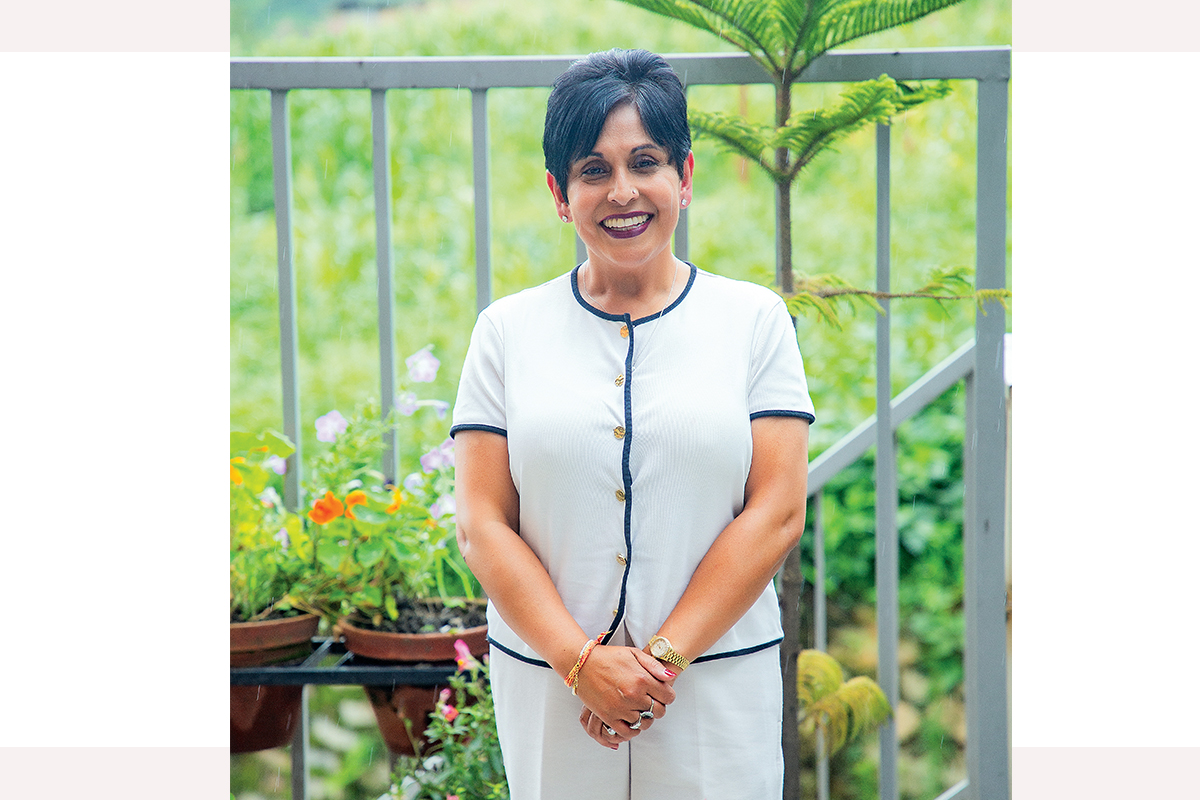
For Dr Rajni Rijal, the desire to work in healthcare began at home. Born and raised in London, she was still young when her mother developed heart problems and required a heart valve replacement. Watching her mother navigate illness naturally placed Dr Rajni in a caring role, but it also planted something deeper: a desire to help others.
“I just always thought I wanted to be in the medical profession because I wanted to help and care for people,” she recalls.
Initially drawn towards medicine and research, including the study of tropical diseases, she eventually found her path in dentistry. “My husband, fellow dentist Dr Kapil Rijal, and my father-in-law, Dr Bhola Rijal, who is known as one of the pioneers of assisted reproductive technology in Nepal, have also been among my inspirations in the medical field,” she says.
Today, however, her professional life extends far beyond dentistry. As Chairperson of The Women’s Council UK, Dr Rajni works to promote disability inclusion, training and leadership across Asia, the Middle East and the UK. Her commitment to Nepal is equally personal. She and her family have long maintained close ties with the country, where they run Hamro Pyaro Nepal, a charity established after the 2015 earthquake to support children and schools in communities including Gorkha and Sankhu.
For Dr Rajni, education remains one of the most powerful pathways to independence. “If you can help the younger generation to be educated, they can then become independent as well,” she says.
Understanding Disability Beyond the Individual
Working across different regions has given Dr Rajni a first-hand understanding of how deeply culture can shape attitudes towards disability. While every country has its own social and cultural context, she says one of the most significant differences she has observed is the persistence of stigma in parts of Asia and the Middle East.
In some communities, disability may still be associated with karma, bad omens, or blame directed towards mothers. Such beliefs can prevent children and adults with disabilities or additional needs from being fully accepted, supported or given equal opportunities.
“Inclusion is about accepting everyone for who they are,” says Dr Rajni.
But awareness, she believes, cannot be limited to the individual with a disability. Parents, siblings, grandparents, teachers and the wider community all have an important role to play in building a more inclusive society.
Her work with The Women’s Council is guided by the philosophy of “train one, train 100”. Women are provided scholarships to receive specialist training and are then encouraged to return to their communities and share what they have learned.
The impact, she says, can be measured not only through scientific auditing and long-term reviews, but also through the lives transformed along the way. Some children who may once have been denied opportunities have gone on to work in banks, pursue higher education and even complete PhDs.
“These are living examples of this system working,” she says.
Adapting Systems, Not People
For Dr Rajni, obstacles are not necessarily barriers; they can also be opportunities to adapt. She recalls dental camps in Mumbai where rather than simply telling people what they “should” be doing, she considers what is affordable, understandable and realistic within each person’s circumstances.
Inclusion, in her view, means adapting systems to people rather than expecting people to fit into rigid systems.
That same philosophy informs her view of Gauthali, the film made by her husband, which explores romance, education, early marriage and the life of a young autistic man.
Dr Rajni says the film was not created solely as a story about autism. Instead, the autistic character forms part of a wider narrative about vulnerable groups, particularly young girls whose education may be disrupted by early marriage.
The character was developed with an understanding that autism exists on a spectrum, making representation both important and complex. Dr Rajni believes the film succeeds in portraying an autistic individual as capable and deserving of opportunity, while allowing its broader themes of love and education to remain central.
“We see people with all sorts of different forms of autism,” she says. “They have all sorts of different traits – extremely intelligent individuals, very capable individuals – who need to be given a chance, a voice and an opportunity to succeed in their own right.”
She sees the film, alongside initiatives such as vocational training programmes, as a way of starting conversations that may otherwise never happen
The Power of the ‘Umbrella Effect’
Dr Rajni is particularly encouraged by grassroots initiatives that give people with disabilities practical skills and meaningful opportunities. Through The Women’s Council, women receive training in areas ranging from vocational skills to inclusion policy.
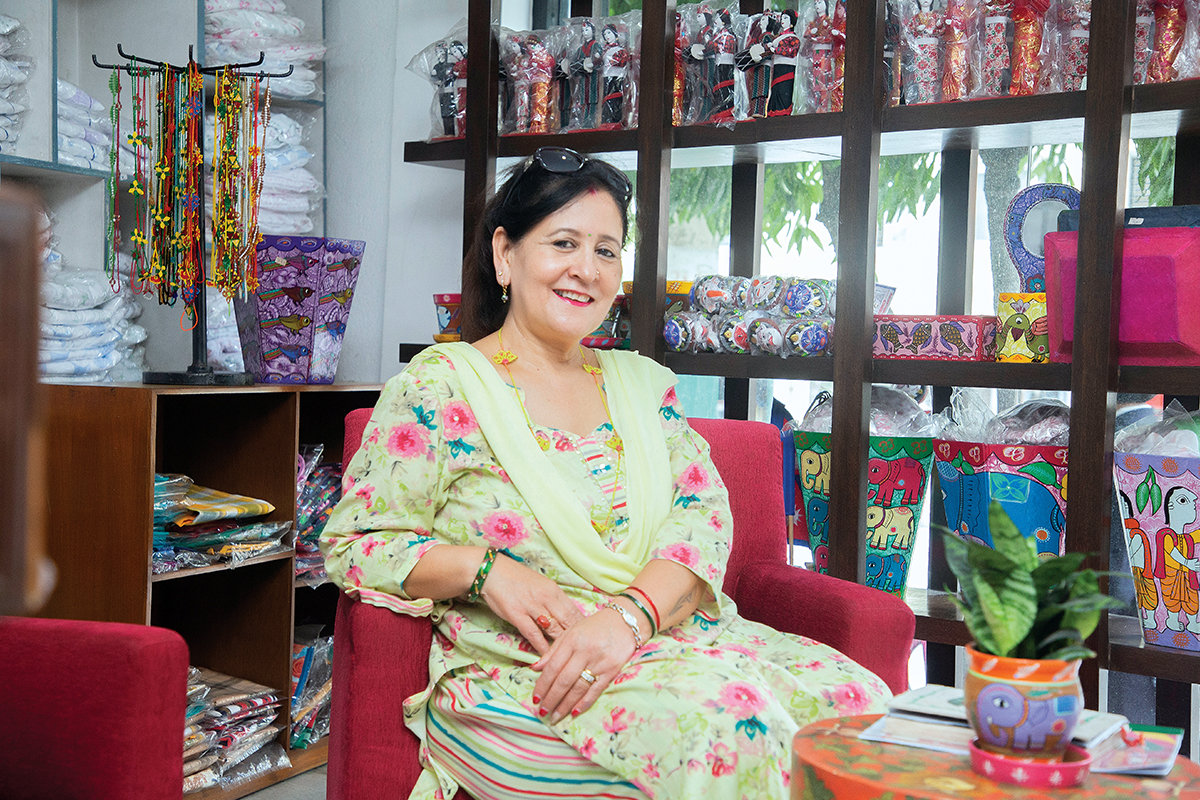
One scholarship recipient, Archana Shah, President of Aakar Foundation, has since brought block-printing skills back to Nepal and collaborated with Autism Care Nepal to create opportunities for people with disabilities.
For Dr Rajni, this represents what she calls the “umbrella effect” – different organisations addressing different aspects of inclusion while working together towards a shared goal.
Yet lasting change, she believes, cannot come from grassroots initiatives alone. It must also be supported by policy, infrastructure, resources and training.
Policy provides direction, resources make implementation possible, and education helps shift attitudes. Younger generations, meanwhile, can help ensure that inclusion becomes normal rather than exceptional.
Beginning in the Classroom
Dr Rajni points to inclusive schools as one of the most powerful places to begin.
When children grow up learning alongside children with disabilities, inclusion becomes second nature rather than something that needs to be explained later in life. Differences become familiar, not unusual.
Change, however, will not happen overnight. Dr Rajni describes it as a “trickling effect”, beginning with children, families and communities and gradually reaching institutions and policymakers.
Her vision for Nepal is therefore not about solving one problem in isolation, but about building a society where different needs are understood within the wider realities of the country.
Most importantly, she believes meaningful change requires everyone to participate, not simply as advocates speaking for people with disabilities but as communities creating space for them to speak, learn, work and thrive on their own terms.
Text: Kreenjala Pyakurel
Photo: Sanjay Maharjan