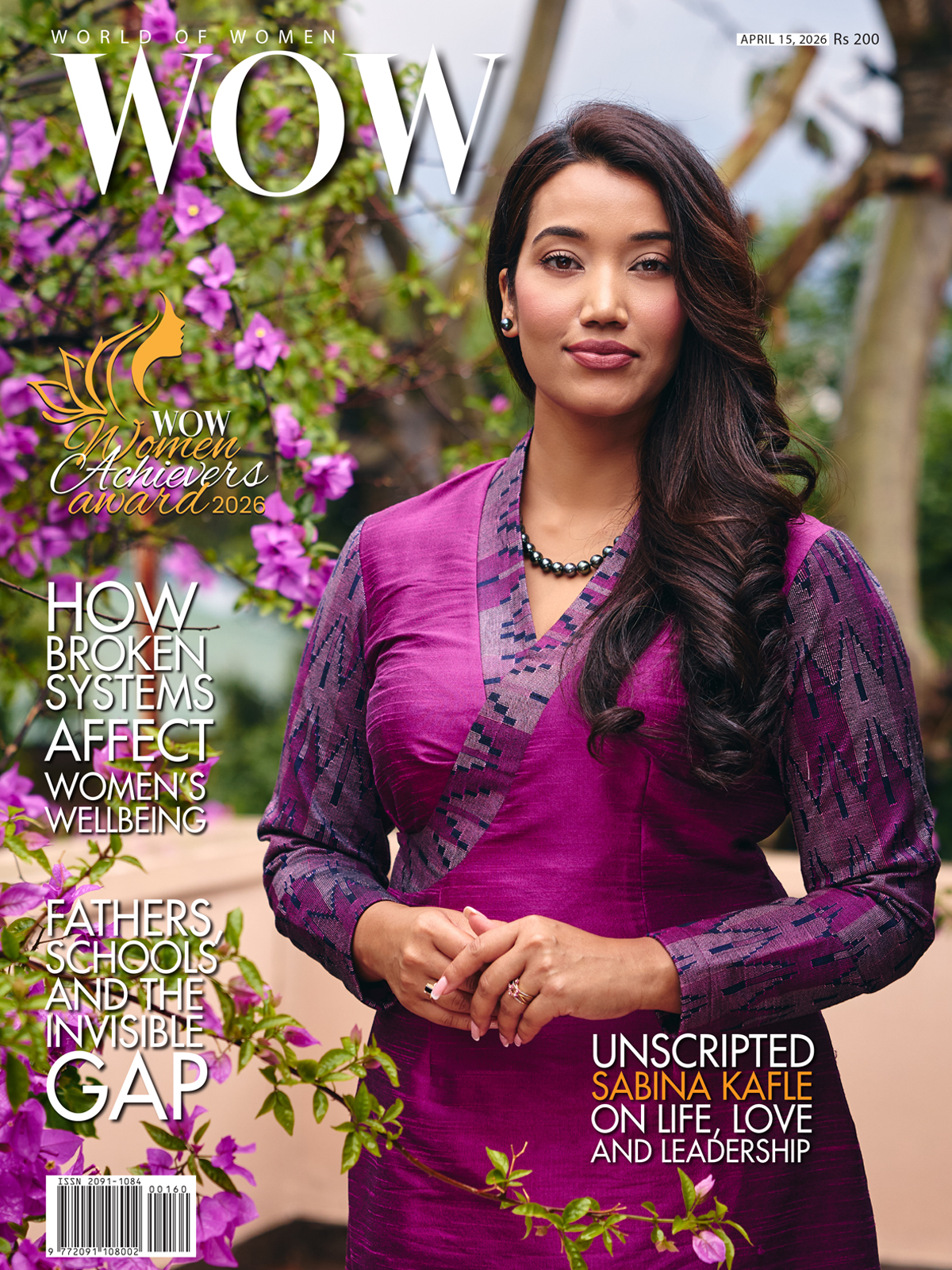
Public life has a way of reducing women into symbols. The supportive wife. The composed public figure. The woman standing quietly beside power. But Sabina Kafle resists easy definitions. As the wife of Nepal’s Prime Minister, Balendra Shah, she stands at the intersection of visibility and vulnerability. Beneath the headlines is a woman navigating ambition, partnership and motherhood with remarkable honesty. In conversation with WOW, she speaks not like someone performing a role but someone determined not to lose herself within it.
There is something quietly disarming about Sabina Kafle. Not because she speaks loudly about resilience or reinvention. In fact, she rarely does. Instead, she speaks with the kind of calm honesty that makes you pause, the kind that reveals itself slowly between conversations about motherhood, public scrutiny, identity and the strange loneliness that can sometimes accompany visibility.
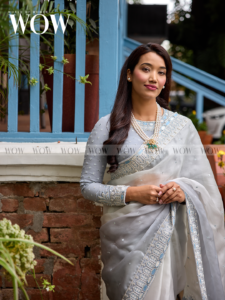
Long before public attention became part of everyday life, she was a woman navigating her own ambitions, beliefs and professional path in public health and gender advocacy. Today, she inhabits one of the country’s most visible spaces, yet what defines her most is not proximity to power, but the emotional intelligence with which she carries it.
“Life truly changed almost four years ago,” she says thoughtfully. “I decided to leave my job and dedicate myself fully to supporting my husband during the Kathmandu mayoral election campaign. Everything happened very quickly. Along with the campaign came sudden public attention, social media visibility, and a feeling that people were constantly observing and forming opinions about me.”
The transition was not glamorous. It was deeply human. “At first, it was difficult to process everything, from the overwhelming love and encouragement to the criticism and negativity that naturally come with public life,” she admits. “Over time, however, I learned to adapt. There are certainly more responsibilities, protocols and boundaries than before. When you are connected to a political figure, the entire world is watching you.”
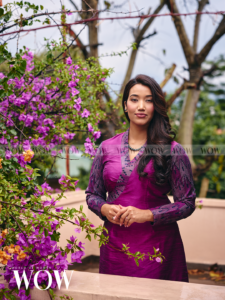
Yet amid the expectations attached to her role, she speaks repeatedly about preserving softness in a world that often rewards performance over authenticity. “Through it all, I try to remain true to who I am as a person, as a wife and as a mother.”
Motherhood sits at the centre of her worldview, not as an aesthetic identity but as a deeply transformative emotional experience. Listening to her speak about parenting feels less like hearing policy commentary and more like listening to a woman carefully shaping the moral architecture of another human being.
“Motherhood makes policy feel deeply personal,” she says. “When you become a parent, you stop thinking only in terms of statistics and begin thinking about reality. Real children. Real classrooms. Their real future.” Her voice sharpens slightly when she speaks about education, inclusivity and the invisible struggles parents quietly carry every day.
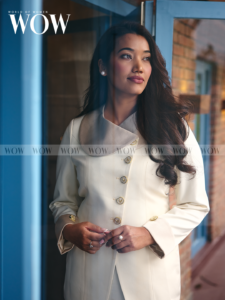
“You begin to notice the importance of things that are often overlooked. Accessible spaces for children with disabilities, breastfeeding rooms in workplaces, proper facilities and care for pregnant women, and environments where both children and parents feel supported and respected.”
It is clear that her background in public health and gender studies still shapes the way she sees the world. But motherhood, she says, deepened those convictions emotionally. “It gave me an even stronger understanding of why these conversations matter so much in shaping a more compassionate and inclusive society.”
Compassion appears to be the thread running through nearly every part of her life. When asked what parts of her identity remain untouched despite public attention, she does not mention status, image or influence. Instead, she speaks about family, books, silence and nature.
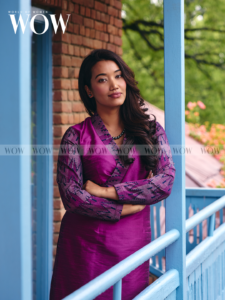
“There is something deeply grounding about getting lost in a good book, putting thoughts into words, or simply being surrounded by nature and silence,” she says. “Those parts of me have remained deeply personal and untouched despite the public attention.” And then there is the emotional reality of loving someone whose life exists constantly in public conversation.
In Nepal’s evolving political landscape, admiration and criticism move quickly and often harshly online. Yet Sabina approaches that instability with striking emotional clarity. “I have never looked at the person I love through the lens of the public,” she says. “To me, he is simply the person I know in real life, beyond public expectations and headlines.”
What matters most, she reflects, is “staying emotionally balanced, supporting one another privately, and keeping perspective through both the good and difficult moments.” Her understanding of partnership feels mature, deeply lived-in and honest.
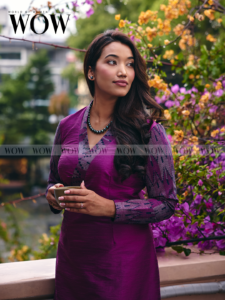
“A partner becomes the emotional anchor,” she says. “Someone who reminds you of your purpose, encourages honesty, and gives you space to stay human.” Then she adds quietly, “A partner should be someone you can be vulnerable with in private and become the strongest version of yourself in public.”
Of course, there are days when she misses anonymity. “There are moments when I miss the freedom of ordinary life,” she admits. “But public service comes with sacrifice, and if that sacrifice contributes to something meaningful, it becomes easier to accept.”
Yet even while navigating visibility, her deepest concerns remain personal, especially when it comes to the kind of world her daughter will grow up in. “I want my child to grow up with kindness, discipline and respect for others,” she says. “She is being raised in a situation where many things are easily accessible and I feel it is important that she also understands the value of simplicity and the meaning of scarcity.” One absolute non-negotiable, she adds, is empathy. “Kindness and respect towards others are the foundation of strong character.”
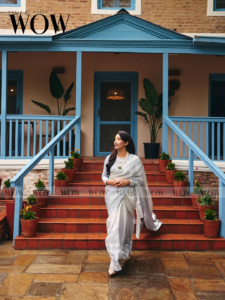
Throughout the conversation, she returns often to gratitude, the quiet kind rooted in perspective. “I often remind myself that I am living many things I once wished for,” she says. “That awareness keeps me centred.”
At the same time, she understands the temporary nature of power and public recognition. “Positions and fame are temporary but values are lasting.” Perhaps that awareness is what allows her to move through public life without allowing it to consume her identity entirely.
And yet, Sabina is not interested in shrinking herself into a singular role either. Near the end of our conversation, she reveals something unexpectedly honest and wonderfully modern. “I do not want to be limited by one definition,” she says, smiling. “I want to be everything a woman can be.” Then comes the sentence that perhaps captures her most fully. “I want to embrace the fullness of what it means to be a woman. I want to look sexy and bold like a model, to be beautiful, graceful and expressive like a movie actress, and to be intellectual and thoughtful like any technical scholar.”
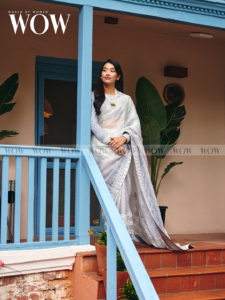
In many ways, Sabina represents a new generation of women connected to public life. Women who are no longer willing to disappear quietly behind titles. Women who understand visibility but refuse to be defined entirely by it. When asked how she hopes people remember her years from now, her answer arrives without hesitation. “I hope they remember someone who remained sincere and compassionate despite the pressures of public life.
Titles eventually fade but the way you treat people stays in their memory.”
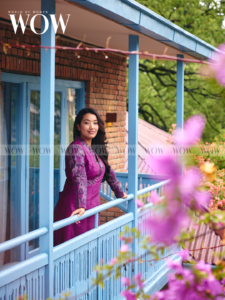
And perhaps that is exactly what lingers after meeting Sabina Kafle, not the visibility surrounding her, but the humanity she refuses to lose within it.