
What collective grief teaches us about emotional well-being
Over the past few weeks, I have noticed something changing in the conversations I have with people back home. Friends no longer begin our calls with, “How are you?” Instead, they ask, “Have you seen the news?”
Sometimes it is about a little girl whose life ended long before it should have. Other times it is about families waiting for news of loved ones swept away by devastating floods. In between, there are conversations about missing people, interrupted lives, uncertain futures, and communities trying to make sense of tragedies that feel almost impossible to comprehend.
These are very different events. Yet I keep on returning to the same question. What happens to us emotionally when a nation grieves again before it has had the chance to recover from the last grief?
For many of us, sadness has become intertwined with helplessness. We scroll through photographs of rescue operations before going to work. We pause during meetings to check updates from home. We refresh social media hoping for better news, only to encounter another story of loss. Even those of us far from the disaster or the crime scene are affected. Because grief does not always require proximity. Sometimes it requires connection.
When Safety Stops Feeling Certain
What struck me most about these past weeks was not only the scale of the tragedies, but the way they unsettled something many of us rarely think about until it is gone. Our sense of safety.
After Garima’s death, I spoke to friends who told me they found themselves holding their children a little closer before they left for school. Parents who had never thought twice about their children playing outside began asking more questions, worrying a little longer, checking a little more often.
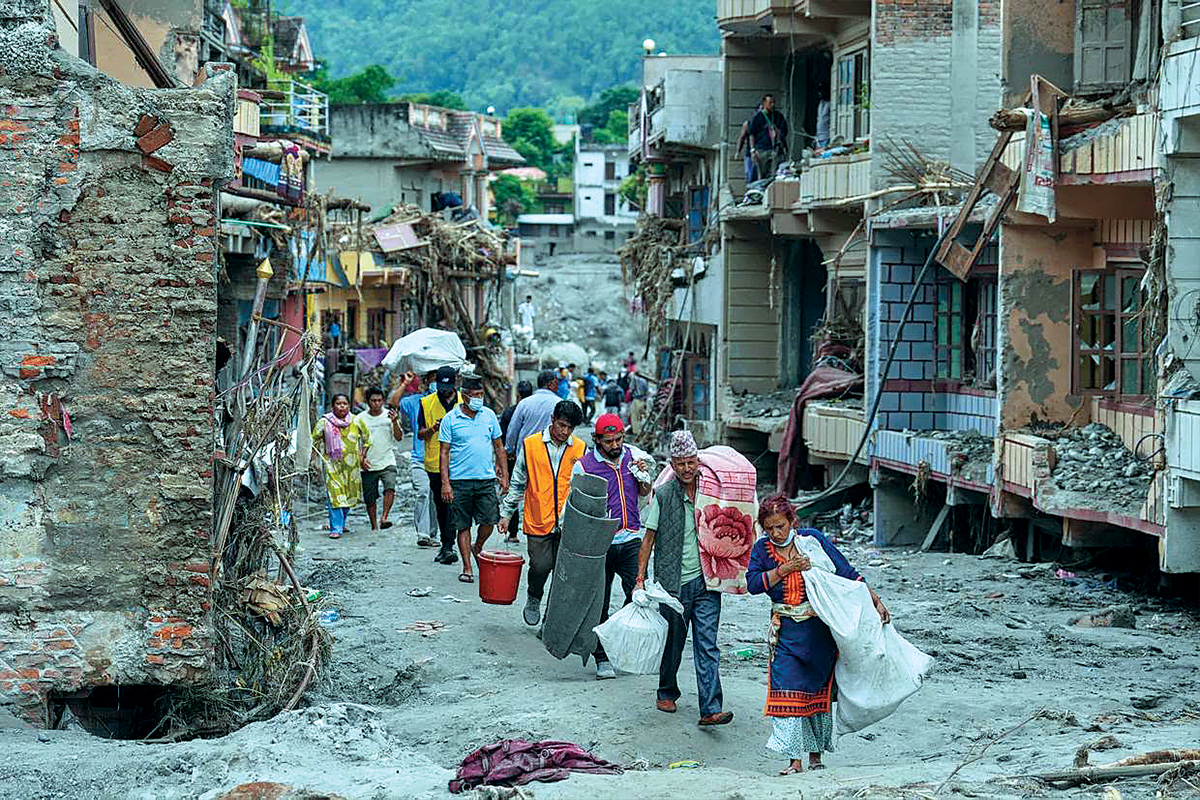
After the floods, another kind of uncertainty emerged. Families waited for phone calls that never came. Others searched lists of the missing. Across Nepal, images of washed-away homes, destroyed roads, and rescue teams digging through debris reminded us how quickly ordinary life can disappear. Neither event affected every family directly. But both affected something shared. The belief that tomorrow will look much like today.
The Emotional Ripple Effect
We often think trauma belongs only to those who experience it firsthand. Yet psychologists have long recognised that communities can experience collective grief after tragedies that touch the national conscience. Even indirect exposure to repeated distressing events can leave people feeling anxious, emotionally exhausted, or unusually vigilant. Perhaps this explains why so many people have said recently, “I can’t stop thinking about it.” Or, “I don’t even know why this is affecting me so much.” These are not signs of weakness. They are signs of our humanity. When suffering becomes visible, our emotional worlds respond.
The Women Who Hold Everyone Together
During times of crisis, I often notice another pattern. Women become the emotional anchors of families. They comfort frightened children while trying to make sense of events themselves. They reassure ageing parents. They organise relief efforts. They prepare meals for volunteers. They answer difficult questions they do not yet know how to answer. Many continue carrying everyone else’s emotions while putting their own aside.
This emotional work is rarely acknowledged. Yet it is one of the invisible ways communities survive. I have seen it during this flood response. Women coordinating donations. Women opening homes to displaced families. Women checking in on neighbours before checking on themselves. Compassion becomes action. But compassion also has limits.
Without opportunities to pause, grieve, and process, even the strongest people can become emotionally overwhelmed.
Making Room for Collective Grief
One of the hardest things about living through multiple national tragedies is the pressure to move on quickly. News cycles change. Social media moves to the next headline. Work resumes. Schools reopen. Life continues.
But emotionally, recovery is rarely that immediate. Grief does not follow a calendar. Neither does healing. Sometimes what people need most is permission to acknowledge that they are carrying more than they were a month ago. That they feel heavier. More anxious. More protective. More uncertain. And that these responses are understandable.
Healing Together
As I write this, many families are still waiting. Waiting for answers. Waiting for loved ones. Waiting for justice. Waiting to rebuild homes and lives. Some forms of recovery will require better policies, stronger institutions, and long-term commitment.
Others begin much closer to home. By checking in on one another. By allowing conversations about grief instead of rushing toward normality. By recognising that emotional recovery deserves attention alongside physical reconstruction. Communities do not heal only when roads are rebuilt or investigations are completed.
They heal when people slowly begin to trust again. When children feel safe enough to play. When families dare to imagine tomorrow without fear. When hope, however quietly, finds its way back into ordinary conversations. I guess that is the weight we are carrying together. And perhaps it becomes lighter only when we recognise that none of us has to carry it alone.