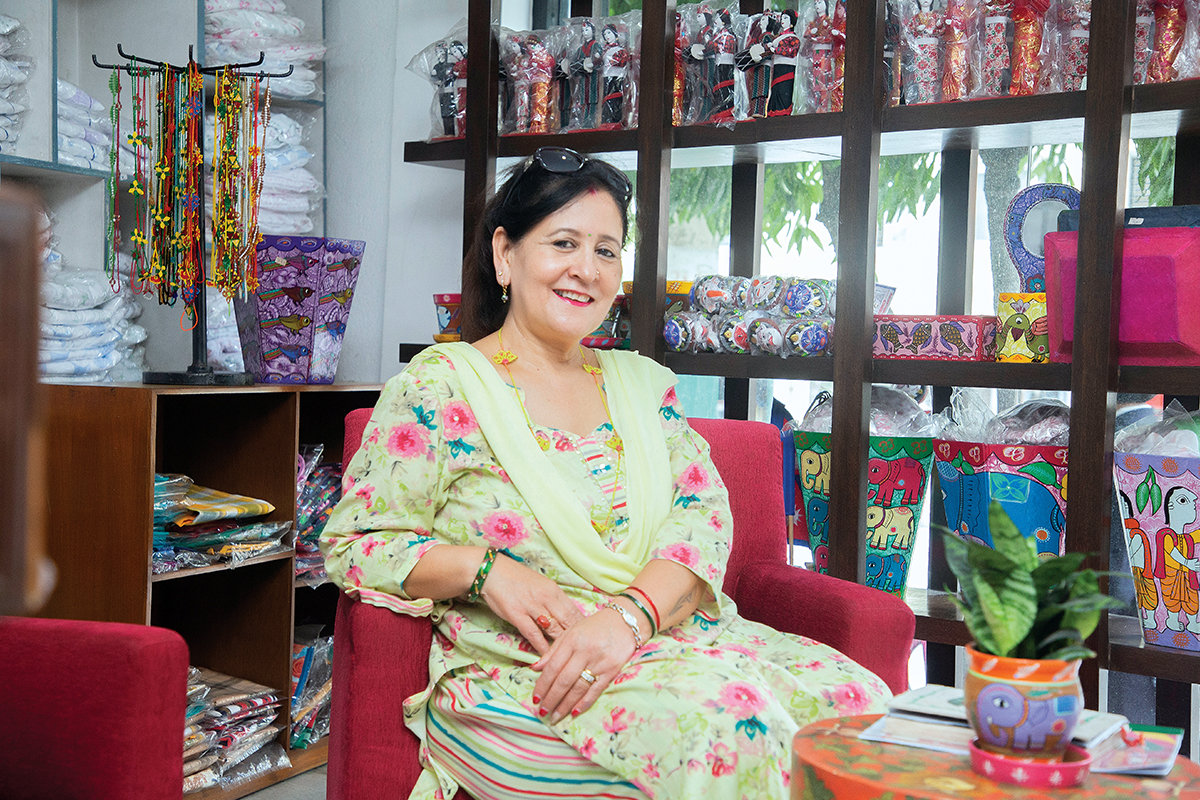

There is something quietly radical about the way Monal Bhattarai talks about education. Fresh from being named to the Forbes 30 Under 30 Asia 2026 list in the Social Impact category, the Director of Canopy Nepal speaks less about accolades than she does about children, classrooms and stories. She rarely measures success in numbers, despite leading an organisation that has directly reached more than 23,000 students across Nepal. Instead, she speaks in stories.
A child who once struggled to express themselves. A classroom finally loud with laughter instead of silence. A former student who returned years later, not as a learner but as a facilitator determined to inspire the next generation.
As Director of Canopy Nepal, Monal believes meaningful education begins long before examination scores. It begins when a child feels seen, heard and empowered to think for themselves.
Recognition on a global platform may have brought her work into sharper focus, but spend a few minutes in conversation with her and it becomes clear that the real reward lies elsewhere. It is in watching a child discover confidence, curiosity and the courage to tell their own story.
Her own journey with the organisation is proof that purpose rarely follows a straight line. Nearly eight years ago, at just 17, she walked into Canopy’s office as a volunteer after spotting the organisation at an Education Fair. Drawn simply by the photographs in its brochure, she hoped to spend time teaching children. She never imagined she would one day lead the organisation.
“I always knew I wanted to work in education,” she says. “My grandmother was a government school teacher for almost 40 years. During my school holidays, she would take me to her classroom, and because I came from a private school, everyone assumed I spoke good English. I was asked to teach the younger children. Looking back, that’s probably where it all began.”
Growing up in Kathmandu, Monal watched her grandmother become the first woman in her extended family to work. Financially independent, deeply respected and devoted to education, she quietly challenged the expectations placed upon women around her. Those early memories stayed with Monal, shaping not only her career but also her understanding of what education can truly achieve.
Today, Canopy Nepal uses storytelling as the foundation of its work. Through its flagship programme, Kathamuna, children are encouraged to read, write, imagine and express themselves rather than simply memorise textbooks.
For Monal, storytelling is far more than a creative exercise. “We have always learned through stories,” she explains. “Whether it’s religion, folklore or the stories shared at home, they shape how we understand the world. Every child already carries stories within them. We simply create a space where they feel confident enough to tell them.”
Her conviction is rooted in what she has witnessed inside government schools across Nepal. While education is officially free, she points out that many schools still struggle with limited budgets, overcrowded classrooms and outdated teaching methods. For children from economically vulnerable families, these challenges are compounded by financial pressures at home. Many students work after school to support their households. Others eventually leave education altogether, particularly after Grade 10.
Rather than placing blame on teachers, Monal believes the system itself must evolve. “Children today learn differently. They consume information differently. Yet our classrooms still expect them to sit quietly for hours and memorise content that often has little connection to their lives.”
Canopy’s response has been to reimagine what learning can look like. Sessions are interactive, energetic and intentionally noisy. Students collaborate, debate, draw, perform and create stories that reflect their own realities. The organisation deliberately prioritises students who are often overlooked, working first with lower-performing sections in government schools rather than selecting only academically strong classes. “We believe opportunities should first reach the children who need them most,” she says.
The curriculum itself has continued evolving alongside its students. Following the pandemic, Canopy introduced hybrid learning, self-paced workbooks and is now developing a digital storytelling app that will allow children to continue learning beyond the classroom. The organisation has also expanded internationally, establishing teams in France and the United States while exploring partnerships in Bangladesh and India.
Yet for Monal, growth is never measured by geography or statistics alone. “The biggest success is when a child moves even one step ahead of where they started.” She recalls one particularly emotional moment that continues to define her journey. Years after leading storytelling sessions as a young volunteer, she received a message from one of her former students. The student had completed school and wanted to return to Canopy, this time as a facilitator. “It was such a full-circle moment,” she says. “The child I once taught had grown into someone who wanted to inspire others.”
Today, more than a dozen former students have returned to work with the organisation, transforming beneficiaries into mentors and proving that meaningful education creates ripple effects long after a programme ends.
Working so closely with children has also transformed her understanding of privilege. Having attended a private school, she admits she never fully appreciated the opportunities she received until she entered government classrooms. “I realised that my experience represented only a tiny fraction of what children across Nepal experience every day.”
It also reshaped the questions she now asks about education policy. Why are conversations so heavily centred on urban experiences? Why are childrens’ lived realities rarely reflected inside textbooks? Why are classrooms still designed around systems instead of students? These are questions that continue to guide her work.
As Canopy Nepal enters its 11th year, the organisation hopes to work alongside all seven provincial governments.
Text: Ankita Jain
Photos: Ripesh Maharjan