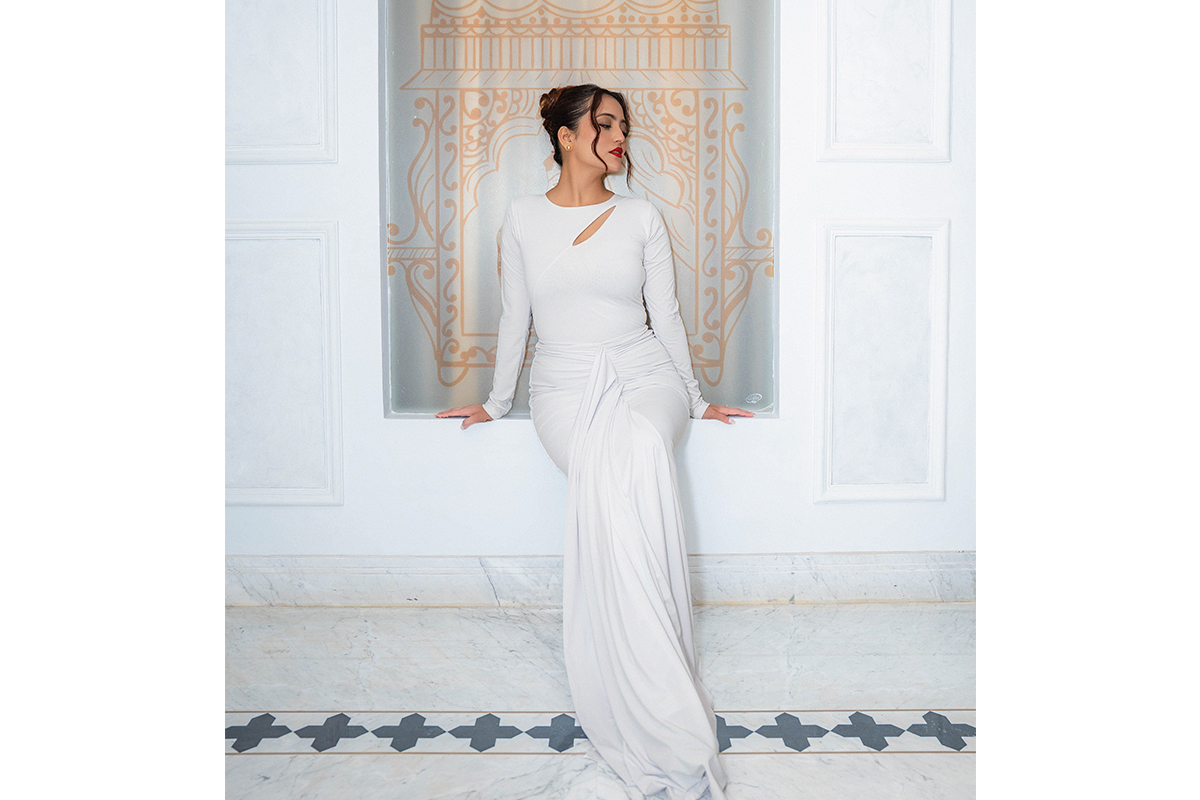
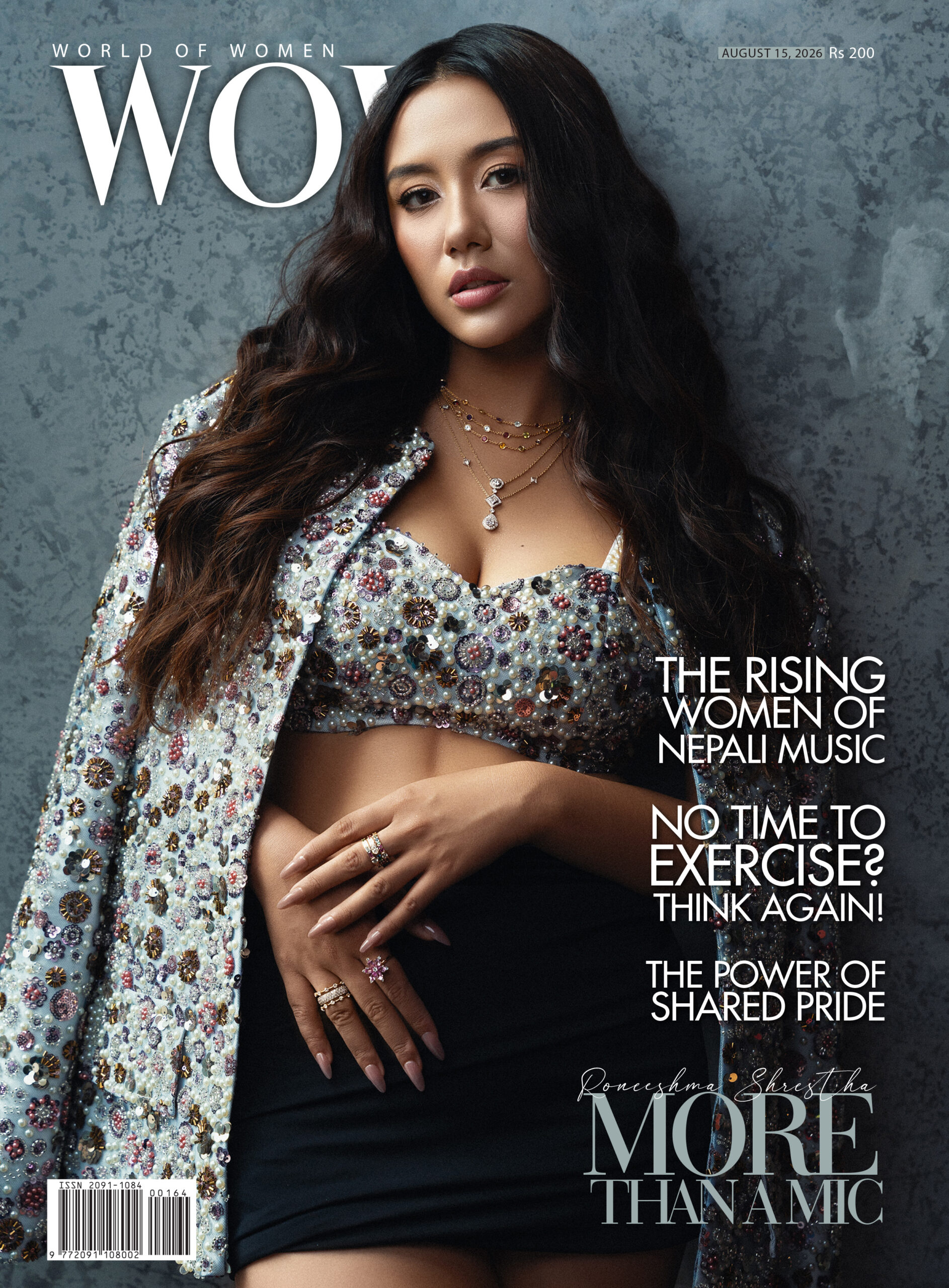
Roneeshma Shrestha
Roneeshma Shrestha has built her career around being seen and heard but not quite in the way one might imagine when thinking of someone who lives in front of a camera. She is not a singer, although music has recently found an intriguing place in her journey. She is not an actor, although she has begun experimenting with characters. And while she has become a recognisable face for brands, she has never been interested in saying yes to every campaign that comes her way.
At her core, Roneeshma is a host. An emcee. Someone who thrives on the unpredictability of a live audience, the adrenaline of a packed room and the split-second decisions that come when there is no option to say, “Let’s do another take.”
Yet, after years of building a career around words, she has discovered something rather unexpected: the power of saying things without them.That discovery has come through two music videos, Jun Na Heri and Pagal Pagal, both by Wangden Sherpa and Sushant Ghimire. The first arrived in 2025, with Roneeshma at the centre of its story as two men compete for the attention of the same woman. The video became one of the year’s more visible Nepali music releases, crossing millions of views and revealing a different side of the familiar emcee.
More than a year later, she returned for Pagal Pagal, this time alongside singer Melina Rai. Released in August 2026, the project had, interestingly, begun taking shape around the time Jun Na Heri was being made.
For Roneeshma, the two videos have become less about adding another title to her CV and more about discovering what happens when she steps away from the person audiences already know. “As a host, I am Roneeshma – my personality, my energy, my instinct, my way of connecting with people. But with a music video, you are asked to step away from yourself and surrender to a character, a mood and a story,” she says. “I get to leave myself behind for a little while and enter someone else’s world. There’s something almost magical about that.”
It is a side of performance she had admired long before she had the opportunity to experience it herself. She remembers being fascinated by actors who could appear as completely different people from one project to another. There was something almost childlike about that fascination,the idea that one person could inhabit an entirely different world and make everyone watching believe it.
The music videos gave her a small taste of that transformation. They also taught her something particularly interesting for someone whose professional life has been built around communication: silence can be communication too.
“As a host, I have always lived through words, but over the years I have also realised that sometimes a gesture, an expression, or simply the way you make someone feel can say far more than words ever could,” she says “In a music video, you have to take that instinct and strip it down even further. There are no words to lean on. You are left with your eyes, your expressions, your body, your stillness. A single look can carry an entire emotion.”
That is perhaps the biggest difference between Roneeshma the host and the woman audiences see in the music videos. On stage, her personality is the instrument. In a music video, she has to put that personality aside. And she likes the challenge.
“I think that’s what makes it so intriguing for me, discovering another way of expressing myself.”
Finding Her Place
Roneeshma’s career has never followed a particularly straight line. Before entering the entertainment industry, she describes herself as a corporate girl. Hosting was not necessarily the grand plan she had mapped out for herself. It was an opportunity that presented itself, and she decided to find out what might happen if she took it seriously.
The rest has been a gradual accumulation of opportunities, consistency and believe in oneself. Live events came first, followed by larger stages, television and brand work. Her television journey included The Voice Kids, where she became a familiar presence to families across Nepal. She has also hosted major concerts and corporate events – environments where the script can change in a matter of seconds and the person holding the microphone simply has to keep going.
That experience has shaped her more than any formal idea of confidence ever could.
“When you have stood in front of 20,000 people, you develop a certain level of confidence that comes from knowing you have that many eyes on you, and somehow, you learn to embrace it,” she says.
Interestingly, she does not consider a giant audience the intimidating part.
Give her 20,000 people in a venue and she is comfortable. Put her alone in a room with a phone camera and ask her to create content, and she might struggle more.
“I actually find it much more comfortable standing in front of 20,000 people than sitting at home in front of a camera trying to create content,” she admits. “People find that very strange, but I think I have always been someone who thrives around people. I feel more proactive, more spontaneous and, honestly, more creative when I am surrounded by people.”
A Different Kind of Stage
Her work has taken her beyond Nepal too, including an opportunity to host Coke Studio Bharat in India. For someone who grew up listening to artists such as Shreya Ghoshal, standing on a stage connected to a platform of that scale was inevitably surreal.
“I was starstruck,” she says, laughing. “For a moment, I couldn’t quite believe what I was witnessing because Coke Studio Bharat is such a massive platform. And for someone who had grown up listening to artists like Shreya Ghoshal, actually sharing the stage with them was such a surreal, full-circle moment.”
But once the initial awe wore off, the host in her took over. There were practical differences too. She had to incorporate Hindi into her hosting, something culturally familiar but which still required her to think differently about how she communicated.Then there was the audience. Delhi and Guwahati brought their own energy but Roneeshma found something reassuringly universal in the experience.
“Whether it was Delhi or Guwahati, I felt completely at home. It reminded me that language is never really a barrier; it’s about how you make people feel.”
The experience also gave her a new appreciation for Nepal’s own entertainment and events industry. It is easy, particularly when working across borders, to assume that bigger markets automatically mean better productions. Roneeshma came away with a different conclusion.
She had seen the scale of the Indian production environment, but she had also seen Nepali teams deliver ambitious shows and work with some of the biggest artists in the world.
“I think that was something I felt very proud of,” she says. “You go somewhere thinking you are there to learn, and you come back realising you also have so much to bring to the conversation.”
For someone who has made communication her profession, that exchange seems to matter. She is interested in learning, but not in losing the perspective she brings from Nepal.
From Jun Na Heri to Pagal Pagal
In Jun Na Heri, she was at the centre of a playful romantic storyline. The song, released by Wangden Sherpa and Sushant Ghimire in April 2025, blended contemporary pop with traditional Nepali musical elements, while the video used a familiar romantic set-up, with Roneeshma caught between the two male leads.
Then came Pagal Pagal. The second video reunited her with Wangden and Sushant, this time with Melina Rai also part of the cast. It arrived in August 2026, giving audiences another glimpse of Roneeshma in a role that exists outside the polished, energetic personality they associate with her hosting work.
The two projects have created a small but interesting thread in her career. Music is not her profession. But music videos have become a space where she can play—and she seems to enjoy precisely that distinction.
“With projects like Jun Na Heri and Pagal Pagal, what I discovered is how much I love becoming someone else in front of the camera,” she says. “I think it brought out the child in me who used to be mesmerised by watching actors transform themselves on screen.”
The Film Question
Ask Roneeshma whether she wants to act in films and she laughs first.
“Honestly, I love being asked this question because it still makes me go, ‘Really? People actually see me doing that?’” But beneath the humour is genuine interest. She has received offers. She has considered them. Yet she is reluctant to make a film simply for the sake of being able to say she has acted in one.
Cinema, she believes, deserves more commitment than that. She is fascinated by the idea of spending two or two and a half hours inside a character’s life – not simply appearing in a film, but carrying an audience through that person’s emotions, choices and experiences.
“There’s something almost fairytale-like about that for me,” she says. “That ability to create a world and make people believe in it, and perhaps leave them carrying a little piece of that world with them, is incredibly fascinating to me.”
If she does it, she wants to prepare.
“I don’t know if I have the bandwidth to be a full-time actor in the long run, but I would absolutely love to explore a few characters if the right opportunity comes along,” she says. “For me, it would have to be the right story, the right character and, most importantly, the right time in my life to truly commit to it.” And her dream first role?
“I’d want to do the complete opposite of what people expect from me,” she says. “People usually see me as bubbly, vibrant and full of energy, so I’d love to step into a character that is almost unrecognisable from that version of me.”
Her taste leans towards the darker, stranger side of cinema. Fictional worlds. Horror. Thrillers. Fantasy. She wants a role that makes her uncomfortable.
“Give me a character that asks me to shed everything people already know about me and disappear into a world completely unfamiliar, but also one that leaves an impact, something that stays with people even after the film ends.”

The Brand Associations
There is another part of Roneeshma’s public life that has grown steadily alongside hosting: brands. She has become a familiar face in campaigns and endorsements, but she remains selective about what she puts her name behind.
For her, the starting point is belief.
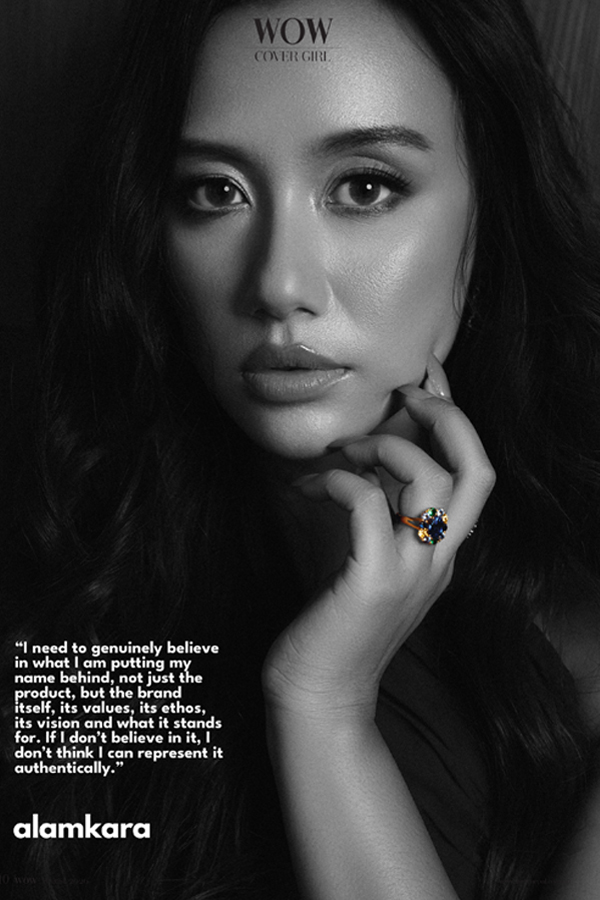
“I need to genuinely believe in what I am putting my name behind, not just the product, but the brand itself, its values, its ethos, its vision and what it stands for. If I don’t believe in it, I don’t think I can represent it authentically.”
It is a philosophy that speaks to something larger than endorsement. In an era when visibility can easily become currency, Roneeshma seems more interested in alignment than exposure.
Beyond the Spotlight
Entrepreneurship is the one space she has wanted to enter for some time. It is perhaps the most significant departure from everything she has done so far.
Hosting requires her to interpret someone else’s brief. An endorsement requires her to align herself with an existing brand. Even acting involves entering a world created by someone else.
Entrepreneurship would mean creating the world herself.
“I have always had that side of me that wants to build something of my own,” she says. “But I think it’s about finding the right time and, more importantly, being in a place where I can truly commit to it. I don’t want to do it half-heartedly.”
She is not putting a date on it. There are things she wants to do, but she does not feel the need to announce a deadline for each one. She would rather be ready than rushed.
There is also an international ambition that has grown after her experience in India. Hosting outside Nepal opened her eyes to possibilities she had not necessarily considered before.
Host First
For all the talk of music videos, acting, brands, international work and entrepreneurship, there is one thing that remains uncomplicated: Roneeshma loves hosting. She wants to be remembered for it. “At my core, I think I’ll always want to be remembered as a host, and hopefully, a really good one,” she says.
She has hosted concerts, corporate events and television. She has worked with children on The Voice Kids. She has stood in front of enormous crowds. She has crossed borders for international projects. She has appeared in music videos and begun thinking seriously about acting.
“From concerts and corporate events to television with The Voice Kids, I’ve already experienced very different facets of hosting, and I’ve realised there is still so much depth to the craft. Every format, every audience and every room asks something different of you.”
Text: Ankita Jain
Photographer: Shravan kay Shrestha @shravan.kay.shrestha
Assist: Anil joshi, pj studio @pj__studio
Stylist : Ashim Ranabhat
Wardrobe: Anugraha Adhikari
Rohee fashion studio
Neonthelabelsofficial
Jewellery partner: Alamkara @alamkara.np
Makeup artist: Mila Shrestha @Glambymillyy
Hair artist: Durga malla @Hairartist.durga
Assist: siwani rijal
Location partner: Moxy Kathmandu