
Disaster has a way of reducing life to its essentials. A home becomes shelter. A road becomes a lifeline. A telephone call becomes reassurance. And, in the space between fear and survival, the instinct to help another person can become an act of extraordinary consequence.
When disaster struck Rasuwa and Nuwakot, the destruction was immense. Homes disappeared, roads were swept away and families were left searching for loved ones. Landscapes familiar for generations were altered in moments. Yet amid the devastation, another story began to emerge, not of what had been lost but of the people who chose to step forward.
They came with different skills and from very different lives. Mountain rescuers carried ropes and technical expertise into terrain few could navigate. National security forces moved to the frontline of rescue operations. An educator moved hundreds of students towards safety. Scouts mobilised. Volunteers found ways through broken roads to carry relief to isolated communities. Counsellors tended to wounds that could not be seen. Medical professionals worked in conditions far removed from the controlled environments in which they had been trained.
None could undo what had happened. What they could do was respond.
Courage, in their stories, is rarely theatrical. More often, it appears as responsibility: the decision to use what you know, offer what you have and remain when circumstances give you every reason to turn away. It is found in competence, compassion and the quiet understanding that, in a crisis, showing up can itself become an act of hope.
These are the Impact Heroes – the people who, when confronted by extraordinary loss, chose to be useful.
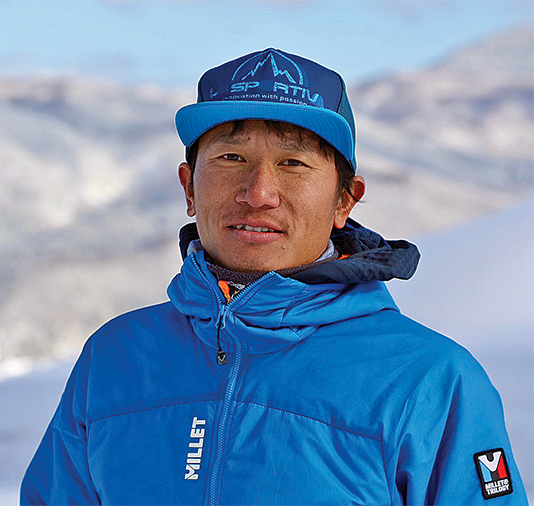
Ashish Gurung
There are places where experience becomes more than expertise; it becomes instinct. For Ashish Gurung, an internationally certified IFMGA Mountain Guide, Mountaineering Instructor and Expedition Leader, years spent negotiating altitude, unstable terrain, ropes and technical rescue systems had prepared him for some of the most unforgiving environments in the world. During the Rasuwa flood, those skills suddenly assumed an entirely different urgency.
Deployed alongside fellow mountain rescuers to flood – affected hydropower areas in Rasuwa, Ashish entered terrain made treacherous by unstable ground, debris and mud-filled tunnels. The techniques ordinarily associated with Nepal’s mountains – rope systems, technical access, terrain assessment and rescue – became essential tools in a disaster unfolding far below the summits. His experience is a reminder that, in moments of crisis, expertise matters most when someone is willing to put it to use.
What made you step forward when you could have simply stayed safe yourself?
When I reached the Rasuwa-Bhotekoshi disaster area, what I saw was extremely painful. Houses had been swept away, and many families had lost their loved ones and everything they had. Seeing the survivors searching for their family members was heartbreaking. As a professional and internationally certified mountain guide, I am used to steep terrain, cliffs, ropes and technical rescue systems, including long-line rescue. So, when I saw the situation, I felt that if my skills could help someone, why not use them? In such situations, I believe we should not think only about our own safety when we have the ability and experience to help others. I simply felt that I had the skills, and it was my responsibility to put them to use.
What was the most difficult moment you faced during the floods, and how did you get through it?
One of the moments I will never forget was during a body-recovery operation near Chilime Hydropower, close to Syabrubesi. Seeing what appeared to be a young girl, around 15 to 18 years old, deeply affected me. I still carry that image in my mind. Despite the emotions, I had to stay strong and continue the work. There was no time to let the emotions take over because the situation required us to remain focused on what had to be done. This experience taught me that even in the most difficult situations, we have to control ourselves, face reality and keep moving forward. Some moments stay with you forever, but you learn to carry them while continuing to do the work that needs to be done.
In the middle of chaos, what is one human moment you will never forget?
I also realised how important specialised equipment is for tunnel rescue. If there is any possibility that people are still alive inside, we need the right pumps, hoses, machinery and technical rescue equipment immediately. Every minute matters. I believe all possible resources should be mobilised as quickly as possible to give people the best chance of survival. What I saw in Rasuwa is something I will never forget for the rest of my life. Beyond the destruction, what stayed with me was the urgency of the situation and the realisation that, in a disaster, having people willing to help is not always enough. We also need the right resources and equipment to turn that willingness into effective action.
What did this experience teach you about the strength and resilience of Nepali communities?
The biggest thing I learnt was how important it is to hold yourself together. Once you make yourself strong, you have to learn to control your emotions and, no matter how difficult the situation is, keep going and even smile with others. That was one of the biggest lessons I took from this experience. I also saw how people supported one another when they themselves were going through loss and uncertainty. Local people, families and relatives were helping those who had been displaced. That sense of community showed me that resilience is not always about being unaffected by tragedy, sometimes it is simply about finding the strength to stand up, support someone beside you and continue despite everything that has happened.
Were there moments when you felt helpless? How did you turn that feeling into action?
I have personally taken around 30-35 of my relatives and friends to that area in the past, so being there during this disaster sometimes made me feel very emotional. But I learned that you have to manage and control those emotions yourself and continue doing what needs to be done. When I reached the villages in the Bhote Koshi area of Rasuwa, I realised that, for the immediate situation, food and accommodation in the upper villages were not the biggest problems. Local people and relatives were helping each other, and those who had been displaced were being supported. That helped me understand that the needs of a disaster-affected community can be different from what we assume from outside. Sometimes the most important thing is to first understand what people actually need and then focus your efforts where they can make a difference.
Beyond immediate relief, what do you believe Nepal needs to do differently to prepare for disasters like this?
Communication is a major issue. Because there is no electricity in many places, people cannot even charge their mobile phones. This has made it extremely difficult for families to communicate with their children, relatives and loved ones who are living in Kathmandu or abroad. Another very important issue that the Nepal government needs to focus on immediately is the hydropower tunnel. There is still a big question about the situation inside the tunnel and how far rescue teams can go
We urgently need the necessary equipment, resources and skilled manpower to clear the mud and debris and reach deeper inside the tunnel. This work needs to be started and supported as quickly as possible. Beyond this particular disaster, I think Nepal needs to strengthen its preparedness before disasters happen. Rescue equipment, trained manpower, communication systems and coordination between different teams need to be readily available. When a disaster happens, there is no time to start arranging everything from the beginning. We need to be prepared beforehand.
When the headlines fade and the cameras leave, what do you hope people remember about this crisis?
I hope people remember the human cost of what happened in Rasuwa. Behind every number is a family, a home and a life that has been changed forever. I hope people remember the survivors who are still trying to rebuild their lives and the families who are still waiting for answers about their loved ones. I also hope this disaster reminds us that rescue and preparedness cannot be limited to the immediate response. Nepal needs better communication, specialised rescue equipment, skilled manpower and stronger disaster-preparedness systems. Most importantly, I hope we remember the spirit of the local communities who supported one another through an incredibly difficult time. Their strength showed that, even in the middle of devastation, people can come together, support each other and keep moving forward.
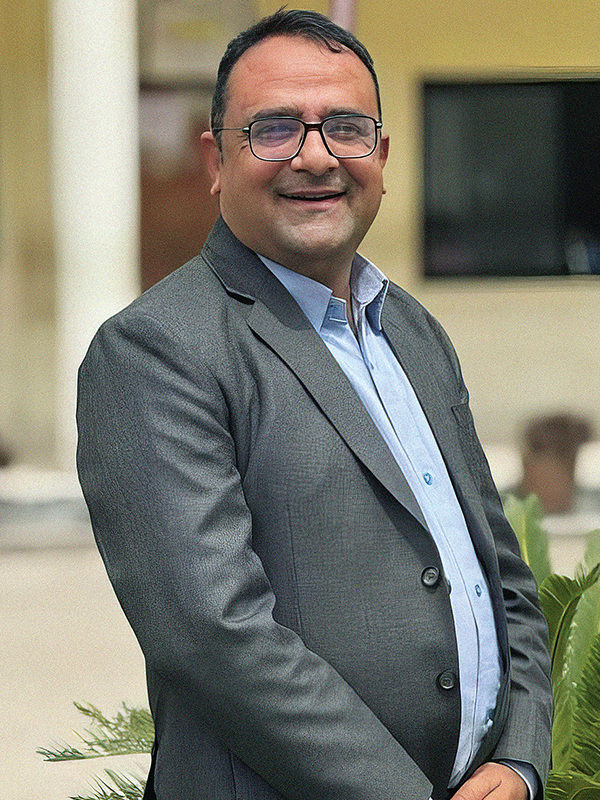
Rajendra Dawadi
Sometimes leadership is measured in years. Sometimes it is measured in seconds. For Rajendra Dawadi, Principal of Tribhuvan Trishuli Secondary School in Bidur, Nuwakot, the defining decisions came with almost no time to make them. When an urgent warning arrived that floodwaters were approaching, he immediately coordinated the evacuation of approximately 900 students and 16 staff members to safer, higher ground.
The school would later be devastated by the flood. Its students and staff had already been moved out of harm’s way. For Rajendra, the loss was deeply personal: this was not simply the institution he led, but the school he himself had once attended. His story is therefore as much about attachment and loss as it is about decisive leadership – the instinct to protect a community before there was time to fully comprehend what was about to disappear.
What made you step forward when you could have simply stayed safe yourself?
Looking back at that day, everything was washed away. It was devastating, horrible and deeply tragic. It is honestly something I do not even want to remember, because it was such a heartbreaking event. My colleagues and students were there, and if we had been even about 30 seconds late, we could all have been washed away too. We could have lost our lives. When we received the news that the floodwater was coming, we immediately evacuated the area and tried to get to safety as much as possible. But what made me step forward was the need to save someone. As a human being, I felt I had to help, and as a principal, I felt that responsibility even more strongly. I felt I needed to do whatever I could to help those around me.
What was the most difficult moment you faced during the floods, and how did you get through it?
The most difficult moment was when the flood was actually hitting and I was trying to evacuate on a motorcycle. The wave was so fast and so high that I realised I had no choice but to leave the motorcycle and run for my life.
Within a few seconds, I watched everything being washed away right in front of me. Once I reached a safer place, I stood there with my hands on my head, just looking at the school. That was the place where I had spent my entire childhood, and suddenly, I was watching it being washed away. I wasn’t only the principal of that school; I had also been a student there. That place was like my home. Seeing it disappear in front of me was one of the most difficult moments of my life.
In the middle of chaos, what is one human moment you will never forget?
I think I will never forget the moment when our school accountant, Saroj Shrestha, urgently informed us that the flood wave was coming. It may have seemed like a simple warning at that moment, but it gave us the time we needed to get ourselves to safety. Everything was happening so quickly, and there was very little time to understand the seriousness of what was about to happen. If he had not warned us when he did, the situation could have been completely different. Everything around us could have been washed away, and we might not be here today to speak about what happened. Sometimes, a single warning, given at the right moment, can mean the difference between life and death.
What did this experience teach you about the strength and resilience of Nepali communities?
This experience taught me that even after facing something so devastating, Nepali communities still hold on to hope. Everything we had known was suddenly taken away, yet we are still thinking about rebuilding, starting again and moving forward. We are hopeful that we will rebuild our school very soon and create a new environment for our students. For me, it feels as though we have been given a new life. We survived something that could have ended very differently, and I see that as a second chance. Now, we have to begin again, from the concrete foundations to rebuilding the school and creating a safe environment for everyone. It will not be easy, and we know that rebuilding will take time, but there is a determination among us to do it. In that sense, this experience has shown me that resilience is not simply about surviving a disaster; it is also about finding the courage to begin again after it.
Were there moments when you felt helpless? How did you turn that feeling into action?
Of course, there were moments when we felt completely helpless. At that time, there was negativity and sorrow everywhere, and it was difficult to process everything that was happening around us. We had lost so much, and there was a lot of fear and uncertainty about what would happen next. But in that situation, I felt that we could not allow ourselves to remain trapped in those negative emotions. We had to be hopeful. I believe that being optimistic was important for all of us. We needed to give each other hope and the strength to move forward. We cannot change what has already happened, but we can choose how we respond to it.
Beyond immediate relief, what do you believe Nepal needs to do differently to prepare for disasters like this?
Relief is one matter, but I think Nepal now needs to think much further ahead. We need to look at the increasing risks brought by global warming and climate change and understand how these could affect us in the future. Nepal may contribute very little to global emissions, but we are still experiencing the consequences of a changing climate. So, we need to prepare ourselves for what may come. One important step is to take greater precautions around rivers and other areas that are vulnerable to flooding. We need to make sure that schools, institutions and settlements in such areas are located in safer places and that proper safety measures are in place. We also need clear warning signs, early-warning systems and other forms of warning and communication that can alert people before a disaster reaches them. Most importantly, people need to be trained on what to do and how to respond when such situations occur. Future planning, safer infrastructure, early warnings and proper disaster response training all need to become part of how we prepare for the future.
When the headlines fade and the cameras leave, what do you hope people remember about this crisis?
I can only hope that people remember the lives that were lost and the families who lost their loved ones and everything that was dear to them. So many people went through unimaginable pain, and I sincerely hope that we never have to see such a tragedy again, not in Nepal and not anywhere in the world. But if there is one thing I would want people to remember from this crisis, it is the importance of helping one another. In times of crisis, we should come together as human beings and help each other in every way and with every possibility available to us. We have seen people coming forward to help Nepal during this difficult time, and that support has meant a great deal. I hope that same spirit of humanity continues wherever and whenever people are facing a crisis.
Disasters may take away homes, belongings and even lives, but compassion and solidarity can remind people that they are not alone. If there is anything I hope remains after the headlines fade, it is that sense of humanity, the willingness to stand beside one another when someone needs help the most.

Sadiksha Scarlet Thapa
For Sadiksha Scarlet Thapa, action has always arrived before hesitation. The Managing Director of Nyadha House Bed & Breakfast had long been the person who stopped for an injured street animal or responded instinctively when something was wrong. When the Rasuwa floods struck, that instinct expanded into something larger.
Working with more than 30 young people and volunteers, Sadiksha helped collect, coordinate and organise essential supplies for flood-affected families. What began as a youth-led relief effort quickly became a lesson in the less visible complexities of humanitarian response: not simply gathering what people were willing to give, but understanding what communities actually needed and finding a way to reach them. In the process, compassion became logistics, and goodwill became a question of preparedness.
What made you step forward?
Ever since the earthquake, which was the first major disaster crisis of my life, I have found it very difficult to just stay home and watch things unfold. Even before that, I had always been the person who would stop to rescue an injured or sick street animal whenever and wherever I could. It has always felt less like a conscious decision and more like an automated response. When there is a crisis, my immediate response has always been “Okay, what do I need to do? Let’s go.” This instinct has led me to places where I have realised now that I may not have the necessary skills and knowledge to do what I am supposed to do. I have always been willing to step forward, but I have also learnt that I need to be better prepared to do so responsibly. That is why basic first-aid training has become particularly important to me.
What was most difficult for you during the relief efforts?
I think the most difficult part was not the collection of relief materials, but figuring out how to actually get them to the people who needed them. We were incredibly grateful for the response from our friends, families and communities. We had never planned to operate at anything close to that scale, and I was genuinely amazed by how much people came together to contribute. But once we had accumulated enough supplies, we learnt that some of the more accessible areas, particularly Nuwakot, were already receiving an overwhelming amount of relief.
We wanted to find a route to places that were harder to reach, so we decided to head towards Dhunche. The road was still being built, and the first ones from our team, Chirag Goyal and Rajat Agrawal, ended up following road-construction dozers for much of the journey. We were told the journey would take around six hours, but it took 36. Our vehicles from Kathmandu could only make it part of the way.
We had to find another Eicher truck, convince the driver they found it on the way, and then unload and reload all the supplies onto the new vehicle before continuing. Our team was also seriously underprepared for what the journey would actually demand. We simply hadn’t fathomed how difficult the route would be.
There were stretches where there was nowhere to sleep, very little certainty about what lay ahead, and they had to rely heavily on the local people. With no network, our team in Kathmandu also had very little communication with them. Eventually, after 36 gruelling hours, they reached Dhunche. Looking back, I think that journey taught us as much about preparedness as it did about relief work. We learnt that getting supplies together is only half the job. You also need to prepare for the journey itself.
In the middle of chaos, what is one human moment you will never forget?
In the middle of all that destruction, there were moments that felt almost strangely ordinary. A particular scene that will probably never leave my mind was watching a dozer clear mud and sand from a half-buried house, while a woman stood on the terrace of that same house, drying her clothes. I remember just standing there, trying to process what I was looking at. Around us, someone was waiting for food at the holding centre. Children were playing. Someone was carrying sacks of bhuja back from the distribution centre.
People were clearing whatever they could from the remains of what had been their homes. At that moment, I understood, in a visceral way, that life moves on for the living. The morning still rises the next day, people still have to eat, clothes still need to be dried, homes still have to be rebuilt. I think this particular image stayed with me more than any of the images of the destruction.
The beauty and the tragedy of life are that it moves on. And the most human thing to do when everything falls apart is help each other on the way until death finally reaches us too.
What did this experience teach you about the strength and resilience of Nepali communities?
What I saw was the extraordinary capacity of people to come together when something goes wrong. What I hope we can build on from that is not just a culture of responding after a disaster, but stronger communities and systems that are prepared before the next one happens.
Were there moments when you felt helpless? How did you turn that feeling into action?
Absolutely. We all have our limitations. When I first saw the news, the images, the information from the affected areas, there was a feeling that what we were doing was not nearly enough. The scale of the disaster was paralysing. What do we do first? Where do we start? But we tried to make the problem smaller and manageable. We divided our collection center into three different departments: food, clothes and medical supplies, and recorded every collection and every dispatch. I also learned that you have to accept that you cannot fix everything. The moment you stop expecting yourself to solve the entire crisis, you become much more useful. You can focus on what is actually within your reach and do that properly.
Beyond immediate relief, what do you believe Nepal needs to do differently to prepare for disasters like this?
I believe we need to have a culture of preparedness rather than a culture of response. What I have realised is that Nepal has a great capacity to mobilise the public after a disaster, so what if we could have these people prepare for the disaster or crisis itself? Disaster preparation needs to be at different levels, each community, at a local level, needs at least one first responder. They need basic first aid and emergency response skills.
Local government bodies need to have trained response teams. There also needs to be coordination between government agencies, humanitarian organisations, local communities and spontaneous volunteers. During a crisis, there is often an enormous amount of goodwill, but goodwill without coordination can become inefficient. You can have supplies sitting in one place while another community is still waiting for them. That was what we experienced firsthand during this crisis.
The relief campaign also made us realise that there was a much bigger gap we wanted to work on. That is what led to the birth of Crisis Connect Nepal, an initiative focused on disaster preparedness and community-level response. We hope to build a network of trained and skilled volunteers who can act as first responders in their own communities and help people respond more effectively when a crisis happens.
When the headlines fade and the cameras leave, what do you hope people remember about this crisis?
I hope we remember humanity and I also hope we remember to be better prepared for the next time. We shouldn’t need another disaster to remind us that we need first-aid skills, trained volunteers, reliable communication, clear routes and better systems. I would like this crisis to be remembered not only for the destruction it caused, but for what it taught us about how we can be better prepared for the next one.
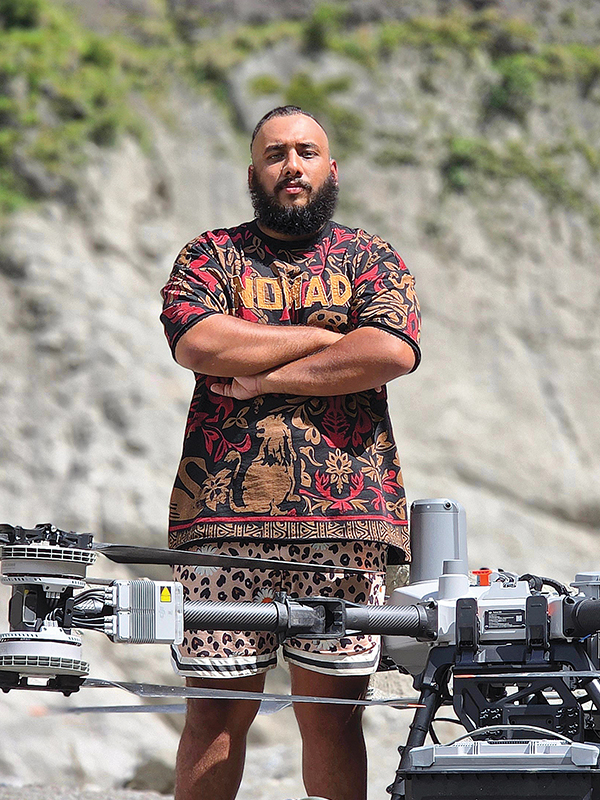
Irfan Khan
For Irfan Khan, service has repeatedly placed him at the edge of difficult moments. As Founder and President of Team Sankalpa, his work has moved between community service, animal welfare and humanitarian response, including support for people affected during Nepal’s Gen Z movement.
The floods brought another kind of urgency. Irfan travelled into affected communities to provide relief to people and animals left vulnerable by the disaster, confronting scenes of loss that made distance impossible. His approach is grounded in a simple conviction: one person may not be able to save everyone, but that is never a reason to save no one. Sometimes, making a difference begins with the decision to show up.
What made you step forward when you could have simply stayed safe yourself?
What made me step forward was seeing the scale of the destruction with my own eyes. I saw dead bodies of people and animals, families who had lost their homes, and people standing in shock, not knowing what to do next. At that point, staying safe myself did not feel like enough.
I kept thinking about the people who were still alive and needed someone to stand beside them. I wanted to help them survive the immediate crisis, but more importantly, I wanted to help them overcome the trauma they were going through.
I knew I could not save everyone, but I also believe that not being able to save everyone should never become an excuse for saving no one. If I could make even one person’s situation a little better, then stepping forward was worth it.
What was the most difficult moment you faced during the floods, and how did you get through it?
The most difficult part for me was reaching the affected areas. The floods had completely destroyed or swept away sections of the roadway, and what would normally be a two-hour journey turned into almost twelve hours.
There were moments when I genuinely wondered whether we would even reach our destination. Our vehicle got stuck in extremely difficult off-road conditions, and there were no easy alternatives. But we had a team with us, and that made a huge difference.
Everyone got out of the vehicle. We pushed, pulled, carried, and helped each other through the difficult sections. Nobody was thinking about whose job it was or who was responsible. We were simply trying to move forward. That experience reminded me that sometimes the biggest strength you have during a disaster is not your vehicle, your equipment or your resources; it is the people standing beside you.
In the middle of chaos, what is one human moment you will never forget?
One moment that will always stay with me happened when we were distributing relief supplies. There was an elderly man standing quietly at a distance. He wasn’t pushing forward or asking for anything. He was simply watching everyone else receive help.
When I approached him and asked if he needed something, he initially said, “No, give it to those who need it more.” We eventually found out that he had lost almost everything. Yet his first thought was still about someone else. We gave him some supplies, and before we left, he held my hand for a few seconds and simply said, “The fact that you showed up is more than enough.” That sentence stayed with me. In the middle of destruction, people were still showing kindness, dignity and concern for one another. That is something I don’t think I will ever forget.
What did this experience teach you about the strength and resilience of Nepali communities?
This experience showed me that Nepali communities are far stronger than we sometimes realise. I saw people who had lost their homes still helping their neighbours. I saw young people carrying supplies through dangerous roads, police officers and rescuers working despite exhaustion, locals guiding us through difficult routes, and ordinary people sharing whatever little they had with others.
Nobody waited for someone else to solve everything. When disaster strikes, we often see the destruction first. But behind that destruction, there is another story, the story of people rebuilding, supporting each other and refusing to give up.
It taught me that resilience is not about never being broken; it is about being broken and still finding the courage to stand back up. And I believe that spirit is one of Nepal’s greatest strengths.
Were there moments when you felt helpless? How did you turn that feeling into action?
Yes, many times. There were moments when I stood in front of situations where I knew I could not fix everything. So, whenever I felt helpless, I tried to ask myself a very simple question: “What can I do right now?”
Maybe I couldn’t rebuild someone’s entire house, but I could give them food or do something for them. Maybe I couldn’t undo their loss, but I could sit beside them and listen. Maybe I couldn’t save every animal, but I could rescue one. That mindset helped me turn helplessness into action.
Beyond immediate relief, what do you believe Nepal needs to do differently to prepare for disasters like this?
Relief is necessary, but relief alone cannot be our disaster strategy. We need to become much more prepared before disasters happen.
First, early warning systems need to reach ordinary people, especially communities living in high-risk areas. Second, our roads and infrastructure need to be built with disaster resilience in mind. During this flood, we experienced firsthand how quickly a road can disappear and how isolated communities can become when connectivity fails.
Third, we need properly equipped and trained local emergency-response teams. The first people reaching a disaster zone are often local residents, police officers, volunteers and community members. They need training, equipment and clear systems to respond effectively.
Fourth, there needs to be better coordination between government agencies, security forces, NGOs, volunteers and local communities. During disasters, time is everything. Duplication of efforts in one area while another area receives nothing is something we need to prevent.
And finally, disaster preparedness should become part of our culture and education, not something we think about only after tragedy strikes. Schools, communities and families should know basic evacuation procedures, first aid, emergency communication and how to protect vulnerable people and animals.
When the headlines fade and the cameras leave, what do you hope people remember about this crisis?
I hope people remember that life is extremely short. And perhaps the biggest lesson from this disaster is simple: we are never greater than Mother Nature, and we should never be too proud to help another life.
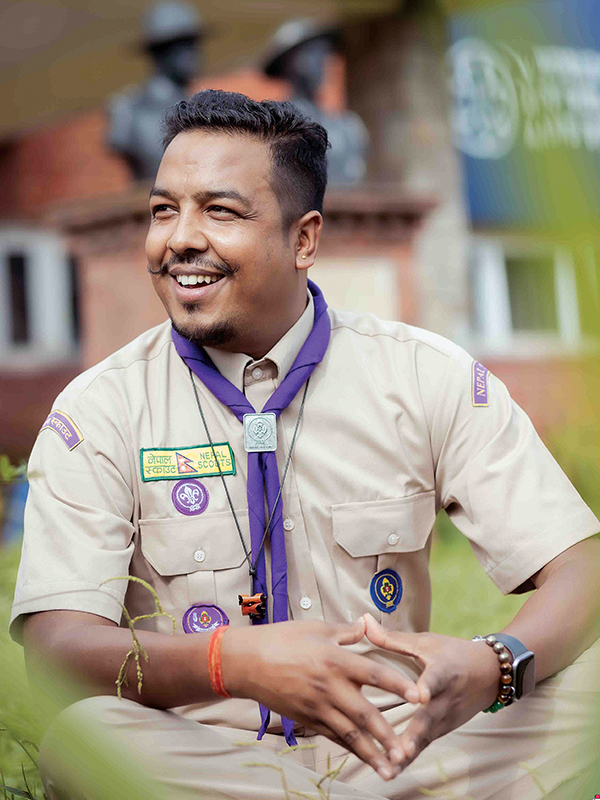
Santosh Kumar Thapa
Leadership reveals itself differently in a crisis. Titles matter less than presence; plans matter less than the ability to respond when certainty disappears. For Santosh Kumar Thapa, years with Nepal Scouts had already shaped service into something more than an ideal, it was a responsibility.
When the Rasuwa floods struck, Santosh helped mobilise Nepal Scouts within hours. Roads had vanished, families were displaced and the scale of destruction was still becoming clear. There was little time for ceremony or hesitation. The task was immediate: organise, collaborate and serve wherever help was needed. In the Scout tradition of being prepared, he found another imperative – to be available.
What made you step forward when you could have simply stayed safe yourself?
I think the answer lies in who I have become through my journey in Scouting. Since childhood, I have always been someone who could not simply sit back and watch when something needed to be done. I was active in sports, technology, social service, adventure and teamwork. But more than anything, Scouting taught me a deeper lesson – not just how to be prepared, but how to be available for others when they need you most.
What was the most difficult moment you faced during the floods, and how did you get through it?
This flood was unlike anything I had experienced before. The scale of the destruction was almost beyond imagination. For me, and for many of our volunteers, the most difficult part was not the physical hardship, it was controlling our emotions when we saw the aftermath in Rasuwa and Nuwakot. Entire settlements looked as if they had simply disappeared. Places where people had lived, worked, raised their families and built their lives were buried under mud and debris. In some places, the destruction was so extensive that it was difficult to recognise the communities we knew before the disaster. It was devastating and, honestly, heartbreaking.
Then came another very practical challenge: where would we even operate from?
When we mobilised our volunteers, we could not find a proper or stable place to establish our base. Most of the remaining buildings were already being used as temporary shelters by survivors. Much of the surrounding area was covered with enormous amounts of mud and debris, nearly 10 meters in some places. Roads and familiar spaces had disappeared, and the environment itself had become extremely difficult and dangerous to work in.
In the middle of the chaos, what is one human moment you will never forget?
On the morning of August 29, I came across a video posted by one of our Scout members. He was with children who had survived the floods in the Trishuli area. Some of those children had lost their parents, while others were still waiting and hoping for news of family members who remained missing. In the middle of all that pain and uncertainty, our Scout member gathered the children around him. Instead of talking about the disaster, he started engaging them in Scout action songs and games. When I watched that video, my eyes filled with tears.
What did this experience teach you about the strength and resilience of Nepali communities?
If there is one thing this disaster made absolutely clear to me, it is this: You can destroy a home, a road or a bridge with a flood, but it is much harder to destroy the spirit of a community that refuses to give up. That is the strength I saw in Nepal. And as a Scout, it made me even more determined to build communities that are not only resilient after disasters, but prepared enough to face them before they happen.
Were there moments when you felt helpless? How did you turn that feeling into action?
From the very beginning, the government recognised Nepal Scouts as a capable volunteer organisation and gave us the space and responsibility to put the Scout spirit into action. On the day of the flood, we immediately deployed two of our expert responders, Rajesh and Arun, to Rasuwa. They joined the Nepal Army’s rescue teams and took part in tunnel rescue and other emergency operations. They were able to help rescue people alive, while also assisting in the recovery of those who had tragically lost their lives. They recovered hundreds of bodies during the operations. Those moments were extremely difficult emotionally.
Instead, we focused on what we could do: mobilising trained volunteers, coordinating with the security forces, supporting rescue and relief operations, reaching affected communities and bringing the Scout spirit of service to the frontline. So, rather than turning a sense of helplessness into frustration, we tried to turn every limitation into a reason to collaborate. Where we lacked resources, we partnered. Where we lacked equipment, we coordinated. Where we could not do everything ourselves, we worked alongside those who could.
And perhaps that is one of the most important lessons I have learned from this disaster: You don’t have to be able to do everything to make a difference. You simply have to be willing to do what you can, with everything you have.
Beyond immediate relief, what do you believe Nepal needs to do differently to prepare for disasters like this?
As a developing country, Nepal simply cannot afford to repeatedly rebuild the same communities after increasingly severe climate-related disasters. We contribute very little to global emissions compared with major industrialised countries, yet our mountain communities are among those facing some of the most serious consequences of a changing climate. We should not have to choose between development and survival. That is why I believe Nepal needs to speak much more strongly on the international stage – not simply asking for aid or grants, but demanding climate justice, climate finance, technology, adaptation support and accountability.
And I hope Nepal’s voice at international forums, including the United Nations General Assembly, will continue to put the concerns of Himalayan communities at the centre of the global climate conversation.
When the headlines fade and the cameras leave, what do you hope people remember about this crisis?
I hope people remember that a disaster does not end when the headlines disappear. For Nepal Scouts, our responsibility does not end with immediate rescue and relief. We will continue working with the affected communities through our Scouting programmes, supporting local recovery and rehabilitation as much as we can within our capacity. Our volunteers can help communities rebuild not only their physical surroundings, but also their confidence, connection and sense of hope.
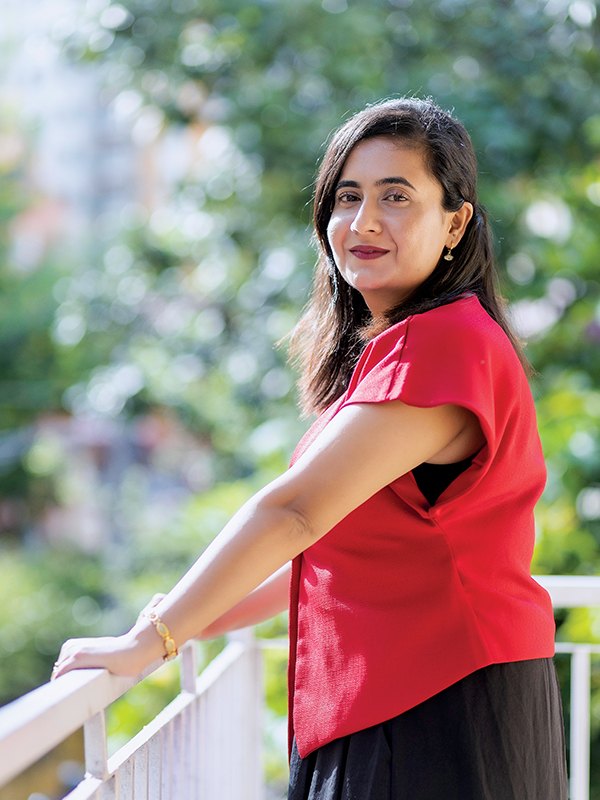
Ranu Sapkota
Not every wound left by disaster is visible. Some arrive as fear, disorientation, grief or the sudden loss of a sense of safety. For Ranu Sapkota, Founder of Antarman Psychosocial Counselling Centre, care begins by making room for those experiences to be heard.
Her work spans psychosocial counselling, psychological first aid, healthcare and community-based interventions, guided by the belief that mental-health support cannot remain confined to a counselling room. During the floods, Ranu volunteered at health camps and spent time with displaced families and children at a holding centre. Amid uncertainty, even a toy, a conversation or a few minutes of play could offer something precious: a brief return to the ordinary. Her work illuminates the quieter architecture of recovery – the human need to feel safe enough to begin again.
What made you step forward?
As the founder of Antarman, I have always believed that mental health support should not remain limited to a counselling room. When a disaster happens, people lose much more than their homes and belongings; they can lose their sense of safety, stability, and hope.
When I saw the situation caused by the floods, I felt that simply watching from a safe place was not enough. I knew that my training in psychosocial counselling, psychological first aid, and healthcare could be useful to people who were going through one of the most difficult moments of their lives. Antarman was founded with the belief that every person deserves a safe space to be heard, especially during moments when life feels unsafe and uncertain. So, when the community needed support, I felt that this was exactly the moment to live by that belief.
I also wanted our team to understand that service is not only something we talk about – it is something we practice. Sometimes we cannot change the disaster itself, but we can make sure that a person does not have to face its emotional impact alone.
That is what made me step forward: the belief that whatever little we can do, we should do it when people need it most.
What was the most difficult moment you faced during the floods, and how did you get through it?
The most difficult moment was seeing people who had lost their homes, belongings, and sense of security, while knowing that we could not immediately solve all their problems. Many people were frightened, exhausted, and emotionally overwhelmed, and some were separated from their families or unsure about what would happen next.
I got through it by focusing on what could be done in that moment, listening to people, offering psychological first aid, helping them feel safe, and connecting them with the support and resources they needed. I also reminded myself that even small acts of care can make a meaningful difference during a crisis. Working together with the community and other responders gave me strength and helped me continue despite the emotional difficulty.
In the middle of chaos, what is one human moment you will never forget?
One moment I will never forget was seeing children at a flood holding centre begin to smile and play when we gave them some toys. For a few moments, they forgot the fear and uncertainty around them and simply became children again.
It reminded me that sometimes, even a small act of care can bring back a sense of safety and hope.
What did this experience teach you about the strength and resilience of Nepali communities?
This experience taught me that Nepali communities are incredibly strong and compassionate. Even in the middle of loss and uncertainty, people came together, shared whatever they had, and supported one another.
It reminded me that our greatest strength during a disaster is our sense of community; no one has to face it alone.
Were there moments when you felt helpless? How did you turn that feeling into action?
Yes, many times. There were moments when I stood in front of people who had lost their homes, their belongings, and their sense of security, and I honestly wished I could do more.
As a counsellor, I had to remind myself that I could not take away their pain, but I could stand beside them in it. So, I stopped asking myself, “How can I fix this?” and started asking, “What can I do right now?”
Sometimes it was providing psychological first aid, sometimes medical support, and sometimes it was simply sitting with someone and listening. I learned that I may not be able to change the situation, but I can change how alone someone feels while going through it. And that, for me, became a reason to keep showing up.
Beyond immediate relief, what do you believe Nepal needs to do differently to prepare for disasters like this?
After being on the ground during the floods, I realised that preparedness has to go far beyond emergency relief. We need stronger early-warning systems, better-trained local responders, safer infrastructure, and communities that know what to do before a disaster happens. As a counsellor, I also saw how deeply a disaster affects people emotionally, especially children and families. Mental health and psychosocial support cannot be an afterthought; they need to be part of our disaster preparedness from the beginning.
My experience during the floods made me believe that we should not wait for another crisis to learn how to respond. We need to prepare our communities before the water rises, not only to save lives, but to help people recover with dignity and resilience.
When the headlines fade and the cameras leave, what do you hope people remember about this crisis?
I hope people remember that behind every statistic was a person, a family, and a story. The floods showed us how quickly life can change, but they also showed the compassion, courage, and solidarity within Nepali communities. I hope people remember the importance of standing together, not only during the crisis, but also in the long and difficult period of recovery that follows.
I also hope this crisis reminds us that disaster response must include mental health and psychosocial support, not only food, shelter, and medical care. People need to feel heard, supported, and safe as they rebuild their lives. Most importantly, I hope we remember that recovery is a shared responsibility and that no affected community should be forgotten once the headlines disappear.
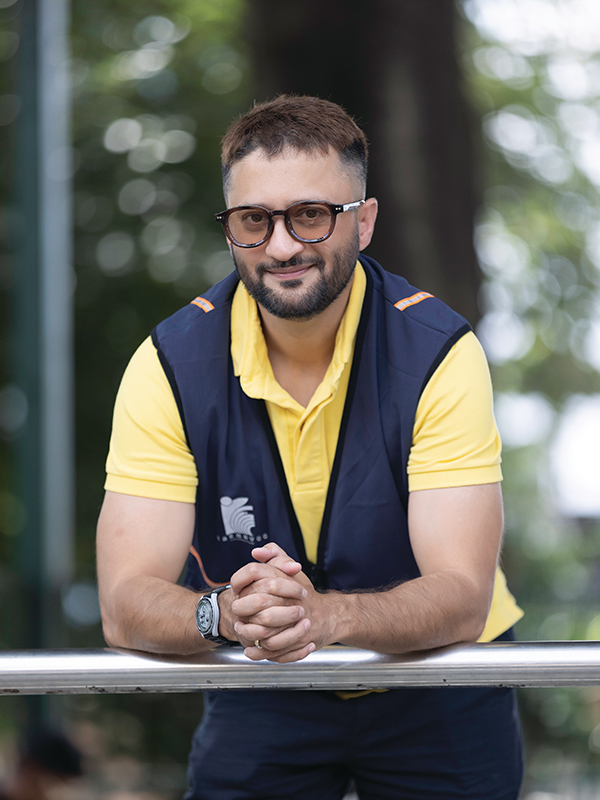
Saurav Rimal
Saurav Rimal’s path has moved between business, civic engagement and animal welfare, but service has remained a consistent thread. The President of the Karma Yog Foundation and a Business Administration graduate of Stratford University in Virginia, he has also participated in the US State Department’s Professional Fellowship Programme and spoken at TEDx on community development.
When the floods struck, credentials mattered less than immediacy. Saurav and his team began by contacting local communities and authorities to understand what was needed, then moved into organising food, medicine and other essentials. As donations grew, so did the scale of the effort. What began simply became a larger exercise in collective action – and a reminder that, in catastrophe, compassion is most powerful when it can be translated into practical help.
What made you step forward when you could have simply stayed safe yourself?
At the start, our actions were quite simple. We knew that it was a crisis and that everyone should stand together to help those affected by the tragedy. We immediately contacted local communities and the local authorities to find out the real needs in the area and the emergency caused by the floods. Our involvement was at first limited to providing some basic essentials, such as food and medicines. However, as more people were willing to donate, the small cause turned into a big relief effort, collaborating with other donors. We are grateful to the Coca-Cola Foundation and several others that participated in the project and provided supplies to the affected communities.
What was the most difficult moment you faced during the floods, and how did you get through it?
As soon as I left the house, it felt wrong to do so without my children, one is eight years old, thinking that such a tragedy could happen and, unfortunately, affect them as well. Despite this, I felt an urge to go there anyway. When I arrived at ground zero, what I saw was something I will never forget. Families who had done everything in their power to save their loved ones from the ruthless floodwaters had lost their relatives and all their belongings. The feeling I had at that moment was devastating. Still, as soon as I realised that families and their loved ones needed our help, support, and care, the thought of giving up never crossed my mind. We started collecting medicines, toys, and other essentials. People were left alone in the saddest moment one could imagine – losing family members in such a terrible tragedy. Our contribution, together with others’ donations, sparked a wave of volunteer action and community support for those affected by the disaster.
In the middle of chaos, what is one human moment you will never forget?
One moment from the disaster that I will never forget is the day I met a young girl who left her house ten minutes earlier for school. At that very same time, she lost her entire family to the flood.
She became the only survivor.
That story was one of the saddest moments of my life. It was heartbreaking to know that such a tragedy could happen to innocent people who had nothing to do with disasters. Losing all you love is the saddest thing that one can ever experience in a lifetime.
What did this experience teach you about the strength and resilience of Nepali communities?
What I understood from the experience is that we can care about each other and be compassionate even in the saddest moments, and help our brothers and sisters in need. Disasters teach us a lot, such as that compassion, solidarity, and mutual help can be stronger than sadness, hunger, and even death.
Even though Nepal is a developing country, we still have something that no other country can take from us. Our hearts are bigger and different religious communities coming together to help and support in times like these.
Today, our world seems to be moving to a world where people seem distant from one another; it is the solidarity and mutual help that can save lives. I believe that the example of Nepalese communities gives hope to our world that there is still light, and that people can support and care for each other, no matter what. Other than our own communities, foreign aid has been a huge help.
Were there moments when you felt helpless? How did you turn that feeling into action?
I couldn’t save as many lives as I wished I could. I couldn’t respond to such a scale of disaster faster, as I didn’t have much training or the equipment required. However, even though I did my best, there were always people I couldn’t save.
This flood turned a busy place, full of tourists, into a ghost town in a few seconds. We did not have enough time, as everything happened in a matter of seconds. We could not give every person the personal attention and counselling they needed. Despite the donations, we could not keep up with the fast-moving disaster.
Beyond immediate relief, what do you believe Nepal needs to do differently to prepare for disasters like this?
For the future, the government should formulate a disaster awareness policy. It could include creating safe spots where people can be evacuated and kept safe from any natural disaster that may strike. These areas should be known to the public well in advance.
The recent river flooding is a great example of a sudden disaster. With no time to think about how to react, people are faced with danger and panic. The government needs to think ahead and prepare evacuation plans, safe areas and a warning system for the public. Basic training is required.
The government has the main responsibility when it comes to disaster relief and aid. It has the widest outreach, the most authority and power and, ultimately, the greatest capacity to deliver services. We, as citizens and foundations, are allowed, able and encouraged to help the government during a disaster. But in the end, it is the government that holds the primary role in our country. Disaster awareness cannot wait until the day of a disaster. We need to think ahead for our own safety and the safety of others.
When the headlines fade and the cameras leave, what do you hope people remember about this crisis?
As the festive season draws near, families are still mourning the loved ones they have lost, as well as the homes and memories that were taken from them. As the country prepares for celebrations, many are still grieving over their loss.
Despite this, there is still hope. Hope in solidarity helping in times of trouble, hardship and distress. Perhaps the best way to honour the victims is through love, care and compassion. During a time when there is so much uncertainty, it is human nature that comes to light, and our unity will be the best medicine for those in need. Helping each other and not leaving anyone behind is the best tribute we can pay to those who died and those who grieve.
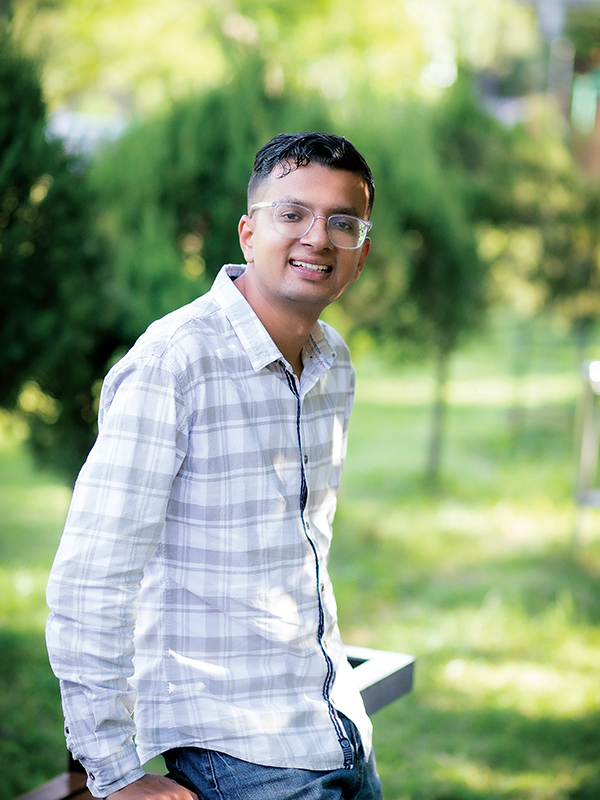
Samaya Khadka
For Samaya Khadka, a call for help became an exercise in building a community almost overnight. The young entrepreneur, CEO of Mirai Global Education and Visa and Founder of Sharing Chances and Covid Connect Nepal, was attending a summer programme in the United States when he began posting about the needs of flood-affected families.
The response gathered momentum quickly. A WhatsApp group became Community Relief Nepal, drawing more than 500 volunteers, including 75 active volunteers, while a live-inventory system helped match available supplies with urgent needs. What emerged was not simply a relief drive, but a model of digital-age volunteering: decentralised, responsive and powered by people who may never have known one another before the crisis.
What made you step forward?
I have always striven to create added value for others, and volunteering has become an integral part of my life. I want to contribute to making our society better and more comfortable. Helping others is what gives meaning to my life.
We need to create a responsible society in which government, every citizen and every business strive to make our country better. Authorities cannot control and manage everything, so there is a responsibility on every person to provide the necessary help to those who need it. If people look with compassion at those who suffer, and not at what they have lost or what they do not have, then our society will change for the better. I believe that every person can and should play their part in making society better.
What was the most challenging moment you faced during the floods, and how did you get through it?
Challenges arose when coordinating with the authorities and ensuring that all donated resources reached those who needed them. After seeing that many people had been affected by the disaster, I felt that my efforts were not enough. We noticed that some communities received much more help than others, even though all the donations were well-intentioned.
Another problem was that people sometimes donated unsuitable things, such as clothes that were torn or of the wrong size. We had many requests from people in need, and it was necessary to find volunteers who would take care of the families who were left without shelter, money and food. Although the weather was hot, people suffered from the cold since there were many floods in Nuwakot.
Moreover, the situation was complicated by the fact that the communities were left almost helpless in the wake of the disaster. In addition, to reach the flooded localities, volunteers had to make a detour when the bridge was damaged by the flood. Unfortunately, there were cases where families were left without food and had to survive on the charity of nearby villages. While the floodwaters blocked the roads, people could not get the supplies they so desperately needed.
Nevertheless, we managed to solve the problem by creating a social media account to post news, photos, videos, and urgent appeals. Every request published on our behalf helped coordinate the work of volunteers and raise awareness among potential donors. We collected many donations, both material and financial, which served to help the victims. The experience of donating in kind showed that sometimes people do not really know what is needed and what is not needed in the current situation. The most needed items were those that the affected families had to live without – food, water and warm clothes.
Another valuable experience was that the authorities have the responsibility for assigning resources appropriately. The state bears the responsibility for taking measures that will ensure that every family receives the necessary aid. Therefore, it is essential to develop a responsible and organised system that will respond quickly to disasters and distribute resources as evenly as possible among the public.
In the middle of the chaos, what is one human moment you will never forget?
The main thing that touched me and will remain with me after experiencing those sad times is that people are incredible beings. I saw Nepal’s best, that is, the spirit of national solidarity and humanity. Volunteers from different cities, various backgrounds, and different beliefs became like one large family, striving to help families affected by the disaster.
It is fascinating how people from different walks of life, who have never known each other, can unite and work towards one goal. Such events make you realise that humanity and an incredible amount of kind thoughts and actions radiate from the hearts of our people.
What did this experience teach you about the strength and resilience of Nepali communities?
The most incredible thing was to see how much Nepali people care about each other in times of crisis. Humanity is the most potent force that can overcome any disaster. Thousands of people showed an amazing spirit of solidarity.
People have shown compassion and generosity in donating money and time. My experience tells me that our communities have the grit to endure hardship and rise to the challenge. When our country is in trouble, neighbours support each other and do their best to help. The spirit of human solidarity knows no boundaries, and the generosity of the Nepalese people inspires hope and confidence in the future.
Another thing that surprised me was the donations from abroad. People overseas have demonstrated an incredibly kind and generous attitude towards us. Despite the lack of a personal connection, people from other countries have risen to the cause and provided us with much-needed support. When our communities are in trouble, people from other countries do their best to help us. I believe that our society must always encourage and support such acts of kindness, generosity of spirit, and solidarity because they are our greatest strength.
Were there moments when you felt helpless? How did you turn that feeling into action?
It was a very sad experience for me to see that people have so little time to help. When our Community Relief Nepal group on social media was created, I wanted to ask for donations in all localities. However, not everyone could afford to help immediately. Later, we realised that people needed time to respond to our appeal.
Although our volunteers went to the affected areas and tried to help, the problem was that the relief goods were not reaching the victims. Unfortunately, the distribution of donations was unequal, and some communities were left without food. We saw that there was a need to control and coordinate the work of volunteers and ensure that every family received the help of our community. It was also challenging to get to the affected localities when the roads were affected.
Beyond immediate relief, what do you believe Nepal needs to do differently to prepare for disasters like this?
I am sure that disaster relief assistance can be much more efficient if proper planning and courses of action are taken. When disaster strikes, it is critical to provide people with food, water, and medicine as soon as possible. During the disaster relief, I saw that some families were provided with goods while others had to wait, even though they were both in dire need of assistance. I think that a system for distributing goods should be created in order to help everyone as efficiently as possible.
The topography of Nepal is very diverse, which can make it hard to reach remote villages by road during a disaster. Because of this, any disaster management plan should address the need to have alternative ways of distributing supplies.
In my opinion, disaster management plans should ensure that people in disaster-struck areas are attended to in the most efficient way possible.
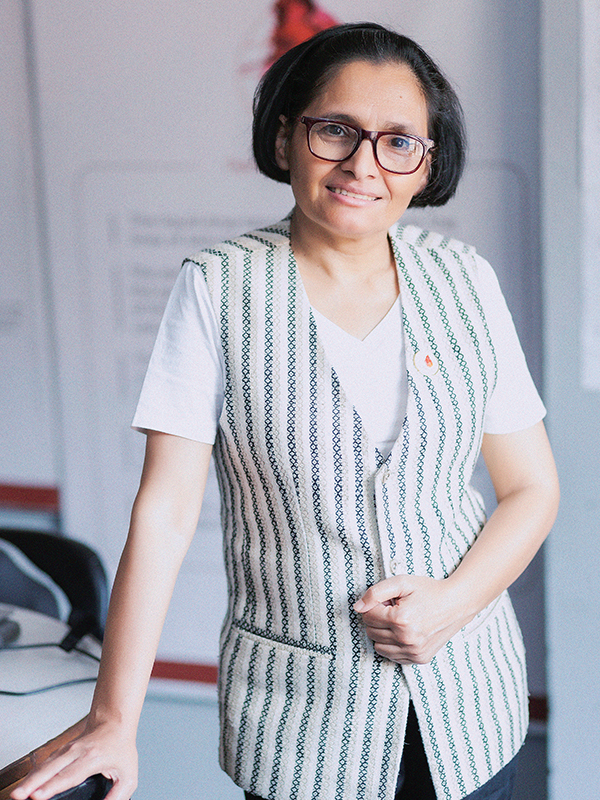
Radha Paudel
For Radha Paudel, service is not an intervention reserved for moments of crisis; it is the continuum of a life spent confronting inequality at its most intimate. A nurse, writer and activist, she has worked through conflict, earthquakes, floods and public-health emergencies, often alongside communities whose needs remain at the margins of formal systems.
Her advocacy for dignified menstruation has pushed an issue too often treated as private into wider conversations about human rights, climate change and humanitarian response. Radha’s memoir, Khalangama Hamala: A Nurse’s Diary, won the Madan Puraskar in 2014, but her work has continued far beyond the page. In Rasuwa and Nuwakot, she brought that same insistence on dignity to disaster relief, asking a question that emergencies can too easily overlook: whose needs disappear when survival is reduced to the most obvious essentials?
What made you step forward?
I have often found the purpose of my life in serving people like me, particularly menstruators from disadvantaged communities. My commitment to emergency response began early. I remember running with buckets to put out a fire in my neighbourhood when I first learnt about it, and collecting relief materials through the Junior Red Cross Circle while I was still in school.
As a nurse, I worked during emergencies for thousands of patients, involving babies, children, mothers, older people and others. While working in Jumla, Karnali, I saw how geographical hardship, political exclusion and armed conflict made such emergencies even more difficult.
These experiences, and the humanitarian crises I witnessed, compelled me to continue serving wherever I could. I quietly worked during the Koshi floods in 2008, the 2015 earthquake, the Madhes uprising of 2015/16, the Terai floods in 2016, the Covid-19 pandemic and the Jajarkot earthquake in 2023.
The Rasuwa flash flood reminded me, above all, of the 2004 tsunami. The news coming from Rasuwa has brought tears to my eyes. I remember my late mother telling me that crying is not a solution.
Of course, money and political power matter in the Nepali context, but neither is a prerequisite for serving people who are most in need.
What was the most difficult moment you faced during the floods, and how did you get through it?
There were many difficult moments, and some were beyond my control. Within the areas I could influence, I worked to organise emergency relief materials by centring menstruators, from womb to tomb. However, these materials were not always allowed to reach affected communities because of the Government of Nepal’s one-door policy, while representatives of local governments also hesitated to facilitate their distribution.
I was frustrated by what I saw as a lack of readiness to learn from previous disasters and respond to humanitarian needs accordingly. Since 2008, Nepal has experienced several major natural disasters, despite having structures from the local to federal level and significant investment in preparedness.
I coordinated with journalists and activists from Dignified Menstruation Campaign Nepal, a national network, particularly those from Nuwakot and Rasuwa, and decided to travel to the affected areas. We first went to Nuwakot and then to Rasuwa, where we have continued to stay.
Our approach is centred on dignified menstruation during humanitarian crises. This means addressing the needs, rights and priorities of every menstruator, including pregnant and lactating mothers, babies, children, adolescent girls, older people, menstruators with disabilities and families who have lost loved ones. This also means providing essential non-food items such as solar lights, bulbs, chargers, tarpaulins, ropes and utensils.
In the middle of chaos, what is one human moment you will never forget?
There are many human moments I will never forget. One photograph in particular broke my heart. It showed a muddy boy of about five or six carrying his younger sister, perhaps one or two years old, also covered in mud and crying, while searching for their missing parents. The image reminded me of photographs from the Second World War in Hiroshima, Japan, in 1945. It also brought back the memory of my Miteri (brother), who survived the Maoist attack in Khalanga, Jumla, in 2002 but went missing while returning from Mount Kailash as part of a group of Sadhguru followers. How could I forget him until my last breath?
What did this experience teach you about the strength and resilience of Nepali communities?
Let me be honest. Since my childhood, I have seen Nepali people endure immense hardship, regardless of where they come from or what resources they have. Yet they step forward to support one another, often without knowing what the next day, week or month may bring, and often before the government is able to respond.
Survivors and villagers, many of whom may never have attended school or studied formal ideas of humanitarianism, help one another find missing people, rescue the injured, provide food and offer whatever support they can. They are extraordinary examples of kindness, compassion and ethical humanity that go far beyond what is written in textbooks.
I have also seen local government representatives continue to work for their communities even after losing immediate family members, friends or co-workers. They continue because they see it as their responsibility to the people they serve.
But there is also a painful side to this resilience. Photographs and videos of dead bodies are circulated and placed in the public marketplace of attention. The pursuit of views, money, banners, newspaper headlines and visibility for celebrities is also a reality that cannot be ignored.
Were there moments when you felt helpless? How did you turn that feeling into action?
After two days of consultations and coordination with local government and federal stakeholders, everything was prepared for us to head to Bidur, Nuwakot, on August 28. However, I was not included as a team member because of accessibility challenges in the mountains following a serious accident in 2017 while attending the inauguration of a birthing centre in Sannigaun, one of the most remote and geographically challenging villages of Jumla district.
In every natural or human-made catastrophe, I have almost always been among the first to respond. This time, I could not go. I could neither sleep nor stop crying. Then, accidentally, my eyes met my mother’s eyes in a photograph. I stopped crying and promised myself that I would continue supporting the relief effort, which needed more funds, networks, communication and coordination.
I began the flood relief work with zero funding, using money that would otherwise have gone towards rent and other operational costs. We are still in Uttargay, Rasuwa, one of the areas most affected by the flash flood.
Most importantly, our focus is dignified menstruation in humanitarian crises. This means centring the menstruator, meaning people born with a uterus and ovaries, across all ages. There are several important realities that are often overlooked: flash floods do not stop menstruation or menopause; menstruators are present among survivors, the deceased and the missing; and menstrual discrimination, including silence, taboos, shame, stigma, restrictions, abuse and denial of services and resources, exists across communities in many forms and at different levels.
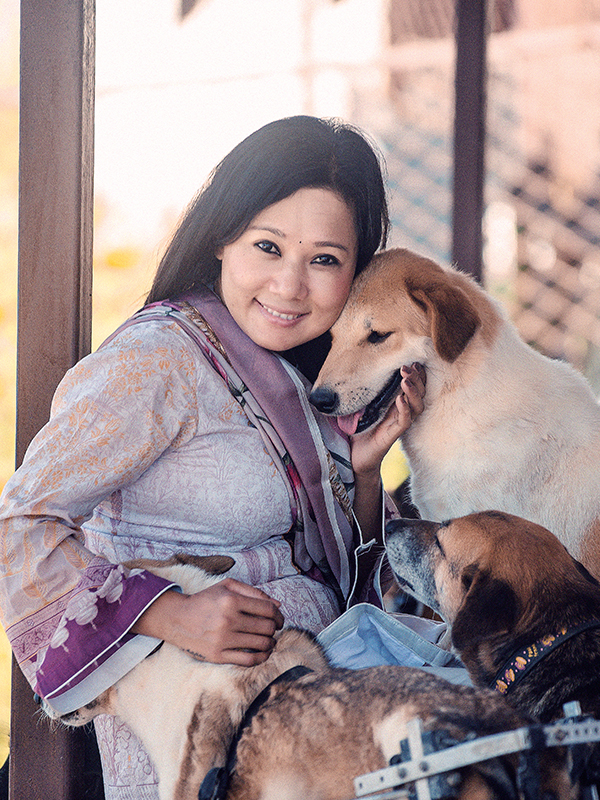
Sneha Shrestha
As images of the devastating floods began to circulate, Sneha Shrestha found herself searching the footage for those she could not see. She paused videos, zoomed into frames and scanned the destruction for a glimpse of an animal. Had they survived? Were they injured? Was anyone looking for them?
For Sneha, those questions could not remain unanswered from a distance. Founder of Sneha’s Care Animal Welfare Organisation, established in 2015, she has spent more than a decade rescuing and rehabilitating community dogs and farm animals, while advocating for animal rights through vegan outreach, community initiatives and campaigns against live-animal transportation. When the floods struck, that commitment took her and her team into affected communities, navigating damaged roads and an alarming lack of information in search of animals that had survived but were injured, hungry or stranded without care.
What they encountered was devastation, but also something that Sneha continues to carry with her: animals waiting beside the ruins of homes for families who might never return, communities caring for livestock despite having lost almost everything themselves, and the quiet determination to survive, even when no one knows that you are waiting to be found
What made you step forward when you could have simply stayed safe?
When I first heard about the flood, I saw videos of its terrifying force. Then came the news that people had lost their lives. I was heartbroken, and I could not stop thinking about the animals. Had any of them survived?
I immediately began looking for news about the animals, but I could not find any. I did not know whether they had survived, whether they were injured or where they might be. I began watching every flood video I could find in the media. I paused the footage and zoomed in, hoping to spot even one animal. I found no video of an animal being rescued, but none showing an animal being swept away either.
The animals were absent from the news but they were never absent from my mind. The more I searched, the more strongly I felt that I needed to be there. If animals had survived, some could be injured, hungry or waiting for help. I could not learn that by staying home and watching the news.
When I shared my decision to go to the flood-affected area, my team did not hesitate for a moment. They have always been ready to go wherever animals need them, and their commitment gave me the courage to go too.
What was the most difficult moment you faced during the floods, and how did you get through it?
The most difficult part was knowing that animals needed help but struggling to find out where they were. We contacted the Department of Livestock Services and the livestock service offices in
Rasuwa and Nuwakot, but even they did not have a complete picture. Roads to some of the worst-affected areas were inaccessible, and some local livestock service offices had themselves been swept away. Reliable information was hard to obtain at the very moment we needed it most.
Getting there was another challenge. The alternative roads were in such poor condition that one journey of roughly 70 kilometres took us nearly 12 hours. Throughout that journey, I kept thinking about the injured and hungry animals we had yet to find. What if we arrive too late? That thought was more exhausting than the road itself.
My team helped me get through it. We focused on the next safe step, continued asking local people what they had seen, and went from one affected place to another. We spoke with families and checked homes one by one. That was how we found many animals who had survived the flood but were still waiting for food, treatment and care.
In the middle of the chaos, what is one moment you will never forget?
I will never forget the animals we found near what remained of their homes. Some were injured and hungry, so we treated their wounds and gave them food. But after eating, a few went straight back to the same place. They stayed there, as though they were waiting for their families to return.
We had no information about those families. We could ease the animals’ pain and hunger, but we could not tell them whether the people they were waiting for were coming home.
I met many animals, including cows, buffaloes and mules, who fought through the flood and storm to survive. They taught me never to lose hope. They could not cry out or ask for help, yet they fought to stay alive.
We also met a few families who had managed to save their animals. They had lost their homes and belongings and did not know what would happen to them next. Still, they kept their animals beside them and cared for them with what little they had.
What did this experience teach you about the strength and resilience of Nepali communities?
The flood changed the landscape so quickly that even reaching a place could become a challenge. Roads were damaged, conditions kept shifting and information was limited. What struck me was how much we came to rely on local people. They knew which routes were still passable, where help was needed and what had changed since the day before. Even while dealing with their own losses, they took the time to guide us.
I am grateful, too, for the cooperation of the Department of Livestock Services, local authorities, veterinary personnel and the organisations working alongside us. No one could respond to a disaster of this scale alone. What I witnessed was a community of people bringing their knowledge and effort together, day after day. Their strength deserves continued support as they recover.
Were there moments when you felt helpless? How did you turn that feeling into action?
I felt helpless when news of renewed flooding reached us and the damaged roads made it unsafe to continue. We had to turn back while knowing there were animals farther ahead that we had not reached. After seeing the scale of the destruction, it was difficult to leave without knowing what condition they were in or how long they could wait for help.
At the same time, our days in the field had given us reason to keep going. We had found animals alive, and conversations with local people gave us a clearer picture of what was happening beyond the places we could reach. That knowledge helped us understand where the needs were and how we could continue responding.
Beyond immediate relief, what do you believe Nepal needs to do differently to prepare for disasters like this?
This experience reinforced a lesson for me: preparation has to happen within communities before an emergency begins. People need to know how they will receive warnings, where they can go and how they can bring the animals in their care to safety. I would like to see animals included in community disaster plans from the beginning.
We also need stronger coordination between local authorities, veterinary services, health workers, community groups and rescue organisations. When a disaster occurs, everyone should know how to share information, identify urgent needs and reach people and animals when normal routes are cut off. Supplies, training and clear responsibilities established in advance can make those first critical days more effective.
When the headlines fade and the cameras leave, what do you hope people remember about this crisis?
I hope people remember that the end of a news story is not the end of a disaster for those living through it. Families are still trying to rebuild their homes and find a way forward. Animals that survived may still need food, treatment and a safe place to stay.
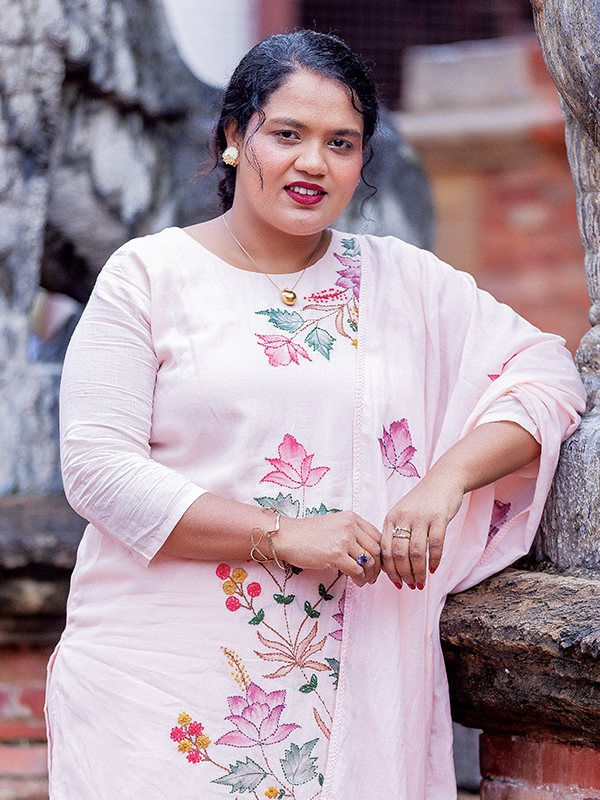
Dr Salmalee Yadav
Forensic medicine begins where many stories have already ended, but its work can offer families something essential: certainty. Dr Salmalee Yadav, a forensic medicine specialist and Lecturer in the Department of Forensic Medicine at Patan Academy of Health Sciences, also serves as Treasurer of the Medico-Legal Society of Nepal and works across forensic research and medico-legal services.
During the Rasuwa floods, Dr Salmalee joined a forensic team deployed to Timure, Syafrubesi and surrounding areas to examine and identify victims. The familiar infrastructure of a hospital or mortuary was gone; examinations had to be carried out close to the disaster site, in difficult conditions and with limited equipment. In a landscape defined by loss, her task was exacting and deeply human: to help return identities to the dead and answers to the families waiting for them.
What made you step forward?
It was my work and my responsibility as a forensic expert. Our forensic experts are part of the MeLeSoN Society, and whenever disasters like this occur, the society sends experts to the affected areas. In this case, our secretary, Dr. Samjhana, forwarded my name to the relevant ministry, and I was contacted and asked whether I was willing to go to Rasuwa because they needed a forensic expert there. Identifying victims and helping families identify their loved ones is part of my work. I felt that this was something I needed to do. When there is a crisis like this, people are waiting for answers about their loved ones, and I felt a responsibility to be there and do my part. I knew the situation could be difficult, but I also knew that there was a need for someone with my expertise.
For me, going to Rasuwa was not simply about responding to a disaster. It was about fulfilling my professional responsibility and doing what I could for the people affected. That sense of duty is what made me step forward.
What was the most difficult moment you faced during the floods, and how did you get through it?
Initially, I thought I would be doing the forensic work in a hospital or mortuary, as I normally do. But when I reached Rasuwa, I realised that I had to carry out the examinations in an open field, close to the actual disaster site. Even seeing the situation from the helicopter was devastating. The scale of the destruction left me in shock for a while. On the first day, there were around eight bodies. We had to examine them with very limited resources. We had to carry buckets of water to the site because there was no proper water supply, and even moving around was difficult because the ground was wet and covered with rubble. At one point, my leg plunged into the rubble, and one of the police officers had to help me get out. Identifying the bodies was another extremely difficult part. Because of decomposition, it was often impossible to identify faces, so we had to rely on tattoos, scars, jewellery, clothing, and other belongings. One particularly distressing scene involved a pregnant woman whose fetus had been expelled because of the decomposition process. Despite everything, I had committed to completing the work. My focus was to identify the bodies within two or three days so their families could receive them.
In the middle of chaos, what is one human moment you will never forget?
One thing I will always remember is the support we received from the army and police while we were working at the disaster site. The environment itself was frightening. We were working in an open area where almost everything around us had been destroyed, with broken furniture, windows, and parts of collapsed houses scattered around. There were very few people in the area, and we were working close to the Bhotekoshi River. The army and police had also warned us that the river level could rise, so there was always a concern about whether we would be able to continue our work safely.
Despite that, the police and army stayed with us and helped whenever we faced difficulties. They were also in a frightening situation, but they did not show their fear because they knew we needed to continue our work. Our own team also became a source of strength. There were several doctors working together, and we consoled one another throughout the process. We were all afraid, but we did not allow that fear to stop us. That sense of people standing together, even when everyone was facing the same danger, is something I will remember. The support from the army, police, hospital management, and our own team made it possible for us to continue.
What did this experience teach you about the strength and resilience of Nepali communities?
The experience taught me that even in extremely difficult circumstances and with limited resources, people can continue to work and help one another. The disaster happened suddenly, so there were many things that had to be managed very quickly. Even when the management and resources were not ideal, we still had a responsibility to do our work and give it our 100 per cent. I could not interact extensively with the local people in Rasuwa because the area had been so severely affected. But looking at the wider response to the flood, I saw that Nepali people are strong and willing to help one another. People stood together, supported each other, and offered consolation during an incredibly difficult time. As medical professionals, we also tried to support those affected, while receiving support ourselves from others working at the site. For me, resilience is not about being unaffected by a disaster.
It is about continuing to do what needs to be done, even when circumstances are painful and difficult.
Were there moments when you felt helpless? How did you turn that feeling into action?
Yes, there was a moment when I felt helpless. When I first arrived at the disaster site and saw that I had to carry out forensic examinations in an open field, I was overwhelmed. I had always worked in a hospital or mortuary setting, so suddenly having to work in the middle of a disaster area was something completely different. For a moment, I wondered whether I could really do the work in that environment.
The destruction, the bodies and the lack of resources were difficult to process. But then I reminded myself why I had gone there in the first place. There were families waiting for their loved ones. They needed to know what had happened and needed the bodies to be identified. I could not simply leave because the circumstances were difficult. I also reminded myself that, as doctors, we have a responsibility to serve our country and our people. That thought helped me overcome the feeling of helplessness and focus on what needed to be done.
Sometimes, you have to put your own fear and discomfort aside when someone else needs your help. Once I focused on the people who were waiting for answers, it became easier to continue.
Beyond immediate relief, what do you believe Nepal needs to do differently to prepare for disasters like this?
Nepal is a disaster-prone country. We experience floods, landslides, earthquakes, avalanches, and other disasters, so people need to have basic knowledge about different types of disasters and how they should respond to them.
Preparedness should not only be the responsibility of authorities or professionals. Everyone should understand disasters, know how to respond, and take them seriously. Better management, communication, awareness, infrastructure, and psychological support can all help reduce the impact of future disasters.
Text: Ankita Jain, Sujana Dongol, Bijaya Shiwakoti & Sukrity Sharma
Photos: Sanjay Maharjan & Ripesh Maharjan