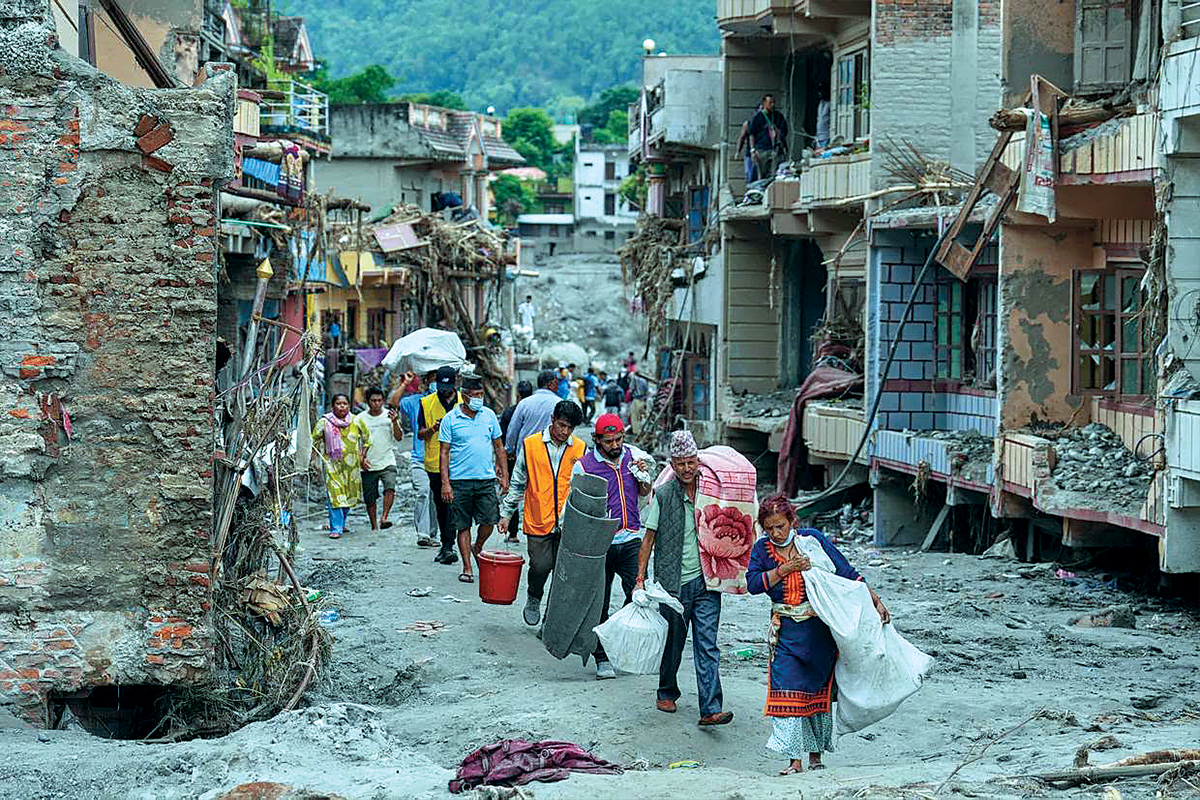

When disaster strikes, loss is rarely measured only in bricks and belongings. For a woman, it can mean the loss of a livelihood, a workplace, a sense of security and years of hard-won financial independence.
And yet, when the waters recede, she is often expected to begin again without pause. She cleans the house. She finds food. She cares for children and elderly family members. She helps neighbours. She looks for missing documents. She begins calculating how to replace what was lost.
Then comes the second rebuilding. Her own. For thousands of women whose incomes depend on small businesses, agriculture, home-based enterprises, shops, tailoring, food production or daily work, a flood can wipe out more than stock and equipment. It can erase months, sometimes years, of economic progress.
This is why disaster recovery cannot stop at relief. A package of food keeps a family going today. Restoring a woman’s livelihood can help keep that family secure for years.
We need to look at recovery through the lens of economic independence. Women need access to capital, tools, markets, skills, documentation, financial services and safe spaces to restart. They need opportunities, not just sympathy. Because a woman who earns is not simply earning for herself. She is often supporting children, contributing to household decisions, employing others and strengthening the economic fabric of her community. Her recovery has a multiplier effect.
There is also something we must be careful not to celebrate too easily: resilience. We often praise women for being resilient, as though resilience is an endless resource. But resilience should never become an excuse for systems to expect women to endure more. Women should not have to rebuild the same lives after every disaster.
They deserve preparedness before the crisis, protection during it and meaningful opportunities afterwards. The floods have shown us the extraordinary generosity of communities. Now, that generosity must evolve into long-term action.
She rebuilds twice. And our responsibility is to make sure she does not have to rebuild alone.