How Nepal’s designers are turning heritage, identity and imagination into a global creative language
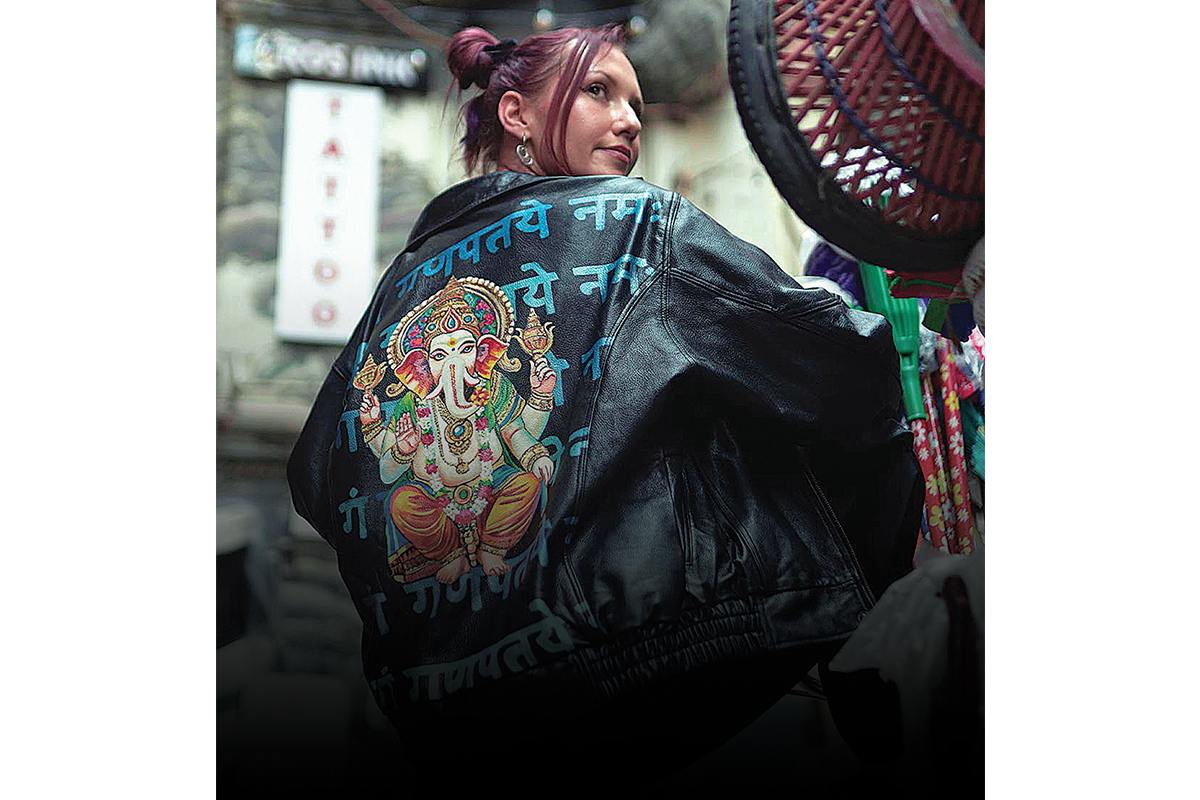
Nepal’s creative landscape is entering a new era, one where heritage is not simply preserved, but reimagined. Across fashion, textiles, visual art and design, a new generation of creatives is transforming traditional craftsmanship into contemporary expressions that resonate far beyond the country’s borders.
From reinterpreting Thangka through modern art to creating consciously crafted fashion, experience-driven brands and purpose-led design, these makers are proving that creativity flourishes where tradition and innovation intersect. Their work is as much about storytelling as it is about aesthetics, blending cultural memory with fresh perspectives and global relevance.
As Nepal’s creative economy gains momentum, these designers are doing more than responding to international trends. They are shaping a visual language that is distinctly their own, one that is rooted in identity, driven by imagination and confidently positioning Nepali creativity on the world stage.
DIVINE POP
Where Thangka Meets Contemporary Art
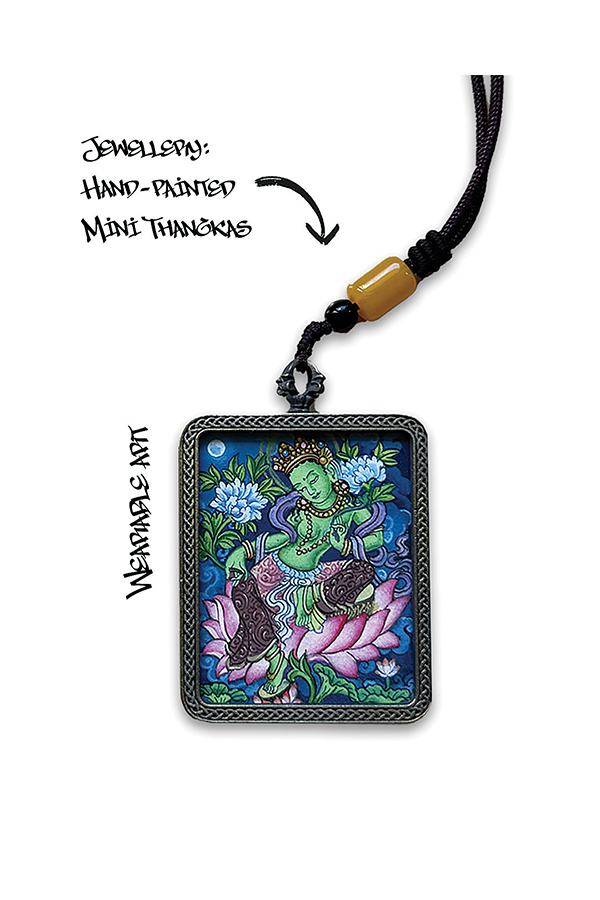
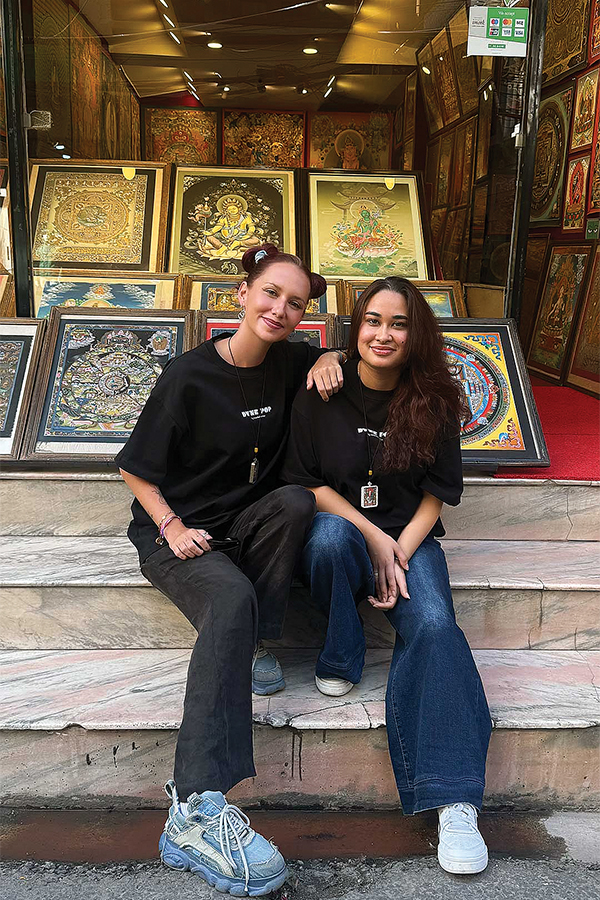
What began as a student learning the intricate traditions of Thangka painting has evolved into a cross-cultural creative partnership. Today, German artist Katharina Schanderl and Nepali Thangka artist Grishma Giri are the creative force behind Divine Pop, a project that brings together contemporary art, traditional craftsmanship and a shared belief in the power of cultural exchange.
Katharina, whose work explores pop art, upcycling, vintage aesthetics and visual storytelling, first came to Nepal for a nine-month stay to study traditional Thangka painting. Under the guidance of Thangka master Jayaram, she immersed herself in an art form rooted in precision, symbolism and spirituality. It was through him that she met his niece, Grishma, who runs a Thangka studio and painting school in Kathmandu. What began as a simple introduction soon grew into a close friendship, and eventually, a creative collaboration.
For Katharina, Nepal became far more than a place to learn painting techniques. Its spirituality, vibrant culture and artistic heritage profoundly shaped both her work and her worldview.
“When I returned to Germany, I continued developing my own artistic style, but Nepal had changed the way I saw both art and life,” she says.
Although she returned to Germany, her connection with Nepal, and with Grishma, never faded.
While Grishma continued preserving the traditions of Thangka painting, Katharina expanded her practice through mixed media, collage, textiles and upcycled art. Though working in different artistic worlds, they discovered a shared appreciation for craftsmanship, storytelling and authentic cultural dialogue. That shared vision became Divine Pop.
Rather than seeing tradition and contemporary art as opposing forces, they view them as complementary visual languages. Their work is not about reinventing tradition, but creating a respectful conversation between heritage and modern expression.
Katharina has long been fascinated not only by the visual beauty of Thangka painting but also by the philosophy and symbolism it carries. Time spent visiting temples such as Pashupatinath and learning about Hindu traditions deepened her appreciation of the culture that continues to inspire her work.
At the same time, her own artistic language remains distinctly contemporary. Through bold colour, layered materials and mixed media, she explores new ways of telling stories while honouring the traditions that have shaped her journey.
“Nepal and Germany are very different in many ways, and honestly, that’s one of the reasons I feel so drawn to Nepal,” Katharina says.
The partnership has also become a meeting point between two different creative cultures. Coming from Germany, Katharina approached projects with structure and careful planning. Nepal introduced her to a slower rhythm – one that values patience, flexibility and trust in the creative process.
Studying Thangka painting taught her that art is not simply about the finished piece, but about the discipline, intention and presence required to create it. In a world driven by speed and productivity, she found renewed appreciation for slowing down and embracing the process.
Despite the distance between Germany and Nepal, the collaboration continues to thrive. The two remain in constant conversation, exchanging ideas, developing new projects and supporting one another both professionally and personally. Their roles have evolved organically, with Grishma leading the Nepali and Asian side of the venture, while Katharina oversees artistic direction, design, marketing and outreach across Europe.
Alongside Divine Pop, both continue to pursue their individual artistic practices. Yet they agree that the project’s greatest strength lies not in the work itself, but in the friendship that made it possible.
“Before Divine Pop became a creative project, it was a friendship. We believe that’s what makes our collaboration so strong despite the distance,” they say.
Looking ahead, the pair hope to expand Divine Pop through new collections, international collaborations and a stronger digital presence, while remaining committed to supporting women artists, local craftsmanship and creative communities. For them, Divine Pop is more than an artistic collaboration, it’s a celebration of tradition, creativity and the enduring connections that emerge when cultures meet with curiosity and respect.
ATELIER SARATARA
Rooted and Illuminated
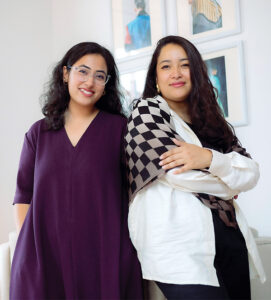
In a world where fashion often prioritises speed and convenience, Atelier SARATARA embraces something far rarer: stillness.
Inside its Kathmandu atelier, every garment is created with intention rather than urgency. Hemp is softened by skilled hands, natural fibres is transformed through generations of craftsmanship, and timeless silhouettes are shaped with patience rather than trends. Every stitch carries the story of the artisan behind it.
Founded by France-trained textile and fashion designer Chandani Pradhanang and later joined by her sisters, Rajina and Sejol, Atelier SARATARA has quietly established itself as one of Nepal’s most thoughtful design houses. More than a fashion label, it is a dialogue between heritage and contemporary design, where natural materials, artisanal skill and modern craftsmanship exist in seamless harmony.
For the sisters, fashion has never been about creating beautiful clothes alone. “It has always been about creating something meaningful,” they say. “Something that honours where we come from while speaking to today’s world.”
That philosophy is woven into the brand’s name. “For us, it’s about remaining grounded while always looking towards the light.”
Together, those two words capture the balance at the heart of the brand: earth and elegance, tradition and innovation, simplicity and refinement. It is this quiet coexistence of contrasts that has become Atelier SARATARA’s signature.
Each sister brings a distinct perspective to the business. Chandani leads creative direction, Rajina oversees strategy and business development, while Sejol manages production, ensuring every piece reflects the atelier’s exacting standards.
“Each of us sees the brand differently,” Rajina says with a smile. “That’s not something we try to erase, it makes us stronger.” Like the garments they create, their partnership is built on individual strengths woven together into something greater.
Rejecting mass production, Atelier SARATARA embraces a slower, more mindful approach to making clothes. Its collections are crafted using locally sourced natural fibres, including hemp, Himalayan nettle and Nepali raw silk, materials chosen not only for their beauty, but for the stories they carry.
Working closely with artisans across Nepal, the sisters honour techniques passed down through generations while reimagining them for the contemporary wardrobe. Rather than preserving tradition as something static, they allow it to evolve through thoughtful design.
Sustainability, too, is approached with quiet conviction rather than marketing rhetoric. For Atelier SARATARA, it is not a trend but a responsibility, reflected in every decision, from material selection to production.
The philosophy becomes immediately tangible inside the showroom. Calm and understated, the space feels more like a gallery than a retail store. Every garment has room to breathe, inviting visitors to appreciate not only its design but also the craftsmanship behind it. Designed to transcend gender, age and seasons, the collections celebrate effortless individuality. Functional yet expressive, each piece is intended to be worn, lived in and treasured over time.
The sisters see the atelier as a way of demonstrating that Nepali design can stand confidently alongside the world’s finest. “It is a space where heritage isn’t something we preserve behind glass,” they say. “It is something we continue to live with every day.”
That quiet confidence is what distinguishes Atelier SARATARA. While many brands speak of authenticity, theirs feels lived rather than marketed. As Nepal’s design industry continues to gain international recognition, the sisters hope their work will inspire a deeper appreciation for local craftsmanship, natural materials and thoughtful design.
“We have always believed Nepal has extraordinary materials and extraordinary makers,” says Sejol. “Our role is simply to preserve those stories and let them travel through our clothes.”
TwentySix
Selling a Story Before The T-shirt
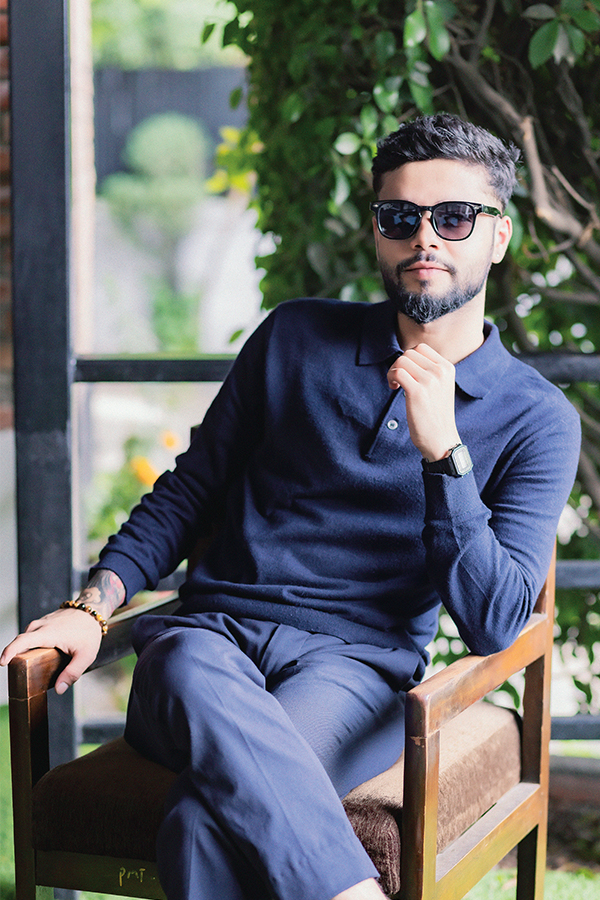
In an age where Gen Z shops through screens rather than storefronts, first impressions rarely begin with the product, they begin the moment a package arrives at the doorstep. For today’s independent fashion labels, the unboxing experience has become almost as important as the garment itself.
That philosophy lies at the heart of TwentySix, the streetwear label founded by graphic designer Saurab Baral. Built around unisex T-shirts and hoodies, the brand has carved out a distinctive identity not just through its clothing, but through storytelling. Every order arrives with a carefully sourced vintage DVD tucked inside, transforming an everyday delivery into something memorable, and shareable.
Long before launching TwentySix, Saurab spent years as a graphic designer, contributing to the growth of Nepal’s pioneering streetwear label, Babal Wears. Watching the local industry evolve convinced him there was space for a brand that offered more than fashion.
“I realised clothing was never just about clothing,” he says. “People connect with stories first. If you can make someone feel something before they even wear the product, you’ve already created value.”
That idea became the foundation of TwentySix.
Although many assume the name holds a hidden meaning, Saurab describes it as a mindset rather than a number. “Today it’s clothing, but tomorrow it could become anything. I never wanted the name to limit what the brand could become.”
The coincidence, however, is fitting. He launched the label at the age of 26, and the number has since become inseparable from his creative identity.
Rather than relying on oversized logos or loud graphics, TwentySix focuses on crafting a complete brand experience. Every package includes a vintage DVD, not for its practical use, but as a collectible that sparks nostalgia and curiosity.
“When people buy from us, they are not just buying a sweatshirt,” Saurab explains. “They are receiving something unexpected. The DVDs become part of the story. Some people even collect them.”
In an era dominated by streaming, the gesture feels intentionally analogue. It invites customers to slow down, linger and engage with the purchase in a way that extends beyond the product itself.
For Saurab, packaging is never an afterthought. “The product is important, but packaging is equally important because it’s the first physical interaction people have with your brand.”
His thinking reflects a broader shift in consumer behaviour. As Instagram Reels and TikTok have turned unboxing into a form of storytelling, brands are competing not only through what they make, but through how they make people feel. For Gen Z in particular, the experience surrounding a purchase is often as meaningful as the purchase itself.
That philosophy also shapes his definition of luxury. “Luxury isn’t about the price tag. It’s about how you make people feel. You shouldn’t have to leave Nepal to experience thoughtful design and premium presentation.”
Quality remains equally central. From fabric selection to finishing, every decision is made with longevity in mind. “People remember how something feels. Good design without good quality doesn’t last.”
The brand’s latest collection, Lost in Kathmandu, continues its storytelling approach. Inspired by the city’s layered streets, youthful energy and everyday discoveries, it captures Kathmandu beyond the familiar tourist gaze. Through graphic design and visual narratives, the collection celebrates the beauty of getting wonderfully lost in a city that constantly reveals something new.
That narrative-driven approach is a natural extension of Saurab’s background in graphic design, where visual communication has always taken precedence over fleeting trends. It continues to shape every collection, campaign and package that leaves the studio.
Running an independent label in Nepal comes with its challenges. Original ideas are often copied, particularly in fashion. Yet Saurab remains unfazed.
“You can copy a design, but you can’t copy the thinking behind it. Storytelling is what keeps us different.”
Looking ahead, TwentySix is preparing to evolve beyond apparel. While clothing remains its foundation, Saurab plans to expand into unisex jewellery and handcrafted silver accessories, with the long-term ambition of building a creative lifestyle brand rather than simply another fashion label.
“I don’t want TwentySix to exist only as a clothing brand,” he says. “I want people to recognise it as a creative brand that can live across different categories.”
SAM SUI
What’s next?
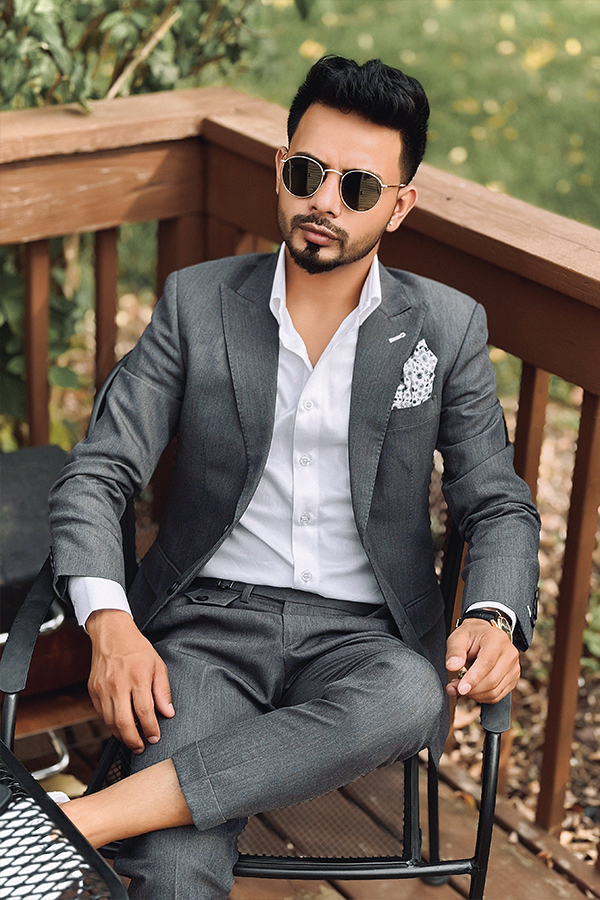
For many, success is the destination. For fashion designer and stylist Shambhu Puri, it became the beginning of something new.
After more than a decade shaping Nepal’s fashion and entertainment industry, Shambhu had built the kind of career many aspire to. As founder of Sam Sui Clothing, he established himself as a designer, stylist and creative director, working across films, television, music videos, editorials, fashion campaigns and live events. Known for treating fashion as a form of visual storytelling, his work extends beyond garments to create narratives that resonate long after the runway.
His success earned industry recognition, but one question continued to linger: What’s next?
Rather than settling into the comfort of an established career, Shambhu chose uncertainty. He left behind the life he had built in Nepal to pursue a Master’s degree in Fashion Marketing at LIM College in New York, determined to expand not only his creative vision but also his understanding of fashion as a global business.
“Fashion has been part of my life for over a decade. Every project brought new experiences, meaningful collaborations and opportunities to grow creatively,” he says.
Looking back, he speaks with gratitude. Every collaboration helped shape his creative identity, whether designing collections, styling artists or directing campaigns. Yet, even as his career flourished, he resisted the temptation to become comfortable.
“I have always believed growth begins when you are willing to step outside your comfort zone.”
That belief ultimately led him to New York.
Leaving behind an established reputation was not an act of starting over, but of investing in what came next. He wanted to challenge himself, experience different markets and cultures, and better understand how fashion intersects with business, branding and global culture.
The decision wasn’t sparked by a single defining moment. Instead, it grew quietly with every achievement. “As my career grew, every accomplishment was followed by the same question: ‘What’s next?’”
His curiosity had expanded beyond the creative process. He wanted to understand fashion from every perspective, not only as design, but as a global language capable of connecting cultures, shaping identities and creating lasting impact.
“It wasn’t about leaving something behind,” he explains. “It was about expanding my perspective and investing in the next chapter of my journey.”
Moving to New York also meant embracing vulnerability. After years of building a name within Nepal’s fashion industry, he found himself in an unfamiliar city where experience alone was no guarantee of success.
“It required courage, adaptability and the willingness to learn all over again.”
Those moments of uncertainty, he believes, became the catalyst for growth. “The confidence I carried came from the experiences I had gained over the years, the lessons from every project, and my belief that creativity has no boundaries.”
Today, those experiences continue to shape his work, encouraging him to balance craftsmanship with innovation while remaining grounded in his own creative identity.
Rather than fearing failure, Shambhu has learned to value every experience equally. “You may achieve the success you are working towards, or you may gain lessons that help you move further in life. Either way, every step contributes to your journey.”
His ambitions now extend far beyond personal achievement. He hopes to contribute meaningfully to the global fashion industry while showcasing Nepali creativity on an international stage. More importantly, he wants his journey to encourage others to believe that where they begin does not determine how far they can go.
Happiness, too, has taken on a different meaning. “It is the peace of mind that comes from knowing I am living with purpose.” For Shambhu, that purpose lies in the freedom to create, to keep learning, to dream without limits and to keep evolving with every new experience.
His advice is simple: stay curious, remain humble and never stop investing in yourself. “Move at your own pace, celebrate every small step forward and remember that every chapter of your life has something valuable to teach you.”
Text: Ankita/Kreenjala/Bijaya/Shriyukta