Culture is more than history, it is the thread that connects generations, shapes identity and gives communities a sense of belonging. In Nepal, that thread is woven through festivals, languages, rituals, traditional crafts, music, architecture, food and an enduring spirit of togetherness that continues to define everyday life.
Yet, as migration, urbanisation, digitalisation and global influences reshape society, many of these traditions are evolving while others risk fading away. The question is no longer simply what we should preserve but how we ensure that our cultural heritage remains relevant, meaningful and alive for future generations.
In this feature, artists, researchers, activists, entrepreneurs and cultural practitioners reflect on a simple yet profound question: If you could preserve just one aspect of Nepali culture for the next 100 years, what would it be? Their responses reveal not only what they value most, but also why preserving culture is ultimately about preserving identity, memory and the stories that define who we are.
Among Nepal’s many cultural traditions, which one had the most impact on you growing up?
Aliz Ghimire, Actor, Elephants in the Fog
Aliz: The tradition which has influenced me the most while growing up is the feeling of community and caring as a part of Nepali culture. Whether it is festivals, community events, family traditions or just people’s presence on special occasions, I came to know that culture is not only something which we get from our past but something which we practice as well. Being queer and an artist, there have been times where I have felt isolated from some aspects of tradition but what kept me going is the warmth, strength and generosity that comes from the very essence of Nepali culture.
Kritika: The tradition that shaped me most isn’t a festival or a ritual but the way we gather around illness and grief. My mother fought cancer for much of my life, and when she was finally on her deathbed, our home filled with people who never waited to be asked… neighbours arriving with food, relatives settling in for the long nights without anyone needing to call them. I learned early, and then again at the end, that in Nepal suffering is rarely something you carry by yourself. There is an instinct here that when something breaks in a family, the whole community leans in to help hold it all together. After she passed, that did not stop.
People kept coming, kept sitting with our silence, kept making sure we were never left alone in it. I have lived in places where grief is kept private and managed politely, and ours felt messier by comparison but far more human. That instinct to show up for one another, unasked, is what I hold onto most, and it is how I still feel her.
Skanda: I spent some of my younger years in India and the USA, so I only saw the culture growing up later in my teens. It took me some time to get used to the community, collectivism our culture holds. I realised that this unity we have between our relatives and community shapes who we are. The feeling that there is a community I know will always be there if I need is what had the most impact on me growing up.
Yubraj: As a Bharatanatyam dancer, something that captured my eye and my heart as a child when I first visited our ancestral home in Nepal was the beauty of Ghatu and Kaura. It was like witnessing the Tandava and Lasya elements that I had learned early on. In the meditative, trance-like state of the Ghatusari performing the narrative ritual of Ghatu, I saw the gentle, expressive storytelling grace of Lasya mirroring our shared classical roots. In contrast, the vibrant energy, powerful footwork and fast-paced syncopated rhythms of the Kaura dance felt alive with the dynamic, rhythmic vigour of Tandava. Ghatu acts as a sacred, historical archive of our community, while Kaura celebrates life and collective joy. Experiencing these indigenous art forms instilled in me a deep kinetic reverence, proving that the body is a sacred vessel for heritage.
Sahara: As a person who grew up in a family where every morning starts with puja and day ends with saajh ko aarati, culture is what shaped me as the person I am today. Not just one specific ritual or culture but me as a human is a canvas of different cultures blending together.
In a very positive way, the sense of belonging that the festivals gave me or how they brought the family together is what I crave all year long. But culture also has negative aspects like having to stay away from celebrations when I am menstruating. Our culture also gave me the realization that a daughter is a temporary family member in her own home and that my true home is somewhere else with the man I marry.
So, while my culture instilled in me values of honesty, loyalty and togetherness, it also made me rebellious. My relationship with my culture has been about learning how to belong even while asking questions about things within it that didn’t feel right.
If you could preserve one aspect of Nepali culture for the next 100 years, what would it be?
Aliz: I will try to preserve the diversity of stories, languages and folklore that exist in Nepal. We have so many different groups of people, each with their own history, songs, legends and worldviews. Most of our cultural heritage has been transmitted orally and are therefore can be easily lost. Being a storyteller working in cinema, fashion and arts, I am convinced that preserving stories is most important for us. Losing our stories would mean losing our life perspective and our memories.
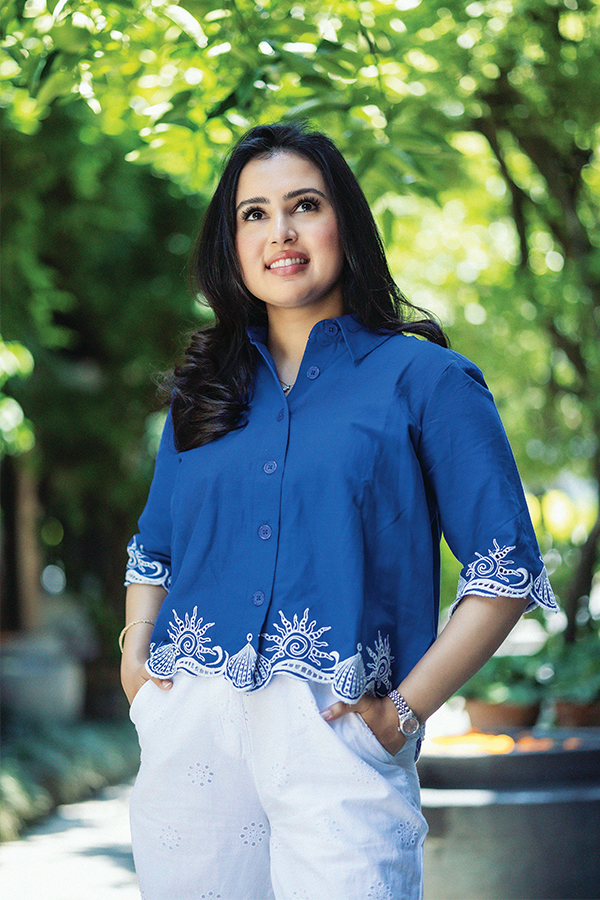
Kritika Ghimire, Project Manager, SpeakUp Nepal
Kritika: I would preserve the way we turn strangers into family through language. A stranger on a bus becomes didi, dai, bhai or kaka almost before begin to speak. I find that extraordinary… the way a single word decides that this stranger is not separate from me. Other cultures build elaborate systems to manage the distance between people but we built a language that simply erases it. At SpeakUp Nepal, I spend a great deal of time thinking about who gets left out and who gets treated as outside the circle, and this small habit of ours just brings people together instinctively. I would want Nepalis a century from now, however global they have become, to still meet a stranger and reach for a word that makes them belong.
Skanda: The Newari culture is extremely rich. Not being from that community, I did not truly understand the significance and uniqueness of the traditions until I started capturing it on camera. I was blown away with the grandiosity yet simplicity of it.
My first big task was at Khokana for the Rato Machindranath Jatra (longest and oldest chariot festival dedicated to the deity of rain) which happens only every 12 years. The enormous crowds and the tall chariot pushing through it amidst the sounds of traditional Newari musical instruments… it is just one of those “you have to be there” moments.
Likewise, Bisket Jatra (nine-day annual festival celebrating the solar New Year and spring) with attendees and performers wearing beautiful Newari attires coming together and the sense of belonging is a life-changing experience. I would want our Newari traditions to be preserved for the next 100 years and more.
Yubraj: It would be our intangible cultural heritage, specifically traditional storytelling through indigenous dances and music like Charya Nritya and the sacred Ghatu Nritya. Tangible temples can be rebuilt after earthquakes as we have resiliently proved after 2015 but once oral rhythms and muscle memory die out, our spiritual consciousness vanishes forever. These traditions could be better preserved if institutionalised through a systematized, codified format, just like what I saw happen to Bharatanatyam through my guru’s storytelling about how the art form was painstakingly revived and structured. Preserving this ensures that future generations do not just look at Nepal’s history but feel its pulse in their veins.
Sahara: If I could preserve one aspect of Nepali culture for the next 100 years, it would be the culture of caring deeply for one another. Nepali culture is very community-oriented and deeply rooted in the sense of “us” rather than just “me”.
This is one of the biggest realisations that I have had since I started working at SpeakUp Nepal, an online petition platform where people can raise any issue that they think the government should address, enabling citizens to bring forward concerns and advocate for change through collective public voice. Once a petition is filed, people can go and either support, oppose or give alternative solutions to the specific issue. And I have seen people raise their voice not only for issues that affect them personally but also for causes that do not directly impact them. I realised this while working on a petition related to making the process of obtaining a driver’s license easier for e-rickshaw drivers. E-rickshaws are primarily operated in the Terai region of Nepal, while our user and audience base is largely concentrated in Kathmandu and other urban regions. Despite that distance from the issue, people still signed and supported the petition. This is just one specific example, but over time I have started recognizing a pattern that appears across different issues. Whether it is child trafficking, period tax or other civic and social causes, I have consistently seen people engage beyond their immediate personal stake and respond to issues as collective concerns rather than isolated problems.
A majority of young Nepalis are moving abroad or considering it for study and work. How can Nepal preserve its cultural identity while also embracing globalisation and migration?
Aliz: Culture is not something that remains alive by staying unchanged; it survives because it adapts. Young Nepalis living abroad should be encouraged to remain connected to their language, traditions and community while also bringing back new ideas and experiences. At the same time, cultural preservation should focus on accessibility through education, arts, digital archives and community programs that make culture relevant to younger generations.
Globalisation and migration do not have to be threats to identity. If approached thoughtfully, they can create opportunities for Nepali culture to evolve, reach wider audiences and remain meaningful in a rapidly changing world.
Kritika: My senior thesis in anthropology was about exactly this – Why young Nepalis leave – and writing it changed how I see the question. I have stopped viewing migration as the real threat to our culture. The deeper risk is making people feel they must choose between belonging here and building a life elsewhere. Culture has never survived by keeping people in, it survives by giving people something worth carrying out into the world. The Nepalis I know abroad still cook dal bhat in unfamiliar kitchens, still teach their children Nepali, still somehow find each other across continents, carrying the whole of Nepal inside them. What we owe them is a country that stays open, one that doesn’t treat leaving as a betrayal or returning as a failure, and part of that is building a Nepal worth coming back to.
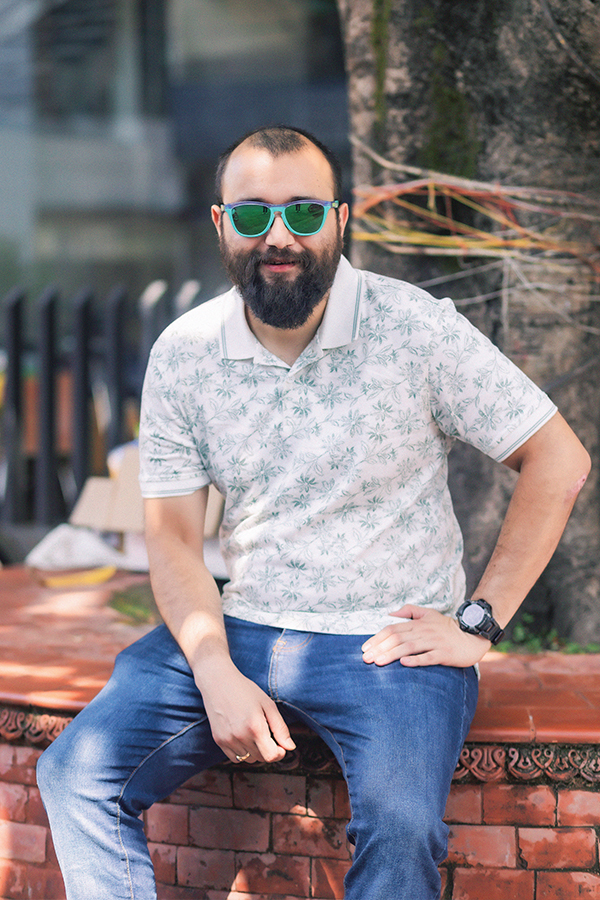
Skanda Gautam, Photojournalist
Skanda: It is easy to say you should stay back, contribute to preserving culture but we must consider the different economic needs of people. Even when people leave, they should be proud to take forward their culture into foreign lands with an evolved sense of preservation.
I consider my work to be an ode to the Nepali culture, and I hold a lot of pride in showing it not just here but to the whole world.
Nepalis are quick in being influenced but knowing what not to inherit is very important, and something to think about.
Yubraj: We cannot tie young Nepalis to the soil by forcing stagnation but we can give them deep cultural roots that travel with them. As a classical dancer practicing an art form that transcends political borders, I view migration not as a loss but as a diaspora expansion.
Nepal can leverage globalisation by creating institutionalised digital archives and hybrid learning spaces. We must integrate our cultural history directly into international school curricula and support global networks of Nepali cultural hubs. When a young person moves to London or New York, they should not have to leave their identity at Tribhuvan International Airport. Blending global professional pursuits with digital access to ancestral arts, our youth become global cultural ambassadors rather than displaced citizens.
Sahara: Globalisation and migration are inevitable. Human Migration is not a new phenomenon and it has existed across generations in different forms. People have always moved for education, work and better opportunities. I believe cultural identity is neither dependent upon physical presence within the country, nor does it have to be tied within one geographical boundary. People migrate and while they migrate, they take their heritage and culture with them. However, there is always a risk of coerced cultural assimilation. To address this, both the government and individual have a shared responsibility to create systems, spaces and practices that help strengthen the connection between people and their cultural roots, even when they are living outside the country. This can also include strengthening frameworks such as Non-Resident Nepali (NRN) citizenship with cultural rights, which can help maintain a continued sense of belonging and cultural connection among the Nepali diaspora.
Through your work, have you noticed any change in how not only the younger but even the older generations are thinking in terms of cultural preservation?
Aliz: Certainly, I have noticed changes. Younger generations care about saving culture however they wish to do it through more inclusive and modern approaches. What caught my attention was that the older generations became more accepting of this discussion as well. Through my experience with fashion, films and queer activism, I noticed an increasing understanding that the culture should be inclusive to make it more powerful. People are starting to realise that saving culture does not necessarily mean keeping it from changing but making sure that it stays relevant and reflects the current community.
Kritika: Yes and it has surprised me in both directions. I had assumed the younger generation would be the ones letting go but I have found almost the opposite, especially among those who have lived abroad and come home strangely hungry for the very traditions they once took for granted.
One of the obvious examples of how the older generations continue to preserve Nepali heritage is through legacy enterprises. An example is the Dwarika’s Hotel which began when Dwarika Das Shrestha started channelling his collection of ancient, intricately carved wood and terracotta salvaged from demolished buildings in 1952 into the creation of the hotel. Years later, it remains one of Nepal’s most sought-after heritage destinations.
What surprises me now however about the older generation is that during my research on menstrual exclusion, I sat with elders who were rethinking practices their own mothers had never dared to question, and I came away convinced that people are far more willing to reexamine what they have inherited than we ever give them credit for.
Culture here isn’t frozen, it is an ongoing conversation between generations, each one deciding together what to keep, what to release, and what to gently reshape for the world they actually live in.
Skanda: People of any age living abroad are nostalgic about their childhoods, so they post and repost about Nepal on their social media handles. When you live abroad, you realise how beautiful your homeland is. Younger generations are also keen on holding onto their identity. They don’t feel the need to conform to other cultures; and that is refreshing to see.
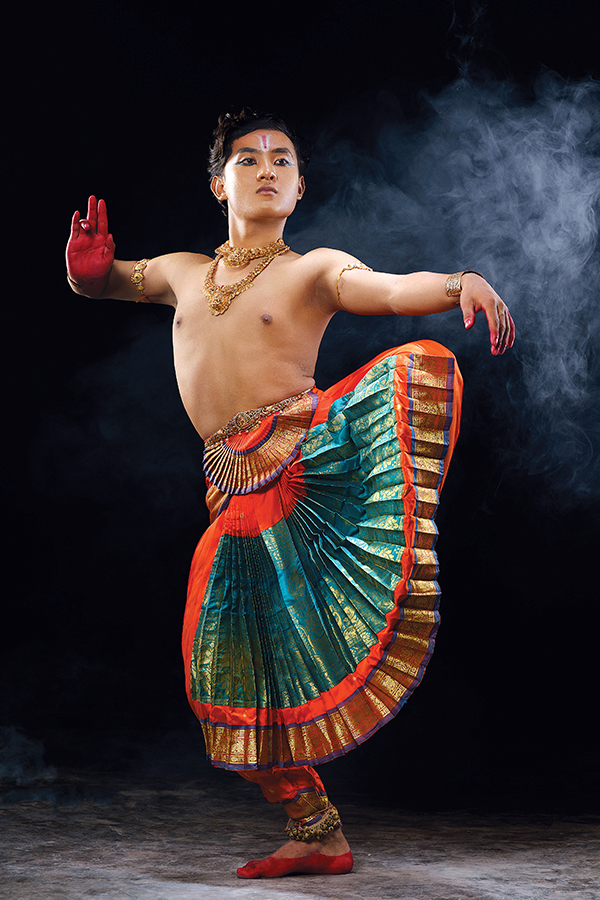
Yubraj Ghimire, Bharatnatyam Dancer
Yubraj: Through my performances and teaching, I have observed a fascinating, beautiful inversion of thinking. The older generation, once fiercely protective and somewhat exclusive about sacred art forms, has grown more open out of a healthy fear of obsolescence. They realise that secrecy leads to cultural extinction.
Concurrently, the youth are moving past viewing tradition as old-fashioned. Driven by a subconscious search for identity in a hyper-connected world, young Nepalis are showing immense pride in participating in Jatras, learning scripts like Ranjana Lipi, and attending classical performances. They are questioning traditional exclusionary barriers like gender roles in musical bands, which is injecting fresh, inclusive vitality into ancient practices.
Sahara: Through my work, I have noticed a shift in how both younger and older generations are thinking in terms of cultural preservation, particularly within Nepali diaspora. After the Gen Z Protest, I saw many NRNs return to the country or actively reach out to understand what was happening and how they could contribute. During this time, the country was also going through a politically uncertain phase with an interim government in place and elections still in question. Members of the Nepali diaspora themselves identified concerns around low voter registration and reached out to us, requesting support through our social media platforms to help raise awareness and encourage more people to register. Something that stood out to me was the immediacy of that response and emotional proximity that Nepali diaspora still feels towards Nepal. It is beyond any geography or citizenship status but rather a deeply rooted cultural attachment towards Nepal and this connection is also visible in the way they engage with issues related to Nepal’s civic and cultural preservation, even from outside the country.
If you could create a national program to protect one aspect of Nepali culture for the next century, what would you choose and how would you preserve it?
Aliz: I would create programs that would protect traditional crafts and arts of Nepal. It includes practices like weaving, carving, metal crafting, textile craft and more. These practices contain centuries of experience and culture. But many artisans find it difficult to sustain themselves through these crafts. I would develop an initiative where artisans will be given apprenticeship programs, financial assistance, cultural training as well as platforms to display and sell their craft. This way, we will ensure that the practice becomes economically viable as well as attractive for young people. It will allow these skills to flourish instead of fading away.
Kritika: I would build a national living archive of our oral traditions – the songs, proverbs, stories and dialects that exist nowhere except in people’s memories, kept alive rather than locked behind glass. The idea is to have young Nepalis sit down with the elders in their own lives, whether a grandmother in a Kathmandu apartment or a neighbour who still remembers the old songs, and record them in their own words, telling the stories no textbook has ever held. Then I would make those recordings free, taught in schools and woven back into daily life. So much of who we are was never written down and when an elder passes, an entire world can vanish with them, including the small dialects that hold the very words we use to call each other family.
The instinct comes from my civic work, because at SpeakUp Nepal I learned that the best projects begin by listening to people rather than deciding for them. Pairing the young with the old preserves both.
Skanda: I would focus on preserving the spirit of unity and pride that connects all of Nepal’s diverse traditions. However, I also believe we are already moving in the right direction. Across the country, people continue to celebrate festivals, protect religious sites, preserve traditional foods, and pass on music, languages and customs to younger generations. A national program should strengthen these efforts by supporting local communities, encouraging cultural education in schools, documenting traditions and promoting cultural tourism in a respectful way. It should also empower young people to participate in preserving their heritage through modern technology and creative projects. Nepal’s greatest strength is that its people are proud of their identity and willing to protect it. If we continue working together with the same unity and commitment, I believe our rich cultural heritage will remain strong and vibrant for the next century and beyond.
Yubraj: I would establish the National Intangible Performing Arts Academy and Endowment, specifically targeting our indigenous dances, festive music and dying oral folklore. Our traditional arts suffer because artists cannot make a sustainable living. This program would operate on a two-pronged approach. First, the Living Legend Stipend would provide a monthly, state-funded salary to dance masters across Nepal’s diverse ethnic communities, honoring them as national treasures in exchange for training apprentices. Second, the School-to-Stage Initiative would mandate the integration of local folk and classical performing arts into public school physical education and arts streams. By formalizing training, providing structural financial security to practitioners and creating commercial performance platforms, we convert vulnerable oral traditions into a robust, prestigious professional pathway for the next century.

Sahara Bhandari, Research and Campaigns Head, SpeakUp Nepal
Sahara: If I could create a national program to preserve one aspect of Nepali culture for the next century, I would focus on preserving Nepal’s ethnic customs. I believe this is one of the most unique and diverse aspects of
Nepal’s cultural identity. In terms of preservation, I would propose a dedicated cultural preservation framework or act focused specifically on safeguarding ethnic customs. This would include structured plans and policies developed under the Ministry of Tourism and Culture but with strong implementation at the local level.
Rather than a purely top-down approach, I would emphasise a bottom-up model of preservation, where communities themselves are actively involved in protecting and continuing their own cultural practices. In this way, cultural preservation becomes something that is not only governed by institutions but also owned and sustained by the people themselves.