
Couples who chose authenticity despite societal pressure.
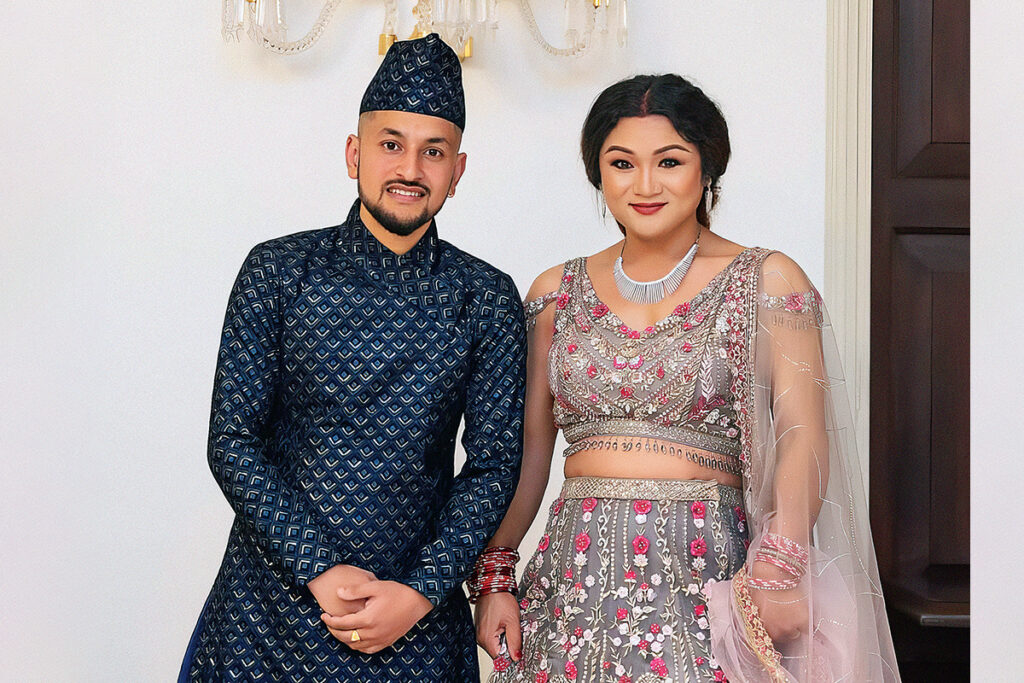
Maya Gurung and Surendra Pandey made history in November 2023 by becoming the first LGBTQIA+ couple in Nepal and South Asia to officially register their marriage. Maya Gurung, a transgender woman and Surendra Pandey, a cisgender man had already held a traditional Hindu wedding ceremony in 2017 but their union was not legally recognised for years. After a landmark interim order from Nepal’s Supreme Court supporting same-sex marriage registration, the couple successfully registered their marriage in Lamjung district. Their journey became a powerful symbol of hope, equality and resilience for Nepal’s LGBTQIA+ community. Despite facing legal obstacles and social discrimination, they continue advocating for recognition, dignity and equal rights for future generations through their organisation, Mayako Pahichan.
How did you first meet, and when did you realise your relationship was becoming serious despite the social expectations often present in Nepali society?
Maya and Surendra: We met in Nawalparasi, where both of our families and homes are. At the time, Maya was living in Kathmandu and would visit home occasionally, and during those visits we gradually got to know each other better. What began as friendship slowly deepened as we started opening up about our lives, struggles and personal experiences. We became very close friends first, and over time the relationship naturally grew into something more meaningful. As our bond became stronger, we eventually decided to start living together in Kathmandu. In the beginning, city life was not easy for us and we struggled to find stability while building our lives together. We even started with a Momo cart while trying to find a footing. It was a very tough in terms of finances as well. People around us often questioned why we were living together without being married. Those comments and constant social expectations created pressure, especially because marriage is always part of any conversation in Nepali society.
That was when we truly realised our relationship was becoming serious because despite the pressure and judgement, we continued choosing each other.
Nepal has made important legal progress for LGBTQIA+ rights, including recognition by the Supreme Court, but social acceptance can still be difficult. Did legal protection make any difference in how safe or confident you felt as a couple?
Maya and Surendra: Love is not a crime and neither is someone’s identity. We believe that two people choosing to marry or build a life together is their personal right and choice. Nepal’s legal progress and recognition of LGBTQIA+ rights has given us a sense of validation and protection, and in many ways it has made us feel more confident about our relationship. It sends an important message that our love and identity deserve dignity and equal rights.
At the same time, social acceptance continues to be difficult. Many people still believe that marrying a queer individual brings negativity to society, and stereotypes deeply rooted in culture continue to shape how people understand gender and sexuality. There is still a lack of understanding about the difference between gender identity and sexual orientation which often leads to judgement and discrimination. So, while legal protection has helped us feel recognised and supported in some ways, true acceptance in everyday social life is something we still continue to navigate.
How did your families, relatives or local community react to your relationship? Were there cultural or traditional expectations that created pressure for you both?
Maya and Surendra: Our families and communities reacted very differently to our relationship. When Surendra’s family first learnt about us, they stopped all contact which was one of the most painful experiences we had to go through. During that time, Surendra tried to communicate with family and the wider community through interviews and public conversations, and slowly some people began keeping in touch again.
However, there are still relatives, including an uncle who cared for Surendra during childhood, who does not talk to us even today. Being disconnected from family for such a long time was deeply disheartening, especially during some of the most difficult moments in our lives. Even though there is more understanding now, there is still sadness around why acceptance had to take so long in the first place.
Maya’s family, on the other hand, were among the first to support us. Maya had always been independent and had even gone to Saudi Arabia to build a life for herself which may have helped her family trust her choices and believe she understood what was best for her own life.
We have learned how important family support truly is, because without it, people can begin to feel as though they have done something wrong simply by loving someone. Love, trust and acceptance from family can make an enormous difference in helping people feel safe and valued.
Have you ever faced challenges in public spaces, workplaces, colleges or while renting housing in Nepal because of your relationship?
Maya and Surendra: There were times when people treated us unfairly, excluded us or behaved in openly discriminatory ways. Finding a place to rent was especially difficult because some landlords were ignorant and did not treat us equally compared to other couples or tenants. At times, people would even ask us to pay almost double the normal rent. Experiences like that made us feel judged and unwelcome in spaces where everyone should be treated equally.
During those moments, supporting each other emotionally became very important. We reminded each other that our relationship and identity were not wrong, even when society made us feel otherwise. Facing discrimination together also strengthened our bond because we learned to rely on one another during difficult situations.
At the same time, we do feel things have improved over the years. Earlier, even young children would repeat slurs or hurtful comments they heard around them, but now we notice that many young people and children are far more understanding and treat us with more equality and respect.
What message would you like to share with young couples in Nepal who want to live authentically but fear judgement, discrimination or lack of acceptance?
Maya and Surendra: Society often creates fear by spreading stereotypes and negativity around people who choose to live differently from what is traditionally expected. We understand those fears deeply because we have experienced them ourselves.
What helped us through those difficult times was being completely certain about each other, even when it felt like the world was against us. Holding on to that trust, love and belief in one another gave us the strength to continue living authentically despite the judgement around us. Today, when we look back, we feel proud that we stayed together through all of it.
Our message to young couples in Nepal is to continue supporting each other and hold on to one another even more strongly during difficult moments. When you have someone who truly understands and accepts every part of who you are, it becomes easier to face the outside world with courage. Acceptance may take time, but living honestly and staying true to yourself is always worth it.
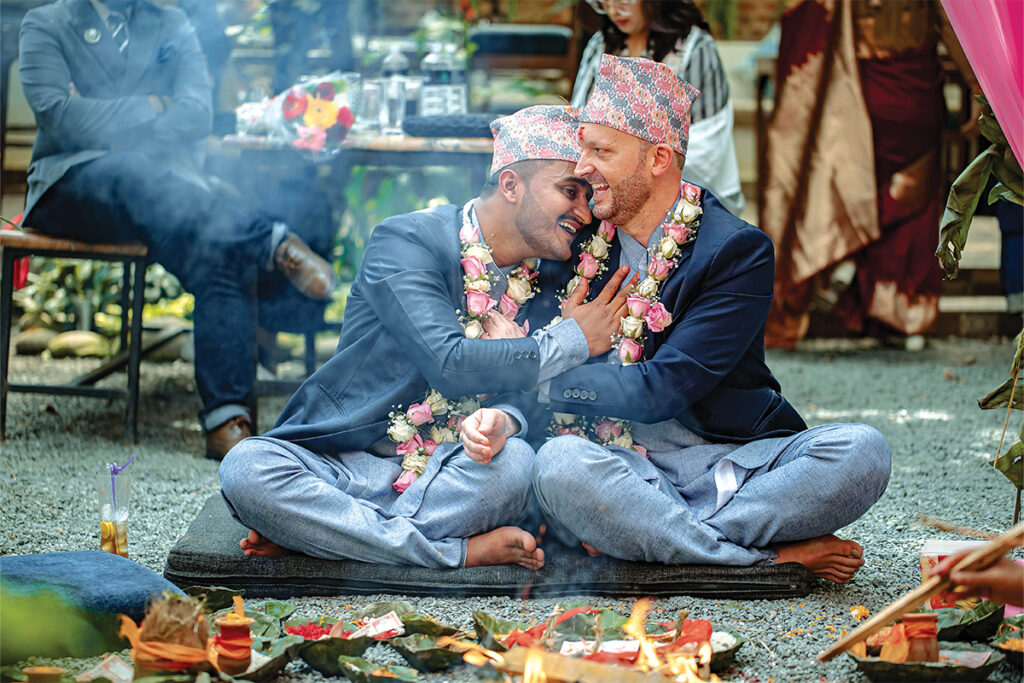
Prajeet Budhathoki, a Nepali gay man from Dharan, and Joey Foster Ellis, an American gay man from New York currently a Sanskrit scholar at Tribhuvan University, made history in 2024 by becoming the first same-sex couple involving a foreign national to legally register their marriage in Nepal. Their marriage was officially registered in Dharan following Nepal’s landmark recognition of same-sex unions. The couple, who had been together for over two years, celebrated their union through a blend of traditional Hindu and Christian wedding rituals, symbolising both cultural diversity and LGBTQIA+ visibility.
Beyond their relationship, Prajeet and Joey are also connected to Queermandu, Nepal’s first gay-owned travel company, where they advocate for safe, inclusive and LGBTQIA+-friendly tourism in Nepal. Their story represents courage, love and a significant step forward for marriage equality and queer visibility in South Asia.
How did you first meet, and when did you realise your relationship was becoming serious despite the social expectations often present in Nepali society?
Prajeet and Joey: We met on Grindr, which feels very modern but also very honest.
It reminds us that soulmates do not always arrive through the story society expects. Sometimes they arrive through an app in the middle of ordinary life, and still change everything. We like to joke that we were lesbians about it: we basically moved in after a month. It became serious quickly, but it did not feel careless. It felt like recognition. We had both lived enough life to know the difference between excitement and something you can actually build a home around.
In Nepal, there is always ;dfh (society) around a relationship: family, reputation, tradition and the question of what people will say. We were aware of that but we were not building our relationship for other people to approve of. We were trying to see whether our lives worked better together. At some point, it stopped feeling like dating and started feeling like home. Not perfect, not easy but real. And that was enough for us to keep choosing each other.
Nepal has made important legal progress for LGBTQIA+ rights, including recognition by the Supreme Court but social acceptance can still be difficult. Did legal protection make any difference in how safe or confident you felt as a couple?
Prajeet and Joey: Yes, but not in a way we fully understood at first.
We knew legal recognition mattered, but it felt different when it became part of ordinary life. At the hospital, being able to write “husband” was a small action but it changed the feeling of the room.
It meant we had clwsf/, the right to be there for each other without having to over-explain who we were. Not just visitors. Not just partners in some vague way. Family. That also made us think more deeply about transgender rights, because recognition is not just a political word. It affects how people move through hospitals, offices, borders, schools, families and daily life. Being recognised correctly can change whether you feel safe, believed, or allowed to stand there at all. Of course, a word on a form does not make every person understand immediately. Someone can still pause or look confused. But it gives you something solid. It lets you stay calm because your life has a place.
How did your families, relatives or local community react to your relationship, and were there cultural or traditional expectations that created pressure for you both?
Prajeet and Joey: Our relationship has never been only about sexuality. It is also about race, nationality, class, language and two very different family systems.
In Nepal, one of us can be seen first as lab]zL (foreign). In America, that flips. The other one becomes the outsider.
That has taught us that belonging is not neutral. It depends on where you are standing, who is looking at you, and what kind of difference they have been taught to notice first.
Sometimes people react more to our interracial and cross-cultural marriage than to the fact that we are two men. Prejudice does not always arrive as homophobia. Sometimes it shows up as racism, nationalism, class anxiety or discomfort about who is allowed to become family.
Our families have not all responded in the same way. Some people have been warm. Some have needed time. Some have shown us prejudices we did not expect. But marriage is not about making everyone comfortable. It is about building a life true enough to hold both of you. We come from very different families, and that will always shape us. The work is not to erase those differences. The work is to build a family where neither person has to become smaller to belong.
Have you ever faced challenges in public spaces, workplaces, colleges or while renting housing in Nepal because of your relationship?
Prajeet and Joey: We have faced moments, but we do not want our story to become only about difficulty.
What surprised us is how marriage gives people a way to come closer. Sometimes people do not know what to do with the gay part, or the foreigner part, or the interracial part.
But they understand marriage. They understand asking where your husband is, how long you have been together, where your home is, and what your family thinks. That gftf(relationship) matters.
It does not mean every awkward moment disappears. It does not mean everyone understands everything. But marriage gives people a familiar place to begin. For us, recognition has not only made us more visible. It has made us more connected. It brought us closer to society in a way we did not expect.
What message would you like to share with young couples in Nepal who want to live authentically but fear judgement, discrimination or lack of acceptance?
Joey and Prajeet: Get married if you have found the one. We had no clue how meaningful being married would be. We knew we loved each other but marriage took that love to another level. It gave us new perspectives on each other, on family, on society and on what it means to belong to another person.
We had a Hindu ceremony, and in that tradition, marriage is not only for this life. It carries the idea of seven lives. That is magical to us. Sacred. It made us understand that love is not just a feeling. It is a bond that keeps revealing itself.
We both had lives before each other. We both had past relationships, past love, past heartbreak, and we needed those experiences to recognise what we had found. We spent our whole lives looking for each other, even before we knew it.
So, during Pride Month, our message is simple: everyone deserves the right to find this kind of love and have it recognised.
Love should give you more life, not less. It should make your world bigger. It should give you someone who is always in your orbit, someone you can call budu, someone who is part of every version of your future.
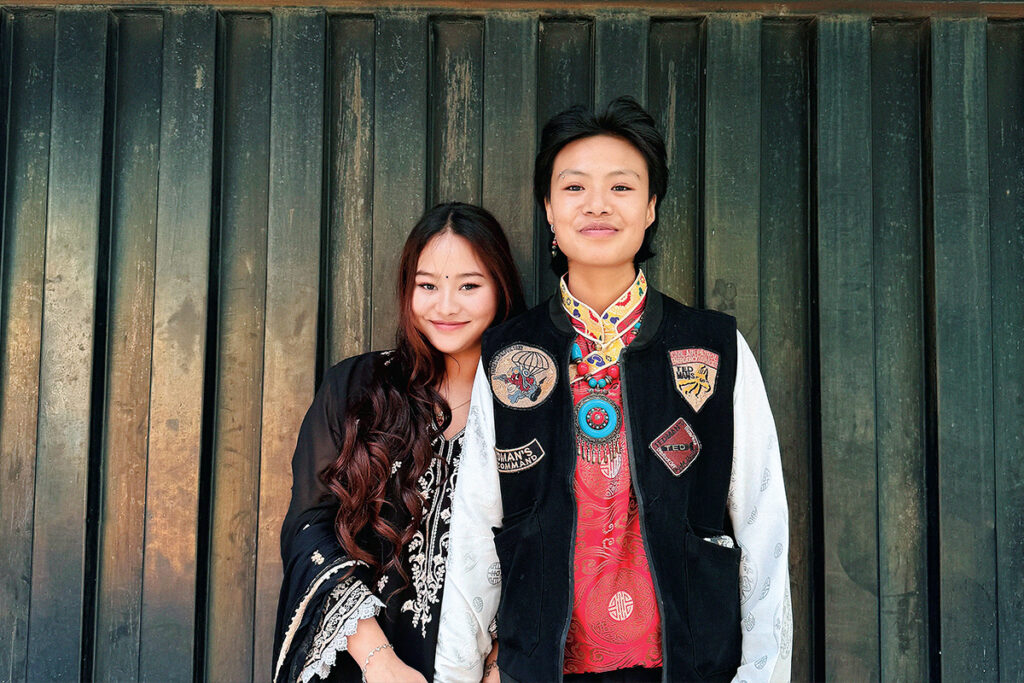
Prativa Rani Rai and Muskan Tamang are digital content creators known for openly sharing their relationship journey through their joint YouTube channel, Prativa x Muskan. Through vlogs, lifestyle content and personal storytelling, they have built a large online audience and become recognisable voices within Nepal’s queer community. Their content often highlights themes of love, family acceptance, emotional support and the realities faced by same-sex couples in Nepali society. By choosing to openly document their lives together, they have helped create greater LGBTQIA+ visibility and representation online, especially for young queer individuals seeking connection and encouragement. Despite facing social pressure and discrimination, Prativa and Muskan continue to use their platform to promote authenticity, understanding and self-acceptance while inspiring many people to live honestly and without fear.
How did you first meet and when did you realise your relationship was becoming serious despite the social expectations often present in Nepali society?
Prativa and Muskan: We first met through Instagram where casual conversations slowly turned into something we both began looking forward to every day. At first, it was simply friendship, sharing thoughts, laughing over small things and being there for each other during ordinary moments. Over time, though, our connection grew deeper in the most natural and unexpected way. We found comfort in each other’s presence, even through simple conversations and quiet understanding. Whenever we met, it no longer felt like just spending time together; it felt peaceful, safe, and familiar, like finding a sense of home in another person. As our bond became stronger, we realised that what we shared was far more meaningful than friendship.
Despite the social expectations and pressures around us, our relationship continued to grow with honesty, trust, and emotional support. That was when we both understood that this connection had become serious and truly important in our lives.
Nepal has made important legal progress for LGBTQIA+ rights, including recognition by the Supreme Court but social acceptance can still be difficult. Did legal protection make any difference in how safe or confident you felt as a couple?
Prativa and Muskan: Legal protection has definitely made some difference in how safe and confident we feel as a couple. Knowing that the law recognises LGBTQIA+ individuals and provides certain rights gives us a sense of validation and hope for the future. It allows us to express ourselves more openly than before and reassures us that our relationship deserves equal respect and protection. However, in daily life, social acceptance still remains a challenge. Many people continue to hold conservative beliefs and discrimination or judgement can still happen within families and public spaces. Because of this, legal rights sometimes feel limited to paper rather than fully reflected in society. We believe true progress will come when these protections are genuinely practiced and respected in everyday life. While the legal recognition is an important step forward, real safety and confidence will grow only when society becomes more accepting, understanding, and supportive of LGBTQIA+ relationships and identities.
How did your families, relatives, or local community react to your relationship, and were there cultural or traditional expectations that created pressure for you both?
Prativa and Muskan: Our relationship did face pressure from relatives, society, and traditional expectations within the community. In many cultural settings, people often expect relationships and marriages to follow conventional norms, so being open about our relationship was not always easy. At times, there were uncomfortable questions, judgement and assumptions from extended family members and people around us. These social expectations created emotional pressure and made us worry about how others would perceive us. However, the acceptance and support we received from our families became our greatest source of strength. Knowing that the people closest to us understood and stood beside us gave us confidence to face societal opinions more calmly and positively. Their support helped us feel secure in our relationship and reminded us that love and understanding within a family are more important than social stereotypes. Because of that support, we gradually became more confident in living honestly and openly within our community despite the challenges.
Have you ever faced challenges in public spaces, workplaces, colleges or while renting housing in Nepal because of your relationship?
Prativa and Muskan: Yes, we have faced challenges because of our relationship, especially while trying to rent housing. Some people judged us unfairly and believed that our relationship could be a “bad influence” on others. Experiences like that were deeply painful because they made us feel excluded and misunderstood simply for being ourselves. Situations like these also reminded us that, despite legal progress, social acceptance is still limited in many parts of society. There were moments when the judgement and rejection became emotionally exhausting, and it sometimes felt discouraging to constantly explain or defend our existence.
However, during those difficult times, we supported each other with patience, love and understanding. We became each other’s safe place and source of comfort whenever things felt overwhelming. Instead of allowing negativity to break us apart, those experiences strengthened our bond even more. Beyond all the criticism and social pressure, we chose to focus on the love, trust and companionship we shared, and that became the most meaningful part of our journey together.
What message would you like to share with young couples in Nepal who want to live authentically but fear judgement, discrimination or lack of acceptance?
Prativa and Muskan: To young couples in Nepal who are afraid of judgement, discrimination or rejection, we want to remind you that your existence and your love are never something you should feel ashamed of or apologise for. Society may not always understand you immediately, and there may be moments when people question or criticise your choices because they are different from traditional expectations. Those experiences can feel painful and isolating, but they should never stop you from living honestly and embracing who you truly are.
Always stay close to the people who genuinely support, respect and value you because having even a small circle of acceptance can make a huge difference during difficult times. Most importantly, never allow society’s opinions to make you believe that you are undeserving of love, dignity, happiness or a peaceful future. Change takes time, but every person who chooses to live authentically helps create a more understanding and compassionate society for future generations.
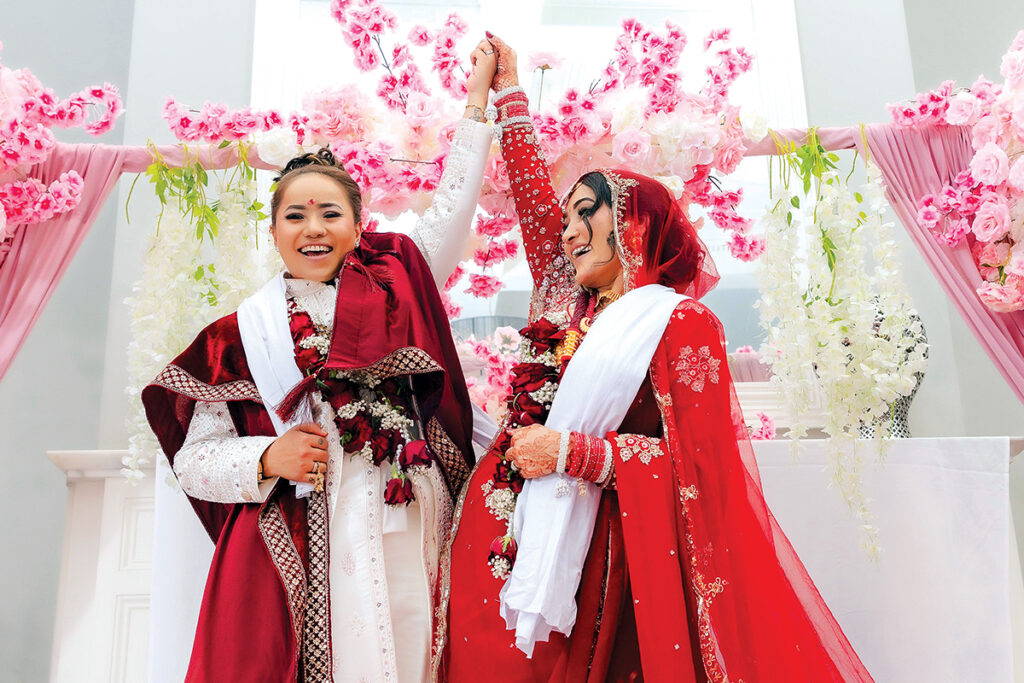
Shanti Rai and Srijana Rai are a Nepali LGBTQIA+ couple whose relationship reflects the changing realities of queer visibility, love and family within the Nepali community. Currently based in Australia, they openly advocate for living authentically and embracing love without fear of social judgement or traditional expectations. Their story highlights the importance of emotional support, family acceptance, and resilience in navigating both personal and cultural challenges as a same-sex couple. As openly queer women from a Nepali background, they represent a growing generation of LGBTQIA+ individuals who are challenging stereotypes and creating safer spaces for future generations. Through their honesty, strength, and commitment to one another, Shanti and Srijana continue to inspire many young LGBTQIA+ people by showing that it is possible to build a life rooted in love, dignity and genuine happiness while remaining true to oneself.
How did you first meet and when did you realise your relationship was becoming serious despite the social expectations often present in Nepali society?
Shanti and Srijana: We first met face to face in 2023, but we actually started talking to each other in 2021 through social media during a difficult period in both of our lives due to personal reasons. (Srijana had just given birth to a baby and was deeply missing my home and family when Shanti came into her life). From our very first conversation, I felt an instant connection with her and wanted to know her more, although I could not fully explain why at the time. We began as friends, supporting each other through our ups and downs and sharing our personal struggles and experiences. Over time, without even realising it, our friendship gradually developed into a very strong emotional bond.
As time passed, we both realised that our relationship was becoming serious despite the social expectations and personal challenges we faced. What started as a friendship became a relationship built on trust, understanding, emotional support and genuine love for one another.
Nepal has made important legal progress for LGBTQIA+ rights, including recognition by the Supreme Court but social acceptance can still be difficult. Did legal protection make any difference in how safe or confident you felt as a couple?
Shanti and Srijana: Although we currently live in Australia, seeing legal progress for LGBTQIA+ rights in Nepal still means a lot to us. Legal recognition will give hope, reassurance and confidence to LGBTQIA+ individuals and couples, and reminds people that everyone deserves respect and equal recognition regardless of their gender or sexuality.
At the same time, we understand that legal protection does not always mean full social acceptance. Even in Australia, where LGBTQIA+ relationships are legally recognised, people can still face judgement and misunderstanding. We know, not everyone will understand or accept our relationship but that does not change the love, commitment and respect we have for each other.
Legal acceptance and protection make a huge difference to us as a couple. They make us feel respected, seen, validated and treated equally in society. We feel incredibly fortunate to live in a place where our relationship is recognised and valued like any other couple’s relationship. No one should have to hide who they love or feel less worthy because of their gender or sexuality.
How did your families, relatives or local community react to your relationship, and were there cultural or traditional expectations that created pressure for you both?
Shanti and Srijana: We both have very strong views about life and we believe that you must be responsible for your own happiness. If we expect others to make us happy, we are likely to end up disappointed. Therefore, we choose not to focus on how the wider community may react as long as we have each other’s support and understanding.
Coming from a Nepali background, we consider ourselves very fortunate to have full love, support and acceptance from both of our families. With their blessing, we were able to get married in February this year. I had two children before I met Shanti, and from the very first day she has embraced them with unconditional love and care, accepting them as her own. She has built a beautiful and natural bond with both children, and they are very close to her. Kids lovingly call her “Mamu.” This strong connection between all of us has created a loving, united and secure family where respect, care and emotional support are at the centre of everything we do.
Have you ever faced challenges in public spaces, workplaces, colleges or while renting housing because of your relationship?
Shanti and Srijana: To be honest, being in Australia, people are generally more open and accepting of same-sex couples. We have not personally faced any direct social judgement in public spaces or workplaces. We do understand that if we were in Nepal, it may not have been as easy for us to be open due to social expectations and lack of acceptance in some areas. However, regardless of where we are, our approach to life remains the same. Even if we ever face discrimination, it will not change who we are or the love we share. As long as we have each other, that is enough for us. Our love gives us strength.
What message would you like to share with young couples in Nepal who want to live authentically but fear judgement, discrimination or lack of acceptance?
Shanti and Srijana: If you live in fear, that fear will eventually stop you from doing the things that truly matter. It will stop you from telling your truth and living openly. Try to build a habit of saying: “I will do it anyway.” Even when you are judged. Even when there’s no support. Even when you are afraid of failure. Because you don’t build an amazing life or relationship by waiting for the perfect moment, you build it by showing up every day, regardless of what others think. Always remember the step you are most afraid to take is often the one that can change everything for you. So don’t lose yourself while trying to fit into others’ expectations. Because fear can hold you back from the life you are meant to live.