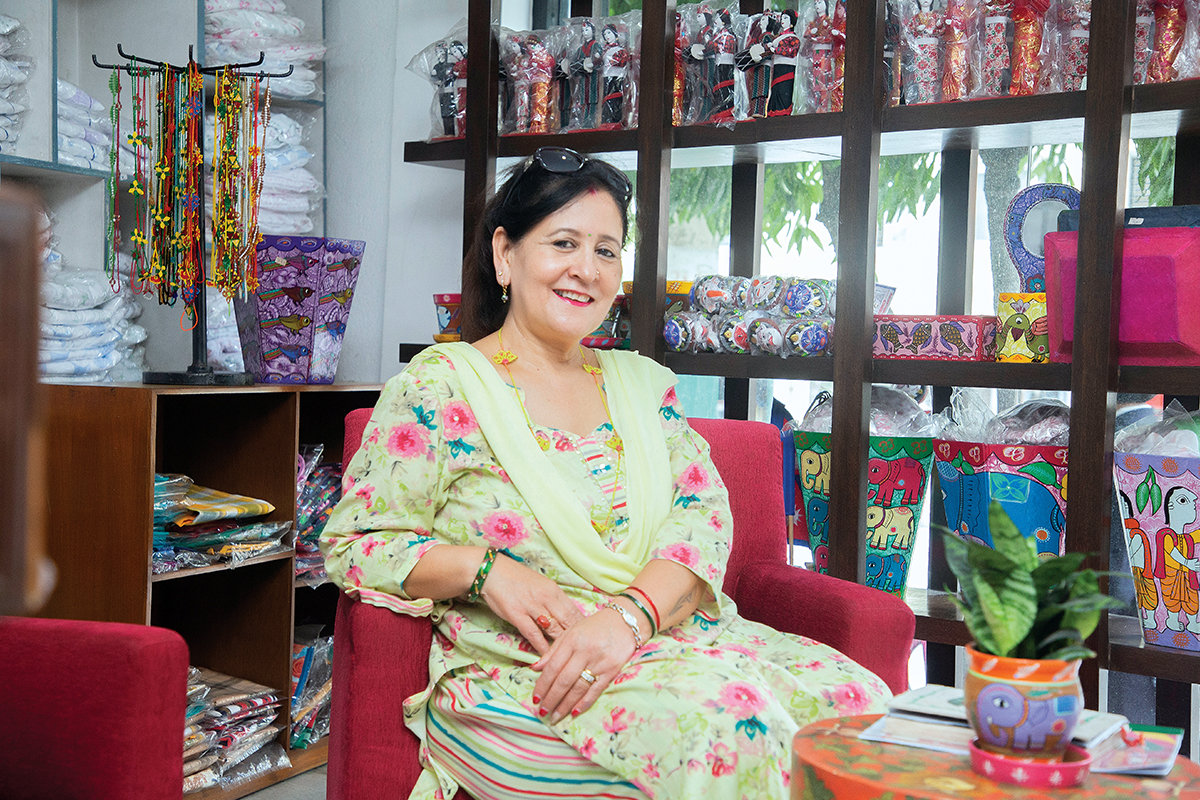

Luvana Shrestha Taking Mental Health From Hashtags to Households
In Nepal, mental health is finally having its moment. Conversations around anxiety, burnout, and emotional wellbeing are no longer whispered, they are posted, shared, and spoken about openly. But somewhere between awareness and access lies a quiet gap. One that Luvana Shrestha has chosen to step into, not with noise, but with action.
As the Country Director of Unity in Health Nepal, the local branch of Jaya Mental Health UK, Luvana is part of a growing force working to shift mental health from conversation to care. Her work is less about headlines and more about what happens after them, in rural clinics, community halls, and homes where silence has long defined suffering.
Her journey into mental health advocacy was not planned, but it feels inevitable in hindsight. With a background in Human Rights and years spent in the development sector, she had already begun to see how inequality quietly shapes health outcomes. “Mental health is not separate from development,” she says. “It is central to it.”
That realisation deepened when she began working with Unity in Health Nepal in 2018. What she encountered was not just a lack of services, but a culture of silence. People were struggling, often invisibly, and support systems were either inaccessible or non-existent.

Today, while awareness has grown, especially among young people, the reality on the ground tells a more complex story. “More people are talking about mental health than before,” she explains, “but awareness does not always translate into access. In cities, there are options, though still limited. But beyond urban centres, the landscape shifts dramatically. Entire communities are left without consistent mental health services, and many individuals seek help only at crisis points. Stigma continues to shape decisions, delaying care and deepening distress.”
For Luvana, the solution lies not in building more isolated systems, but in embedding mental health into everyday life. This means integrating it into primary healthcare, training frontline workers, and most importantly, involving communities themselves. “Without community ownership, change does not last,” she says.
Through Unity in Health Nepal, her team runs community-based mental health clinics in rural areas, offering counselling, assessment, and follow-up care to those who would otherwise go without. But the work does not stop at service delivery. It extends into training local health workers, nurses, and volunteers, equipping them with the tools to recognise and respond to mental distress.
This approach is both practical and deeply strategic. In a country where mental health professionals are scarce, especially outside major cities, empowering existing healthcare workers becomes essential. Nurses, often the first point of contact, play a particularly crucial role. Yet even this system faces strain. “Many young nurses are leaving Nepal for opportunities abroad,” Luvana notes. “It weakens an already fragile system.”
Still, it is the human stories that define the impact of her work. She recalls a woman from a remote district who had lived with severe depression for years, believing it was a personal failure. After receiving counselling through one of their clinics, the woman began to speak openly about her experience, encouraging others to seek help.
“It is moments like these that remind me why this work matters,” Luvana says. While grassroots interventions remain at the heart of her work, she is equally aware of the power of digital platforms in shaping perception. Young people in Nepal are increasingly engaging with mental health content online, creating opportunities to challenge stigma and normalise conversations.
But for Luvana, digital awareness is only the beginning. “Online conversations need to be reinforced by real-world engagement,” she explains. “That is where lasting change happens.”
This dual approach, combining digital outreach with on-ground programmes, allows for both reach and depth. School workshops, peer support groups, and youth dialogues become spaces where conversations turn into understanding, and understanding into action.
Despite the progress, barriers remain deeply embedded. “Stigma continues to discourage people from seeking help. Funding for mental health programmes is limited, and while policies exist, their implementation is often inconsistent,” she shares.
Yet, Luvana remains grounded in possibility rather than frustration. Her vision for Nepal is clear. A future where seeking help for depression feels as normal as visiting a doctor for a fever. Where mental health is fully integrated into primary care. Where communities lead conversations, not shy away from them. “Real change begins at the community level,” she says.
It is a vision that requires patience. And persistence. For young advocates looking to enter the field, her advice is simple but powerful. “Start with compassion,” she says. “Listen more than you speak. And remember to take care of your own mental health along the way.” Because in the end, the work of transforming mental health is not just about systems or services. It is about people. About making space for stories that have long gone unheard. And about ensuring that when someone finally speaks, there is someone ready to listen.
Text: Kreenjala Pyakurel
Photo: Ripesh Maharjan