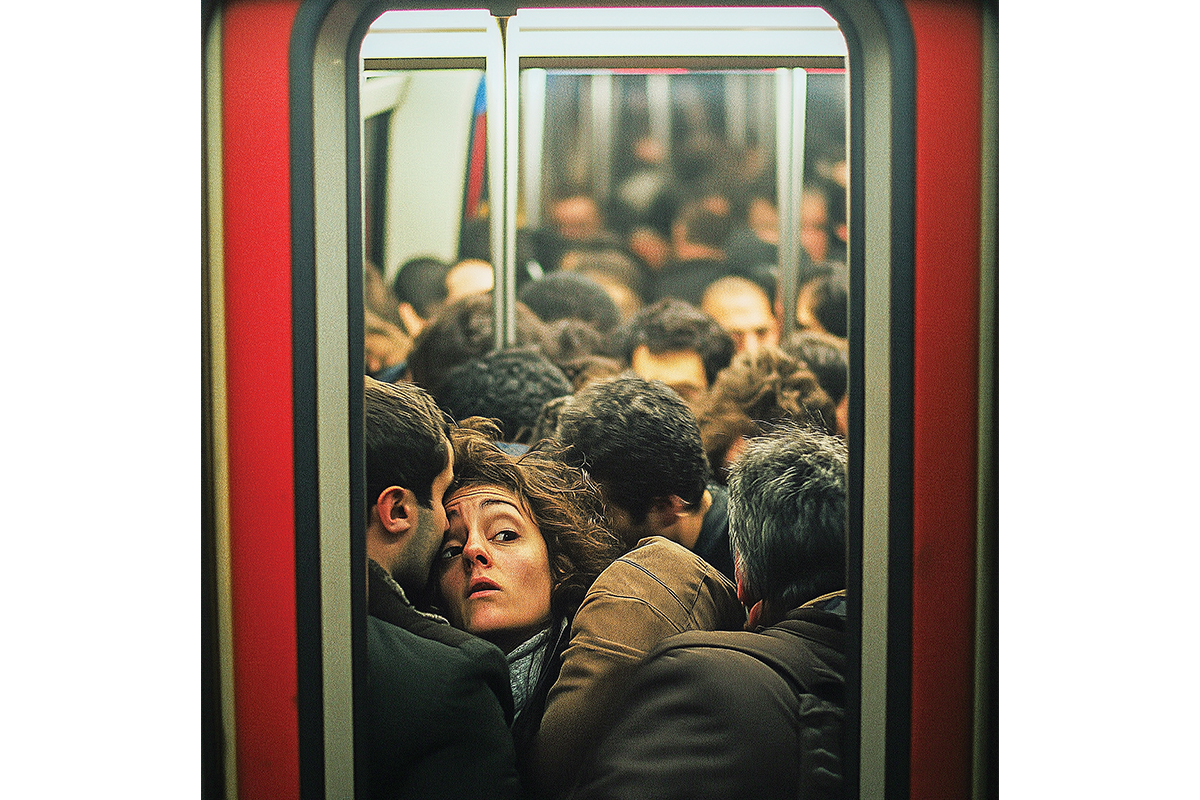
On Safety, Gender and Being Seen!
I’ve always feared dogs, even though I like them. So, when I went to visit my 82-year-old grandmother, I planned to get off public transport halfway and use a pickup service to avoid the stray and pet dogs near her home. Their numbers have grown in recent years, and I didn’t want to walk the stretch from the bus stop to her place. But the moment I stepped off, my phone stopped working. The station was isolated, no vehicles in sight, and daylight was fading fast. A man on a bike looked at me and asked if I needed a ride. He was heading in the same direction. With little time to decide, I accepted.
The moment I got on the bike, I realised I had done something I always warn against. I didn’t know this person — he could have been anyone with a dangerous past, a criminal, and most dreaded of all, a man, a stranger. Throughout the ride, I kept trying to reassure myself: Don’t worry, he seems like a decent guy. It’s still daylight. You can shout if something feels wrong. You’re older now, with gray hair — though, of course, I remind myself age has never stopped men from abusing women. So, if it comes to it, you have a pocketknife.
But none of those defenses were needed. He dropped me exactly where public transportation would have, leaving me to walk the rest of the way. And strangely, the growls of stray dogs along the path felt more like music than threat that day.
Many men you and I know are not rapists (or at least we hope they are not!). Yet harm does not exist only in extremes. Some are abusers — often within the private spaces of homes and relationships — while projecting decency to the outside world. These men often hesitate to harm a stranger but feel comfortable abusing those closest to them. For queer individuals too, harm often comes not from strangers alone but from people they know — friends, partners, or even family members who struggle to accept their identity. Research across the globe shows that abusers are more likely to target someone they know than a stranger.
Still, the question remains: would we feel safe getting into their vehicle or walking with them alone at night if we didn’t know them? Would we truly be comfortable accepting their help without unease?
Since the dawn of human civilisation, women—and those who do not conform to gender norms—have been told to be cautious, vigilant, always watchful. The onus of safety is placed on those perceived as vulnerable. From a very young age, many learn to navigate life by putting safety before freedom, before the chance to taste life in its infinite possibilities. These warnings are passed down like survival instructions: don’t walk alone at night, don’t accept a drink you didn’t see poured, don’t linger in empty spaces. Even in daylight, people calculate proximity to strangers, avoid isolation, and carry the weight of vigilance that others are spared. For many queer individuals, this vigilance includes additional calculations: how to dress, how to walk, whether to hold a partner’s hand, whether their voice, body, or presence will draw attention.
Meanwhile, boys are raised differently, as if they don’t share the same planet. Most men move through the world with an ease women rarely experience. They can walk home late at night without rehearsing escape routes in their minds.

They can enter a crowded bar without scanning for exits or calculating who might be a threat. They can jog through a park at dawn without wondering if footsteps behind them signal danger. For men, these are ordinary freedoms — invisible privileges so ingrained they rarely notice them.
So, when women, particularly feminists, raise concerns about safety, they are not suggesting that all men are potential abusers or blaming all men.
While no one can predict intentions in advance, what people want is to live in a society where they can move freely and reach their potential. What feminists are urging is a shift in conversation: away from the defensive “not all men” toward collective responsibility. The goal is to build a society where women and queer, trans, and gender non-conforming individuals don’t have to calculate risk every time they walk home, enter a workplace, or interact socially. The responsibility must rest on everyone to create a safe society for all, rather than leaving the burden of vigilance solely on those most at risk.
We live in the same society. We form communities, raise families, and share spaces. Yet it is disheartening that women, queer individuals, and gender minorities live under constant warnings not to trust men, especially cisgender heterosexual men. If this is unfair to women, patriarchy is unfair to men too. Men are cast as either protectors or abusers — roles they should not be confined to. We no longer live in jungles where survival depended on protection from lions and tigers. Even then, people worked together against wild threats, united in purpose.
Paradoxically, as societies have advanced with infrastructure and development, incidents of abuse, violence, and exploitation have also multiplied. Yet on good days, when I allow myself to be optimistic, I envision a society built on respect and equality — a world where people of all genders are free to express and honor their emotions, where young generation grow up seeing everyone treated with the same dignity, and where no one is objectified or reduced to a body,
but recognised as a human being of equal value. In such a world, men would not need to be protectors, because the impulse to dominate or abuse would no longer define relationships, and queer identities would neither be hidden nor punished, but simply part of the fabric of everyday life.
If we dismantled the culture of exploitation, we would dismantle the very need for protection. Men would no longer be expected to save women from other men; instead, respect would be the baseline, allowing everyone to move through the world not as subjects to be guarded, but as individuals free to savor every experience life has to offer. The prevalence of abuse would diminish significantly. In such a society, we could simply be friends and allies.
So, when that man dropped me off, I wondered: if I had been relaxed, if I had grown up in a society where freedom did not come with fear—for women, for queer people, for anyone read as “different”—I might have enjoyed the ride. Perhaps I would have made small talk. Maybe he would have laughed at my sense of humor, which my friends say is pretty good. I don’t know if it was his loss or mine!