From the rugged heights of Sagarmatha to the fertile landscapes of the Madi Valley, Nepal’s Sustainable Mountain Architecture (SMA) team has been quietly reshaping the conversation around architecture in the Himalayas. Guided by Professor Anne Feenstra and executed with meticulous dedication by architects like Rebika Karki, SMA blends local craft, vernacular wisdom and ecological sensitivity into projects that are as socially relevant as they are visually arresting.
For Anne and Rebika, architecture is not just about buildings, it is about people, place and ecology. “Our work, be it in Taplejung, Manang or the Kathmandu Valley, always embraces collaboration with local communities, use of local materials and respect for the flora and fauna,” Anne explains. “Every project starts with research – bio-climatic, anthropological and user-centric. A certain slowness in the design-and-make process is one of the virtues of truly sustainable architecture. If somebody is in a hurry, they should not come to us.”

Anne Feenstra
The team’s philosophy is perhaps best exemplified by Sagarmatha Next, a learning centre and climate action hub at extreme altitude. “When the mountains are harsh, resources are limited and conditions extreme, architecture must work with the environment, not against it,” Anne reflects. “Design is about humility – modesty, blending in and protecting vulnerable ecosystems.” SMA’s highest-altitude project, the Kargyak Learning Centre in Ladakh, reaches 4200 metres, demonstrating how these principles translate across borders.
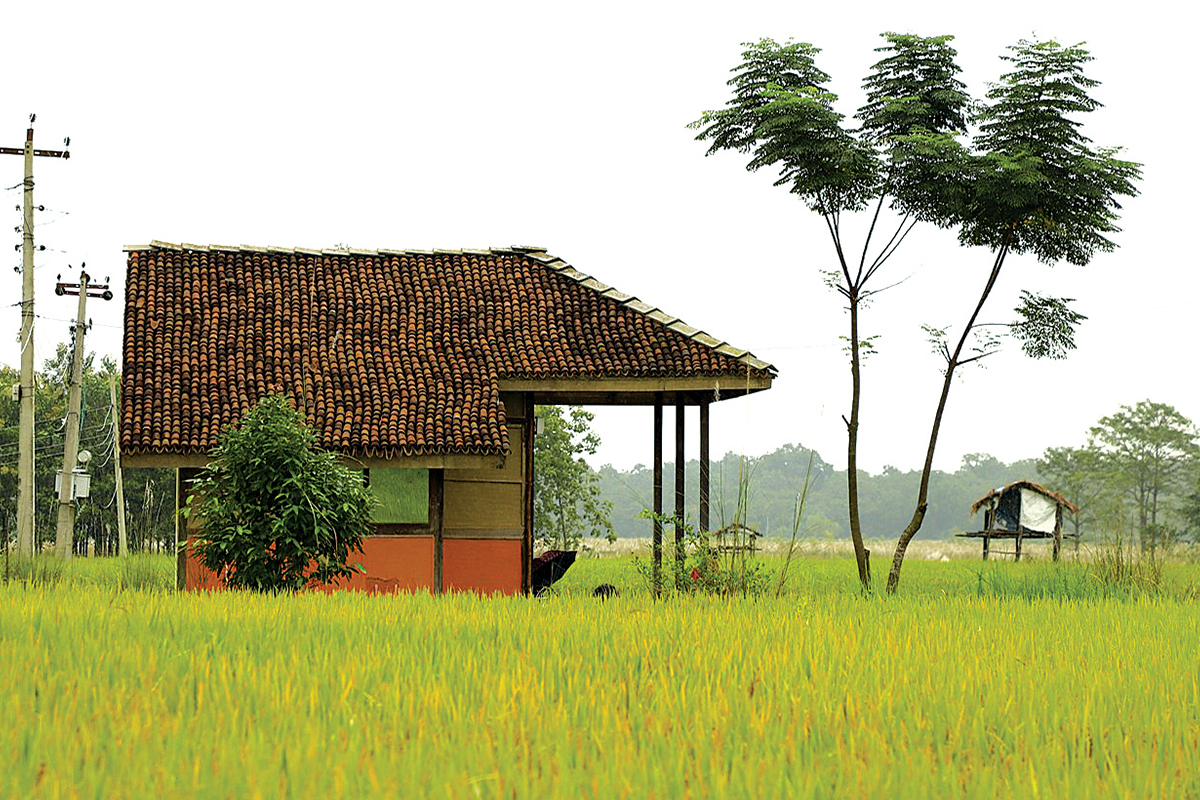
In the Terai, SMA’s Bankatta Eco-Cottages project embodies another dimension of this ethos: low-tech, community-led architecture. Anne highlights the principles behind the initiative: “We wanted to prove that architecture can be socially responsible and ecologically sensitive. Around 60% of the materials we used were upcycled – Sal timber, hand-woven bamboo wattle-and-daub walls and reclaimed clay roof tiles. Ownership lies with the community, both physically and emotionally.” Guests have repeatedly praised the comfort and harmony of these spaces, validating SMA’s approach that beauty is, ultimately, in the eye of the beholder.

Rebika Karki
Rebika’s journey has been just as transformative. Educated in Bhaktapur, she often wondered why the intelligence embedded in the city’s heritage architecture rarely translated into contemporary practice. “The urban sprawl and concrete infill around Bhaktapur’s centre felt like a loss of memory,” Rebika recalls. Her internship at SMA’s Chakupat Studio opened her eyes to design that is pro-local, pro-ecology, pro-craft and pro-people. Upon graduation, she joined SMA full-time, embracing the fieldwork, community dialogue and hands-on experience that make SMA uniquely appealing to practising architects.
This commitment to meaningful architecture recently earned the team global recognition. When Rebika received the congratulatory email from Amsterdam announcing the AMMODO Architecture Award ‘Local Scale’, she read it three times aloud to ensure it was real. The jury lauded the participatory process and choice of materials, highlighting the upcycled timber, bamboo walls and clay tiles that make Bankatta a model for sustainable architecture in Nepal. This award is historic: it marks the first time a Nepali project has been recognised by the AMMODO Awards, joining winners from Europe, South America, Africa and Asia.
The recognition is timely, following another international accolade. In 2025, the Sagarmatha Next project was selected among the 40 best projects globally for the MATERIA Award, praised for its use of nature-based materials – granite, timber, yak dung, cow dung, egg shells and mustard oil – in collaboration with Sherpa, Rai and Tamang builders. SMA sees these honours not as endpoints but as moments of reflection
Anne emphasises that architecture’s greatest responsibility is to listen, adapt and belong. “Nepal has enormous vernacular wisdom,” he says. “It is already a laboratory for sustainable mountain and Terai architecture. Politics is overrated; people want solutions. Good architecture offers that.” For Rebika, Bankatta is a testament to this philosophy. Beyond hospitality, the project has fostered local enterprise, including bamboo treatment for young entrepreneurs, offering livelihoods while strengthening cultural and ecological resilience.
As Nepal urbanises at a rapid pace, SMA continues to challenge the dominance of extractive construction models. “Concrete jungles and urban sprawl are unhealthy,” Anne notes. “People are leaving Kathmandu during peak pollution months. Young designers and environmentalists are actively seeking solutions for healthy, walkable and livable cities.” Community-led, low-tech projects like Bankatta offer not just an alternative but a vision: architecture that is repairable, adaptable and rooted in both culture and ecology.
For the next generation of Nepali architects, SMA’s message is clear. “Study and understand Nepali wisdom,” Anne advises. “Immerse yourself in the culture, learn people’s stories, and design with empathy. Take risks, make mistakes and reflect. The process is not easy but it is deeply satisfying.”
In the hands of Anne, Rebika, and the SMA team, architecture becomes more than buildings. It becomes a dialogue with the mountains, the rivers, and the people of Nepal. It is a practice rooted in care, responsibility and beauty; a reminder that the most meaningful architecture listens first, before it builds.