Women in Nepal’s Tattoo Industry
I already had three tattoos, all done by male artists, and I was excited to be on my way to get my fourth. On a cold January afternoon, I was on my way to the Queer Film Festival in Kathmandu—which had collaborated with the Human Rights Tattoo organisation, a group that works on human rights issues by inscribing tattoos on people across the globe—I found out that the artist who would be tattooing me was a woman. I was thrilled to see her at the festival, and even more excited when she told me there are now many women tattoo artists in the city. That conversation lit a spark in me. It felt like I had stumbled into a whole new world of stories waiting to be told.
As I started digging deeper, I realised tattoos have always had a special place in women’s lives in Nepal. Tharu and Newar women, for example, wore tattoos as part of their identity, often tied to rituals and spirituality. However, fast forward to today, and things look a little different. Many people still carry negative ideas about tattoos, often judging those who wear them or those who work in the industry. For women artists, the challenge is even greater, as they are more harshly judged and sometimes discouraged from pursuing this path. However, modern female tattoo artists are reclaiming the art, mixing tradition with bold, fresh styles that speak to the present.
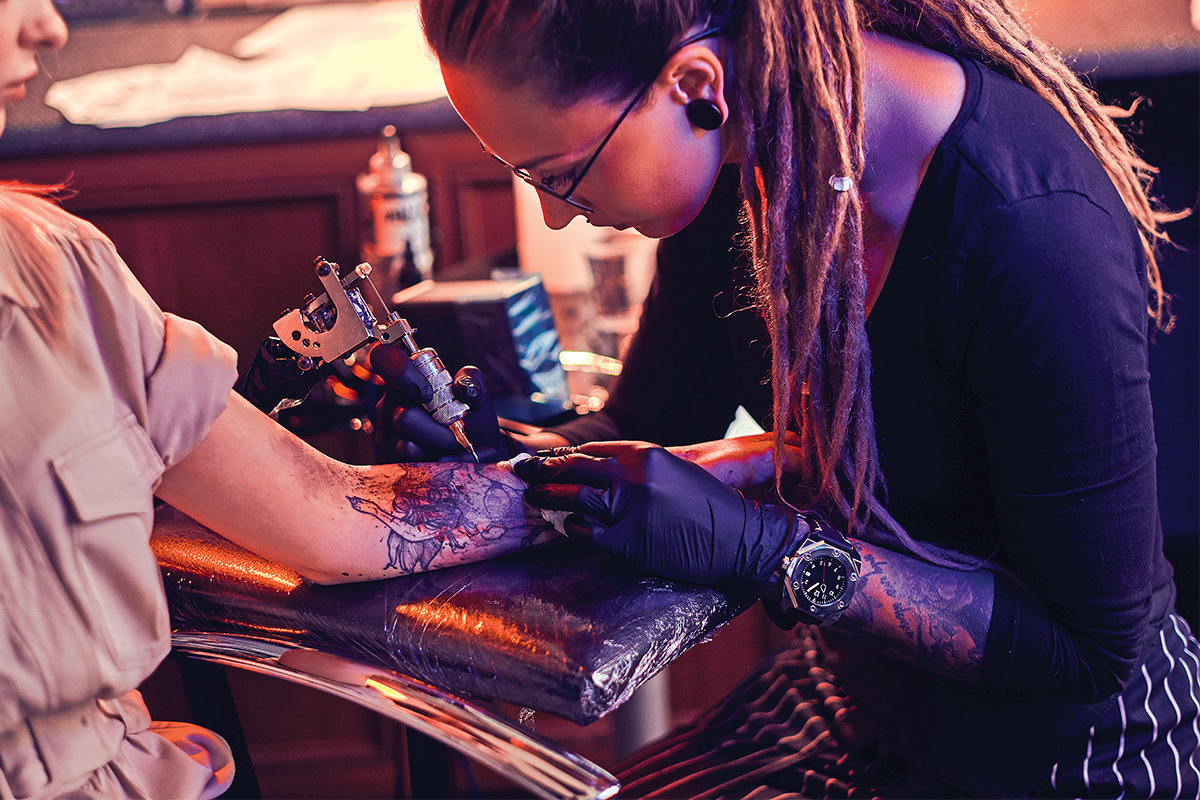
In this feature, I’ll be sharing the stories of four incredible women tattoo artists whose journeys are full of resilience, artistry, and courage. Their presence in studios and conventions shows that tattooing isn’t just a male domain—it’s a universal art form, and they’re proudly leading the way. In a society where tattoos are still struggling to gain respect—and where women, in particular, have often been judged more harshly for being part of the industry—they’re carving out space, claiming independence, and changing how body art is seen.
Jelisha Gurung
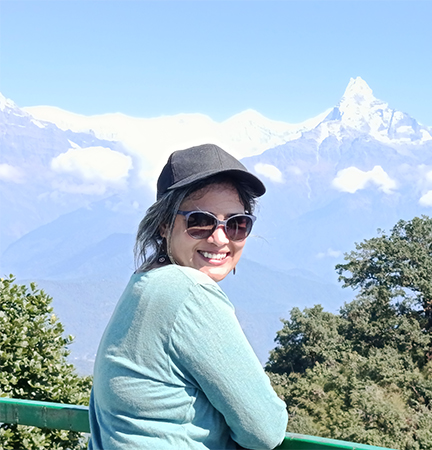
Jelisha learnt tattooing in 2019 at a formal school, where she had many other women friends who trained alongside her, but most of them did not continue professionally. Jelisha shares, “It takes a lot of time, patience, and dedication to take the job seriously, so it is not easy for everyone to pursue it professionally.”
In her professional career, Jelisha has noticed that women clients often come searching for women artists, as there is a certain level of comfort in being inked by a woman. However, Jelisha is comfortable tattooing anyone who walks into her studio in Jhamsikhel, where she has been working for the last two years. She recalls being very young, in grade 5 or 6, when she first saw a tattoo studio while growing up in Pokhara, and from that moment she knew she wanted to work in the same field.
Jelisha grew up in a strict family where no one had seen or worked in the tattoo industry, so making them understand her choice was a journey in itself. Having her family in Pokhara while she works in Kathmandu has made things easier, as she has more freedom regarding working hours. Some relatives abroad, who understand that there are many ways of living life and different professions, also helped her family accept her career choice.
Jelisha adds, “It is definitely harder for women artists who need to go home on time to take on work that might require longer hours, as women are expected to reach home on time. For men, it is easier—if a call comes from home, they can simply say they are at work.”
She still feels that the first tattoo she did on her friend’s body remains her best work. Jelisha says, “Perhaps it is clouded by my feeling of being grateful to my friend who trusted a newbie.” She also enjoys tattooing foreigners who come to Nepal to hike and trek, and who often get tattoos of mountains or landmarks as souvenirs before returning to their countries.
She believes the tattoo scene for women artists, at least in big cities, is changing for the better. Many women are now pursuing the art, but Jelisha emphasises the importance of hygiene and sanitisation in the field, as one cannot take lightly a profession that involves working directly with the human body. She advises young women to pursue their passion with integrity and responsibility.
Jelisha adds, “People from Nepal have always been regarded as good artists and have represented Nepal in international conventions, but until now they have mostly been men. I hope in the days to come, Nepali women also gain the same kind of recognition. I hope the work that we, women artists, are putting in now will be a stepping stone for that hope to come true.”
You can reach Jelisha at _jelishagg (Instagram)
Sujana Joshi aka Suzubro
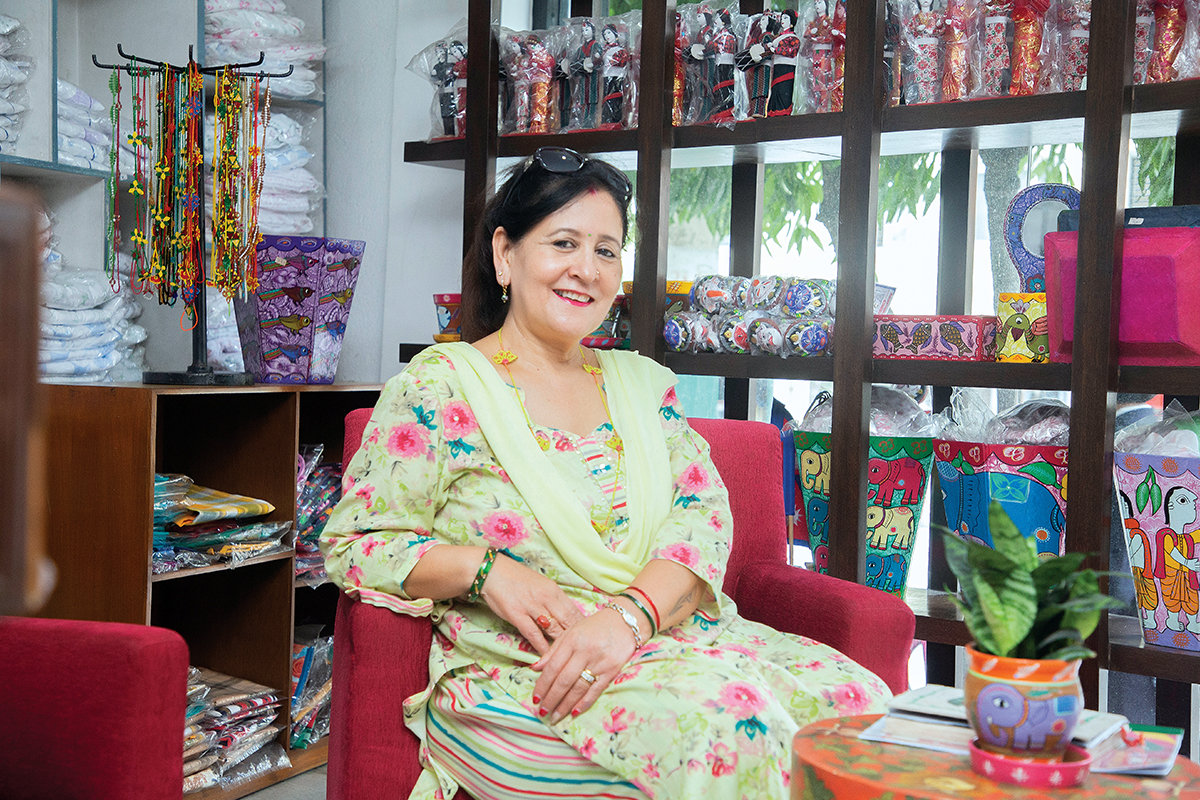
From riding bike to delivering handmade jewellery to customers—packaged in her own art-sketched designs during the Covid days—to now working as a full-time tattoo and piercing artist, life has come full circle for Sujana, known in the art world as suzubro.
Although she has a background in accounts and banking, Sujana never felt she belonged in that field. She shares, “While my mother kept receiving questions about my life choices, I was never bothered by what others thought or said. I knew I was being true to myself, and that was the most important thing for me.”
Currently, Sujana works at Tatoopasal, a studio in Thamel. However, she was first inspired and guided by her mentor in her first studio, where she worked as a piercing artist. She wholeheartedly believes that having someone to inspire or guide you makes the journey easier. As she explains, “I knew I enjoyed art, but with proper guidance and motivation, I was able to find my path and finally become a tattoo artist.”
Sujana also reflects on the broader challenges women face in society: “In a society like ours, every workplace can be unsafe and dangerous for women. Instead of repeatedly labelling the tattoo industry as unsafe, we should focus on making all workplaces safe for women.”
A truly multi-talented artist, Sujana not only works with machine tattoos but also practises the hand-poke technique. She explains, “There are many different forms—machine tattoos, hand pokes, bamboo, and other methods. I still do piercings and enjoy making jewellery as well.”
Finding and living her passion has not been easy. From facing relatives’ questions about her career choices to dealing with discouraging comments and feeling disheartened, Sujana has overcome those obstacles with her perseverance.
Today, through her work, she has silenced those doubts. Her father, who once did not believe in her profession, now proudly tells others that his daughter is a tattoo artist. Sujana truly enjoys her world of art, embracing its many forms while making a living from what she loves most.
You can reach Sujana at suzubro.pokes (Instagram)
Shristika Yonzon
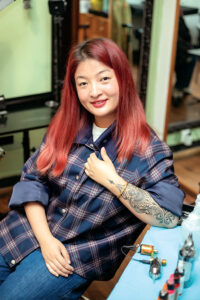
Shristika remembers last year’s tattoo convention as one of her proudest experiences, where she had to work in a small booth and cater to many walk-ins throughout the day. She was able to serve all those who came to the booth without prior appointments, and still no one was turned away, which made her feel she had done justice to her work.
Shristika knew early in her professional life that doing a desk job was not her cup of tea. She was an artistic person who loved to draw and sketch. By chance, she had a mutual friend with the owner of the studio where she still works, Tattoo Pasal. Through that connection, she met the owner and expressed her desire to learn tattooing. Not only did she learn the craft, but after completing her training she began working in the same studio. It has now been five years, and she has never regretted a single day.
She enjoys the entire process of creating a tattoo. Every aspect excites her, from designing to adding unique features to each piece, and the feeling that someone will carry her art on their body is what attracts her most to her work.
She feels that the myth people hold regarding tattoo artists is very unjustified. Shristika explains, “Tattoo artists are the ones who need to be very alert, healthy, and mindful, with great skills of concentration. We must be in our best form when we work.”
While Shristika has always received love and motivation from her family, with her grandmother being her biggest cheerleader, listening to the stories of other female colleagues has made her realise that it is not easy for everyone. Women especially often have to go through many struggles within their own families when they want to pursue what makes them happy.
So, when asked about her future plans, Shristika does not hesitate to say, “I want to learn more and attend more international conventions in the future. Perhaps one day I will have my own studio. And if women are not getting the right help from their families, I don’t mind being the family they don’t have—motivating them and hiring only women, so they feel supported and encouraged in the field.”
You can reach Shristika at shristikaa_ (Instagram)
Wherry KC
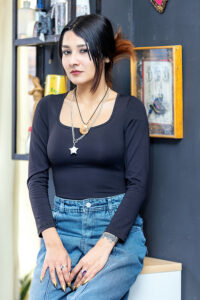
Wherry believes that when a person goes to get a tattoo done, they need to trust the artist’s skill and have faith in the process. While most of her clients who have received tattoos from her have admired and enjoyed her work, there have been instances where some have been impatient while she was preparing, showing less belief in her compared to male artists.
Wherry shares, “I feel proud of the fact that people carry my art on their body, but I also feel a little disheartened when they judge me while I am still doing the job. Women do have extra pressure to prove our work and to make others trust us.”
She has always enjoyed art and likes to engage in different forms such as sculpture, cloth art, sketching, and drawing. She also enjoys the pain that comes with tattooing. She adds, “I think there is a melancholic feel in the pain of a tattoo, and that’s what I enjoy the most.”
Wherry would never have delved into tattooing and other forms of art if her friend, who saw her potential, had not encouraged her. She is grateful to that friend, who not only motivated her but also helped her gain experience in tattooing by providing the equipment and materials she needed to practise the art.
She is also learning how to cover up tattoos that have gone wrong or that people want to hide. Wherry explains, “It is a different set of skills needed to cover up. It is not very easy, hence it requires a different approach.” She enjoys learning new techniques and someday hopes to explore colour realism within tattoo artistry.
While the world is changing and it is becoming easier for women to join the industry, Wherry is aware of the pressures women artists face when trying to make their own name. From prejudices that assume women artists have certain characteristics to receiving uncomfortable messages from clients, she has faced and dealt with unsolicited comments. None of this has deterred her from doing what she loves.
Wherry adds, “So for all young women, I would say that if you enjoy learning art, you must pursue it. If we waited for the world to be better and everyone to be understanding, then we would never get to do the things that give us satisfaction.”
You can reach Wherry at wher_ry666 (Instagram)
Photos: Sanjay Maharjan, Ripesh Maharjan