

Across Nepal’s banking, corporate and hospitality sectors, women are no longer just participants; they are decision-makers, strategists and industry leaders. From shaping financial policy and steering automotive conglomerates to redefining hospitality leadership, women are helping build Nepal’s modern workplace.
Organisations that prioritise gender diversity report stronger collaboration, deeper creativity and greater resilience. This feature highlights five institutions where inclusion is not symbolic but structural.
Through conversations with women in leadership and operational roles, we explore how mentorship, representation and opportunity are transforming professional life.Mercure
Kathmandu: Redefining Hospitality Leadership

At Mercure Kathmandu Sukedhara Heights, women are shaping hospitality leadership through empathy and precision.
We spoke with Geeta Manger (Food & Beverage Executive), Sudhika Pradhan (Marketing & Communication Manager) and Suvechha Khanal (Talent & Culture Manager).
Leadership Rooted in Trust
Geeta describes leadership in hospitality as earned rather than titled: “Leadership is built on trust, preparation and calm under pressure.”
Sudhika highlights the industry shift:“Women are now leading departments across hospitality. Empathy allows deeper guest connection.”
Suvechha focuses on people-centred leadership: “Hospitality is about relationships. Skills can be taught but mindset and intent make the difference.”
Balancing Performance and Humanity
All three emphasise emotional intelligence, adaptability and resilience as critical strengths. Mentorship, cross-training and flexible policies are helping close leadership gaps.
Over 33% of Mercure Kathmandu’s leadership roles are held by women, reflecting measurable progress.
As Suvechha concludes: “Advancing women in hospitality is both a moral responsibility and a business imperative.”
Inclusion as Strategy, Not Symbolism
Across industries, a common thread emerges: gender inclusion strengthens performance.
These organisations demonstrate that when leadership pathways are transparent and merit-based, women do not simply participate, they transform institutions. Representation builds confidence.
Mentorship accelerates growth. Policy reinforces culture.
Nepal’s corporate landscape is evolving. And increasingly, women are shaping its future, not as exceptions, but as leaders.
Prime Ceramics: Women Leading Nepal’s Design Industry

In Nepal’s growing interior design and construction sector, Prime Ceramics stands out not only for its premium tiles and sanitaryware but for its progressive workplace culture. As part of the Prime Group, the company integrates social sustainability into its business strategy, with gender balance as a key pillar.
To understand how this translates into everyday practice, we spoke with Smita Pradhan (Relationship Manager), Mandira Maharjan (Procurement Officer) and Sirju KC (Senior HR Officer).
Leadership Through Merit
Smita Pradhan, who has been with the company for over five years, emphasises that women’s leadership at Prime Ceramics is intentional but merit-based.
“Prime Ceramics actively encourages women to take leadership roles. Working alongside female supervisors has been motivating and empowering. Performance, commitment and creativity – not quotas – determine growth.”
This merit-driven culture ensures leadership roles are earned and respected, reinforcing confidence and visibility for women across departments.
Mandira Maharjan echoes this perspective: “The increasing number of women reflects social progress. Women are highly educated and professionally prepared. Organisations benefit when hiring decisions are based on competence rather than gender.”
She adds that a female-majority environment strengthens collaboration and open communication, fostering deeper professional trust.
From an HR standpoint, Sirju KC highlights structural impact: “Women often bring empathy, resilience and balance to workplace interactions. These qualities positively influence teamwork, productivity and culture.”
Creativity, Mentorship and Social Impact
In a design-focused company, creativity is central. Smita notes that women contribute distinctive aesthetic and collaborative insights that strengthen shared vision. Mentorship plays a critical role.
Leaders actively support junior staff, providing resources and guidance that reduce self-doubt and encourage professional risk-taking. This structured support builds long-term confidence and leadership readiness.
Beyond internal impact, Prime Ceramics challenges traditional norms by visibly promoting women in design, sales and management — offering role models for younger generations.
Chairman Ashish Garg summarises the company’s philosophy: “At Prime Ceramics, sustainability encompasses people, product and planet. Gender balance is central to our social sustainability.
One-third of our team is women — an achievement we are proud of. Empowering women strengthens families, communities and Nepal’s economy.”
Agni Group: Driving Inclusion in Nepal’s Automotive Sector

As the authorised distributor of Mahindra vehicles in Nepal, Agni Group is a major force in the automotive industry — historically male-dominated. Yet the company has cultivated a culture that values merit and diverse leadership.
We spoke with Rupa Lamichhane (Finance Head), Durga Thapa (Customer Service Representative) and Deepa Sharma (Senior Manager).
Merit Over Quotas
Rupa Lamichhane explains: “Women in leadership at Agni Group are there because of capability and performance. Growth here is merit-driven.”
She notes that the culture encourages independent thinking and recognises expertise over assumptions.
Durga Thapa highlights how representation changes daily dynamics: “Women supervisors reflect a shift toward recognising leadership ability rather than gender expectations.”
Deepa Sharma adds that societal progress and organisational recognition together have expanded opportunities: “Women’s evolving education and professional focus have increased their demand in leadership and decision-making roles.”
Collaboration and Confidence
All three women emphasise that representation fosters open dialogue and balanced decision-making.
Female-majority teams often demonstrate strong communication and customer sensitivity – essential in the automotive sector.
Mentorship is also transforming workplace culture. Deepa notes a shift from competition to collective uplift: “Women increasingly support and mentor one another, strengthening morale and discipline.”
Managing Director Susan Vaidya Shrestha captures the broader vision: “The only limit to a company’s growth is the breadth of its vision. When leadership pathways are open to everyone, the entire organisation moves faster and further.”
NMB Bank: Embedding Inclusion in Progressive Banking
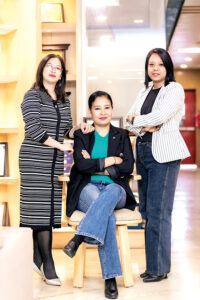
In a traditionally male-dominated sector, NMB Bank has positioned itself as a leader in inclusive banking culture.
We spoke with Pratibha Shrestha (Senior Counterparty Risk Manager), Srijana Dongol (Assistant Manager) and Jarina Tuladhar (Branch Manager, Kumaripati).
Policy Backed by Practice
Pratibha highlights the bank’s structural commitment: “NMB is a signatory to the UN Women’s Empowerment Principles and actively implements a Gender Equality and Social Inclusion framework.
Inclusivity here is about enabling women to lead, not just increasing numbers.”
Policies supporting maternity, caregiving and leadership development reinforce practical inclusion.
Srijana stresses culture over ratios: “Diverse perspectives improve problem-solving and innovation. What matters is a culture that encourages dialogue.”
Jarina underscores intersectionality: “Women are not a monolithic group. Inclusion must recognise differences in age, background and personality.”
Representation and Ambition
All three agree that visible female leadership strengthens ambition and mentorship. Seeing women in senior roles normalises leadership aspirations and accelerates career growth.
NMB Bank demonstrates that structured inclusion – through policy, mentorship and accountability – strengthens innovation, performance and sustainability.
Everest Bank: Strengthening Leadership Across Nepal’s Banking Landscape
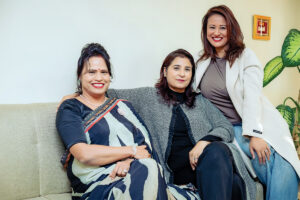
Everest Bank has steadily expanded female leadership across provincial and branch levels.
We spoke with Anju Sharma (Assistant General Manager, Bagmati Province), Sunita Basnet (Manager, Lazimpat Branch) and Dina Dhaubdhel (Manager, Teku Branch).
Inclusion as Ongoing Work
Anju oversees 47 branches, nine led by women.
“Representation has improved, but full inclusion requires continuous effort and deliberate leadership.”
Sunita emphasises diversity within gender: “Inclusivity means valuing varied life experiences, not forcing women into a single mould.”
Dina reinforces intentionality: “True inclusion creates space for quieter voices and respects lived experience alongside technical expertise.”
Impact on Decision-Making
Women leaders, they observe, often bring coordination, ethical awareness and long-term perspective, essential in operations, credit and compliance.
The consensus is clear: balanced teams outperform homogeneous ones. Empowering women is not symbolic; it improves institutional effectiveness.
Text: Ankita Jain, Kreenjala Pyakurel & Prashtutee Thapa Magar
Photos: Ripesh Maharjan & Sanjay Maharjan