
EMPOWERING GIRLS THROUGH EDUCATION, DIGITAL SKILLS & COMMUNITY ENGAGEMENT

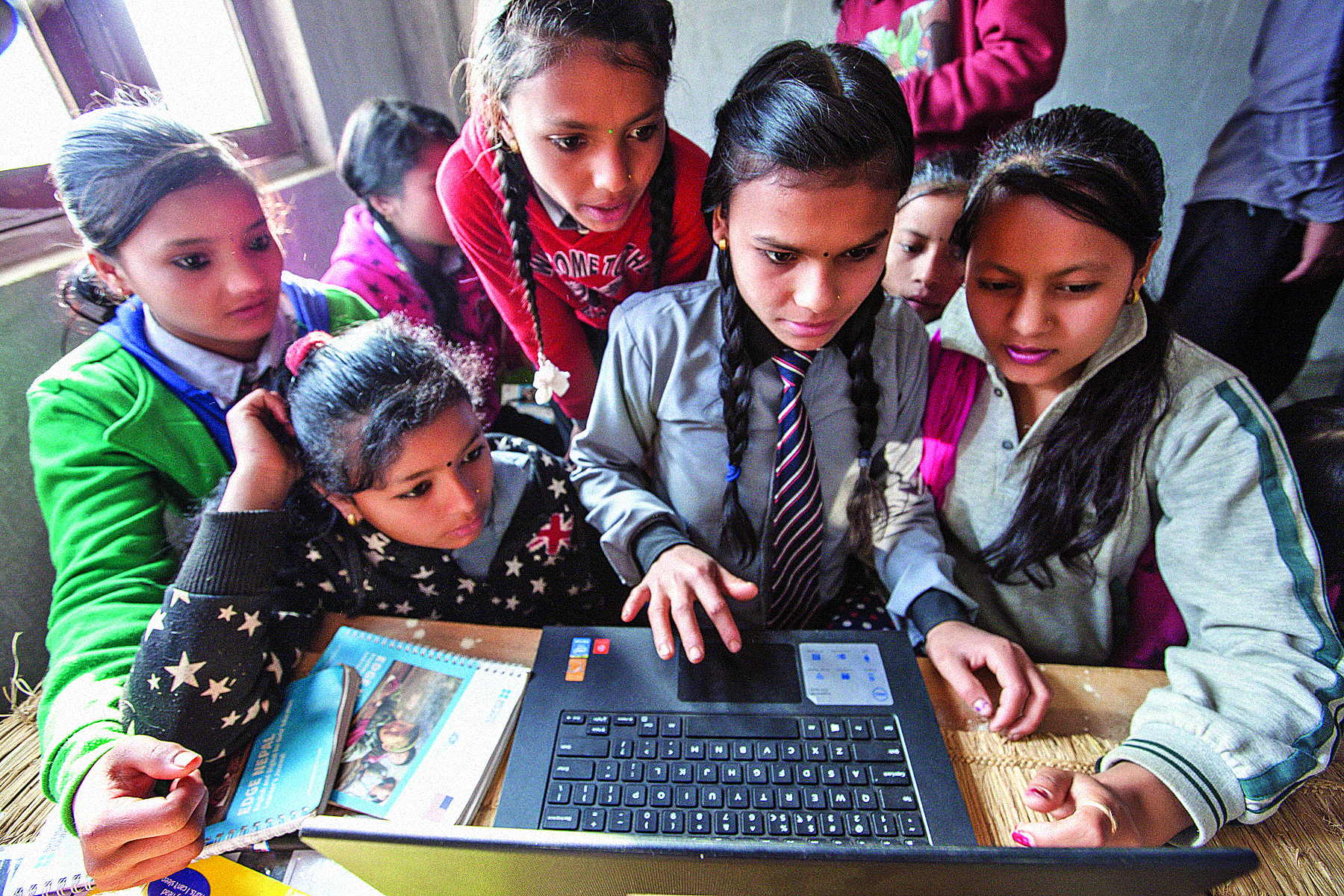
Bhogendra Lamichhane is Head of English and School Education, British Council Nepal and has spent over a decade championing girls’ education in Nepal. As the driving force behind the English and Digital for Girls’ Education (EDGE) programme, he has helped over 5,000 adolescent girls gain confidence, digital skills and leadership abilities. Here, he talks about what drives him, why programmes like EDGE matter, and how education is changing communities.
What sparked your passion for girls’ education and digital empowerment?
I grew up in a remote village where gender discrimination was the norm. My mother and grandmother, both illiterate, carried the burden of housework and farming, while men made all decisions. Girls were often married off soon after puberty. Even in school, teachers treated boys as more capable.
These experiences left a deep mark on me. By the time I finished my SLC, I had resolved to work for girls’ education. I firmly believe men must play an active role in gender equality. That belief still drives me today.
Why is investing in girls’ education, especially in STEM and digital skills, so critical?
Because it’s the smartest investment any society can make. Educated girls are more likely to delay early marriage, earn an income, and make decisions that improve family health and education.
Digital and STEM skills, in particular, open doors to jobs, entrepreneurship, and global opportunities. For girls from marginalised communities, this doesn’t just stop at employment; this breaks cycles of poverty and provides independence. Equal access to education is both a matter of justice and a smart investment in Nepal’s future.
Can you share any stories that show the real impact of EDGE?
One that still inspires me is of a girl I met in 2018. She admired her Peer Group Leader (PGL), who had resisted early marriage and was fluent in English and technology. Inspired, she too became a PGL, gained confidence, and rejected early marriage.
Years later, I met her again. She was now pursuing a Master’s degree in law and working at a top law firm. She said, “If it weren’t for EDGE, I’d probably be a housewife. Instead, I’m advocating for justice.” That’s the power of safe spaces, mentorship, and education.
How do programs like EDGE empower girls beyond academics?
I have had the privilege of meeting many of these girls through my field visits. The biggest shift is in confidence and self-worth. Many of them have told us that EDGE was the first time they had felt seen, heard, and valued. Many girls who once sat quietly in classrooms are now leading community clubs, speaking at public events, and making their own life choices, continuing education, resisting early marriage, or entering the workforce.
When girls feel valued, they become role models. We have seen parents, teachers and even local leaders start taking pride in their daughters’ achievements.
Why combine English, Digital Literacy, and Leadership training?
Because these three skills together are transformative. English connects girls to global opportunities, digital literacy builds confidence with technology, and leadership skills give them a voice in decision-making.
For girls in marginalised communities, this mix is a game changer. They are learning and they are preparing to lead.
What role do families and community leaders play?
They can either be gatekeepers or allies. That’s why we involve them from the start. We share success stories, and invite them to events, and show real benefits. Once they see results, they become champions of change.
If you could share one message to young girls dreaming of big careers, and to those who can help them, what would you say?
To young girls, I would say your dreams are valid. Don’t let stereotypes decide your future. The world needs your innovation and leadership.
To policymakers and educators, investing in girls is investing in Nepal’s future. Every girl given a chance changes not just her own life, but the lives of many others.

