Bhajan Sandhya: Her Grace Guides the Music
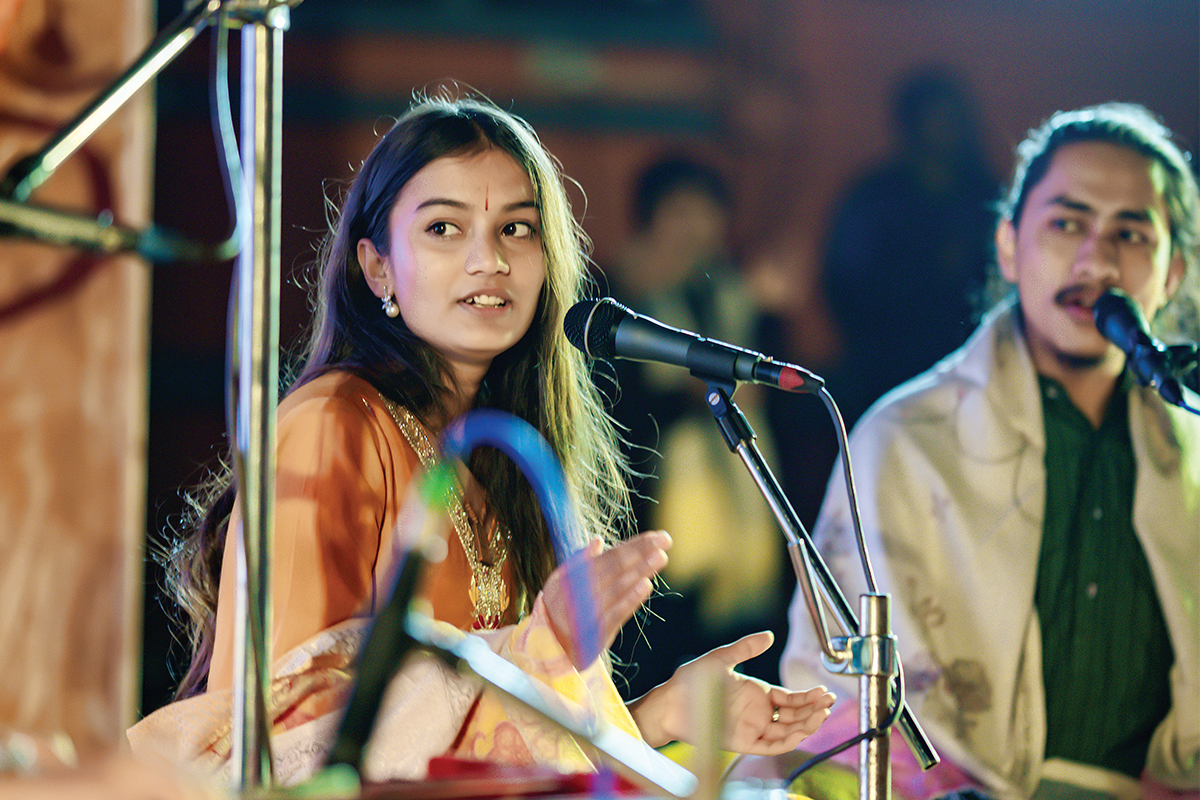
In the tranquil aura of the Linga Bhairavi temple, a group of musicians found inspiration in devotion itself. Sounds of Isha, a devotional music group, emerged from the inspiration and grace of Devi herself. Here in Nepal, you can immerse yourself in their soulful melodies performed at the Bhajan Sandhya in Basundhara, every Friday at 6:30 pm. “The ambience and energy of Devi generate a deep sense of devotion,” the group explains.

For Sounds of Isha, music is not merely an art form; it is a devotional practice. The group believes that devotion is the fuel behind creativity. “Without devotion, there is no creativity,” they reflect. “Devotion reflects the emotional sincerity behind the music, while creativity shapes how that devotion is expressed through melody, rhythm and sound. Through devotion, the creative process becomes intuitive, and technique or perfection takes a backseat. Devotion becomes the source of inspiration, and creativity is the medium through which it reaches others.”
This journey of creating devotional music has brought profound inner transformation. “Music has taught us patience, discipline and the ability to listen, both to our sound and to our own intuition,” they share. “It has helped us become more connected, more present, humble and open to learning, while also strengthening our confidence and devotional expression. Over time, music has become not just a skill but a way of understanding ourselves and relating more honestly to everything around us.”
Beyond personal growth, Sounds of Isha emphasises the universal power of music. “Human connection does not always require explanation. Sometimes it simply requires listening and vibing together,” the group says. Even when language and culture differ, the music transcends barriers, allowing listeners to feel the essence of the songs.
Discipline, they insist, is key to sustaining this living musical tradition. “It provides structure, consistency and dedication to practice,” they explain. “Through discipline, music remains a living, evolving expression rather than a passing impulse, allowing its meaning to grow stronger over time.”
Ultimately, the goal of Sounds of Isha is not just to entertain but to touch hearts. They say, “We hope our music inspires listeners to connect more deeply within themselves. If the music offers moments of calm, honesty or quiet transformation, allowing listeners to feel the sense of devotion within themselves, then it has fulfilled its purpose.”
Bhajan Sanjh: Where Youth, Spirituality & Collective Healing Meet
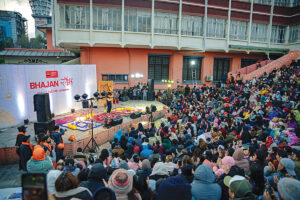
On a quiet January evening in 2023, a small group of friends gathered in a room with a shared intention: to sing, to chant and to sit with something deeper than everyday noise. That intimate gathering marked the beginning of Bhajan Sanjh, an initiative by Yagyashala Nepal, co-founded by Nirjan and Abhishek Adhikari. What started as a humble circle of close companions has since evolved into a growing movement; one that brings together youth, music, spirituality and mental wellness in a distinctly Nepali cultural framework.
At its core, Bhajan Sanjh was born from a desire to reconnect young people with ancient wisdom in a way that feels relevant and healing today. Bhajans have long been part of Nepal’s spiritual landscape, but Nirjan and Abhishek felt there was space to intentionally curate these musical gatherings as a tool for mental wellbeing. “We wanted to emphasise bhajans not just as devotion, but as a medium to help the mind,” they share. Unlike Western psychological models that often focus on individual healing, Bhajan Sanjh is rooted in collective experience, where healing happens together, as a community.
This sense of intentionality is reflected deeply in how each Bhajan Sanjh is structured. Music is not chosen at random. Sessions often begin with Vedic chanting performed by esteemed pandits, chants believed to guide the brain into theta wave states associated with deep relaxation and meditative awareness. By involving pandits, the initiative bridges cultural tradition with contemporary conversations around mental health, grounding healing in familiar spiritual practices. As the evening unfolds, the music gradually transitions, guiding participants through different emotional and mental states, sometimes into trance-like immersion. To keep the experience inclusive and joyful, popular and familiar songs are also woven in, allowing participants to sing along, relax and enjoy the shared atmosphere.

Beyond individual experience, Bhajan Sanjh thrives on connection. When people chant together, the founders believe an exchange of energy takes place, transforming the ambience into something deeply healing. This collective vibration fosters unity, reminding participants that they are part of something larger than themselves. That same spirit of togetherness extends beyond music. The team is currently involved in Project Pashupati, a community initiative aimed at enhancing the aesthetic beauty of Nepal’s most revered temple, reinforcing the idea that spiritual spaces, like people, flourish through collective care.
Being part of Bhajan Sanjh has been transformative for those involved. It offers an escape from individual identities and routines, opening a space where people from different walks of life come together for shared purpose. For Nirjan, who studies parapsychology, the initiative also serves as a platform to eventually integrate deeper understandings of consciousness and the mind into spiritual practice.
Looking ahead, Bhajan Sanjh carries an ambitious yet grounded vision: to contribute to Nepal’s potential as a hub for spiritual tourism. The Founders believe that policies alone are not enough, what Nepal truly needs are meaningful spiritual experiences. By hosting larger, emotionally moving musical gatherings while preserving cultural authenticity, Bhajan Sanjh hopes to position Nepal not just as a destination but as a sanctuary for spiritual connection, collective healing and inner exploration.
Text: Kreenjala Pyakurel