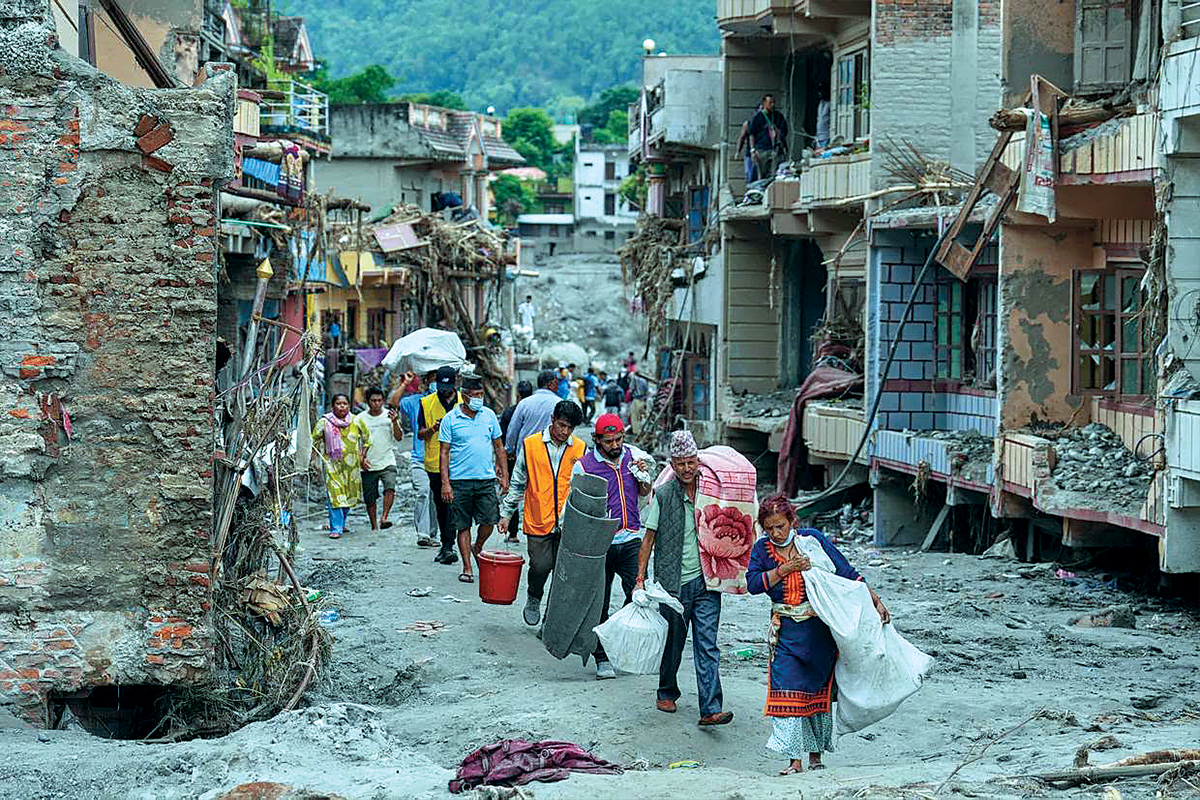
There is a moment after disaster when the cameras move on, the rescue teams begin to leave and survival gives way to a far more complicated question: What now?
For those who lived through the floods and landslides in Rasuwa, the answer is measured in what must be rebuilt – homes and livelihoods, schools and roads, documents and routines, communities and a sense of safety. But some losses cannot simply be reconstructed. There are people who will not return, ancestral places that may no longer be safe to call home, and memories that continue long after the waters have receded.
For Ishwari Thapa Magar, beginning again means rebuilding a business created to give women financial independence while finding a way to put her five-year-old daughter back in school. For Phurpu Dorje Ghale, it means imagining a future for a community that lost people, homes and a school. And for Bhujung Sherpa, who stepped forward to help displaced families find shelter and one another, it means insisting that rescue cannot be where responsibility ends.
Their stories reveal a side of disaster we speak about far less: the long, uncertain journey after survival. Because rebuilding Rasuwa is not simply about replacing what was destroyed. It is about restoring livelihoods, dignity, identity, community – and, slowly, the belief that life can begin again and again.
Starting Again, From Nothing
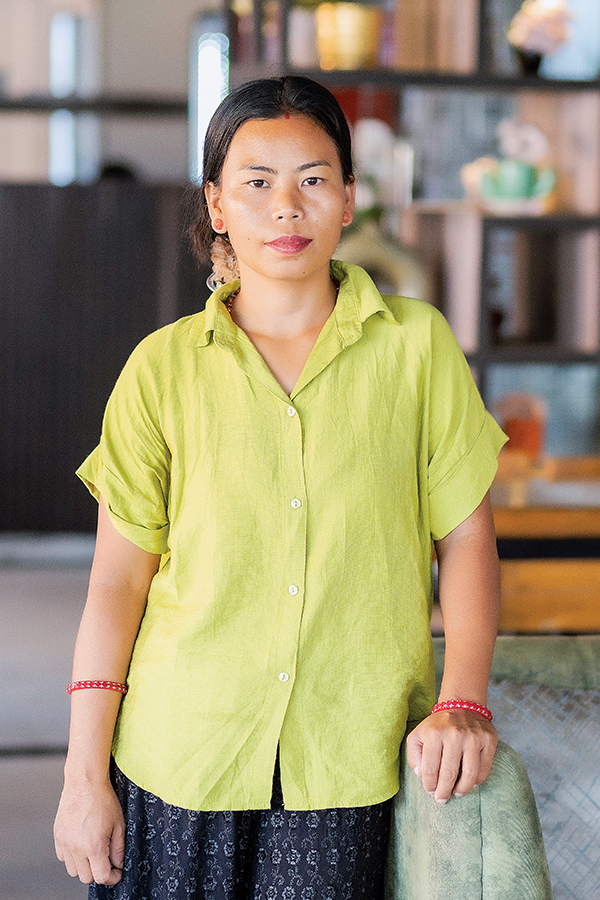
ISHWARI THAPA MAGAR
Raised in Kailratar, Ward 5 of Naukunda Rural Municipality, Rasuwa, Ishwari Thapa Magar built her life around a simple belief: women become stronger when they have the skills and opportunity to earn for themselves.
A homemaker, entrepreneur and advocate for women’s economic independence, Ishwari invested Rs 5 lakh of her savings to establish a shoe-making business in her community. Drawing on vocational training and years of hands-on experience, she trained and employed local housewives and mothers, creating an income-generating opportunity where there had been few. “In just 20 days, seven women had already been trained and employed under me.”
Then the flood came. “I was getting my five-year-old daughter ready for school when suddenly we heard, ‘The flood is coming.’”
An electricity tower collapsed near her home, making the danger unmistakable. Ishwari ran towards higher ground, barefoot, as the rushing water swept away her slippers and parts of her clothing.
She survived. Almost everything else was gone.
Her home, her newly established business, official documents, citizenship certificate and belongings were washed away. Most painfully, she lost her father-in-law. “The flood took away my home, my livelihood and even my identity. Now, I am starting again from nothing.”
With no money and no means of communication, the family eventually began the difficult journey to Kathmandu, walking from 5 a.m. to 7 p.m. and occasionally receiving lifts along the way. It took them three days to reach the capital.
“After losing our home, my daughter and I slept wherever we could, first on the floor of a ward office using a curtain as a blanket, then on classroom benches.”
Relatives gave them shelter and helped them through the first weeks. Aid organisations and community groups provided essential support, while counselling helped Ishwari begin confronting the emotional aftermath of the disaster.
But trauma does not disappear simply because immediate danger has passed. “Even today, the memories of the flood bring back anxiety, trembling and severe headaches.”
Today, Ishwari is starting again in Kathmandu with her daughter. Her first priority is both ordinary and profound: getting her child back to school. She has visited schools across Kathmandu, but admission and tuition costs remain difficult after losing her livelihood and documents.
At the same time, she wants to rebuild the business that once allowed other women to earn. For Ishwari, restarting is not simply about recovering an income. It is about reclaiming a purpose.
She believes affected families need immediate assistance rather than promises of distant solutions. Roads, she stresses, are fundamental.
“Without roads, communities cannot reach hospitals, schools, markets or emergency services when they need them most.”
Her story is not only about surviving a flood. It is about what comes next, when someone must somehow rebuild a home, a livelihood, a child’s education and a sense of identity from almost nothing.
“Our hard work may have been washed away by the flood, but not our dreams. We can still rise again.”
What It Means to Go Home
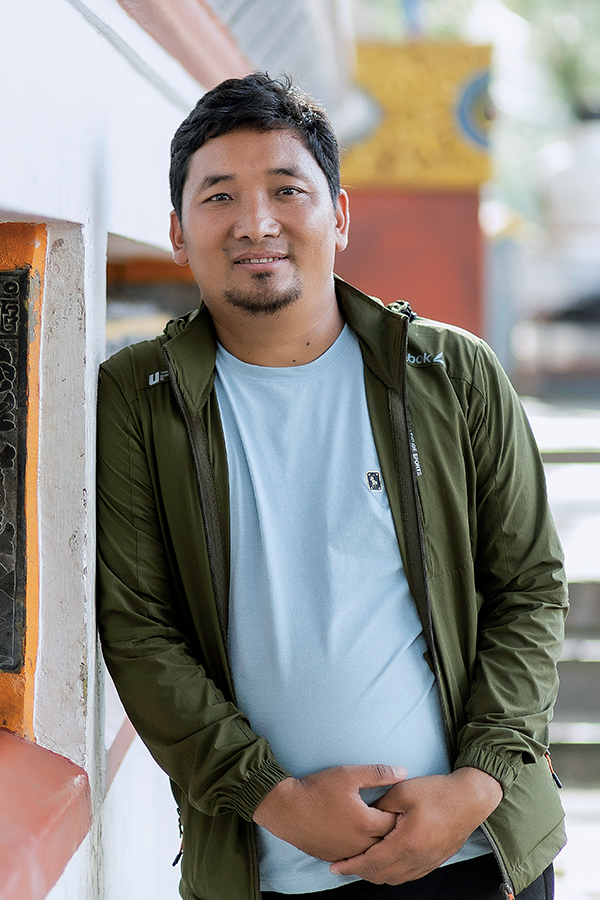
PHURPU DORJE GHALE
When the flood struck Timure, Rasuwa, Phurpu Dorje Ghale ran for his life.
At around 8:50 that morning, as he prepared to leave for school, an explosion-like sound shattered the quiet. Looking outside, he saw a wall of water rushing through the settlement, swallowing everything in its path.
Barefoot, without his phone and unable to contact his loved ones, he ran.
“I ran with my eyes closed,” he recalls. “It felt like a scene from a disaster film, but it was really happening.”
For Phurpu, the disaster was not simply the destruction of a village. As Principal of Shree Nepal Rastriya Basic School, he had devoted years to educating children and building a future for his community. The school, only three years old and equipped with computer facilities supported by China, represented that hope.
Then, within minutes, everything changed. “The flood took my students, my colleagues, my home and almost everything I had built in Rasuwa.”
Rescued from Timure and eventually brought to Kathmandu, Phurpu now lives at Mustang Gumba in Swayambhu, alongside around 250 other survivors.
“We have lost so much, but we still have the right to rebuild, with safety, dignity and hope.”
Food, drinking water, medicines and basic necessities are reaching survivors through the Gumba, organisations and relief efforts. But for Phurpu, the hardest work is still ahead.
Rebuilding, he believes, must begin with roads and bridges. Without access, communities cannot return, rebuild homes, reopen schools or restore essential services. “The survivors cannot rebuild alone. We need the support of the Nepal government, China and foreign aid.”
Yet returning home is not a decision he believes should be rushed.
Scientific assessments must first establish whether Timure is safe. If it is not, he says, Khaidi Village, higher in the mountains, could be a possible alternative. For now, he believes Kathmandu could provide survivors with a safer place to remain while their future is determined.
But the idea of home is more complicated than geography. Their ancestral land carries their history, culture and traditions. Leaving it behind would mean more than losing houses; it would mean confronting the possibility of losing part of their identity.
And that is why Phurpu refuses to surrender to despair. “How long can I keep crying? I have to stand up – for myself and for every survivor still searching for hope.”
His message is ultimately about rebuilding in its fullest sense: rebuild the roads, rebuild the homes, rebuild the schools, but also rebuild the community, preserve its traditions and protect the identity of generations yet to come. “We have lost many people, but we must not lose who we are.”
Rescue Is Only the Beginning
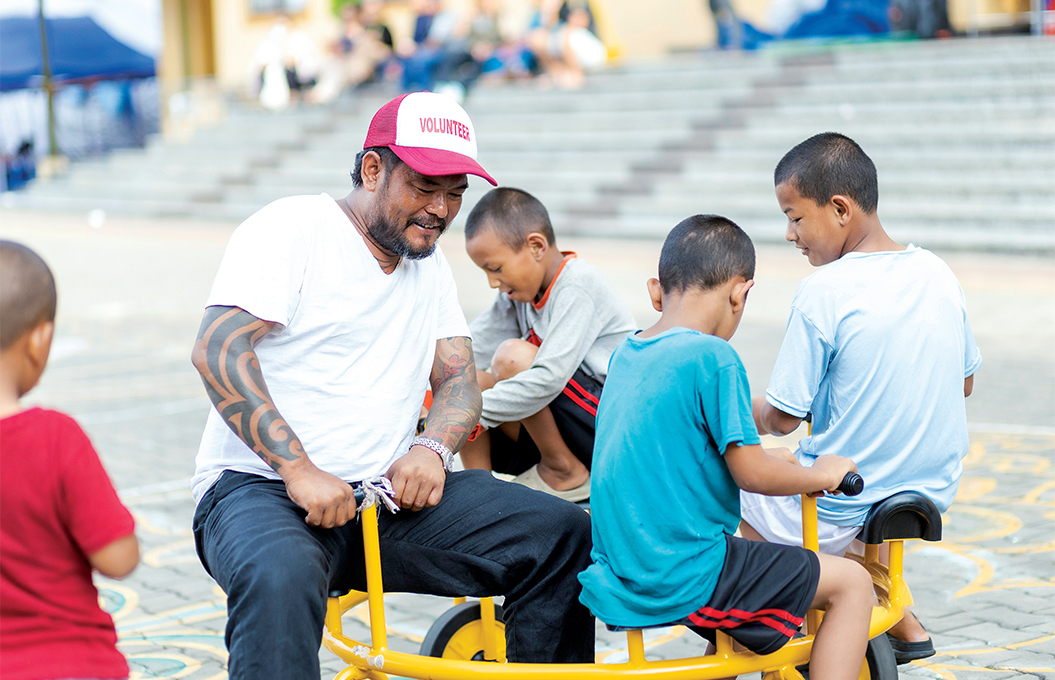
BHUJUNG SHERPA
When disaster struck Rasuwa, Bhujung Sherpa could not stand by and watch his community suffer. From Kathmandu, he learned that his hometown had been devastated by floods, families had been separated and survivors were struggling to find safety, and one another.
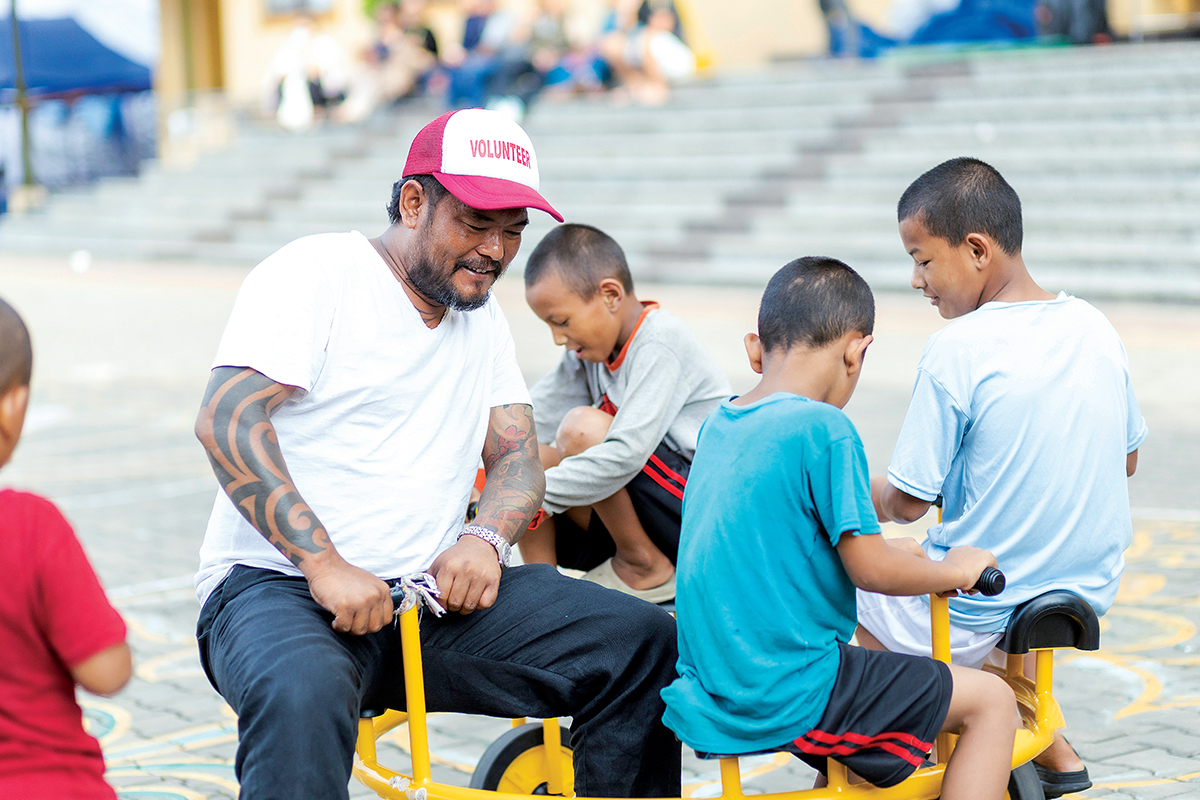
He immediately joined forces with the Nepal Police, Yellow Gumba, friends and volunteers to begin a rescue effort. What was initially meant to be a place where families could reconnect with missing loved ones soon became a shelter for hundreds of survivors.
With the support of Yellow Gumba, Bhujung helped establish a safe space where displaced families could find food, shelter, medical assistance, emotional support and, importantly, one another. “I did whatever I could, whether it meant using my own vehicle or spending my own money. There was no one on night duty to take them.”
But for Bhujung, the physical destruction tells only part of the story. He witnessed survivors struggling with grief, anxiety and the shock of losing homes, livelihoods and loved ones. Counselling, therapy and spiritual support have helped some begin processing their trauma, but he believes much more remains to be done.
Rescue, he argues, cannot mark the end of the government’s responsibility. Survivors need continued follow-up, proper documentation, financial assistance, healthcare, education and a clear path towards rebuilding their lives with dignity.
His vision for Rasuwa begins with restoring safe roads and bridges, particularly access to Timure and surrounding communities. He believes families must also be relocated to safer areas before rebuilding homes and businesses. “Rebuilding is not only about houses and roads. We must also restore our gumbas, traditions, agriculture, businesses and tourism.”
For a community whose livelihoods are closely connected to tourism, rebuilding Rasuwa is about more than recovery. It is about protecting a way of life while restoring an important part of the country’s tourism economy.
Yet amid everything that has been lost, Bhujung refuses to give up. “I have to start from zero because we have lost everything. We are like babies learning to crawl again.”
Perhaps that is what life after rescue ultimately asks of those who survive: not simply to return to what existed before, but to find the strength to begin once more – slowly, uncertainly, and from the ground up.
Text: Sukrity Sharma
Photos: Ripesh Maharjan