
A man can be falling apart and still say, “I am fine.” He may be struggling with grief, anxiety, financial pressure, relationship problems or the weight of expectations, yet continue to show up as though nothing is wrong. For generations, men have been taught – both explicitly and subtly – that strength means being in control, solving problems and carrying burdens without complaint. Vulnerability, meanwhile, has often been mistaken for weakness.
The cost of that silence can be significant. Research consistently shows that men are less likely than women to seek professional help for mental health concerns, even though they experience stress, depression, grief and emotional distress. According to the World Health Organization, suicide is a major global public health concern, with men accounting for a disproportionately high share of suicide deaths in many countries. Yet emotional distress in men can also be hidden behind anger, withdrawal, overwork, substance use or the simple, familiar phrase: “I am fine.”
This raises an important question: Why is it still so difficult for men to say, “I am not okay”?
As conversations around masculinity and mental health evolve, more men are beginning to challenge the idea that they must carry everything alone. Increasingly, strength is being understood not as the absence of vulnerability, but as the courage to acknowledge pain, ask for support and allow oneself to be seen beyond traditional expectations of what a man should be.
We asked four men to share their perspectives on emotional silence, the pressures that shape masculinity and what it takes to finally say the words: “I am not okay.”
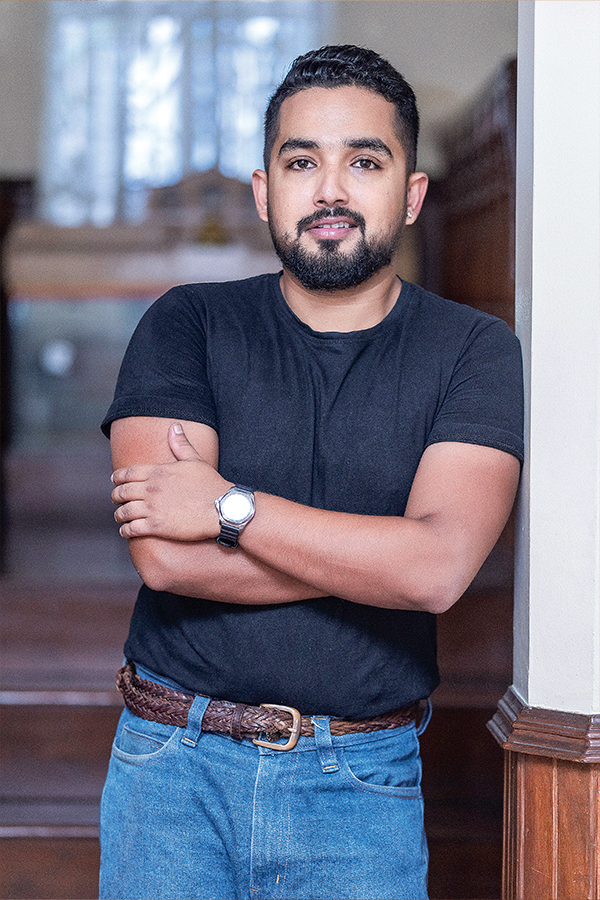
Suprav Acharya, Founder, Cherish Nepal Foundation
Working closely with marginalised communities has shown me how deeply mental health is still stigmatised in Nepal. It is often treated as a taboo. Through my work at Cherish Nepal Foundation, I have worked closely with people experiencing mental health challenges. Being around those experiences has also affected my own mental health at times.
I have come to understand that mental health can be contagious. The emotions and struggles of the people around us can affect us too. When you are constantly exposed to someone else’s pain it can stay with you.
As a man, I have also had to learn that it is okay to talk about what I am feeling. We are often taught that opening up about our emotions is a sign of weakness. I have realised that speaking to people we trust is not a weakness. Seeking professional help when we need it is not a weakness either.
Men do not have to carry everything on their own. Being able to acknowledge what you are feeling is a form of strength. So is talking about it with someone you trust. Asking for help when necessary is also a form of strength.

Baivab Dhoj Khadka, Managing Director and Co Founder, Tekbay Digital Solutions
A man’s life can often feel like a double-edged sword. On one side there are privileges and perks that come with being a man. On the other there is an equally heavy expectation to carry responsibilities.
These responsibilities are often seen as a duty. They are not something that can simply be passed on to someone else. There is an unspoken motto: do it and don’t complain. As the founder of a technology company, I have also experienced the pressure that comes with constantly trying to stay ahead. The world tends to favour the best. Getting there comes with an unending pressure to perform.
There is always someone competing. There is always something to achieve. There is always another level to reach. In many ways it becomes a question of survival of the fittest. But beneath all of that I believe men have a soft underbelly. It is covered by a hard shell that has been built over time through societal expectations and norms. We are expected to be strong.
We are expected to be capable and resilient. This can remain true even when things underneath that shell are not okay. In recent years I have found myself becoming more open about mental health and emotional wellbeing. I have also tried to make these conversations more common within Tekbay and in my personal life.
I believe talking about how we feel should not be unusual or uncomfortable. It should be a normal part of the dialogue. Perhaps opening up does not make the shell disappear. It simply gives us the space to acknowledge what is underneath it.

Rehan Shrestha, Content Creator and Creative Director, RB Diamonds
I think men find it difficult to say, “I’m not okay,” because for generations, society has taught them that masculinity is measured by endurance, by how much they can carry without ever revealing the weight of it.
From a very young age, many boys are taught, sometimes explicitly but often through the smallest social cues, to suppress rather than articulate difficult emotions.
Psychologically, that conditioning runs deep. If you are repeatedly taught that sadness, fear, insecurity or even asking for help somehow diminishes your masculinity, you eventually learn to internalise everything. And society reinforces it constantly, we celebrate the man who remains composed and dependable but rarely ask what that strength is costing him internally.
And I think that is where the spiritual dimension becomes incredibly important. There is immense courage in removing that armour. We cannot heal what we refuse to acknowledge, and we cannot release what we are too ashamed to name. But I do think we are moving towards a more positive light. The conversations are changing. What we consume is changing. We are beginning to see men speak about grief, loneliness, anxiety, heartbreak and emotional exhaustion without immediately attaching shame to it.
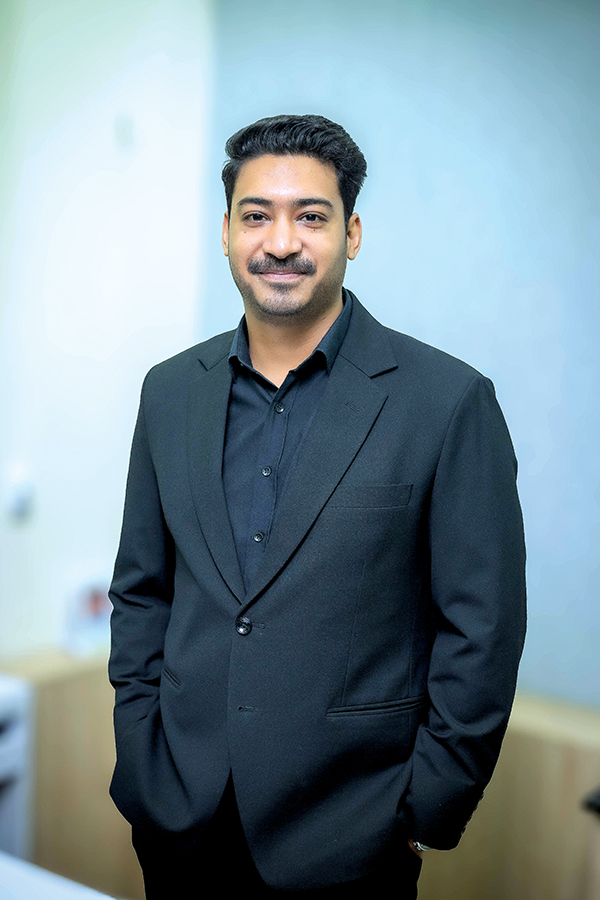
Dr. Pratik Bachhar, Neuropsychiatrist
This is a layered question and the answer is an intricate one. There are several interconnected psychological and cultural reasons why men find it difficult to say “I am not okay.” Men are often taught to be strong. From childhood they hear phrases like “Boys don’t cry.” They hear “Just get over it.” They hear “You are a man. You need to handle it.” This can lay the foundation for what follows.
Emotional expression may not be modelled. When boys grow up around men who solve problems without talking about their feelings they learn to suppress rather than express emotions. They learn to ask “How do I solve this?” while overlooking an equally important question: “How am I feeling?” Over time they may struggle to put their emotions into words. It becomes easier to say “I am tired.” “I am angry.” “I am busy.” Rather than “I am scared.” “I am lonely.” “I am hurt.” Because vulnerability can feel like weakness. They may fear being perceived as incapable.
They may fear being seen as unreliable or less masculine. When emotions have nowhere to go distress can come out indirectly. This can happen through withdrawal, irritability, anger or emotional numbness. It can also lead to unhealthy coping mechanisms such as alcohol, gambling or other addictive behaviours.