
They are not defined by a single sound, a single journey or a single idea of what it means to be an artist. Yet, they share something powerful: a willingness to find their own voice.
These women are part of a generation reshaping the sound and spirit of Nepali music. Their journeys have been shaped by different influences, cultures and experiences, from classical and contemporary music to hip-hop, folk, rock and alternative sounds. Some have taken unconventional paths to music, while others grew up with it as a constant presence in their lives. For each of them, music has become a space for expression, exploration and self-discovery.
What is perhaps most compelling is that they are still becoming. They are experimenting, questioning, evolving and learning to trust their own journeys. Together, they represent the many possibilities of a new generation of women in Nepali music, not simply following a path, but creating one.

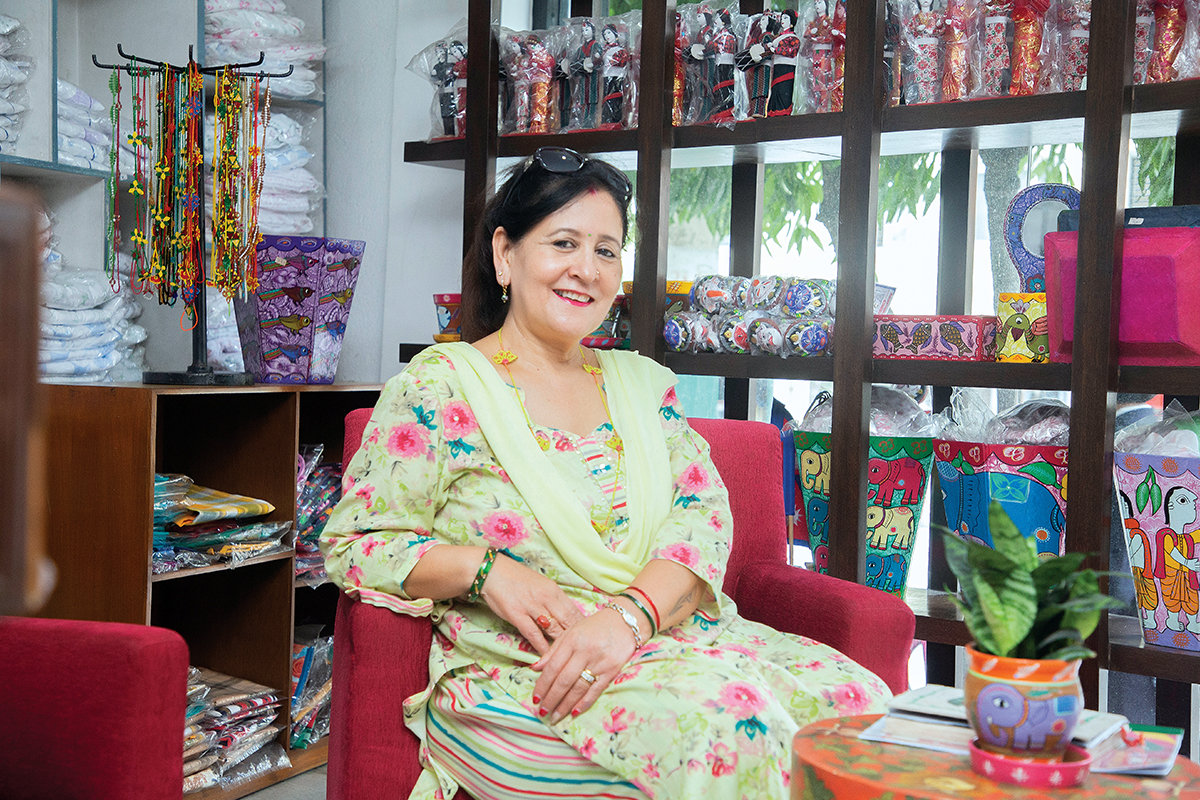
Astha Tamang Maskey
Astha Tamang Maskey is a Kathmandu-born Nepali singer-songwriter, guitarist and sound engineer known for her intimate acoustic sound, blending pop, folk, soul, R&B and alternative influences. Her albums include “Sabai Thikai Huncha” (2009), “Ma Ek Sapana” (2012), “Muse” (2020) and “Sa Re Ga Ma Pa” (2024). Her songs “Jhuto Satya” and “Harek Saas Sita” received Hits FM nominations, while “Chodera Najau” earned five Hits FM nominations and won Best Female Pop Vocal Performance in 2019. She also won Radio Kantipur’s Best Pop Female Vocalist award in 2010 and Best Singer (Pop Female) in 2022.
For a musician, the exploration and expression of emotion can be as important as a song’s lyrics and melody. Astha Tamang Maskey is one of those musicians whose songs feel less like a performance and more like an invitation into a private space. Her music carries emotion with a quiet honesty, allowing listeners to find pieces of their own experiences within it. For Astha, that sense of connection is rooted in vulnerability: the willingness to look inward, question what she feels and allow those feelings to take shape through music.
Her journey as an artist has, in many ways, also been one of self-discovery. Music has given her a language through which she can explore her inner world and make sense of the experiences that have shaped her. Rather than seeing vulnerability as something to protect, she has gradually come to understand it as one of the things that allows art to reach people most deeply.
“Music has become a way for me to explore that inner landscape and make sense of the experiences that have shaped who I am,” she reflects.
That inward journey does not exist separately from the people and experiences around her. Away from music, Astha finds warmth in the relationships that have helped shape the person behind the artist. Family remains particularly important to her, alongside the countless connections and encounters that become part of a person’s story, often without them realising it at the time.
She does not believe in the idea that anyone is entirely self-made. For her, identity is built collectively through relationships, shared experiences, support, love and even the lessons that come from difficult chapters. The people who have believed in her and walked alongside her have contributed to her story just as significantly as music itself.
This understanding also finds its way into how she approaches creativity. Music has taught Astha that nothing in life is ever truly still. Feelings change, ideas develop and the person creating something is often different by the time that creation reaches the world. What begins as an emotion might become a thought, then a melody and eventually a song that takes on a meaning beyond what she initially imagined.
That process has taught her to loosen her grip on expectations. Instead of becoming consumed by what a piece of work should become, she has learnt to trust where the creative process takes her.
There is a particular freedom in allowing something to unfold naturally rather than forcing it towards a predetermined destination.
“Music has taught me to trust the process and, most importantly, to fall in love with the act of creating itself rather than being consumed by the outcome,” she says.
For her, art provides a space where uncertainty can exist without needing an immediate answer. There are moments when she creates from a place she cannot fully explain, only to understand much later what she was trying to express. In that sense, music becomes more than an outlet. It becomes a way of meeting parts of herself that have not yet found words.
Rather than searching for certainty, she chooses curiosity. She would rather continue asking questions and allow her music to reveal something new than attempt to define herself too rigidly as an artist.
As she looks towards the next chapter, that openness remains central.
Astha is not interested in placing strict boundaries around what her future must look like. Music has been an important part of her identity, but she does not believe creativity has to exist within a single form.
There is a sense that she wants to experience life in its entirety and allow those experiences to naturally find their way into whatever she creates next. That could be music, or it could take another form entirely.
What matters is not necessarily carrying forward a particular sound or story, but the qualities that have guided her so far: curiosity, vulnerability and honesty. These are the threads connecting the artist she has been with the person she continues to become.
Astha’s journey does not seem to be about arriving at a final version of herself, but remaining open to discovering who that person might be. Her music reflects that same movement: intimate yet evolving, personal yet universal.
“I hope that in this lifetime, I get to experience a wide spectrum of life and allow those experiences to find their way into whatever I create.”
For an artist whose work has long explored the emotional landscape of being human, perhaps the most compelling part of her next chapter is that it remains unwritten. And rather than rushing to define it, Astha Tamang Maskey looks forward to continuing to listen to life, to herself and to whatever creative form comes next.
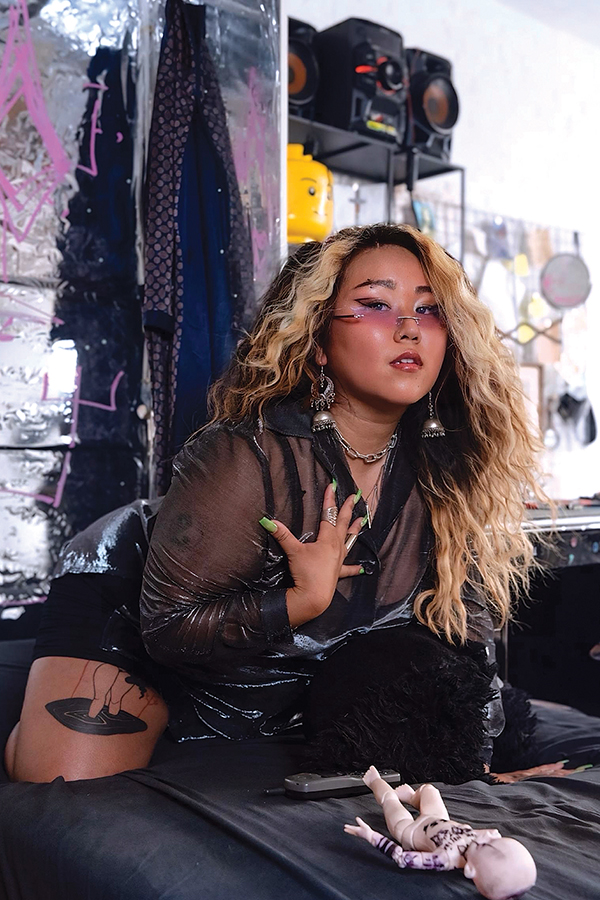
Sumnima Setling (Amazumi)
Sumnima Setling, better known by her stage name Amazumi, is a Hong Kong-born Nepali hip-hop artist whose music blends hip-hop with influences from nu-metal, punk, grunge, hardcore and alternative rock. In 2017, she was selected as one of eight finalists for Belgium’s De Nieuwe Lichting, organised by Studio Brussel, with her entry “V for Venom.” Her music includes projects and tracks such as V for Venom, RIOT, “Hadouken!”, “Drown,” “Damsel,” “Drift” and “Aago,” with more recent releases including “On God,” “Wolf,” “One on One” and “Game” in 2025–26. Her work on “God Is a Woman,” presented in partnership with the Embassy of Switzerland in Nepal, also marked a significant moment in the country’s hip-hop scene as Nepal’s first all-female hip-hop festival.
For Amazumi, music is more than a form of expression. It is a place where scattered pieces of herself come together, where emotions can exist without explanation and imagination can take any shape. Her journey as an artist has not followed a predictable path, and perhaps that is precisely what gives her music its distinct character. It has been shaped by experimentation, introspection, pain, freedom and a willingness to surrender to the creative process.
She describes that journey as “unpredictable, spiritual, cathartic and liberating.” There is an honesty in those words that runs through much of how she approaches her art. For her, creating music is not simply about producing something for an audience. It is about exploring the parts of life that are difficult to understand while they are happening.
She believes an artist can easily lose the spirit behind the craft when the process becomes mechanical. “Otherwise, you can become an engine without spirit,” she says. It is this awareness that has encouraged her to remain connected to the feeling behind the music rather than simply the act of making it.
Over the years, music has also become a place of belonging. Amazumi has often felt like an outsider across different cultures, families and circles, describing her spirit as scattered while music gives her the freedom to feel whole. Within it, she can create new worlds and inhabit different versions of herself without having to fit into anyone else’s expectations.
That sense of freedom is reflected in the way she writes. Amazumi does not necessarily turn to music while she is in the middle of an experience. Instead, she often needs time and distance before she can understand what she has lived through. Life, she feels, can be too overwhelming in the moment to translate into something meaningful.
Shakespeare’s observation that “All the world’s a stage” resonates with her understanding of life. Like an audience absorbed in a play, people can become consumed by what is unfolding before them. It is only later, when the scene has passed, that they begin to understand what it meant.
She may return to something she wrote months or even years earlier and suddenly recognise the emotions behind it. A song can reveal an answer she was not consciously looking for when she first wrote it. “Oh, so that’s what I was going through,” she recalls thinking when revisiting older work.
Rather than forcing an emotion into a song, she allows it to move naturally. She waits until something within her feels ready to be channelled through the craft. In this way, songwriting becomes less about immediate reaction and more about reflection. Her music carries the traces of experiences that have had time to settle, transform and reveal themselves.
Beyond music, Amazumi remains much the same kind of creator. She describes herself as someone who enjoys creating worlds and experiences through families, communities, cultures and special occasions. She is curious about people and different ways of seeing and being, while allowing others the freedom to interpret those experiences for themselves.
But there is another side to her personality, one that is more protective and uncompromising. Amazumi describes herself as a fierce protector who has often found herself on the frontline for others, even when her intentions have been misunderstood. She is not afraid of difficult conversations or uncomfortable truths, although she recognises that not everyone wants to confront them.
Her principles, she says, have sometimes taken her down a lonely path. Yet music gives her a way to continue expressing what she might otherwise struggle to communicate. It is a space where she does not require approval or reciprocity in order to be heard.
Perhaps that is also why she remains uncertain about what comes next. Amazumi is not interested in predicting the direction of her music simply to satisfy expectations. “I don’t even know what to expect next,” she admits. Instead, she leaves room for instinct, intuition and whatever creative force might return when the time is right.
She describes life lately as having built a hard shell around her, making it difficult for those creative spirits to get through. Yet she can feel them nearby again. That sense of their return seems significant, not necessarily as a promise of what is to come, but as an indication that something within her is beginning to open once more.
Ultimately, Amazumi hopes her music can do more than simply tell her story. She wants listeners to recognise something of themselves within it, to discover their own agency, their ability to create magic and the freedom to encounter themselves in unexpected places.

Salina BK
Salina BK is a Nepali singer known for her powerful and expressive vocals who came into the national spotlight through the singing reality shows Nepal Idol and Nepal Star. Since her television appearances, she has continued developing her career through live performances and professional playback singing, establishing herself as a promising young voice in Nepali music. Her singing moves between contemporary pop and folk-influenced melodies, allowing her to work across different styles. Her best-known songs include “Chainejo Jindaganima” from the film “Unko Sweater,” along with songs such as “Oye Bhadani Bolena” and “Milan Ko Geet.” In 2025, Salina was nominated for Best Playback Singer (Female) at the Radio Kantipur National Music Awards, reflecting her growing recognition within Nepal’s professional music industry.
A connection to music, almost instinctive, has always flowed through Salina BK’s journey. “I feel as though music has always been there, even before I was born, in my mother’s womb,” she says. A passionate lover of music, she considers her home and family her earliest and most meaningful sources of inspiration. For her, music is more than a profession; it is a pillar of her foundation and a guiding force in life. It has taught her discipline, patience and, most importantly, how to become a better and more grounded person.
Salina grew up in Chitwan, where music was part of everyday life and everyone in her family shared a love for it. What began as something familiar and comforting gradually grew into a deep connection and eventually became an important part of who she is. Home was her first classroom and her family her first source of inspiration. The values she learned there shaped not only the person she is today but also the artist she hopes to become.
She believes music has taught her about life itself. The discipline required to learn, practise and perform has gradually influenced the way she approaches everything beyond music. “Music has taught me to be a decent human being and a disciplined person,” she says. It has taught her patience and commitment, while reminding her that there is always more to learn.
Curiosity remains an important part of her journey. She does not see herself as someone who has reached a final destination. Instead, she continues to observe, listen and learn from the people around her. Mentors, seniors and fellow artists have all contributed to her understanding of the field, while every experience, whether challenging or rewarding, offers something that can shape her further.
Her experiences on platforms such as Nepal Idol and Nepal Star also became important parts of that learning process. Beyond visibility and opportunity, such platforms allow an aspiring artist to learn by watching others, understanding the demands of performance and experiencing the realities of the music industry. For Salina, they were valuable stepping stones in a much longer journey.
She understands that talent alone cannot sustain a career. There has to be consistency, practice and the willingness to begin again. Her relationship with music has taught her that progress can be gradual and that there is always another level to reach.
At the same time, she values being able to step away from everything. Personal space and meditation are important to her, giving her time to quieten down and reconnect with herself. In a life surrounded by people, performances and expectations, those moments of solitude allow her to reflect on where she is and where she wants to go.
As a playback singer, she is continuing to discover what her voice can express and where it can take her. Every song offers another opportunity to learn about performance, emotion and herself.
Today, she carries the same foundation with her: home, family, discipline and a lifelong love for music. She continues to learn, explore and evolve into the artist she wants to be. The journey is still unfolding, but music remains at its centre.

Simma Rai
Simma Rai is a Nepali singer-songwriter and musician from Kathmandu, known for her soulful music. Her journey began gaining attention through covers and live performances before her first major original song, “Uda Timi,” with lyrics by Shrawan Mukarung and music by Nhyoo Bajracharya, became an important early milestone. She studied Hindustani classical music and has worked across jazz and contemporary styles. Her notable songs include “Maya Pheri,” “Naulo Bihani,” “Manko Uchchhavas,” “Sambaddha” and “Jaai Jaaney Mayalu.” “Maya Pheri” became one of her signature original songs, while “Naulo Bihani” earned her nominations at the Hits FM Music Awards, including Best New Artist and Best Female Pop Vocal Performance.
A transition in one’s mid-twenties can reshape the course of life, altering everything that has unfolded so far. For Simma Rai, moving from software engineering into music was filled with uncertainty, self-doubt and questions about whether the decision would bring the sense of satisfaction she was looking for. Unlike someone who grows up knowing they want to become a musician, she was stepping into music at a stage when career choices often feel increasingly serious and difficult to change.
The transition brought its own battles. There were conflicts within herself, along with the fear of taking such an unfamiliar path. As she became more conscious of the challenges around her, she also realised that being a woman pursuing music came with its own set of difficulties. Yet there were people who believed in her, encouraged her and pushed her to continue when she was unsure of herself.
Her connection with music, however, had been quietly developing through life itself. Observing people, experiencing different emotions, listening to other artists and finding inspiration in everyday moments gradually strengthened her desire to explore music more seriously. Even while working in software engineering, she began to recognise that something was missing.
One comment from a co-worker stayed with her. After listening to her sing, the colleague told her, “When I go home and listen to your voice, it is very peaceful.” It was a simple observation, but it made her realise that perhaps her voice could create something meaningful.
Software engineering had given her a professional path, but she felt a certain kind of value creation was absent. Music seemed to fill that space. She knew, however, that wanting to become a musician was not enough. She needed to understand her voice and work on it professionally, which led her to take vocal classes.
The process was far from straightforward. There were moments of questioning and pressure to progress quickly. Eventually, she began to understand that there was no need to rush. Finding her own pace mattered more than keeping up with the moving world.
That belief now extends beyond music. She is drawn to travelling, nature and greenery, often seeking out green spaces whenever she can. She believes in the restorative quality of being surrounded by nature and considers forest therapy one of the roots of her inspiration. Stepping away from the noise of everyday life creates space to observe, reflect and reconnect with herself and her own sound.
Music has taught her much more than singing. It has taught her the importance of storytelling, human connection, observation and curiosity. A song, she believes, does not exist in isolation; it carries experiences, emotions and pieces of the person who creates it. In that sense, music has challenged her to look inward while also paying closer attention to the world around her.
There is also a sense of self-cleansing in the process. Music has become a way for her to understand herself, process her emotions and continue discovering who she is. At the same time, it has allowed her to build the kind of connection with an audience that she once experienced as a listener. She remembers the artists whose music made her feel understood, and now she has found a medium through which she can offer that same feeling to someone else.
Today, she is an independent artist, something that aligns with a desire for autonomy she has carried for a long time. Independence allows her to make choices about the music she creates, the people she collaborates with and the direction she wants to explore. Rather than chasing a fast-paced career or trying to fit into someone else’s timeline, she is choosing to experiment, collaborate and grow at her own pace.
The most significant part of her transition is that she did not simply leave one career for another. She found a different way of understanding herself. Software engineering was once her professional identity, but music gave her something she had been searching for: connection, expression and personal meaning.

Mrinal Manandhar
Mrinal Manandhar is an emerging Nepali singer and musician gaining recognition through contemporary Nepali music, live performances and collaborations with established artists. She has performed as a vocalist with the Gorkhali Girls Band and the all-female band Istris. She has also collaborated with Kali Prasad Devkota on the Teej song “Teej Ko Ranko” and lent her voice to the Nepal Bhasa song “Tan Chaye Mate Nha.” Through her music, Mrinal is developing an artistic identity that bridges traditional Nepali influences with contemporary sounds.
Growing up in a family deeply connected to music and creativity, Mrinal Manandhar was surrounded by songs from an early age. Her father was a singer and a passionate Beatles fan, and his love for music became one of her earliest influences. That musical environment planted the seed for her own journey into music.
Mrinal was once quite shy. Music gradually became the space where she could move beyond that shyness and discover a more confident side of herself. Singing gave her a way to express emotions that might otherwise have remained unspoken. Little by little, she began putting herself out there, from participating in Nepal Idol and sharing covers on YouTube to performing with bands such as Gorkhali Girls Band and Istris. Each experience became another step towards discovering herself.
Music has also allowed her to understand her emotions, accept them and give them a place rather than constantly trying to explain or suppress them. There is a sense of patience in the way she approaches both life and art. She is willing to let things unfold.
“Continuity is also growth,” is a belief that seems to guide her. Growth does not always have to look dramatic. Sometimes it means continuing to create, continuing to learn and continuing to remain curious about oneself. For a young artist still finding her place, that perspective offers both grounding and freedom.
Her family remains at the heart of that grounding. Her sister, Pallavi Manandhar, is an important source of inspiration, while her relationships with family and loved ones have shaped not only her musical sensibilities but also the person she is becoming.
That rootedness, however, does not prevent her from being adventurous. Away from music, Mrinal is drawn to travel, painting, riding her bike, nature and animals. She wants to experience the world while remaining connected to the things that make her feel at home and to the people she loves.
Perhaps that balance between exploration and rootedness is what makes her artistic journey particularly interesting. Coming from the Newa community, Mrinal is increasingly embracing an important part of her cultural identity through music. Her work in Nepal Bhasa allows her to connect her contemporary artistic journey with a heritage that carries its own history, language, stories and musical traditions. Rather than seeing her roots as something fixed in the past, she appears to be carrying them forward with her.
Mrinal does not want to leave behind the experiences and people who have brought her this far. Instead, she wants to carry the lessons, relationships, memories and artistic experiences she has gathered into whatever comes next. Her ambition is not simply to become known, but to find her own voice.
The girl who once found it difficult to step confidently into the spotlight has slowly transformed through music, not by abandoning her shyness, sensitivity or emotional nature, but by learning how to work with them. Her sensitivity has become part of her strength. Her family has become the backbone of her musical journey, her culture part of her expression, and music the language through which all these pieces come together as she continues learning how to make it her own.
Text: Bijaya Shiwakoti
Photos: Ripesh Maharjan