
The arrival of a new year often invites us into reflection where time asks to be reviewed, not hurriedly but honestly. It is an audit not of productivity but of meaning. Of what we carried forward instinctively, and what we should have had the courage to set down.
Looking back, the year behind us feels heavy in places. Not because it lacked progress, but because progress itself has grown complicated. We live in a time of profound political shifts and social transitions, where certainty has become fragile and trust increasingly transactional. The year left us asking familiar yet uncomfortable questions: What truly mattered? Who showed up when it counted? Where did we spend our emotional and moral energy, and was it worth the cost?
Many of us discovered resilience we did not know we possessed. We learned to endure ambiguity, to function while uncertain, to hope without guarantees. Yet we also learned how exhaustion creeps in when urgency replaces intention, when noise drowns out clarity, and when we say yes too often to things that do not nourish us.
What weighed us down was not always failure. Often, it was the constant pressure to perform, to react instantly, to stay permanently alert in a world addicted to speed. The burden of being perpetually “on” quietly eroding our capacity for empathy.
Yet, the year offered moments of deep inspiration – small, luminous reminders of what humanity can still be. A stranger helping another without a camera present. Young people speaking truth to power with courage rather than cynicism. Communities stepping in where systems failed, choosing compassion over convenience. Scientists, educators, caregivers, journalists, activists – doing the unglamorous, essential work of holding the world together, often without applause.
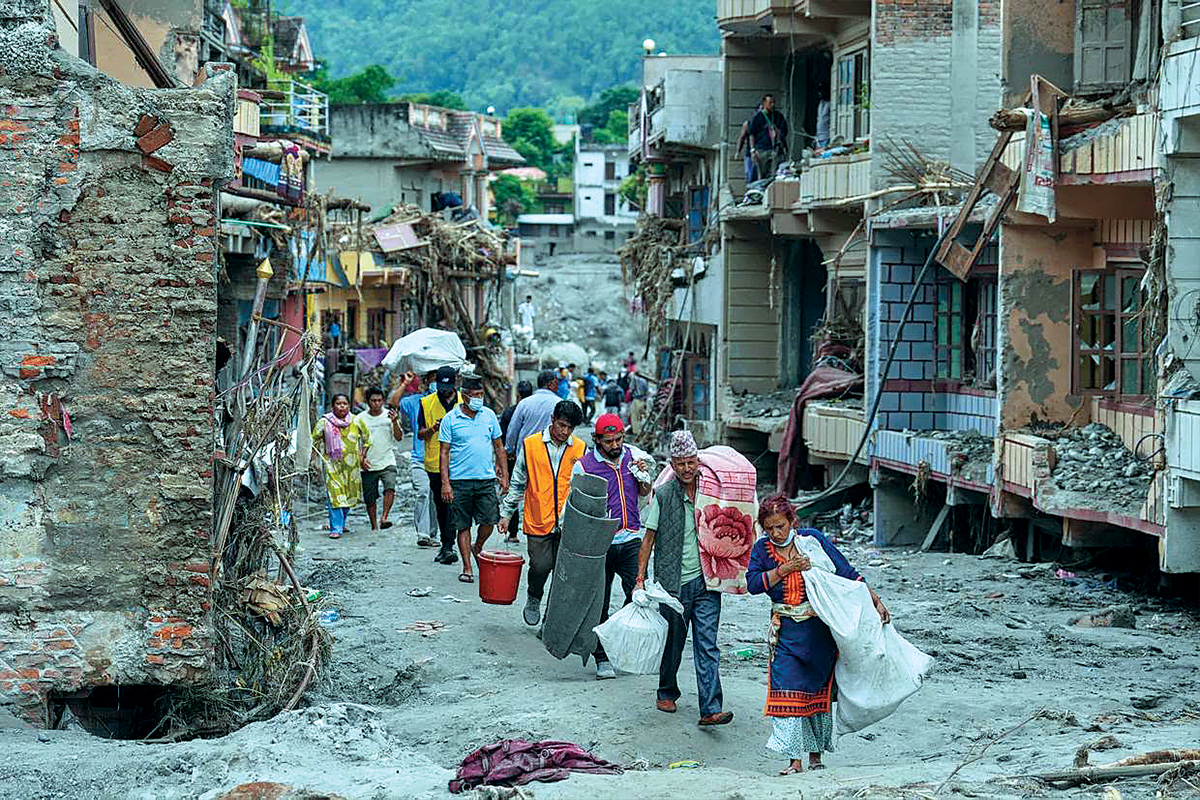
There was beauty in collective grief too – when tragedies reminded us that suffering, while unevenly distributed, still binds us together. In those moments, humanity felt closest to its better self: quieter, kinder, more aware of its shared fragility.
And yet, there are reasons to wish we would do so much better. The widening gap between what we know and what we do is perhaps the defining failure of our time. We know inequality corrodes societies, yet tolerate it. We understand climate urgency, yet negotiate with delay. We speak of peace, yet normalise dehumanisation. The danger is not that we lack ideals, but that we have grown comfortable living without them.
So, the question as we step into the new year is not whether we will change the world overnight. It is whether we will choose depth over distraction. Integrity over impulse. Meaning over momentum. As individuals, will we invest more in relationships, in listening, in long-term thinking? As a collective, will we reward empathy as much as efficiency, truth as much as triumph?
If time is indeed auditing us, may the coming year find us choosing what matters, releasing what does not, and remembering – again and again – that progress without humanity is not progress at all.