Jyoti KC, The Nepali-American Astronaut Aiming To Hoist The Nepal Flag Among The Stars
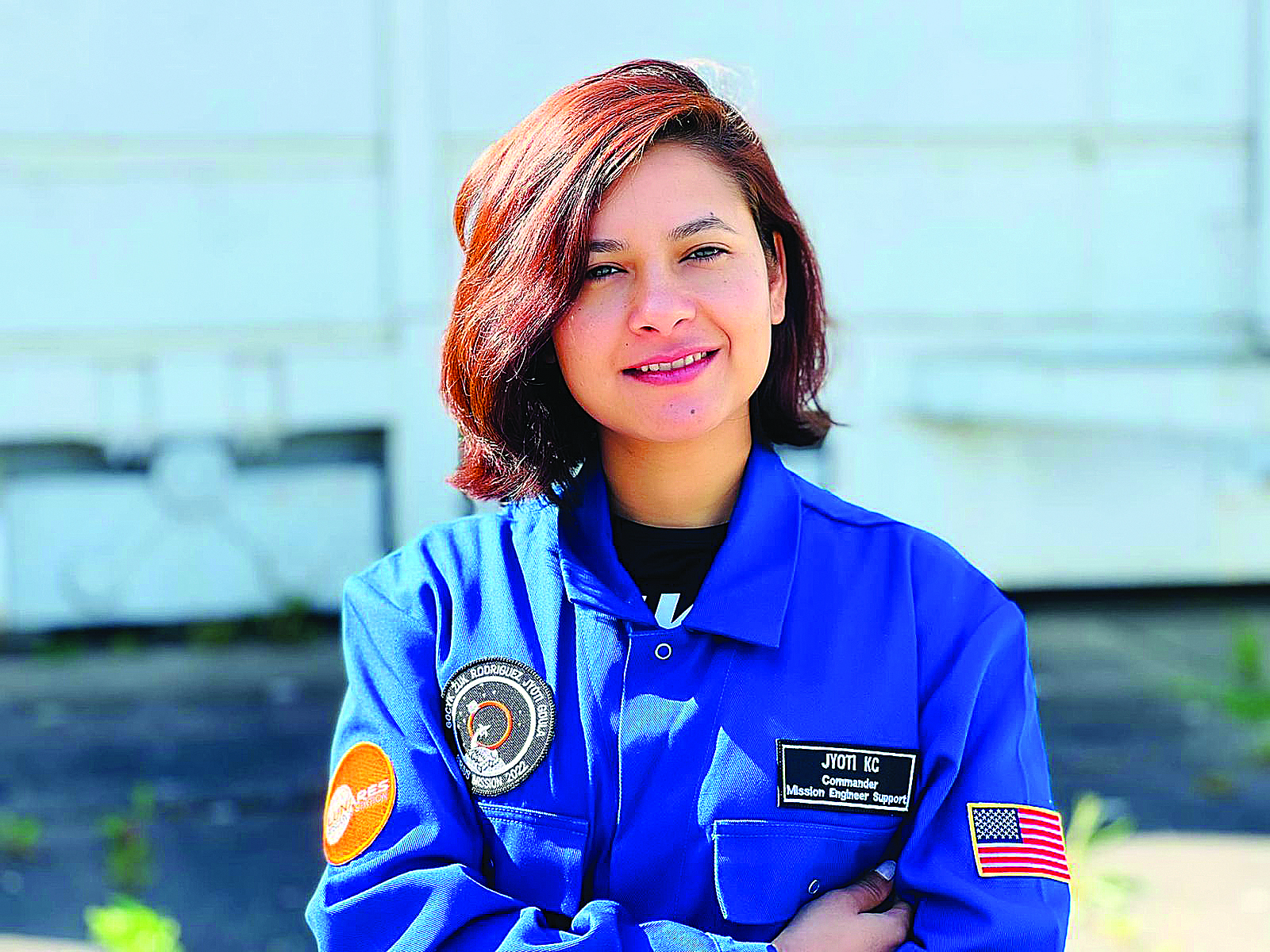
When Jyoti KC first gazed at the stars above the quiet skies of Dang, she didn’t see distance, she saw direction. Years later, that same clarity guided her to the Lunares Research Station in Poland where she made history as the first Nepali-American analogue astronaut. Her story is not one of coincidence but of conviction, of a woman who turned wonder into purpose, and purpose into a pathway. This is the story of a girl who once traced constellations with her imagination, now mapping new orbits for generations to come.
When Jyoti stepped into the Lunares Research Station for the first time, the world outside seemed to blur. Inside, everything felt sharper – the sound of her breath beneath the helmet, the hum of simulated systems, the weight of a promise she carried not just for herself, but for every dreamer who had been told, “This isn’t for you.”
“I wasn’t aiming to be the first Nepali analogue astronaut,” Jyoti says, her tone steady but warm. “That was never the goal. The goal was to open a path, to show what’s possible when someone from a small-town dares to do something difficult and meaningful.”
That moment, she recalls, was one of clarity – a realisation of who she was doing this for. “It was for that little girl from Dang,” she says. “The one who faced challenges but never gave up, because she believed her story could light the way for others.”
It’s that sense of purpose that threads through every chapter of her journey – from a childhood in Dang to serving in the U.S. Air Force, and finally to commanding a simulated space mission in Poland.
Where It All Began
At Moonlight Boarding School in Dang, her dreams outgrew the classroom. She would spend hours staring at the night sky, tracing stars with her eyes and asking questions far too big for her age. There were no telescopes, no labs, and no one she knew who worked in science. What she had, though, was curiosity and a television that occasionally aired the National Geographic Channel.
“One day, a helicopter landed right in front of my house,” she remembers. “I just stood there, watching the power and the noise. That was the first time I realised that I didn’t just want to look at the sky, I wanted to understand how we got there.”
It was a defining moment, a day from when she stopped looking at the sky and started working towards it.
Service, Purpose & the Sky
Before the astronaut suit came the uniform of the U.S. Air Force. She served as a medical technician, a role that demanded precision, endurance and empathy, qualities that later became her foundation in space research.
“Both worlds – medicine and space – are about service,” she says. “They require discipline, compassion and courage. You are constantly pushed beyond your comfort zone to help others. Whether it’s saving lives on Earth or preparing to sustain them beyond it, the mission is the same.”
That intersection between science and humanity became her compass. “Space is not just about technology,” she adds. “It’s about people, teamwork and trust. You don’t go to space alone. You go as a crew, a community.”
“Teamwork is not about dividing work, it’s about multiplying strength.”
Inside the Lunares Mission
Her three-week mission at Lunares was designed to mimic life on another planet. Every hour was accounted for from system checks and research experiments to managing delayed communications with Mission Control.
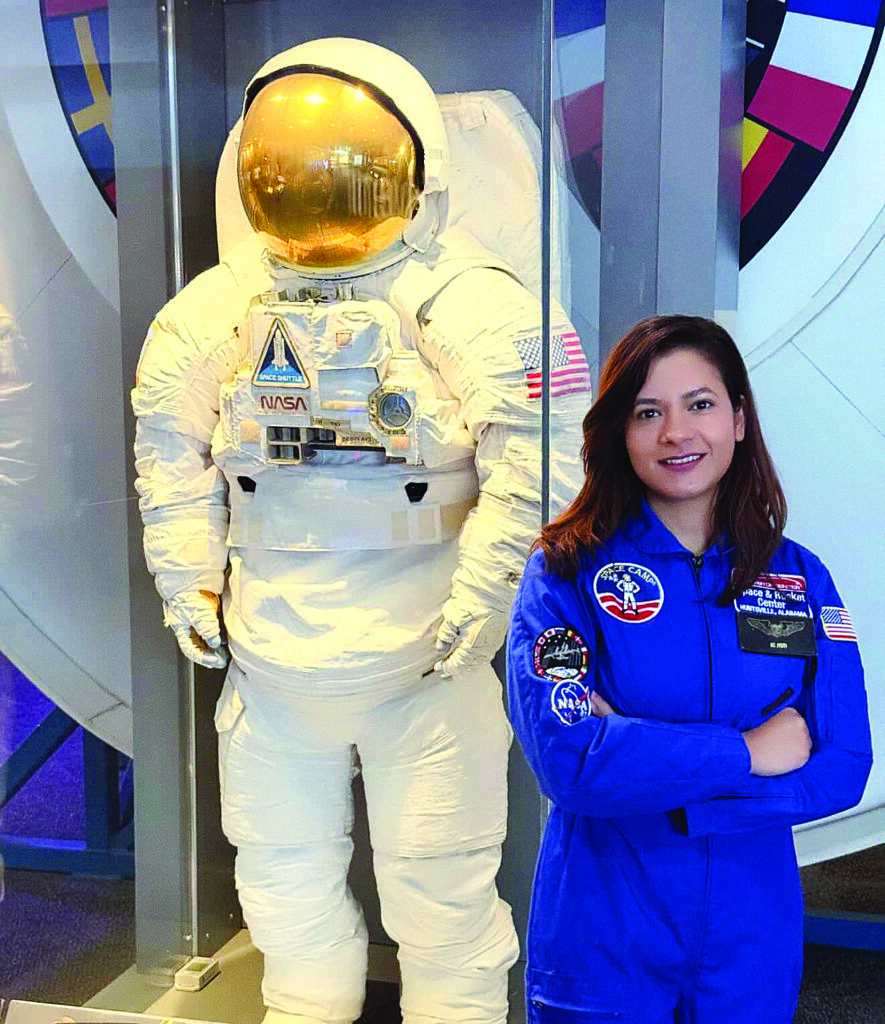
”Every step I take should make it easier for the next person to lead. That’s how progress works, one door opens and another dozen walk through.”
“As commander, my first task each morning was to check in with Mission Control, review the day’s checklist, and ensure the crew was mentally and physically prepared,” she explains. “But leadership in space isn’t just about systems, it’s about people. You have to maintain trust, unity and safety in isolation.”
Days were long and structured while nights, reflective and intense. “We cooked, exercised and even argued like any family,” she laughs. “But every challenge was a reminder that teamwork is not about dividing work, it’s about multiplying strength.”
Resilience in Isolation
In isolation, every emotion is amplified. The walls echo your thoughts, and silence can feel heavier than gravity. Yet she believes that’s where true resilience is born.
“Resilience comes when you allow yourself to fail, adapt and grow,” she says. “The environment tested every part of me – mentally, physically and spiritually. But I also saw how powerful we become when we stop pretending, we are alone.”
As commander, she prioritised her crew’s mental health as much as the mission’s success. “Team safety comes before every checklist,” she says firmly. “In high-pressure situations, success happens when you put people before process.”
Inspiring the Next Generation
Since completing her mission, she’s been inundated with messages from across Nepal and beyond, from students, parents and dreamers who finally see themselves reflected in her story. “Many wrote to say, ‘You made us believe it’s possible,’” she says. “That’s the greatest reward of all.”
Her message to them is simple but powerful: “Don’t let your environment define your dream, let your dream redefine your environment.”
For her, representation isn’t symbolic, it’s strategic. “When one Nepali enters a global platform, it carries responsibility,” she says. “That’s why I openly share everything from how to apply to Lunares to what it’s like living in the habitat. The more transparent we are, the more inclusive space exploration becomes.”
Her goal is not to be the only one, but the first of many. “Every step I take should make it easier for the next person to lead,” she says. “That’s how progress works, one door opens and another dozen walk through.”
Breaking Barriers, Not Spirit
The world of space research remains dominated by men, and even fewer of them are from South Asia. Has she faced bias? Of course. But she meets it with quiet strength.
“I have learnt to stay focused on purpose, not perception,” she says. “Barriers only have power if you give them power. I never tried to fit into someone else’s definition of success; I built my own.”
Her Nepali heritage, she says, is not a limitation but a superpower. “Being a Nepali woman means carrying resilience, humility and creativity in my DNA. These values guided me when the odds were against me.”
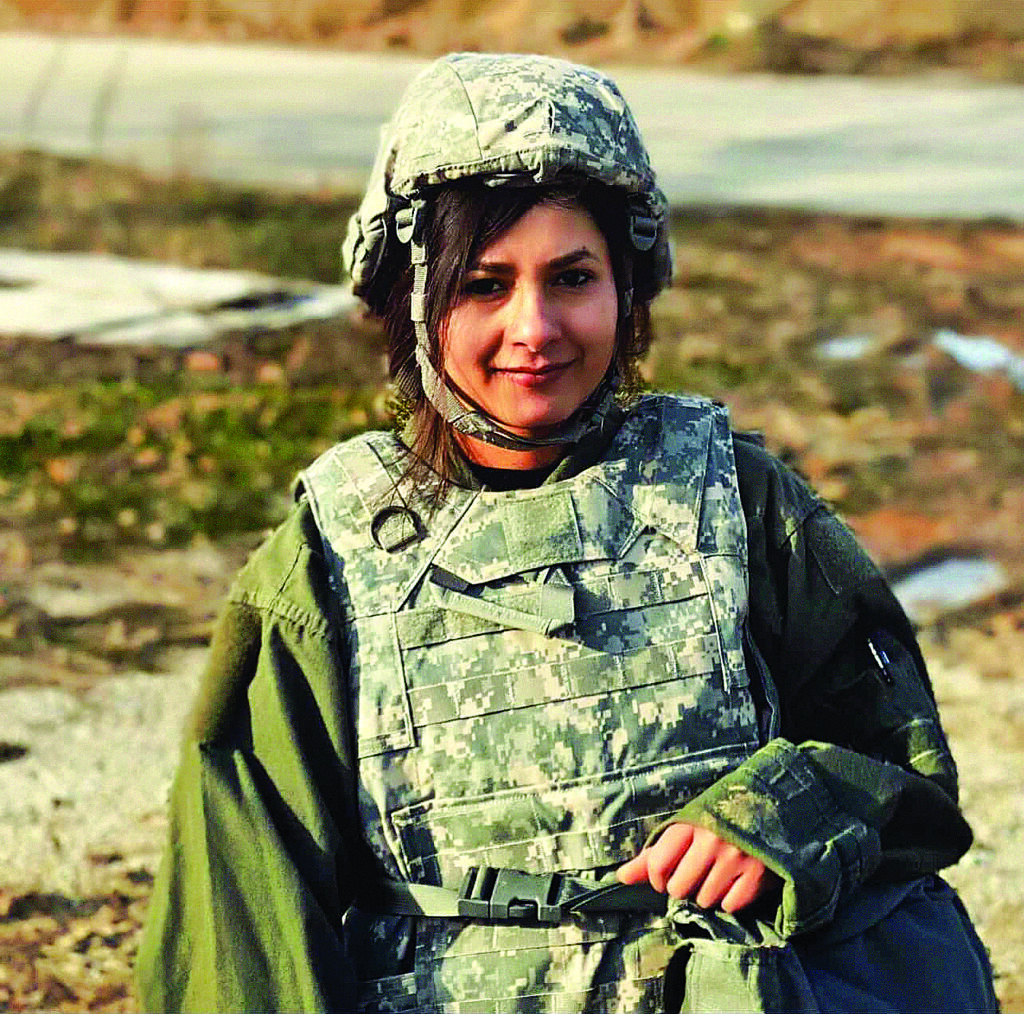
“Barriers only have power if you give them power. I never tried to fit into someone else’s definition of success; I built my own.”
Her words echo a philosophy as vast as space itself: “You can either wait for someone to open the door for you, or you can be the one who opens it for others. That’s what defines who you become.”
A Dream in Orbit
Looking back, from Dang to the U.S. Air Force to the simulated surface of the Moon, she reflects on what the journey has taught her.
“The universe doesn’t reward perfection; it rewards persistence,” she says. “Dreams don’t just live in our imagination; they take shape through clarity and consistency. Every small step, even the ones that fail, brings you closer to something extraordinary.”
Her ultimate dream is to see the Nepali flag among the stars. But for her, that moment isn’t just about personal achievement, it’s about national awakening.
“The day I see more Nepalis curious about space will mean more to me than any title,” she says. “Space exploration is not about personal glory. It’s about awakening belief in what’s possible.”
And when that flag does wave beyond Earth’s horizon, she hopes it will stand for every child who ever looked up and wondered. “It would remind the world that greatness can rise from even the smallest places, from a little girl in Dang to the stars.”
Her journey isn’t measured in miles or missions, but in mindsets transformed. Somewhere in the expanse between Earth and sky, she’s proving that space is not the final frontier, belief is.
Text: Ankita jain