MANISHA DWA’S QUIET REVOLUTION
From a terrace in Pokhara to the global cosmos, Manisha never looked away.
Critical thinking is missing. Creativity is missing. We are still repeating the same experiments that were done 10 years ago.
A friend once told Manisha Dwa that girls cannot study physics. It was said casually, without malice, as if stating a rule of nature. That moment did not silence her. It redirected her. “I did not even know about astrophysics then,” she says. “I only knew that if something was being denied to me because I was a girl, I wanted to understand it.”
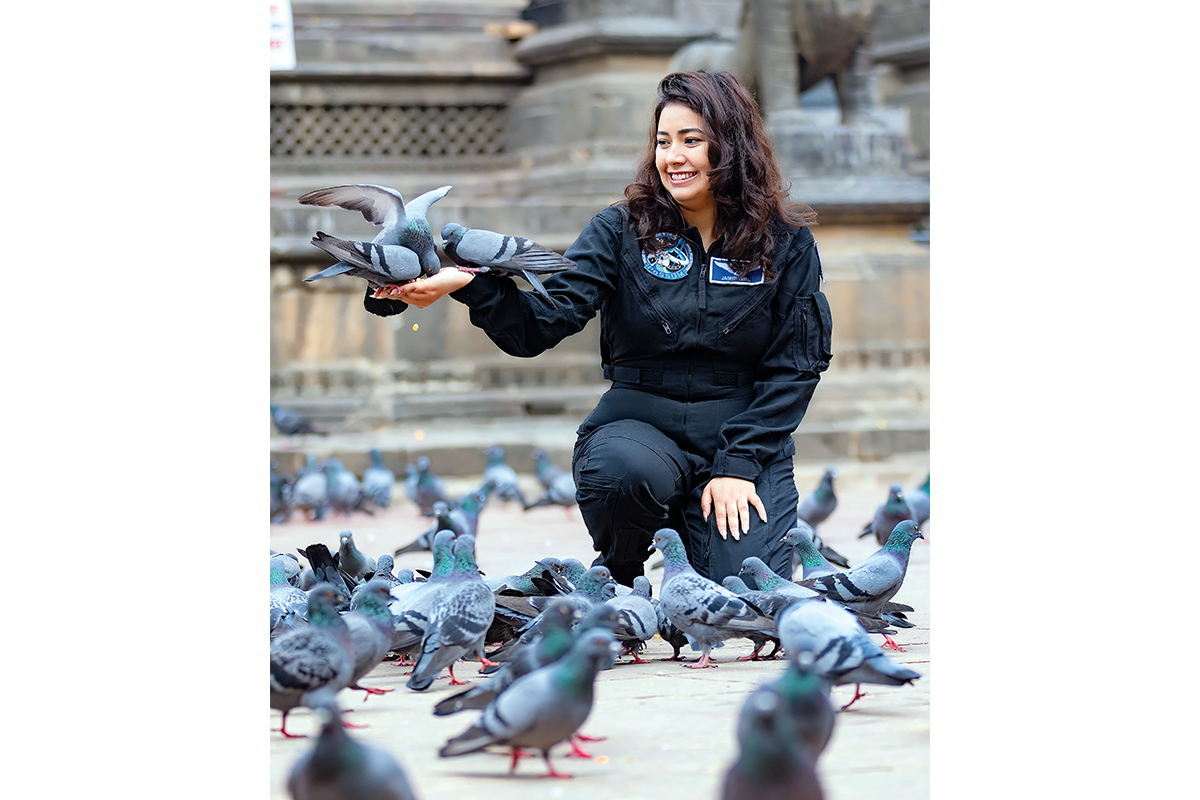
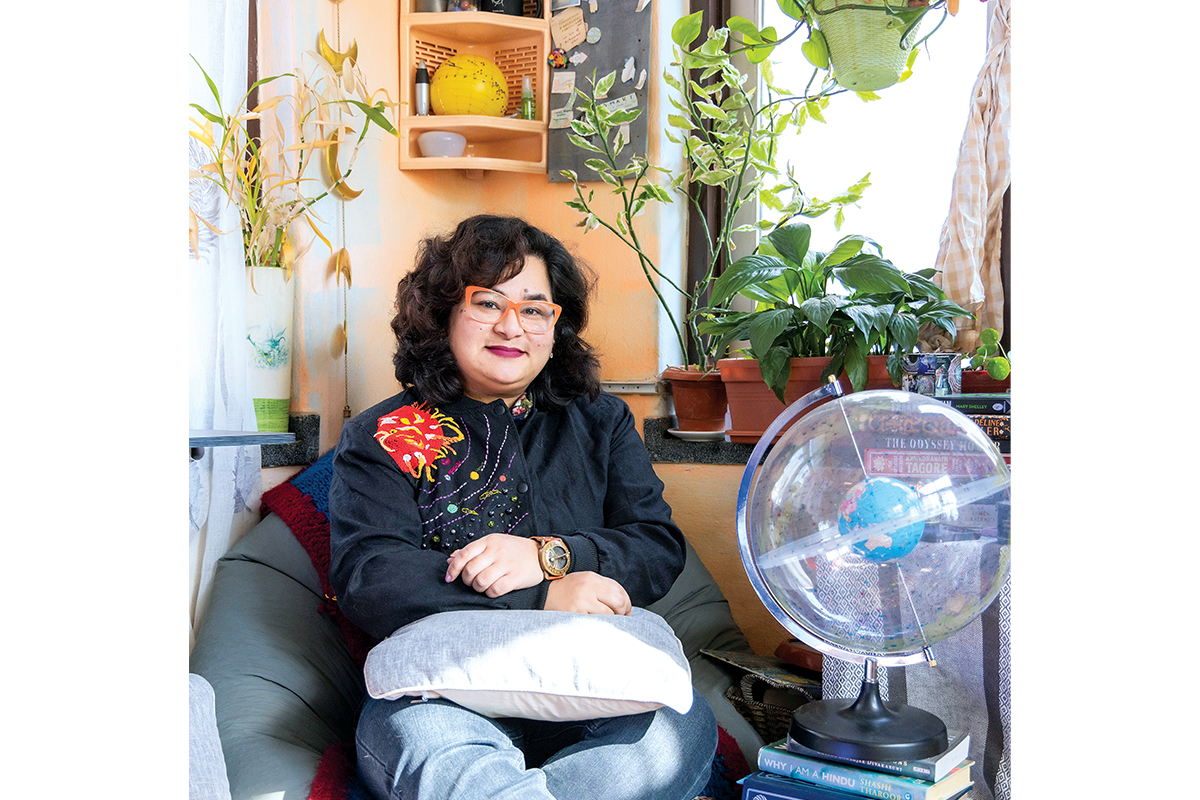
Today, Manisha stands at the forefront of astronomy and science education in Nepal, not only as an astrophysicist but as an architect of access, visibility and belief. Her work has placed Nepal on the global astronomy map and, more importantly, opened doors for young women who once thought science was not meant for them.
Manisha grew up in Pokhara in a family that valued education deeply. Her mother is a teacher. Her father, who ran an electronics business, had limited formal education but made it his mission to ensure his daughters studied as much as possible. “My parents wanted me to study well and earn,” she says. “They never imagined this exact path, but they always trusted my sincerity.”
As a child, Manisha was curious about everything. “Every profession I learned about, I wanted to become that,” she laughs. Medicine seemed inevitable. After plus two, she even prepared for medical studies but when she could not secure a scholarship, her plans shifted. Biology attracted her next. Then came the comment that would quietly alter the course of her life.
Girls cannot study physics. “I chose physics almost in defiance,” she admits. “At that time, I still did not know there was something called astrophysics. But I knew I wanted to be a scientist.”
Her earliest connection to the cosmos came long before textbooks. On the terrace of her home in Pokhara, her mother would tell her stories under the night sky. “Those moments stayed with me,” she says. “I think that is where astronomy really began for me.”
After completing her Master’s degree in Pokhara, Manisha moved to Kathmandu in 2013. It was there that she encountered the Nepal Astronomical Society during a teacher’s training programme. The team saw potential in her and asked if she would consider relocating to work with them. “At first, astronomy was just something I did alongside everything else,” she says. “But slowly, it stopped being a hobby. It became my life.”
When NASO was formally registered in 2014, Manisha was already deeply involved in shaping its outreach, education and advocacy. Over the last 13 years, her roles have expanded across national and international platforms. She is now Project Coordinator and a member of the Board of Directors at NASO, Co-founder of the Women in Science Award and the National Astronomy Olympiad Nepal, Co-National Outreach Coordinator of the International Astronomical Union and National Coordinator for programmes such as Universe Awareness and World Space Week, IAU’s National Astronomy Education Coordinator and Deputy Manager at OAE Node Nepal. She is also one of the first astrophotographers from Nepal.
When Manisha began studying astrophysics, she did so in near isolation. “There were no Nepali women in astrophysics that I could look up to,” she says. “I had no mentor. I was navigating a very vast field on my own.”
At the time, parents were hesitant to let their daughters pursue astronomy. “They believed there was no future for this field in Nepal,” she explains. “Now, that mindset is slowly changing. Parents are beginning to believe that if a child is capable, she can create her own future.”

The change, however, has not come easily. Astronomy and physics remain male dominated spaces, shaped by institutional and cultural bias.
“Stereotypes do not just exist in society, they exist inside institutions too,” Manisha says. “Even today, teachers often prefer male students for fieldwork. That sends a message to girls about where they belong.”
Her response has been to intervene early. Over the last decade, she has worked closely with students across Nepal, rethinking how science is taught and experienced. “Students are trained to study for marks, not to understand,” she says. “Critical thinking is missing. Creativity is missing. We are still repeating the same experiments that were done 10 years ago.”
She also noticed that discouragement often came from home. So, her approach evolved. “Earlier, we focused only on students,” she explains. “Now we actively engage parents. We explain what astronomy and STEM can offer. If families believe in the field, children feel supported.”
Manisha believes exposure is transformative. “Networking, international platforms, real research experiences, these things change how students see themselves,” she says.
Her own career has been shaped by a refusal to compromise. She speaks openly about turning down sponsorships that demanded control over her work. “If someone funds your project, they often want it done their way,” she says. “But I am unwilling to compromise my ethics or my identity. That is why many of my projects do not have sponsors.”
Yet the impact of her work speaks for itself. Under NASO’s guidance, undergraduate students have discovered over sixty provisional asteroids. Nepal has had a star and a planet in an exo solar system named Sagarmatha and Laliguras, marking the country’s symbolic presence in space. For her contribution to science education, Manisha’s signature now appears on telescopes distributed globally as part of Project SSVI, alongside astronauts and Nobel laureates.
Another milestone came when Nepal became formally involved with the International Astronomical Union after more than a century. “That was historic,” she says simply.
For Manisha, success is deeply collective. “For me, success is seeing more women enter astronomy and publish research,” she says. “It is about making Nepal a place where astronomy is studied seriously and respected globally.”
She is quick to point out Nepal’s untapped potential. From the Everest region to Rara, the country offers some of the darkest and driest skies ideal for astronomical research. “We have the geography,” she says. “What we need is infrastructure and belief.”
Her current research focuses on high energy astrophysics. “I am studying some of the brightest objects in the night sky,” she says. There is something quietly poetic about that, given how much of her work has been about illumination.
The journey has demanded sacrifice. “Astronomy is not as colourful as people imagine,” she tells young women who approach her. “You lose sleep. You face family pressure, cultural pressure and gender pressure. You have to be ready for that.”
On difficult days, she returns to art and craft, a love from childhood she was once told to abandon. “Creating learning resources through art grounds me,” she says. “It reminds me why I do this.”
At 37, she is happily unmarried, a choice she describes as liberating. Her sister Nancy has been her strongest emotional anchor. “She told me, you go work for your dreams, I will take care of the family,” Manisha says. “From that day, I never looked back.” She also credits NASO Chairman Suresh Bhattarai as a constant supporter.
Financially, the journey has not been rewarding in conventional terms. “I may not have earned money,” she admits. “But I have earned a name.” NASO continues largely on volunteer energy, with funds from school programmes reinvested into the organisation.
“Without astronomy, I do not have an identity,” Manisha says. And perhaps that is the truest measure of her journey. A girl once told she could not study physics now ensures that countless others never hear that sentence again.
Text: Ankita Jain
Photos: Ripesh Maharjan