Riding Past Gender Norms
In Nepal, the world of motorsports, cycling and motorcycling has long been dominated by men but a new generation of women is challenging that norm. From international racetracks to mountain trails and riding schools, these athletes and instructors are not just pursuing their passions; they are breaking barriers, building communities, and inspiring others to take the wheel. Their stories are about courage, resilience, and the relentless drive to carve out spaces where women can thrive, lead and redefine what it means to be in motion.
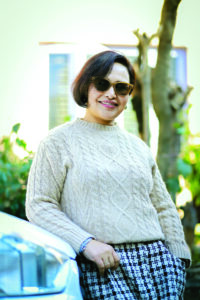
Jiswan Tuladhar Shrestha is a pioneering Nepali motorsport athlete and a respected figure both on and off the track. She has represented Nepal in international motorsport competitions, including the Thailand’s AAGC SGTC and FIA Motorsport Games, where she competed alongside her national teammates, proudly carrying the Nepali flag on the world stage. Beyond motorsports, Jiswan is an accomplished entrepreneur and leader in Nepal’s tourism industry, serving as Senior Vice President of the Nepal Association of Tour and Travel Agents (NATTA) and the Managing Director of Swaa Tours & Travels Pvt. Ltd. Her multifaceted career blends sporting excellence with business leadership, inspiring many to pursue their passions boldly.
How did your journey in car motorsports begin?
In 2016, while I was solo travelling to Annapurna Base Camp, I came across an opportunity through the Nepal Motorsports Club which was looking for a woman involved in motorsports to represent them at an international event. I found it both challenging and exciting. At that time, I had been in an accident and many people doubted my driving abilities. Instead of being discouraged, I saw it as a chance to prove myself. I participated in the event, performed strongly, and stood out as one of the top motorsport athletes. This eventually led to opportunities to be involved in international events in Thailand.
Can you share your experience participating in Thailand’s AAGC SGTC in 2018 and winning as one of the top 3?
I was motivated to participate largely because of my earlier experiences competing in Thailand, which had already exposed me to international racing standards and strengthened my determination to perform better. I committed myself to intense training, maintaining discipline, focus and consistency throughout the preparation period.
Securing a position among the top three marked a major turning point in my journey, as it allowed me to truly recognise my capabilities and potential as a motorsport athlete. More importantly, representing Nepal on an international platform filled me with immense pride and boosted my confidence to continue pursuing excellence in motorsports.
What challenges did you face as a woman in car motorsports?
In Nepal, many people are not even aware that motorsports exist, so the challenges are significant for men and even more so for women. Government support is almost nonexistent and public interest is also limited. While sports like cricket and football are slowly growing, motorsports require specialized facilities such as motor lands which demand large investments. Although international events validate my skills, the lack of systematic support at home is a challenge that many international participants do not have to face.
What motivates you to keep racing and improving?
What motivates me is the desire to keep proving my capabilities to myself and others, especially after facing doubts and limited support. Representing my country internationally, pushing my own limits, and showing that women from Nepal can succeed in motorsports drives me to continue improving. Each race reinforces my belief in my skills and encourages me to keep growing despite the challenges.
What advice would you give to women who want to enter car motorsports?
No matter your age, you should pursue your passion in the one life you have. If you have access to a car and the opportunity, go for it. Believe in yourself, take the first step, and keep moving forward. Trying will help you discover your strengths and get noticed by the right people. Since competition in Nepal is still limited, now is actually the best time to explore and grow in motorsports.
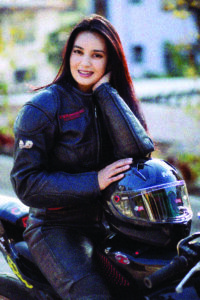
Barsha Basnet is a trailblazing Nepali racer with over 12 years of competitive experience, known for her consistency, fearlessness, and podium finishes across multiple racing formats. Her journey began in 2014 at Racemandu’s Honda Diva Cup, where she competed against 70 women racers and secured second runner-up despite having no formal training. Since then, she has never missed a podium, achieving first, second, and third-place finishes throughout her career. Her major achievements include winning the Racenari Championship 2025 with consecutive victories in both two-wheelers and four-wheelers, and claiming first place at India’s TVS Motosoul 2024 scooter dirt race while representing Nepal. She has also been selected to represent Nepal at MMRT, Chennai, marking another milestone in her racing journey. Now transitioning into event organization, she aims to dedicate her life to the growth of motorsports in Nepal.
How did your journey in racing begin?
I was a tomboy growing up with two sisters when my father noticed my strong interest in activities usually associated with boys – Spiderman toys, bikes and cars. He encouraged me to explore them. That upbringing made me comfortable and confident in motorsports. After finishing tenth grade, I came across Racemandu in a newspaper, and the Honda Diva Cup scooter race instantly caught my attention. Despite my parents’ fears, my passion pushed me forward. I even exchanged my Mahindra Rodeo for a Honda Dio with a stranger just to compete. In 2014, with no formal training, only passion and basic riding skills, I raced against 70 women and became second runner-up. Media attention followed, opening many avenues. Since then, I have never missed the podium and have built a professional career through racing, sponsorships, and collaborations. After 12 years of racing, I am now transitioning into event organizing, which I hope to do for the rest of my life.
What does winning the Racenari Championship 2025 mean to you?
Winning the Racenari Championship 2025 feels like the culmination of years of hard work, sacrifice, and dreams. Racing is full of risks – crashes, injuries, and technical failures but despite everything, I achieved consecutive wins in Racenari 2025 in both two-wheelers and four-wheelers. That achievement makes me feel immense pride, not just as a racer but as a person. While I know there is still more to accomplish, this victory feels like a personal triumph in life. Being selected to represent Nepal at India’s MMRT circuit in Chennai through the Nepal Motorsports Club is another dream come true. I truly feel like I am living my dream and am happier than I have ever been.
Can you share your experience participating and winning India’s TVS Motosoul 2024?
TVS Motosoul is one of India’s biggest motorsport platforms, and being selected to compete among some of the most renowned riders was an honour in itself. Winning the scooter dirt race made the experience even more special. Representing Nepal for the first time on such a prestigious stage and emerging victorious felt surreal. Competing against highly skilled Indian racers strengthened my belief in my abilities and my willpower. As a woman who learned to race in the hills of Nepal, winning there gave me deep confidence and helped me understand my own strength and potential on an international level.
What challenges have you faced as a woman in racing?
Family support has played a crucial role in my journey, and I consider myself fortunate in that regard. I have competed and won alongside men, including victories and podium finishes in mixed-gender races, which has helped break stereotypes. However, questions still arise, even from well-wishers about what racing gives me in return. Societal expectations remain a challenge, especially for women pursuing unconventional paths. Despite this, I feel fulfilled knowing I am living my dream and proving that women can succeed in spaces where they are not traditionally expected.
What message would you like to give to women who dream of racing?
To all the young women dreaming of racing: never let anyone tell you that racing is not for you. The world of racing is filled with incredible opportunities, and it needs diverse voices and talents to make it even more exciting. Your dreams are just as valid and powerful as anyone else’s. Believe in your strength, your skills, and your passion. Racing requires not just speed, but dedication, intelligence, and the ability to push through tough challenges. You can bring something unique to the track, whether it’s the way you approach the competition, how you handle pressure, or the way you inspire others. The road may be tough at times, and you might face doubters or obstacles, but each setback is a lesson that makes you stronger and more determined. Keep pushing forward, stay focused, and trust your instincts. The future of racing is yours to shape. Remember, you belong in the driver’s seat; always have, always will. Keep dreaming big and racing even bigger.
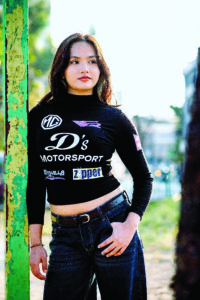
Brisha Shrestha is a rising car motorsport athlete specializing in Gymkhana, whose journey evolved from an early, instinctive connection with driving into a focused competitive pursuit. Having learned to drive at a young age, her passion for cars deepened during her time in Thailand, where exposure to high-level Gymkhana racing reshaped her path. With close to a year of competitive experience and participation in multiple international events, she continues to refine her skills through discipline, technical precision, and mental control. Her racing journey is driven by growth, resilience, and a commitment to constant self-improvement both on and off the track.
How did your journey in car motorsports begin?
My relationship with cars began long before motorsports became a serious pursuit. I learned how to drive at a very young age, around ten, and from that moment, cars felt natural to me. Driving was never just mechanical; it was instinctive. Still, racing itself wasn’t something I initially imagined for my future.
That changed during my time in Thailand. I attended a Gymkhana competition purely as a spectator, but what I witnessed left a lasting impact. The precision, speed, and mental sharpness required were unlike anything I had seen before. The energy on track, the emotions, and the intensity of each run sparked something immediate and undeniable. I remember thinking very clearly; this is what I want to do.
Gymkhana is not just about driving fast—it demands discipline, memory, adaptability, and absolute control. Realizing this, I began formal training under a coach to understand the technical foundations of the sport. It required relearning how I approached driving entirely, focusing on timing, braking points, turning radius, and mental composure.
My first car, a Ford Fiesta MK7, became part of that learning process. Every session brought mistakes, lessons, and growth. Looking back, my journey into motorsports was not planned or traditional. It was driven by curiosity, emotion, and a strong internal pull. That single moment of watching a Gymkhana race transformed a lifelong love for cars into a competitive pursuit that continues to shape who I am today.
Can you share your experience participating in Thailand’s GC Grid Competition?
Competing in Thailand’s GC Grid Competition has been one of the most defining experiences of my motorsport journey so far. I have been racing for about a year, with roughly eight months of active competition, and I’ve participated in approximately 10 to 12 events. I competed in the Lady Category as well as Overall EV, which pushed me to adapt and improve continuously.
Each race demanded complete focus. Gymkhana courses change constantly, leaving very little room for error. Beyond placements, the real achievement for me has been growth. While I have earned results across competitions, my most meaningful milestone came during my final race. In that event, I exceeded my own expectations by significantly improving my time, surprising both myself and my team. That moment validated months of training, discipline, and mental adjustment.
One of the most remarkable aspects of racing in Thailand is the environment. The motorsport community is open and supportive. Even competitors are willing to share advice, techniques, and insights. Being surrounded by experienced professionals accelerated my learning curve and exposed me to high-level racing standards early in my career.
The exposure, professionalism, and collaborative atmosphere helped me build confidence and sharpen my skills. I’m deeply grateful for the opportunity to compete at an international level so early, and the experience has set a strong foundation for where I want to take my racing next.
What challenges did you face as a woman in car motorsports?
My challenges in motorsports have been less about external perception and more about the physical and mental demands of the sport itself. I did not experience being underestimated or excluded because I am a woman, and I’ve been fortunate to receive support within the racing environment. However, the physical toll of Gymkhana was something I underestimated early on.
Gymkhana is extremely demanding on the body. Long competition days, repetitive high-intensity driving, and constant tension placed significant strain on me physically. There were times when fatigue, body pain, and leg discomfort became difficult to manage. At certain points, I relied on painkillers just to get through race days. That experience taught me that physical conditioning and recovery are just as important as driving skill.
Mentally, the pressure was equally challenging. During my first five races, nervousness affected my performance. I struggled to control my emotions and stay fully present on track. Over time, I learned that not every race is about results. Some races are about learning, absorbing feedback, and building confidence.
Shifting my mindset was crucial. Once I accepted that progress takes time and that mistakes are part of growth, my performance naturally improved. These challenges strengthened my resilience and reshaped how I approach both racing and preparation.
What motivates you to keep racing and improving?
What keeps me motivated is the constant demand for self-improvement. Racing exposes every weakness—mental, physical, and technical—and leaves no room for excuses. Every run offers immediate feedback, and that honesty is what drives me to keep pushing forward.
Improvement, for me, is not only about faster times. It’s about consistency, precision, and mental control under pressure. Gymkhana requires rapid decision-making, adaptability, and calmness even when everything is happening at once. Each competition challenges me to refine those skills further.
I’m also motivated by the learning environment. Racing alongside experienced drivers and professionals pushes me to raise my own standards. The exposure I’ve gained in Thailand has shown me what is possible with discipline and focus.
At its core, racing allows me to grow beyond the track. The lessons—patience, preparation, resilience—carry into everyday life. That balance between adrenaline and self-discipline is what keeps me committed to improving with every race.
What advice would you give to women who want to enter car motorsports?
My biggest advice is to start before you feel fully ready. Confidence is built through experience, not preparation alone. Waiting for the perfect moment often delays progress unnecessarily.
Motorsports require patience and humility. Early races are about learning, not winning. Mistakes are unavoidable, and they are valuable. Comparing yourself too quickly to others can be discouraging; focus instead on your own improvement.
Physical preparation is often overlooked but essential. Racing is demanding on the body, and proper conditioning and recovery make a significant difference. Listening to your body is part of long-term growth.
Most importantly, take the sport seriously but remember why you started. Passion sustains you when progress feels slow. If you truly love racing, that commitment will carry you through challenges and setbacks.
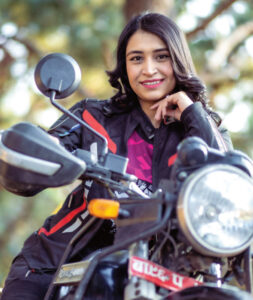
Growing up in a society where freedom for women was limited, Sheetal Giri chose movement as her form of expression. She began riding motorcycles at 16, learning early about the discipline, care, and resilience the road demands. When offered the opportunity by Alison Grün to teach at FreeW’s riding school, she embraced it, knowing that empowering women on two wheels could drive meaningful social change.
Today, Sheetal is Nepal’s first female motorcycle instructor, known for creating safe, supportive learning spaces and mentoring women. She is also the youngest road captain leading women riding trips, continuing to inspire and connect women discovering independence through riding.
How did your journey in motorcycle riding begin?
I was mischievous and rebellious as a child, often doing exactly what I was told not to do. I loved playing football, cycling with my brothers, and riding bikes from a young age. While family members would often encourage me to do more “girly” things, I wanted to challenge those stereotypes. Motorcycle riding became my way of expressing that independence and breaking boundaries that were set for women.
What goes through your mind when you see a student gain confidence on a motorcycle for the first time?
I initially started instructing informally by teaching people I knew. Later, a company approached me to become a formal instructor. During my own learning journey, I once experienced inappropriate behavior from someone close to me, which deeply demotivated me. That experience pushed me to become someone who could create safe, respectful spaces for women to learn riding. Watching my students gain confidence makes me incredibly proud, it reminds me why I chose this path and motivates me to keep improving as both a teacher and a rider.
What challenges have you faced as a woman in this field?
Living in a patriarchal society brings constant challenges. Women are often judged, questioned, and misunderstood; not only in motorcycle riding but in every profession. The scrutiny is frequently about character rather than skill, and that remains one of the biggest obstacles I and many other women face.
What’s one place you rode that deeply changed your perspective on life?
Dolpa is the place that truly changed my perspective on life. Travelling there alone during peak monsoon season pushed me beyond my limits. I was riding forward while landslides were happening behind me. That journey helped me understand myself better and taught me resilience, courage, and self-trust.
What advice would you like to give to women who want to become riders and inspire others as motorcycle instructors?
Owning and riding your own vehicle gives you autonomy and independence. If you have the interest and opportunity, you should go for it—it helps break deeply rooted stereotypes. Riding can also open many professional avenues, from instruction and road leadership to content creation and social media. Motorcycle riding is often not taken seriously as a career for women, but I hope to change that narrative. I have been an instructor for three years, the first female instructor, and the youngest road captain leading women’s riding trips—and this is just the beginning.
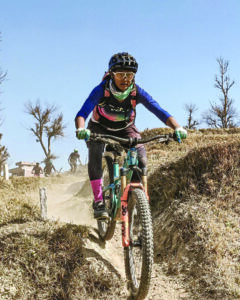
Nishma Shrestha is a Nepali mountain biker, coach, and community builder whose journey into cycling began through her family’s deep roots in adventure tourism and mountain biking. From discovering a sense of belonging on the trails of Mudkhu to racing, guiding, and eventually coaching, her path evolved organically through curiosity and commitment. She is a UCI Level 2 Coach and PMBIA-certified instructor, and the founder of Skills and Thrills, a platform dedicated to creating safe, structured, and confidence-building learning spaces for riders, especially women. As a World Ride ambassador, Nishma represents Nepal on a global stage, using mountain biking as a tool for empowerment, leadership, and long-term social impact.
How did your journey in mountain biking begin?
Mountain biking entered my life through my family. My uncle (mother’s brother) was a national-level cyclist and a professional mountain bike guide and growing up I watched him prepare for long trips to places like Mustang, Thorong La Pass, and even Nepal-Tibet routes. My father was also connected to the tourism field, and I remember one morning seeing him pack his backpack for a heli-biking trip to Langtang. When he said he was going to ride bikes in the mountains, something clicked for me. I was fascinated by the idea of travel, adventure, and being on a mountain bike.
In 2013, very early one morning, I called my mama around 5 a.m. and asked if he could take me riding that day. He scolded me for calling so early but told me to be ready by 7:30. We rode to Mudkhu, about five kilometers from my house. I struggled, took many breaks, but when we reached there, I found a whole community of mountain bikers, drinking milk tea, eating chickpeas and eggs, talking about bikes and trails. When someone asked who I was, my uncle said, “She’s my niece, and she’s going to be a mountain biker.” That moment made me feel like I belonged.
Mudkhu became my second home. I borrowed my uncle’s bike every weekend, listened more than I spoke, and slowly learned about riding, trails, and races. Riding turned into training, training turned into racing, and one opportunity led to another. None of them were planned; I just followed the flow and kept saying yes.
How did becoming a UCI Level 2 Coach and PMBIA Instructor shape your approach to coaching?
Before I became a certified coach, I was already sharing what I knew. Around 2017-2018, I started gathering few female friends in open grounds and on trails, helping them with basic skills like braking, balance, and cornering. I never thought of it as coaching back then; it was just helping each other ride better.
During COVID, I started watching reels of women’s bike camps from around the world on Instagram. I became curious about how they created safe learning environments and taught skills in a structured way. That curiosity slowly turned into a vision. I realized I wanted to build something similar in Nepal, using my own experience as a rider and guide. That’s how Skills and Thrills began.
I had seen many friends get injured because we learned by copying others, without proper guidance. So, I started building a curriculum based on real needs. I learned while teaching, asking for feedback, improving my communication, simplifying lessons, and focusing on safety and confidence. I officially registered Skills and Thrills in 2021 and began running structured camps.
Becoming a UCI Level 2 Coach and PMBIA Instructor helped me refine this approach professionally. Today, my coaching is not just about riding skills; it is about helping people feel confident, safe, and capable. My goal is to create more instructors and community leaders, not just stronger riders.
What were some of the biggest challenges you faced as a female mountain biker in Nepal?
One of the biggest challenges I faced was loneliness. For a long time, I rode mostly with male riders. While they helped me become stronger and more skilled, I could not always relate to them or share my struggles openly. My experiences as a woman in this field were different, and there was not always space to talk about that. I was often judged, compared, and criticized. If I rode well, it would be treated as a surprise. If I struggled, it felt like confirmation that women did not belong. I was compared to male riders without anyone acknowledging the social and mental pressures. Over time, that constant comparison can be exhausting.
Outside the trails, there were strong social expectations. Mountain biking was often seen as too aggressive or risky for women. Choosing this path meant constantly proving myself, not just as an athlete, but as someone who deserved to take up space. Luckily, I have very supportive parents. They have always believed in me and stood by me, even when others judged my choices. They backed me up when people questioned my path and became my voice when things were said behind my back. Having parents who understand you and support your dreams is truly a blessing, and their support gave me the strength to keep going.
What does your role as an ambassador with World Ride mean to you?
Being an ambassador with World Ride means responsibility and representation. I come from Nepal, where women’s mobility and access to sport are still limited in many ways, and this role allows me to represent women who don’t always get visibility in global cycling spaces.
World Ride believes in using mountain biking as a tool for empowerment and confidence by creating real opportunities for women as guides, instructors, and leaders and that aligns deeply with my own journey. World Ride brought the PMBIA Level 1 course to Nepal, and through that, I was able to become an internationally certified instructor. That certification gave me something I didn’t have before, not just skills, but confidence. It allowed me to stand in front of others, run my own sessions, and say with belief that I am a certified instructor.
This role has helped me see cycling beyond sport. It’s about leadership, community, and long-term impact. Most importantly, it reminds me that I don’t ride only for myself anymore, it is about opening doors for others.
What advice would you give to riders, especially women who want to pursue mountain biking?
My advice to young riders, especially women, is to go for it even when it feels scary and uncertain. Following your passion is not easy, and there will be times when you do not see a clear path, but the joy and confidence it gives you are worth it. Start small, stay consistent, and trust the process. There will be moments when you feel out of place, but that does not mean you do not belong; it means you are learning. Courage is not about being fearless; it is about taking the step anyway. Close your eyes, take a deep breath, and take that first pedal stroke. One day, you will look back and realize how far you have come.
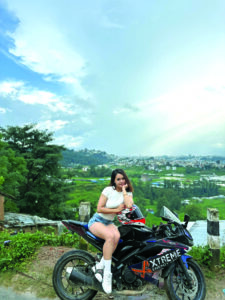
Nawang Moktan is a pioneering motorcycle racer whose journey into motorsports began with a simple love for riding. What started as personal freedom on two wheels soon evolved into a competitive career that challenged social norms and redefined what women can achieve in Nepali motorsports. With multiple national victories and a historic win at the RaceNari Championship 2025, Nepal’s first national women’s motorcycle racing championship, Nawang stands as a symbol of determination, discipline, and fearless passion. Her story is not just about racing; it’s about resilience, belief, and carving a path where none existed before.
What first inspired you to get into motorcycle racing?
I was not originally inspired by racing itself, but by my deep love for motorbikes. I started riding at a very young age, and my first personal vehicle was a motorbike. Riding always felt exciting, challenging, and freeing to me. Especially in a society where it was not considered normal for a woman to ride a motorcycle. I had already been riding since 2008, and that experience naturally built my confidence and connection with bikes.
I simply enjoyed riding and challenging myself. Seeing my passion and comfort on a bike, a friend encouraged me to participate in a motorcycle racing competition, believing it would suit me. I decided to take the chance without any expectations. To my surprise, I won the competition among 60 participants.
That moment became a turning point in my life. Winning made me realize that I had a natural talent that should not go to waste. More than the victory, it was the adrenaline, discipline, and thrill of competition that truly inspired me. Racing gave my competitive nature a direction and opened the door to a new passion.
Since then, I have consistently pushed myself and reached the top in many national competitions. What began as a simple love for riding turned into a serious passion for racing. A beautiful accident that continues to inspire me every day.
How did it feel to win RaceNari Championship 2025 and what was going through your mind on the track?
Winning the RaceNari 2025 Championship felt incredibly special. It was the very first national women’s motorcycle racing championship in Nepal, and being the one to inaugurate the title by winning it is an honor I truly earned. That victory means more than just a trophy—it represents history, progress, and belief in myself.
On the track, my thoughts were very clear and very intense. I kept telling myself that I had to win. I had sacrificed and invested so much to be there . be it financially, physically, and emotionally and I knew that this moment was the result of perseverance, discipline, and hard work.
I truly believe that when you commit yourself fully and stay consistent, results follow. That belief kept pushing me forward. I kept reminding myself, you can do this, you are meant to be a Champion. There was no room for doubt.only one goal in my mind: WIN. Every lap, every move was driven by that single word—WIN.
What have been some of the challenges you’ve faced as a female racer in motorsports?
Motorsports in Nepal come with challenges that go beyond gender. I don’t see them only as challenges of being a female racer, but of being a racer in Nepal overall. One of the biggest limitations is the lack of proper racing infrastructure and dedicated tracks. The organizers are genuinely doing their best to conduct safe and systematic races, learning and improving by taking inspiration from international standards.
Another major challenge is the cost. Motorcycle racing is one of the most expensive sports, and financial pressure is something every racer faces. Along with that come the physical and mental demands. From the outside, racing may look simple. Just twisting the throttle but in reality, it requires a high level of physical fitness, mental focus, and discipline.
Additionally, motorsports often do not receive the same level of recognition as other mainstream sports , and athletes in this field. Especially racers don’t always get equal visibility or support. Despite this, racers continue to invest their time, energy, and resources purely out of passion.
To be a racer, you need to maintain a balance of everything financial stability, physical strength, and mental resilience. These challenges are shared by all racers in Nepal, which is why I have immense respect for everyone who continues to race despite the obstacles they face.
Can you describe how you prepare mentally and physically for a race?
Mental preparation for me starts with my mindset. Whenever I decide to pursue something, I commit to it completely. I have a strong inner drive, call it stubbornness or determination. That keeps pushing me forward no matter the obstacles. Once I set a goal, I’m ready to face every challenge that comes along the journey, and that mentality gives me confidence even before race day.
Physically, preparation is just as demanding. I train consistently to stay fit and strong, and that often means making sacrifices. I choose training over social gatherings, parties, and time with friends, because racing requires focus, discipline, and consistency. I also make sure to spend enough time on the track with my bike, building familiarity, confidence, and rhythm.
Equally important is making sure my bike is fully prepared. I invest in keeping it updated and race-ready. Whether it’s the engine, ECU, or other technical aspects a racer depends on. When both my body and my bike are prepared, everything aligns. I see my bike as my weapon, and when my weapon and my skills are ready, I step onto the track feeling confident, focused, and fully prepared for the race.
What advice would you give to other young women in Nepal who want to pursue motorcycle racing?
For me, motorbike racing is more than a sport. It’s a thrilling journey that challenges you, pushes your limits, and teaches you to grow in every way. It’s a mix of speed, strategy, and personal growth, and it’s perfect for anyone who loves learning, pushing boundaries, and embracing new challenges.
My advice to young women in Nepal who want to pursue motorbike racing is this: riding alone is not enough. You need to be equipped with the right skills, the right bike, proper gear, and, most importantly, the right mindset. Be mentally prepared to invest yourself fully either be it physically, financially or emotionally. Racing is demanding and challenging, but if you are committed and passionate, it can be one of the most rewarding experiences of your life. Remember, being a racer itself is a big challenge, but it’s also an incredible opportunity to grow, learn, and achieve something extraordinary.