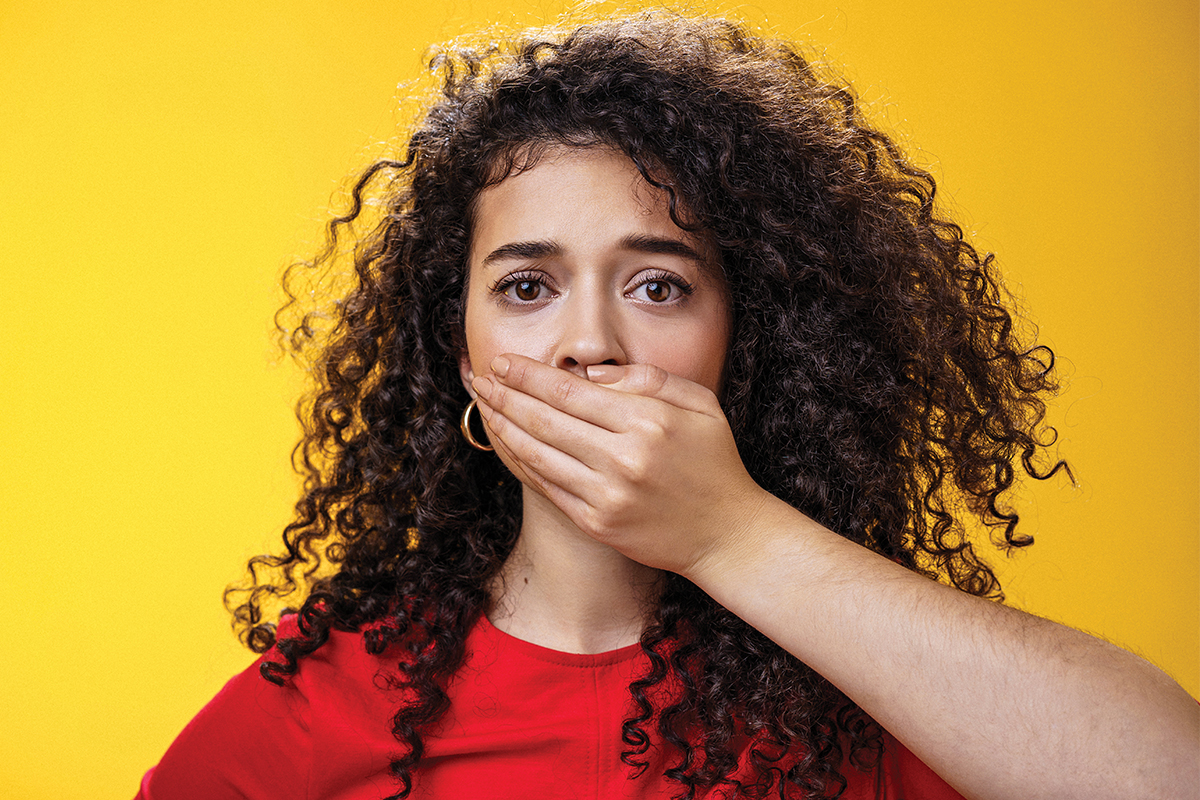

Election season has a sound.
It rises in tea shops, stretches across Facebook threads, spills into taxis and family dinners. Opinions grow sharper. Arguments get louder. The country hums with debate.
And yet beneath that noise, there is hesitation. Many women are listening more than they are speaking. Speaking about politics carries emotional risk.
The Calculation Before the Sentence
For many women, expressing a political opinion requires an internal calculation.
Will this create tension at home?
Will I be dismissed as emotional?
Will this invite ridicule online?
Will my character be discussed instead of my argument?
Research on psychological safety shows that when people anticipate humiliation or punishment, they are far less likely to speak, even when their perspectives are valuable. Political conversations, especially in hierarchical or family-centered cultures, can easily become spaces where speaking feels risky.
In many Nepali homes, disagreement is relational. Challenging an elder may be interpreted as disrespect. Questioning dominant views can disrupt harmony. Younger women, in particular, are often expected to maintain peace. Silence becomes diplomacy. Over time, that diplomacy becomes habit.
The Unequal Risk of Visibility
For women who step into public life, as candidates, commentators, or outspoken citizens, the scrutiny intensifies.
Decades of research in political communication show that women politicians receive more coverage about appearance, tone, and personality than their male counterparts. Their clothes are discussed. Their facial expressions are analysed. Their family lives become political material.
Competence alone rarely defines them. Visibility, for women, comes paired with inspection.
Confidence in men is framed as leadership. Confidence in women often invites evaluation. The message is subtle but persistent: to lead, a woman must also prove that she remains acceptable. This heightened scrutiny does not simply affect outcomes. It affects imagination. When young women observe the emotional cost of public visibility, the threshold for entry rises.
Participation Without Voice
Women are not absent from elections. They vote. They follow news. They discuss issues privately. They care about policy and governance. Yet participation frequently unfolds in quiet ways.
Some align their vote with family preferences to avoid tension. Others stay politically informed but avoid posting opinions publicly. Many hold strong convictions in trusted spaces while withholding them in broader ones.
What appears as indifference often reflects learned restraint. When choices are shaped by fear of disagreement rather than clarity of conviction, participation loses its empowering quality. The ballot is marked. The voice remains measured.
This is constrained participation where women are busy managing risk.
How Silence Takes Root
Silence around politics develops gradually. Girls observe who speaks freely and who is corrected. They notice who is interrupted and who is deferred to. They learn which tones are praised and which are labeled aggressive.
Psychologist Dana Jack’s work on “self-silencing” describes how women often suppress opinions to preserve relationships and avoid conflict. Over time, that suppression can erode confidence and internal clarity.
Restraint begins to look like maturity. Caution looks like wisdom. Withholding becomes safer than testing boundaries. By adulthood, silence feels natural. Political conversations become something to witness rather than shape.
The Emotional Toll of Self-Censorship
Constant self-editing leaves marks. Repeatedly containing opinions weakens self-trust. When perspectives are rarely invited, doubt settles quietly. The question shifts from Is this valid? to Am I overreacting?
Political spaces begin to feel emotionally unsafe; not necessarily violent, but socially punishing. Avoidance becomes protective. Yet protection carries cost. Internal tension builds. Frustration turns inward. Disconnection from one’s own voice deepens.
Neutrality, chosen repeatedly out of caution, reshapes identity.
Representation and Imagination
Representation influences more than policy outcomes. It shapes ambition.
Research on political ambition consistently shows that women are less likely than men to consider running for office because of lower encouragement and higher anticipated scrutiny. Exposure to women leaders, however, significantly increases girls’ confidence and willingness to imagine themselves in positions of power.
When leadership spaces remain overwhelmingly male, the psychological signal is clear: entry requires exceptional resilience. If stepping forward means constant defense of legitimacy, fewer will attempt it. Representation expands imagination. Its absence narrows it.
The Question Beneath the Election
As elections approach, turnout numbers will be counted. A deeper question remains harder to measure: how many women feel safe speaking?
How many can disagree at home without penalty? How many can post an opinion without anticipating ridicule? How many expect their ideas to be debated rather than their personalities assessed?
Democracy begins in conversation. When conversation feels unsafe, participation contracts.
What Safety Would Change
Psychological safety in civic life is not abstract. It is built through everyday interactions.
It would mean disagreement without character attack. It would mean daughters allowed to question without being labeled difficult. It would mean evaluating women candidates for policy rather than personality.
When women no longer calculate emotional cost before speaking, participation shifts from guarded compliance to grounded agency. That shift strengthens democratic culture. It also strengthens women’s emotional wellbeing.