
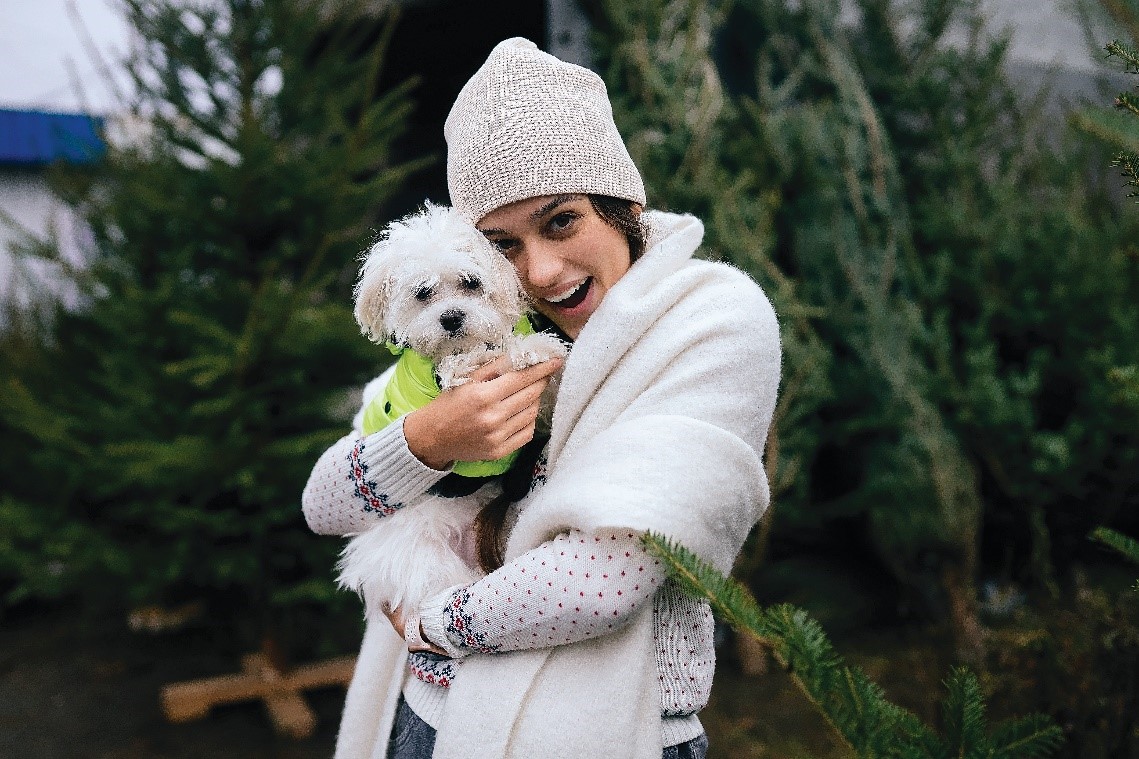
Make sure your pet stays warm at night
Cats enjoy radiator or igloo beds, and dogs prefer heated beds or extra blankets. Regularly wash their bedding at 300C to prevent fleas, particularly during winter in centrally heated homes.
Protect your small furries
In severe or extreme weather conditions additional protection may be required. Be sure to regularly check the temperature of both your pets and their hutch to prevent overheating or a dangerous drop in temperature. A few little extras, try adding extra straw for your pets to snuggle up in, lots of hay for them to munch on and position their hutches out of the path of prevailing winds.
Remember to weigh your pets regularly
Winter coats may hide weight changes in pets, signalling potential health issues. Avoid excessive treats, especially holiday food, as reduced winter activity can contribute to weight gain.
Be seen in the dark
Make sure you and your dog are visible when walking in the dark – reflective leads, collars and harnesses and glow in the dark dog balls are simple ways to make winter walks safe.
Keep pets away from antifreeze and anticold drugs
Cats and dogs love the smell and taste of antifreeze, but it’s highly toxic – just 5ml of antifreeze can kill a cat, according to Cats Protection, so keep it out of reach and mop up any spills straight away.
Top up the litter tray
Even cats that go to the toilet outdoors may prefer to use an indoor litter tray in very cold weather. Or provide an outdoor tray of sand, cat litter or loose earth near the back door, in case the soil freezes.
Don’t let pets overheat
Elderly or overweight dogs can overheat in a very hot room, and flat-nosed (brachycephalic breeds) need special care because they find it harder to pant, which is how a dog normally regulates its body temperature.
Dr Sharad Singh Yadav is the Chairman of Advance Pet Hospital & Research Centre which is open 24 hours throughout the year and located in Bishal Nagar, Kathmandu. He may be contacted on tel: 014522855 or email: aphktm@gmail.com


