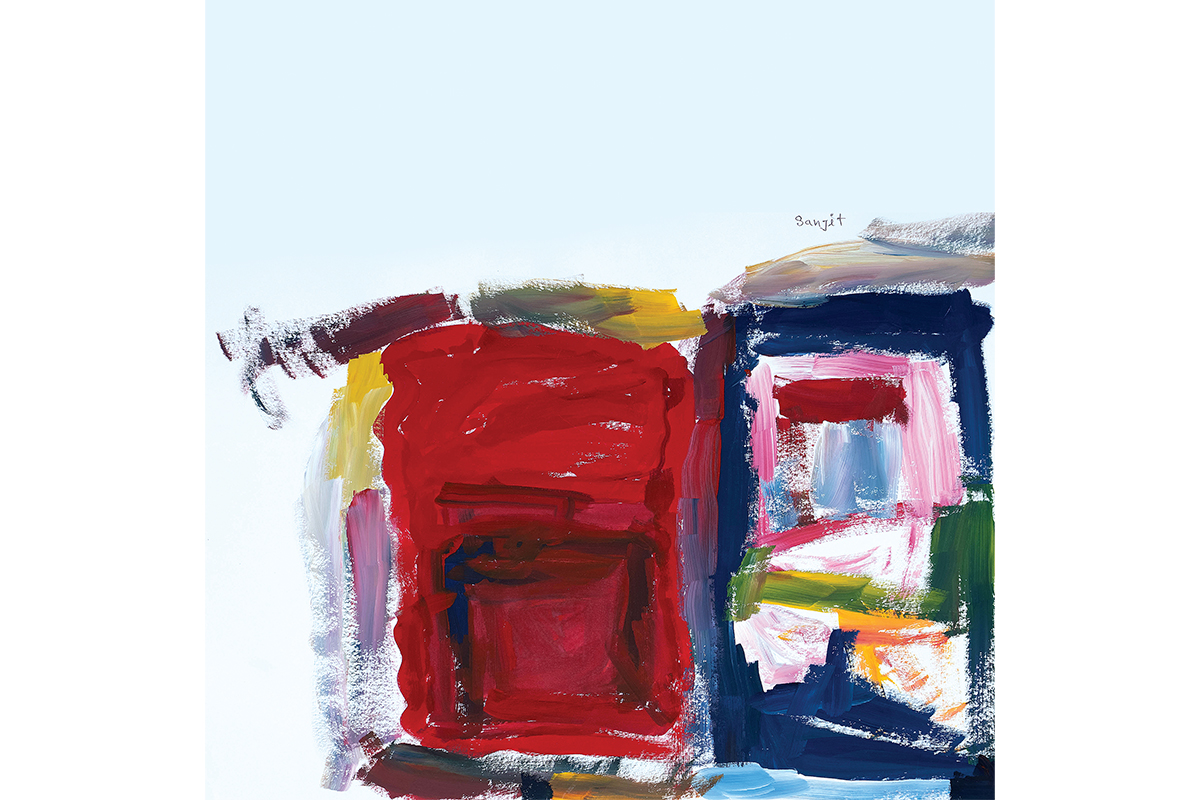
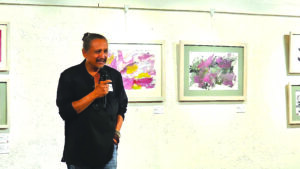
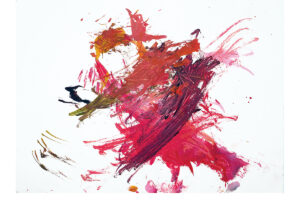
In a quiet gallery in Kathmandu, the walls glow with colour – swirls of indigo, fierce strokes of crimson, soft gradients of orange fading into gold. The exhibition was titled “Unseen”, an intentional nod to the reality of Nepal’s autistic children: their talents often overlooked, their expressions unheard, their potential underestimated. As visitors paused before each canvas – some abstract, some impossibly precise, something subtle yet extraordinary happened. They didn’t just admire the art; they recognised the artists.
A few pieces sold within hours. But what mattered more than the purchase slips was the shift in perception. For once, autistic children were seen not through the lens of limitation, but through the brilliance of what they could create when given space, dignity and trust.
Behind this shift stands the Aakar Foundation, an organisation rooted in a story of deep personal awakening.
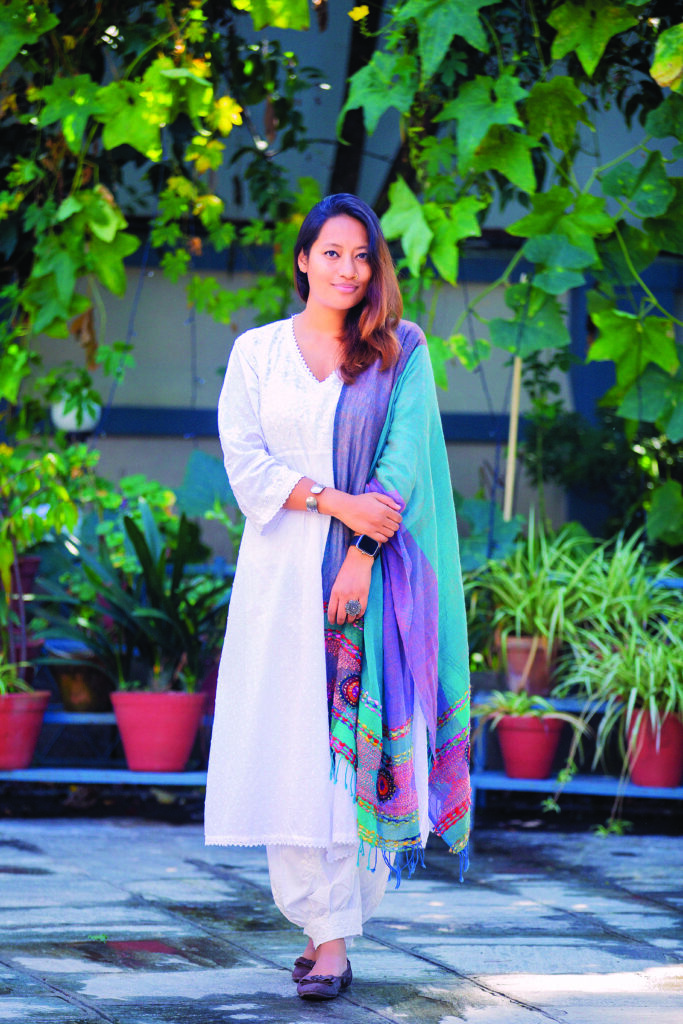
Archana Shah
A Father’s Realisation, A Nation’s Need
Aakar Foundation was founded by Sekhar Chhetri, a father whose understanding of autism began at home. His daughter, diagnosed as autistic, opened his eyes to a world he had never previously imagined – world of sensory intensity, unique perception and unconventional communication. What he saw, beyond the challenges, was untapped ability. What he could not ignore was how few pathways existed in Nepal to nurture such ability.
“He often says that his daughter taught him a new language,” shares Archana Shah, President of Aakar Foundation. “A language of patience, observation and acceptance. Aakar grew from that learning. It grew from the belief that every autistic child deserves the same opportunity to explore, express and earn dignity.”
For Sekhar, founding Aakar was not charity, it was responsibility. He witnessed firsthand how parents struggle, how children are confined, and how society looks away. Through Aakar, he wanted to help as many children as possible, creating the spaces, skills and support systems he wished existed for his daughter. Today, that vision shapes everything the organisation does.


Autism in Nepal: A Landscape of Silence
Autism remains widely misunderstood in Nepal. Diagnosis is inconsistent, awareness is low, and cultural misconceptions persist. A child who avoids eye contact is labelled stubborn; one who struggles with loud environments is seen as difficult; one who communicates differently is assumed incapable.
“What breaks my heart,” Archana says, “isn’t autism, it’s the judgement. Parents aren’t just fighting for support; they are fighting for acceptance.”
In many families, fear of stigma leads to isolation. Mothers speak of missing social events; fathers hesitate to take their children to public spaces. Neighbours offer unsolicited advice, often rooted in superstition or misinformation. Schools, lacking trained staff, frequently deny admission or fail to accommodate learning differences. Therapies are expensive, and access varies dramatically between urban and rural regions.
“It’s not autism that limits these children,” Archana insists. “It’s society. We confine them out of fear, but in doing so, we take away their chance to learn and grow.”
She pauses before adding one of her most powerful refrains: “Autistic children do not need protection alone, they need possibility.”
Aakar’s Vision: Ability, Not Limitation
Aakar Foundation’s philosophy is simple yet revolutionary for Nepal: Focus on what autistic individuals can do. Nurture natural abilities. Provide relevant skill development and technical education. Build real, dignified pathways for income generation.
“Our work is rooted in one core belief,” Archana explains. “Living with dignity is everyone’s right, especially those who have been unseen for far too long.”
The foundation offers structured skill-building programmes tailored to each child’s strengths whether in art, craftwork, digital practice or vocational training. Facilitators are trained to understand sensory sensitivities, communication styles and behavioural patterns. The goal is not to force autistic children to fit into conventional moulds but to create environments where they can thrive authentically.
“When a child feels safe and understood, they show you who they really are,” Archana says. “And what they show is often extraordinary.”
The Exhibition That Forced People to Look Again
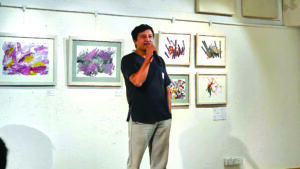
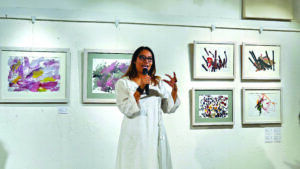
“Unseen” was more than an art exhibition; it was Aakar’s boldest public intervention. The artworks, created by autistic children and young adults were displayed without hesitation, without apology, and without labels that diminished the creators.
The diversity was startling. Some canvases burst with movement, others with intricate patterns or soft, dreamlike palettes. Visitors lingered. Many questioned whether the artists were truly autistic. “That’s the prejudice we are fighting,” Archana reflects. “People assume disability means lack. But these children have depth, imagination, precision and emotion. They simply communicate differently.”
Parents who attended the exhibition felt something shift inside them. For years, many had preserved their children’s creations in drawers or cupboards, unsure whether anyone beyond family would appreciate them. Seeing strangers admire and buy the art was overwhelming.
“One mother told me she had never seen her son stand so confidently,” Archana shares. “She said, ‘For the first time, I saw pride in his eyes.’ Moments like that remind us why Aakar exists.”
The exhibition was not only a platform; it was an argument, a visual proof that autistic children should not be hidden, confined or underestimated. Their world is vivid. Their abilities are real.
Behind Every Canvas, a Parent on the Brink
The challenges faced by parents of autistic children in Nepal remain enormous. There is the emotional exhaustion of navigating sensory meltdowns, the financial strain of therapies, and the daily fear that their child will be misunderstood or harmed in a world not built for them.
“Parents often tell me they feel they are raising their child alone, even in the middle of a crowd,” Archana says softly. “Imagine living every day bracing for judgement. It’s exhausting.”
Some parents withdraw socially, fearing their child’s behaviour will attract stares. Many mothers leave the workforce because full-time care is required. Fathers internalise guilt, believing they are failing to “fix” a problem that is not a problem at all.
But the deepest fear, Archana explains, is universal across families: “Who will take care of my child when I am gone?”
This fear is what Aakar seeks to answer – through skill-building, inclusion and the creation of real income-generating opportunities. A child who earns through their talent becomes not just independent but valued. A society that recognises their capabilities becomes safer for them.
Why Confined Homes Become Confined Futures
Nepali families often keep autistic children indoors to shield them from harsh public reactions. But long-term confinement creates its own consequences.
“When you confine a child, you confine their future,” Archana states plainly. “Autistic children aren’t fragile, they are capable. But capability grows only when the world is allowed to enter their lives.”
Exposure to community spaces, experiences and challenges is critical. It helps children build coping strategies, confidence and independence. It also helps society learn to adapt and accept.
Children who explore the world discover their strengths whether in art, music, structure-based tasks or observational skills. Many autistic individuals excel at pattern recognition, intense focus and creative thinking. But none of these are visible inside a bedroom. “Let them engage with the world,” Archana urges. “Not to change them, but to let them show who they already are.”
The Future Aakar Wants to Build
Aakar Foundation is expanding its programmes to offer more skill development options, more therapy support, and more inclusive events.
“Our dream,” Archana says, “is a Nepal where autistic individuals don’t just survive, they succeed. Where they contribute to society without having to mask who they are.”
She envisions more exhibitions like “Unseen,” but also workplaces where autistic people are valued for their precision, creativity and integrity. She imagines community centres where families feel welcome, not judged. She imagines a Nepal where no parent fears the question of what will happen when they are no longer here.
“We are not here to fix autistic children,” she adds. “We are here to fix society’s view of them.”
Being Seen Is a Form of Freedom
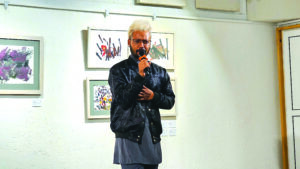
The “Unseen” exhibition did more than display artwork, it dismantled assumptions. The colours on the canvas told stories of sensory intensity, emotional truth, and creative possibility. They made the invisible visible.
Because when autistic children are allowed to explore the world, they do not simply adapt, they flourish.
And when their work is placed on walls for all to see, so too is the truth that every child, regardless of neurotype or disability, deserves opportunity, dignity, and belonging.
People think autistic children live in their own world,” Archana says with a quiet smile. “But the truth is—they see the world differently. And if we give them the chance, they can help us see it differently too.