Navigating Credibility in the Age of Virality
In the age of social media, health and medical content has become more accessible and more complicated than ever before. Certified doctors are now amassing millions of followers by posting surgical procedures, wellness tips, and real-time medical insights. Alongside them, a growing wave of self-proclaimed health influencers, some with formal certifications, others armed with internet research are offering everything from fitness hacks to dietary advice. While this digital shift democratizes health education, it also raises urgent questions about credibility, ethics and public safety.
We talked to medical practitioners and health communication experts working in an era shaped by the internet and social media to gather their perspective on navigating this complex and rapidly evolving reality.
How has the rise of medical influencers changed the way people seek, trust and act on health information?
Internet has also led to misinformation. People now arrive at clinics confused by online content or influenced by flashy but incorrect advice.

Dr Sunil Sharma
Principal Consultant and Head of Digestive Disease Centre, Nepal Mediciti
Sunil: Health awareness in Nepal has improved, but overall knowledge about the body and wellbeing remains very limited. Compared to countries like Japan, or even India, awareness here is still minimal, even among the educated. Many either overreact to minor issues or misunderstand what being healthy truly means. For instance, having a muscular body is often mistaken for good health whereas true fitness involves balance – like doing yoga, eating moderately and living a peaceful, disciplined life. Over the past 30 years, I have seen some progress, from complete ignorance to a small but growing awareness of health. The internet has played a major role not just in health but across all areas of life. However, it has also led to misinformation. People now arrive at clinics confused by online content or influenced by flashy but incorrect advice. Like a vast ocean, the internet holds both truth and falsehood, it is up to individuals to make informed choices.
Ava: The rapid expansion serves as a theatrical backdrop in Nepal, consistently elevating the stature of medical influencers. People have started to prefer social media for acquiring instant, interesting and relatable information instead of relying on more conventional modes of communication. While such an easy access option is good, users oftentimes put their trust in influencers just on the basis of popularity even when actual experts are involved. The disadvantage is the chance of misinformation when misunderstanding complex situations or ill-supported presentations of scientific fact can dictate health choices and behaviours.
During the COVID period, the country saw increased vaccine uptake largely because influencers spread awareness about preventive measures and vaccination. On the other hand, this dependence on influencers also presents a few risks as misinformation, for instance, regarding herbal remedies and unproven ‘miracle cures’ can sow confusion and impair public health responses.
Prasanna: In today’s digital age, social media platforms and AI tools have become the first stop for people seeking health information even before consulting a doctor. The way people consume and trust health advice has dramatically shifted. They are no longer waiting for appointments; they are searching for relatable, quick, and accessible content online. As a licenced medical professional, I recognise the responsibility and opportunity this presents. By sharing accurate, evidence-based and ethical health information on social media, I aim to bridge the gap between internet searches and medically sound guidance.
Often, people come across fragmented or confusing information online, my content can help validate or clarify what they have read, especially when it is delivered by someone with clinical experience. Ultimately, medical influencers who are trained and credentialed have the power and the responsibility to build trust, correct misconceptions, and influence positive health behaviours but we must do so transparently.
Sharada: The rise of medical influencers has changed the ways the public engages with health information. People now have easy access to social media and that has enabled them to seek information and accessible advice from social media instead of relying only on doctors or other medical sources. This has significantly helped raise awareness on different health issues and topics like mental health, preventive care and wellness. However, this shift has also made it easier for misinformation to spread, especially when information is disseminated without any proper sources and evidence.
What appears in social media is generally perceived as truth and is, widely, mistaken for expertise.
Do you believe the benefits of using social media to raise health awareness outweigh the risks of spreading misinformation? How do you view the ethics of posting content such as surgery or operation room videos online?
Typically, promotional content promotes either a product, a service, or a personal professional interest and should be clearly marked as such.

Ava Shrestha
Senior Health Education Officer, National Health Education, Information and Communication Centre.
Sunil: Social media is often mistaken for a credible source, but it lacks the checks and references required in scientific work. In the past, accessing medical knowledge was difficult, I had to go to a library, request an article through a librarian, and sometimes wait months, only to be told it was not available. Today, I can access any article instantly through professional platforms. This shift has greatly enhanced medical practice and education. However, while trained professionals benefit from such access, the general public often turns to unreliable content on social media, misinterpreting or believing misleading information. Many do not know where to look or how to verify what they find. Unlike professional databases, most public health sites oversimplify and advise people to “consult your doctor.” That advice is critical. Used correctly by experts, social media and online tools are invaluable. But for patients, medical guidance must come from doctors, not influencers or anonymous posts online.
There are no laws in Nepal, or even globally regulating the posting of surgery videos online. While medical forums like the World Hernia Federation of which I am a member of, require strict guidelines, influencers freely upload content on platforms like TikTok and YouTube, where few have the expertise to judge what is appropriate or medically accurate.
Ava: For Nepal, especially with its geographical and resource limitations, social media has tremendous potential for health education. It can very rapidly disseminate important health messages in times of crisis, such as during dengue or Covid 19 outbreaks. However, misinformation is indeed a great concern. Ethically speaking, I do strongly believe that benefits outweigh the risks only if influencers strictly adhere to ethical guidelines. Such hospitals, surgeries and operation room videos must be first and foremost concerned about the patient’s privacy and dignity and have fully informed consent. The only reason to sensationalize a medical procedure would be for engagement; such behaviour is unethical and unacceptable. Some medical institutes in Nepal do so with surgical content for educational purposes in a responsible manner – a fine balance between educational value and ethical responsibility.
Prasanna: Absolutely. When used responsibly by licenced medical professionals, social media can be a powerful tool to raise health awareness and combat misinformation. As a stroke specialist, I feel a deep responsibility to share accurate, evidence-based information that can save lives. Too often, I see patients arrive days after a stroke, having first tried traditional remedies. By then, it is too late for life-saving treatments like thrombectomy. These delays are heartbreaking especially when early action, prompted by a simple awareness post, could have changed everything. That is why I use my platform to educate the public on stroke symptoms, prevention, and timely care.
I also share surgical insights ethically, with full patient consent, and always aim to reduce fear, not create it. Social media, when used well, builds trust, corrects harmful myths, and helps people make informed decisions, especially in areas where health literacy is low. It’s more than content; it’s life-changing awareness.
Sharada: Yes, when used responsibly, the benefits outweigh the risks. Social media can play a crucial role in promoting accurate health practices, breaking the misconceptions and myths, and to encourage people for early health-seeking behaviours. However, content sharing must take place responsibly and be guided by ethics. For example, posting a surgery or operation video must only be done with informed consent and in a way that ensures respect and dignity. Without responsible and ethical acts, there is always a risk that such information or content becomes exploitative rather than educational.
What specific responsibilities do you believe medical influencers have in ensuring accuracy, transparency and maintaining public trust? Are there types of content you believe should never be shared on social media?
Public trust is fragile, and building it requires accountability.
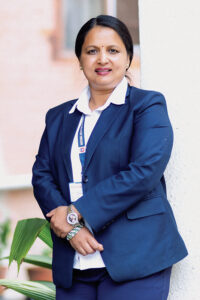
Sharada Pahari
Senior Health Education Officer National Health Education, Information and Communication Centre
Sunil: I am against self-promotional videos. I regularly give talks, now called podcasts for public awareness and not publicity. The public often misunderstands diseases, so it is our duty to explain in simple terms. The challenge with podcasts is they can get too technical for general audiences. My father, Nepal’s first cancer surgeon, used to write weekly articles in Gorkhapatra and The Rising Nepal, educating people on issues like breast lumps. That public outreach significantly raised cancer awareness in Nepal. Today, podcasts and talks have replaced those articles. They are valuable tools, but they must be filtered and simplified to ensure accuracy and clarity for the public.
Ava: Medical influencers are the custodians of the accuracy of information and must ensure that the information they present is evidence-based and verified. Also, their professional conduct entails transparency in that they should declare any affiliation and conflict of interest. Trust should be maintained by refraining from sensationalism, respecting patient privacy, and cautious content presentation with cultural sensitivity for general comprehension. Employees who share content promoting unproven remedies or treatments, disclose patient information without consent from the patient, or use distressing videos that lack an educational context are posing a great threat to public health in the country and undermining the public’s trust, especially in countries like Nepal.
Prasanna: As licenced medical professionals on social media, we carry a deep responsibility to communicate with accuracy, integrity and compassion. Everything we share must be evidence-based, clear and transparent, never sensationalized. Our goal is to educate, empower and build public trust. We must avoid sharing misleading or incomplete information and stay out of online conflicts that harm credibility. Instead, our content should bridge the gap between medical knowledge and public understanding, guiding timely, informed decisions.
Ethics are non-negotiable. Patient confidentiality must be strictly protected, and informed consent is essential before sharing any stories. We should avoid fear-based messaging and strive for a reassuring, respectful tone that makes people feel safe and supported. Criticizing others publicly – whether medical peers or non-medical advocates – can be harmful. Collaboration should always take priority over conflict. Ultimately, our role is to uplift, inform, and meaningfully contribute to public health conversations in the digital age.
Sharada: Medical influencers have the responsibility to ensure that the content shared or disseminated is scientifically/medically accurate, clearly cited, and free from commercial bias. They should always disclose affiliations and never exaggerate claims. Public trust is fragile, and building it requires accountability. Therefore, content that reveals patient identity, dramatizes suffering, or promotes unproven treatments should not be shared without their consent. Content must be shared responsibly and ethically.
How do you distinguish between education, promotion and self-branding when a medical professional is active online?
Sunil: With age and experience, professionals tend to promote awareness while younger individuals often focus on self-promotion. Though not always true, maturity often shapes intent. Knowledge is fluid – what is true today may be outdated tomorrow – so influencers must stay updated. Viewers should assess an influencer’s credibility, qualifications, and authority before trusting their content. Reputable platforms like SAGES require years of experience before allowing members to share medical content. In contrast, health influencers on social media often share unverified advice like “what I eat in a day,” which can be misleading or harmful when presented without scientific backing or medical training.
Ava: It is paramount to properly differentiate the online education, promotion, and self-branding activities. Educational content should mainly involve imparting information to a person in order to empower him or her to make informed decision on his or her own. Typically, promotional content promotes either a product, a service, or a personal professional interest and should be clearly marked as such. Self-branding, although important for professional visibility, should never undermine the accuracy or integrity of health information. It is essential to uphold a strong content line among the three in Nepal, where many people rely on online information, for ensuring their credibility as professionals and public trust.
Prasanna: As licenced medical professionals on social media, we have a responsibility to communicate with accuracy, integrity and compassion. Our content must be evidence-based, transparent and focused on education, not sensationalism. We should avoid sharing misleading information or engaging in online conflict that harms credibility. Instead, we must bridge the gap between medical knowledge and public understanding, helping people make timely, informed decisions. Ethical standards are essential. Patient confidentiality must always be respected, and informed consent is required before sharing any patient-related content. Our tone should be respectful and reassuring, not fear-driven. Publicly criticizing fellow healthcare providers or non-medical advocates only fosters division. We should lead through collaboration and promote health literacy, not competition. Ultimately, our influence should clarify, uplift, and contribute meaningfully to public health conversations in the digital age.
Sharada: Educational content must concentrate and focus on providing accurate, useful information for public good. Promotion is usually tied to services or products, while self-branding highlights personality, lifestyle, or professional image. While all three can coexist, the priority must be clear: if patient welfare is not at the core, the messaging can quickly lose credibility. After all, it is the Intent and transparency that make the difference.
What dangers do you see when non-experts (or even licensed professionals) simplify or sensationalise health content for views or likes?
I share surgical insights ethically, with full patient consent, and always aim to reduce fear, not create it.

Dr Prasanna Karki
Longevity Advocate Neurosurgeon & Neuro Interventionist, Nepal Mediciti
Sunil: Health has long been commercialised with influencers often promoting products for profit. In countries like India and the US, multivitamins are widely prescribed, unlike in the UK where they are reserved for actual deficiencies. Trends in medicine – like margarine over butter or sugar once seen as harmless – often shift with marketing, not science. Influencers push conflicting advice from fasting to skincare, often exploiting cultural insecurities like skin tone. But human evolution thrived without modern medicine or products. As Buddha said, moderation is key. There is no one ideal way, just follow what feels right, not what influencers or ads claim is best for you.
Ava: Simplifying or sensationalizing health information to gain engagement on social media platforms can be major-risk-taking. At worst, crucial health messages may be misunderstood so that people incorrectly treat themselves, postpone seeking help from proper professionals, or unnecessarily panic. In Nepal, where there is such a vast disparity in health literacy skills from one area to another, improper information can become quite harmful very quickly as it begins eroding the trust of real healthcare providers as well as public health initiatives.
Prasanna: Oversimplifying or sensationalizing medical content – through fear, false promises, or drama – spreads misinformation and delays care. When virality overtakes accuracy, public trust suffers. Healthcare professionals face pressure to grow online, but some resort to emotional or misleading posts that harm more than help. Every view is a real person who may act on our words. One irresponsible post can damage trust in the entire medical community, especially in Nepal where scrutiny is high. Doctors are not miracle workers. We must be honest, ethical and focus on education over attention. Medical content should inform, not dramatize, and unqualified influencers must be regulated.
Sharada: Simplifying complex health topics can be helpful but when facts are distorted for attention, it becomes dangerous. Sensationalism can create fear, stigma or false hope, especially when it involves miracle cures, extreme diets or unverified claims. Even licenced professionals must avoid bending the truth for engagement, as it erodes trust not only at individual level but also at larger medical and health system.
In your view, what needs to change within the medical field or on social platforms to ensure safer, more ethical health communication online?
Sunil: The government is trying to control social media due to critical comments but banning all posts is not the solution. There should be a governing body to regulate harmful or false content, especially against individuals like politicians, artists or doctors who face harassment. Social media is still immature – like an adolescent – and will likely mature into a credible information source in 30 years. Meanwhile, fake news is rampant, worsened by AI-generated content, making it hard to distinguish truth from falsehood. Everyone should approach online information cautiously and critically, recognizing social media’s growing but imperfect role in society.
Ava: Significant changes are necessary within both the medical community and social media platforms in Nepal. Institutions such as the Nepal Medical Council should therefore provide targeted training on ethical digital communication for health professionals. Social media platforms should verify medical influencer credentials, efficiently moderate content, and enhance their checkpoints for facts. Collaboration between health authorities, social media companies, and medical influencers can elevate the trustworthiness and ethical standards of online health communication in Nepal.
Prasanna: In Nepal, social media can powerfully raise health awareness but also spread harmful misinformation. I once treated a patient who collapsed after drinking a “herbal tea” promoted online by a non-medical influencer. It nearly cost him his life. This is why only licenced professionals should share treatment-related content, with oversight from regulatory bodies like the Nepal Medical Council. Social media, used ethically, can save lives. A woman suffering from trigeminal neuralgia found hope through one of my videos and is now pain-free post-surgery. Virality should never outweigh accuracy because behind every screen is a person who deserves safe, trustworthy guidance.
Sharada: Medical professionals should receive training in digital ethics and responsible communication. Institutions should offer guidelines for online behaviour. On the platform side, social media companies must do more to flag false claims and promote verified health content. Collaboration between health institutions and tech companies is essential to create a digital space where health information is not only accessible but also safe and trustworthy.