Nepali Designers Taking Craft to Global Runways
The global fashion calendar remains largely shaped by established capitals and legacy houses. Cities like Paris, Milan and New York continue to define what the industry considers international fashion. For designers emerging from smaller fashion ecosystems, entering these spaces is rarely simple. Distance, resources and visibility all become part of the challenge.
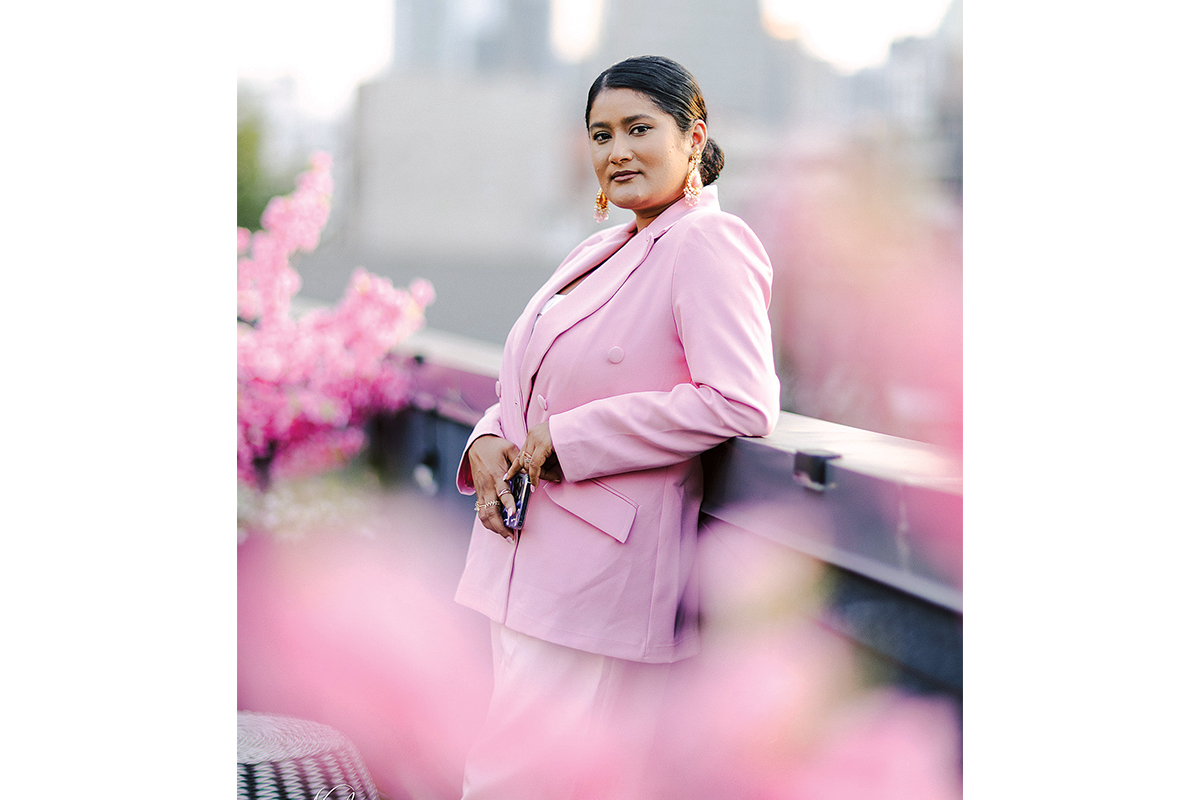
For Nepal’s growing fashion community, such moments are still rare. Only a handful of designers from the country have managed to present their work on international runways, making each appearance significant for an industry still carving its place on the global stage. Designer Kriti Mainali, founder of the label K R I T I, is among those few. With recent showcases at New York Fashion Week and Paris Fashion Week, Kriti’s work has begun appearing within the global fashion circuit, bringing with it a narrative rooted in craft and cultural identity.
Unlike designers emerging from large fashion systems with established supply chains and infrastructure, Nepali designers often build their platforms gradually. The journey to international runways is rarely a sudden breakthrough. It is more often the result of persistence, experimentation and independent effort.
For Kriti, that process has been shaped by a life lived between Nepal and the United States. “Being born in Nepal and later building my life and career in the United States has deeply shaped the visual language of my clothing brand,” she says.
Living between cultures informs how she approaches design. “My designs naturally blend South Asian craftsmanship with modern global silhouettes,” Kriti explains. Traditional embroidery, beadwork and artisanal detailing form the backbone of the garments, while the silhouettes are structured for contemporary couture.
For designers from regions with long craft histories but limited international representation, authenticity can be both a strength and a challenge. Global fashion spaces often encourage simplified interpretations of heritage that align with dominant trends. Kriti approaches the question differently. “When presenting in spaces like New York and Paris, it becomes even more important to stay authentic,” she says. “Instead of adapting my work to fit global trends, I focus on highlighting the richness of South Asian craftsmanship.”
Each piece under her label is handcrafted by artisans in Nepal and India. Many rely on this work as a primary source of income, and several are women supporting their families through their craft. The garments often take days, sometimes weeks, to complete. “The artisans behind each piece are truly the heart of my brand,” Kriti says. “Their craftsmanship is what makes every garment meaningful.”
For a designer representing a relatively small fashion ecosystem, this emphasis on craft also carries symbolic value. It links Nepali fashion to a broader regional tradition of textile artistry while presenting it within contemporary international contexts.
Storytelling, she believes, plays an important role in that translation. One of the brand’s early turning points came during a presentation at Emirates Fashion Week in Dubai, where a collection inspired by Palm Island explored how garments could reflect the identity of a place.
“That experience showed me that fashion can tell stories about places, cultures and emotions,” Kriti says. “It encouraged me to design collections that carry deeper narratives rather than just aesthetics.”
In a global industry that frequently draws inspiration from South Asian textiles, questions of recognition remain relevant. Traditional embroidery techniques and motifs appear regularly on international runways, yet the artisans and histories behind them are often overlooked. “South Asian textiles and embroidery have such deep history,” she says. “They deserve recognition and respect. Their talent is what makes each piece truly special,” she adds.
There is also the question of time. In an industry increasingly defined by rapid production cycles, couture craftsmanship follows a slower rhythm. Her label embraces that pace deliberately. “Fast fashion moves quickly, but couture is about patience, detail and time,” Kriti explains. “Each piece takes days, sometimes weeks, to complete.”
For Nepal’s fashion industry, moments such as a runway presentation in New York or Paris carry significance beyond individual achievement. They hint at the possibility of greater global visibility for designers working within a small but evolving creative landscape. When a garment from her label appears on an international stage, Kriti hopes it carries more than visual impact. “I want the person wearing it to feel pride and connection to culture,” she says. “Each piece carries the story of craftsmanship, heritage and the many hands that helped create it.”
In the crowded theatre of global fashion, the appearance of a Nepali label may seem like a small moment. Yet within that brief walk down the runway lies something larger: a quiet reminder that the map of fashion is expanding, one stitch at a time.
Text: Ankita Jain