Shaping trends, supporting new talent, and redefining what it means to be an art collector today
In a country where art and spirituality have long been intertwined, a new generation of collectors is reshaping Nepal’s creative landscape. Meet Prajwol Man Shakya and Sophia L. Pandé, two passionate collectors whose perspectives on art reflect both reverence for tradition and a bold embrace of change.

PRAJWOL MAN SHAKYA
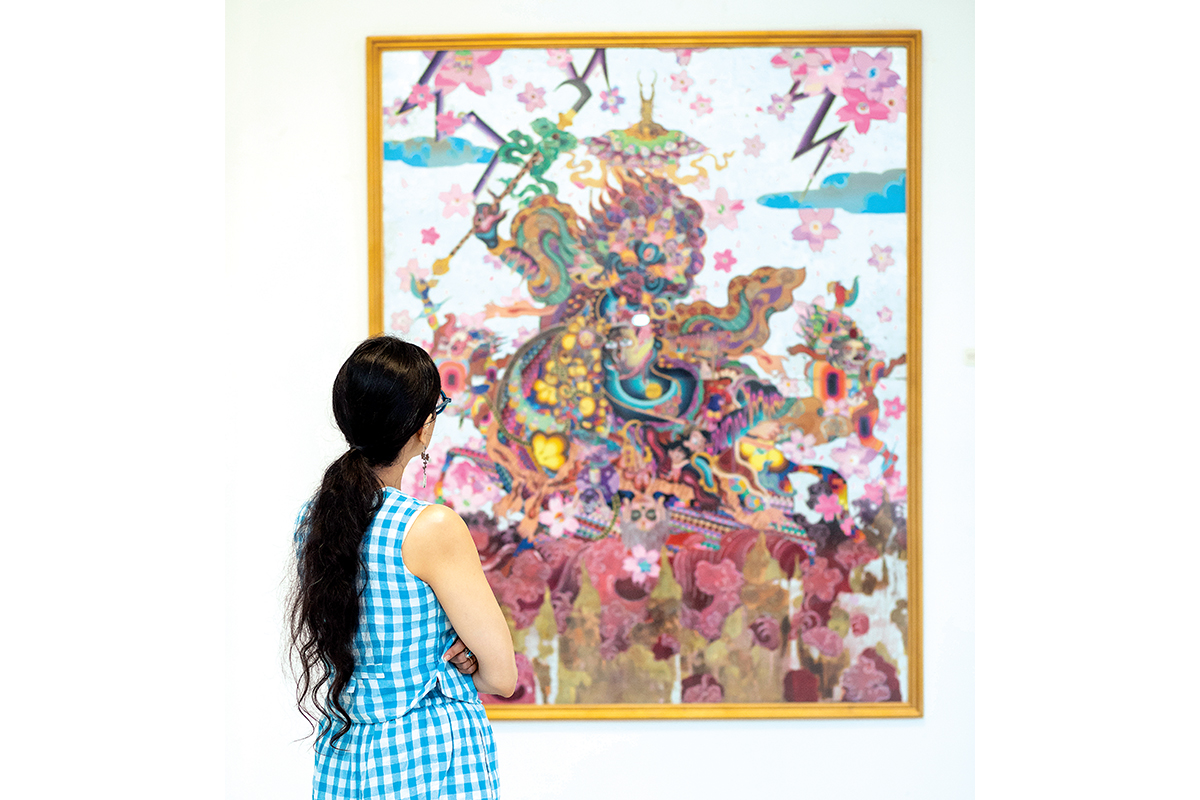
For Prajwol, his fascination with art began early. “In 2008, I encountered a beautiful Siddhi Ganesh painting by Udaya Charan Shrestha in Tokyo,” he recalls. “I instantly fell in love with it and persuaded my father to buy it.” That small but exquisite painting left an indelible mark on him, guiding his later journey into collecting traditional Newa art.
Sophia’s initiation came even earlier, at 16. She emptied her savings for a vibrant, collage-style painting by Jagdish Chitrakar. “It’s still one of my favourites,” she says. “The canvas pulses with stories and energy, it’s dynamic, powerful, and alive.”
While Prajwol remains deeply rooted in Nepal’s artistic heritage, he notes a generational drift. “Fewer young collectors are drawn to traditional Newa art,” he says. “It takes a trained eye to distinguish a truly exceptional piece.” Through his work at Bodhisattva International, he hopes to bridge this gap curating exhibitions that reveal the depth and precision of Nepal’s living art traditions.
Sophia, on the other hand, sees a growing fascination among new collectors for “the greatest hits” of Nepali art. “People want the big names—Samundra Man Singh, Kiran Manandhar, Tshering Sherpa but few look beyond that,” she says. “We must also value emerging and female artists like Pramila Giri and Ragini Upadhyay Grela. A healthy art market thrives on diversity and instinct, not just prestige.”
SOPHIA L. PANDÉ
Both collectors blend passion with study showing the significance of both research and instinct in collecting art. Prajwol researches rare deities and symbolism for his exhibitions, ensuring each display at the Bodhisattva Gallery offers insight into Nepal’s cultural and spiritual narrative. Meanwhile, Sophia collects by intuition. “I buy first, research later,” she says. “If I connect with the work, I’ll want to know the artist’s story. That connection is what matters.” Though Prajwol’s collecting journey began before the digital boom, Sophia finds value in today’s visual platforms. “Instagram, despite its flaws, is still a wonderful gateway,” she says. “There’s a world of art waiting for the curious and open-minded.”
For Prajwol, artist Udaya Charan Shrestha remains a beacon of integrity in traditional art. “He creates without catering to the market, each work is deeply personal with details so fine they need a magnifying glass,” he says.
Sophia’s excitement lies with Nepal’s contemporary art movement. “With more BFA and MFA programmes, young artists are experimenting across media,” she explains. “Collectors must support them and buy locally, nurture the creative economy. Buying art isn’t like buying a luxury item; it sustains someone’s dream.”
Sharing their words of wisdom for new collectors, both agree on one thing: follow your heart. “Choose art that resonates with you,” advises Prajwol. “A name is secondary to how a piece makes you feel.” Sophia echoes that sentiment, adding a lyrical note: “Collecting is itself a creative act. Buy what you love. As Anaïs Nin said, creation is not limited to art, it’s about transforming life itself. Supporting artists is one of the most beautiful ways to do that.”
Nepal’s emerging collectors like Prajwol and Sophia represent more than just a new chapter in the nation’s art story; they embody a bridge between legacy and innovation. With instinct, intellect, and integrity guiding their choices, they are nurturing not only collections but a vibrant future for Nepali art.
Text: Kreenjala Pyakurel