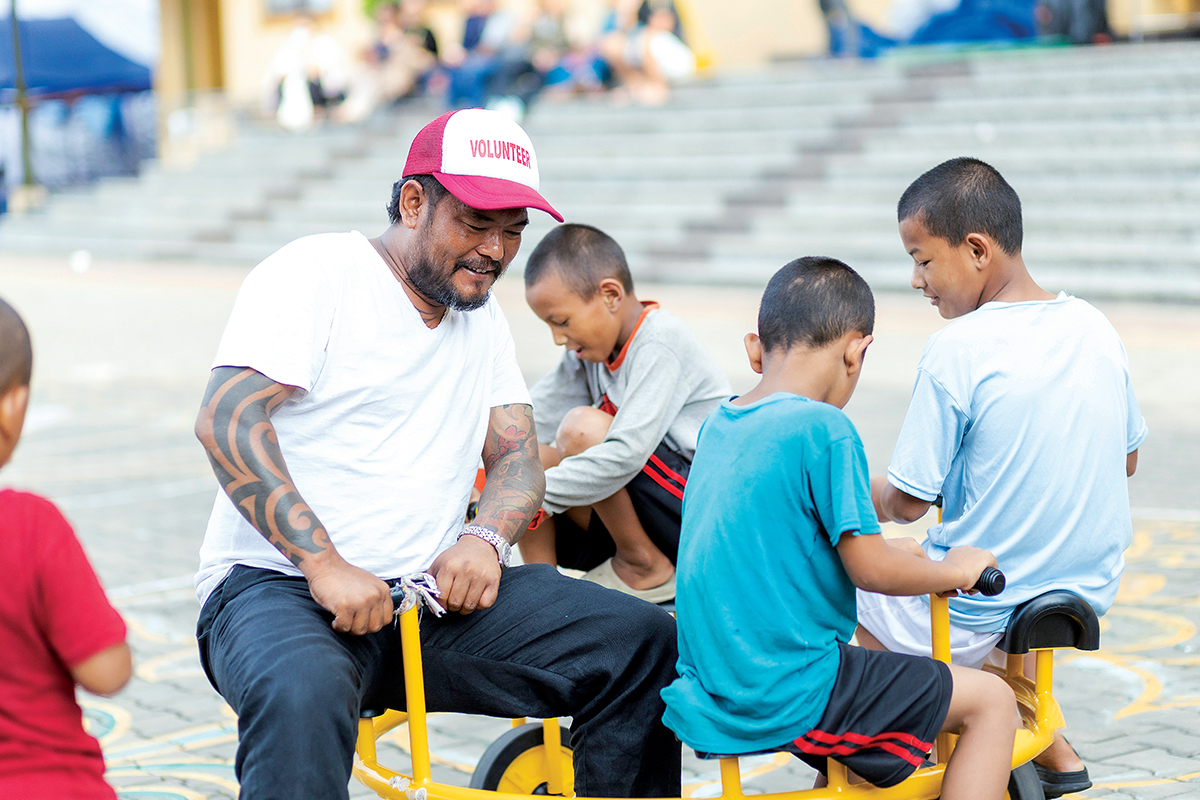
In Rasuwa, science, technology and volunteerism came together in unexpected ways, revealing how knowledge, ingenuity and human action can shape disaster response.
In the aftermath of the Rasuwa disaster, help took many forms. A scientist worked to understand what had happened high in the Himalayas. A filmmaker and drone pilot took technology into difficult terrain. And a government computer officer began turning scattered fragments of information into something families could use. WOW explores three very different ways science, technology and volunteerism came together in a moment of crisis.
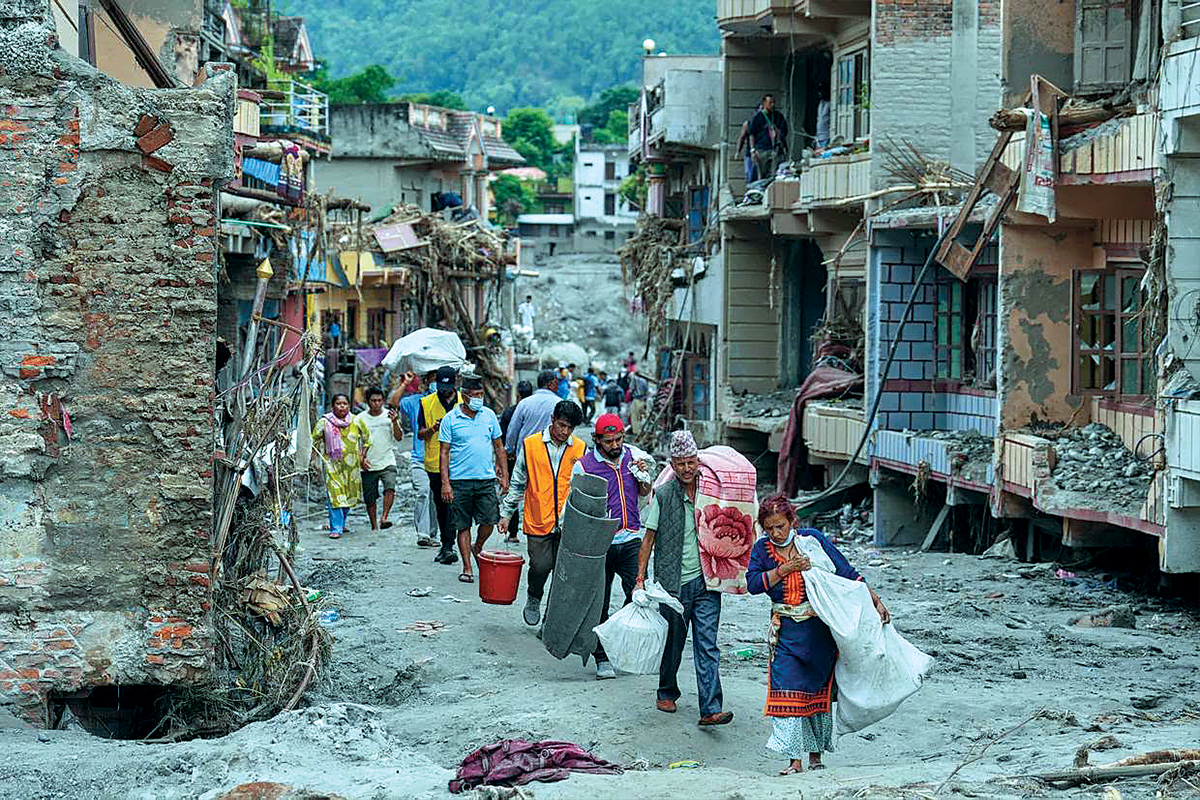
When the Rasuwa flood struck, the response began on many fronts at once. Rescue teams navigated damaged roads and difficult terrain. Families searched for missing relatives. Scientists tried to understand an event whose scale raised urgent questions about the changing Himalayan environment. And alongside them, volunteers reached for the tools they knew best – drones, cameras, digital platforms and whatever resources they could mobilise.
The disaster, which began with a sudden surge into the Bhote Koshi following an upstream ice-rock event, affected communities and infrastructure along the river corridors and led to a prolonged search and recovery operation.
But amid the devastation, another story emerged: of knowledge put into action, technology used with purpose, and individuals stepping beyond their formal roles to help.
Understanding the Mountain
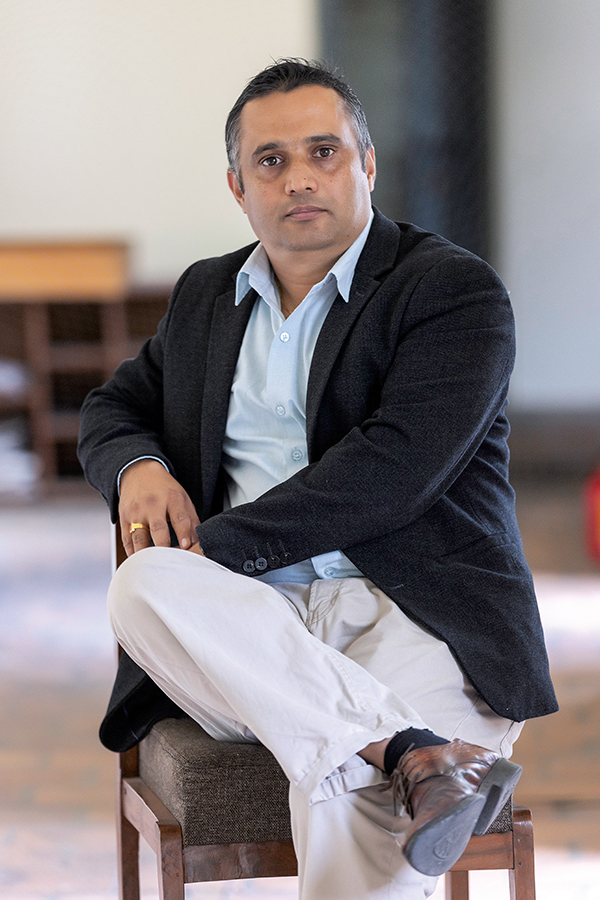
DR BASANTA RAJ ADHIKARI
For Dr Basanta Raj Adhikari, Director of the Centre for Disaster Studies, understanding what had happened was the first step towards understanding what Nepal needs to do differently.
He was in China for discussions on cryospheric hazards when he first heard about the disaster. Initial reports suggested a possible glacial lake outburst flood. After communicating with colleagues in China and learning that the relevant glacial lakes remained intact, attention shifted towards a landslide or ice-rock avalanche as the likely mechanism.
Dr Basanta subsequently informed the National Disaster Risk Reduction and Management Authority (NDRRMA), returned to Nepal and became involved in field assessment and coordination with scientists and authorities.
The exact sequence, he says, is still being studied. Rising temperatures, freeze-thaw processes, glacier changes and the possible effects of the 2015 earthquake are among the factors being examined. His assessment describes an enormous mass of ice and rock descending from roughly 5,200 metres to around 1,200 metres, with melting ice contributing to the debris flow that travelled along the Lende Khola.
The disaster also exposed limitations in the way Nepal currently monitors mountain hazards. Existing early-warning systems are largely designed around known hazards such as glacial lake outburst floods, while this event involved a different chain of processes. High-altitude monitoring remains limited, and some downstream monitoring stations were themselves damaged or washed away. The short distance between the source and affected settlements left communities with very little time to respond.
“Early warnings cannot simply tell people that a flood is coming,” Dr Basanta says. “They need to communicate the likely impact and tell people exactly what action to take.”
He argues for stronger satellite monitoring, broadband seismometers, ground-based observation and disaster education, alongside risk-sensitive land-use planning. Just as importantly, he believes Rasuwa must become part of Nepal’s institutional memory rather than simply another entry in a list of past disasters.
For Dr Basanta, a changing Himalaya demands a different way of thinking – one in which government, scientists, universities and communities work together rather than within separate systems.
Another Set of Eyes
MANISH MAHARJAN
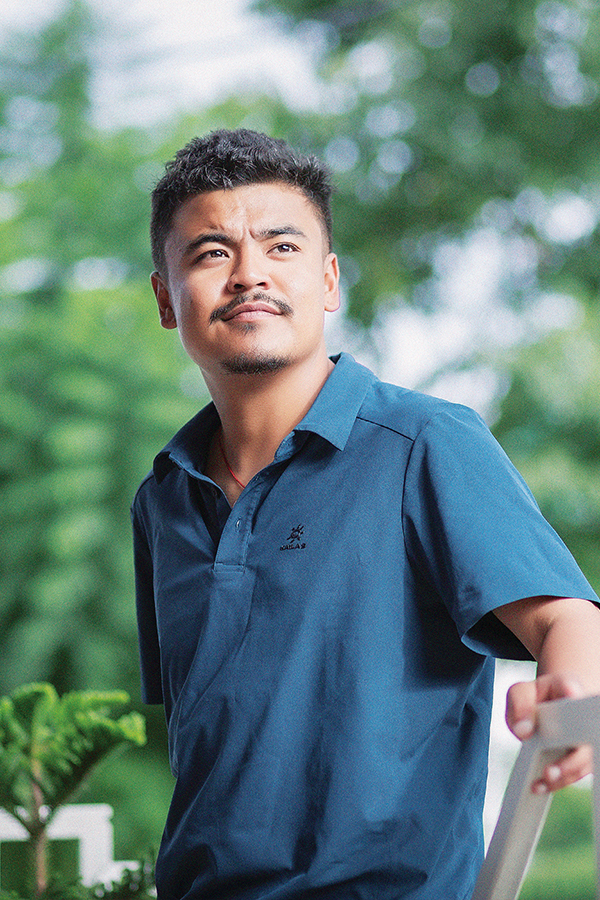
On the ground, Manish Maharjan, a Nepali filmmaker and drone pilot, was contributing in an entirely different way. His experience during the earthquake and Covid 19 pandemic had already introduced him to crisis response, while his work on expeditions and in high-altitude environments had taught him how to operate in difficult terrain. When the Rasuwa disaster happened, he saw an opportunity to put those skills to use.
As a member of the Himalayan Disaster Relief Volunteer Group, formed after the earthquake, Manish’s contribution went far beyond flying drones. He was involved in documentation, filming, logistics and connecting available resources with the teams that needed them. “It was not simply about operating a drone,” he says. “It was about using whatever skills and resources I had to contribute to the rescue effort.”
Some of the most difficult work took place around the tunnels of the Trishuli hydropower area. Sections were filled with mud and water; narrow passages, unstable ground and poor visibility made access difficult. Teams had to crawl through some sections, move over rocks and negotiate waterlogged areas. Going deeper into the tunnels also raised concerns about oxygen levels and the safety of those entering.
Thermal drones offered a way to assess areas before people moved further inside, particularly where visibility was poor. Drones were used to assess tunnels, river sections and other difficult locations, although they did not locate any living people during the searches.
When remains or traces were found, police and forensic teams took over the process of documenting locations and collecting samples for identification. “The drone was another set of eyes,” Manish says. Its value, for him, was never about replacing rescue workers. It was about helping them better understand the conditions they were about to enter.
His experience in Rasuwa was also a reminder that technology is only one part of disaster response. Damaged roads, continuing rain, limited helicopter access and difficulties transporting equipment all affected operations. Even something as basic as charging phones, cameras and drones could become a challenge because electricity was limited, with Army generators providing an important source of power.
What stayed with him most was the cooperation. “Everyone was doing something and sharing whatever resources they had,” he recalls.
The experience has also shaped what Manish wants to see next: a trained pool of civilian drone operators who can be mobilised quickly during emergencies, rather than searching for skilled pilots after disaster has already struck. He hopes to contribute by helping train more operators for disaster response.
When Information Becomes Aid
While Manish was working with technology in the field, Niraj Bhusal was confronting another urgent problem: the absence of accessible, verified information.
In the first hours and days, details about the disaster were scattered everywhere – across WhatsApp groups, Facebook posts, photographs, videos, media reports, official documents and handwritten lists.
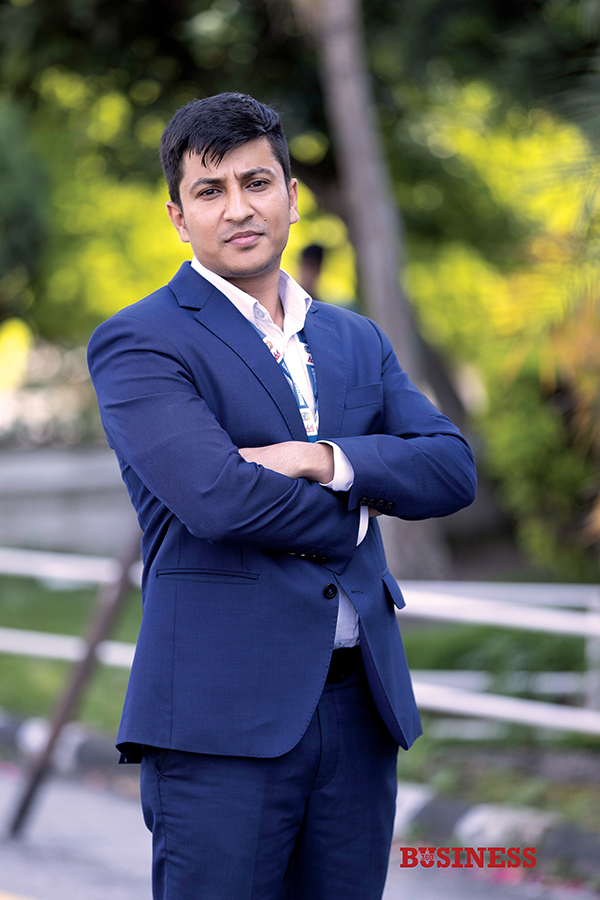
Niraj began collecting and organising whatever could be verified, using AI and digital tools to update a website and social media platforms. He created a missing-person database, bringing together information from different sources and using tools such as Google Sheets and CSV files to give it structure.
People could submit photographs and information through WhatsApp, while AI helped extract and match details. But technology was never left to make the final judgement. The process remained human-led, with information checked before publication. “Information needs to travel faster than misinformation, especially during a crisis,” Niraj says.
NIRAJ BHUSAL
Behind every piece of data was a person. Families from Nepal and abroad contacted him looking for parents, siblings, children and relatives. A missing person’s name was never simply another entry in a database; it represented someone waiting for an answer.
His own experience of loss made that particularly personal. There were nights when he worked until four or five in the morning, continuously receiving information and updating the lists. “I began looking at the affected families as if they were my own,” he says.
His work demonstrated how relatively accessible tools can become powerful during a disaster when paired with organisation and human judgement. AI could transcribe documents, process images and help match information. Verification, however, remained essential.
Niraj’s experience also points towards a larger need: resilient communication systems. He believes Nepal needs stronger connections between early-warning systems, government platforms, emergency databases and communities, alongside backup communication such as Low Earth Orbit satellite connectivity and reliable power alternatives.
Like Dr Basanta, he believes a warning needs to do more than announce that disaster is coming. It should explain what is happening, who may be affected and what action should be taken.
He also sees value in secure systems that could help authorities identify people during emergencies and allow families to check whether their loved ones are safe. “We have many tools available,” he says. “The challenge is bringing them together before the next disaster happens, rather than trying to build a system in the middle of a crisis.”
The Human Network
A scientist studying what happened thousands of metres above the valley. A filmmaker sending a drone into spaces too dangerous to enter blindly. A computer officer awake at four in the morning, turning photographs, messages and names into verified information.
Their roles could hardly have been more different. Yet the thread connecting Dr Basanta, Manish and Niraj is strikingly similar.
Science helped make sense of the hazard. Technology extended what people could see, access and organise. Volunteerism turned individual knowledge and skills into collective action.
None worked in isolation.
And perhaps that is one of Rasuwa’s most important lessons. In an age when disasters are becoming more complex, response is no longer only about the equipment available or the institutions in charge. It is also about how quickly knowledge can move between people, from a scientist to an authority, from a drone to a rescue team, from a WhatsApp message to a verified database, and ultimately, to a community that needs to know what to do next.
The technology matters. The science matters. But it is people who connect them.