
Doctors Shaping and Transforming Nepal’s Healthcare
Nepal’s healthcare system is being powerfully shaped by women doctors who are breaking barriers, leading with compassion, and transforming lives across the country. In this editorial, we spotlight four trailblazing medical professionals – Dr Sangeeta Mishra, Dr Archana Amatya, Dr Anjana Dangol, and Dr Indira Paudyal – who are redefining what it means to lead in medicine. From rural outreach to surgical innovation and visionary mentorship, their stories reveal the unique strengths and challenges women face in this field.

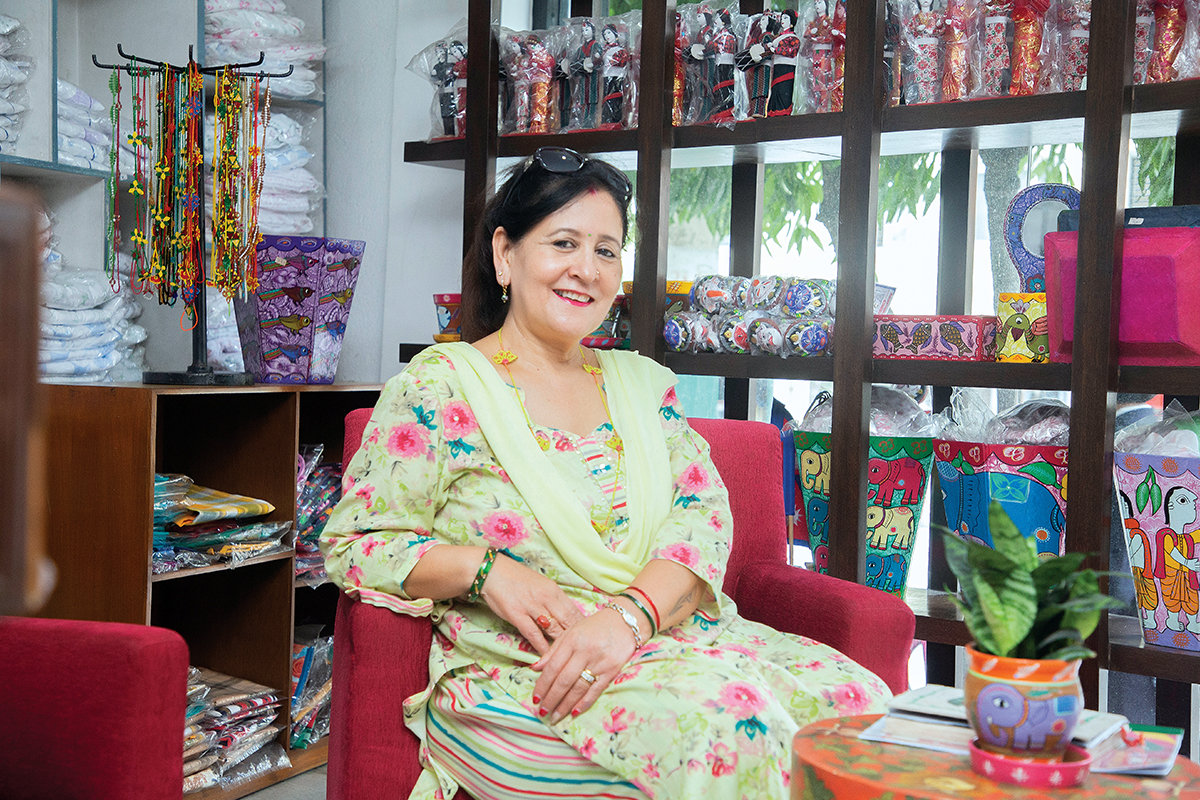
Dr Sangeeta Mishra
Additional Health Secretary, Ministry of Health and Population Specialty: Obstetrics, Gynaecology and Public Health
Dr Sangeeta Mishra currently serves as the Additional Health Secretary at the Ministry of Health and Population, where she brings extensive expertise in obstetrics, gynaecology, and public health. With a distinguished career dedicated to advancing maternal and reproductive health, Dr Sangeeta has played a pivotal role in shaping national health policies and strengthening healthcare systems. Her leadership combines clinical knowledge with strategic policy planning, aiming to improve healthcare access and outcomes, particularly for women and underserved communities. Dr Sangeeta’s commitment to public service continues to drive progress in health sector reforms and the delivery of equitable, quality care across the country.
What inspired you to pursue working in the medical field, and how has being a woman shaped your journey in this field?
Growing up in rural parts of India, I was surrounded by the realities of healthcare inequality. My mother was a nursing school tutor, so I was exposed early on to the healthcare environment. I often accompanied her to the college and hospital where I saw patients, doctors in white coats, and overheard stories of lives saved and lost. In our region, access to healthcare was extremely limited. There was just one government medical college within walking distance from our home, and even that was out of reach for many due to poverty.
I witnessed firsthand how tribal and rural populations struggled with basic medical care – patients sharing beds, delayed treatments, and financial barriers. These experiences left a lasting impression. By the time I was in sixth form studying science, the path felt clear. While others were choosing between engineering or agriculture, my decision to pursue medicine felt deeply personal rooted in experience and empathy.
Have you faced any unique challenges as a woman in Nepal’s healthcare system?
My journey in medicine has been shaped by perseverance. Coming from a middle-class background, I could not afford private medical education, so I sat competitive exams twice before earning a top state rank. As the first doctor in my family, I faced resistance, especially as a woman. My voice was often dismissed in meetings, and assumptions about gender roles were constant. Even while pregnant, I worked during emergencies amidst civil unrest. Balancing family, societal expectations and career progression was difficult but I learned to speak up, stay focused, and prove my competence through hard work and resilience.
How do you think women doctors are changing the way healthcare is delivered in Nepal?
Over the past 30 years, there has been a visible transformation in women’s participation in healthcare. The numbers have improved; more women are entering diverse medical specialties beyond traditional fields like gynaecology or general practice. Today, we see female neurosurgeons, ENT specialists, and physicians, which is a significant shift.
However, while representation has increased, leadership remains disproportionately male. Women are still underrepresented in senior roles, making up perhaps 10–12% of leadership positions in the public sector. Although societal and economic acceptance of women working has improved, a glass ceiling persists. Opportunities for advancement are often withheld, despite merit or seniority. I have personally experienced this; despite having the highest qualifying marks, I was overlooked for a leadership role. This is not unique; many women face similar barriers. While women continue to prove themselves in research, education and clinical excellence, the path to true equality in leadership is still a work in progress.
What role do mentorship and representation play for young women entering the medical profession today?
Mentorship is incredibly important, especially for women navigating the medical profession. When I was training, the concept of mentorship was largely absent. We had teachers but not mentors in the true sense: those who guide, encourage, and help shape your professional and personal development. I was fortunate to have a strong personality and could find my own path, but many young women would benefit greatly from structured mentorship. It is not just about increasing numbers; true, meaningful representation comes from empowering individuals through guidance and support. Mentorship is not limited to professional skills – it includes building confidence, leadership, social awareness, and work-life balance. A good mentor can change the entire trajectory of someone’s career. They offer real-life insights, help avoid common pitfalls, and provide the strength to persevere. In male-dominated environments, especially, mentorship can break barriers and foster a more inclusive and supportive space for future healthcare leaders.
What changes would you like to see for women working in healthcare in Nepal?
We must begin early – teaching girls in their teens, especially in classes eight, nine and ten, to believe in themselves and their abilities. Beyond that, systemic and social change is essential. If we truly want to empower women, society must become more supportive and accommodating of their unique roles and responsibilities.
Women often juggle multiple roles – professionals, wives, mothers – and they require tailored support systems. Flexible working hours and empathetic leadership are crucial. Unfortunately, such support is still lacking. When I worked as a medical officer, I returned to work just 15 days after childbirth because maternity leave was not available for junior staff, only for senior positions. At just 24, I used my annual leave to cover my delivery period. Financial responsibilities left me with no choice. Situations like this highlight the urgent need for equitable maternity policies and workplace reforms that acknowledge and support the realities women face daily.
What advice would you give to the next generation of girls dreaming of becoming doctors and healthcare leaders?
Speak up. You are not here to please anyone. My core advice to women, especially those who dream of becoming doctors, is to practise self-advocacy. Believe in yourself and commit to being your best. Be so excellent that no one can overlook you. In a field that has long been dominated by men, your success is not just personal, it is powerful. When you rise, you inspire others to follow. But when you hold back, it reinforces the doubts and biases that still exist. Persistence is your strength. Excellence is your voice. Do not wait for permission to lead; take your space with confidence and purpose. You are not just shaping your own future; you are helping to break barriers for every woman who comes after you. Medicine needs your voice, your passion, and your brilliance. So never shrink yourself. Stand tall, speak boldly and lead with unwavering conviction.
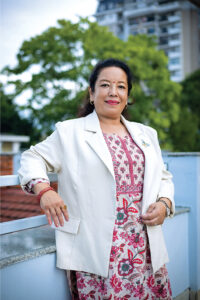
Dr Archana Amatya
Executive Director, Nick Simons Institute, Recipient of ‘Women in Medicine 2023’ Award by the President
Dr Archana Amatya is a passionate leader dedicated to transforming healthcare in Nepal. Inspired by a family legacy of medical service and a deep commitment to community wellbeing, she entered the Reproductive, Maternal and Newborn Health, Family Planning and Health Systems Strengthening field to make a lasting impact.
Dr Archana champions equity, mentorship and inclusive leadership, empowering women in healthcare and advocating for compassionate, gender-sensitive care that uplifts both individuals and entire communities across Nepal.
What inspired you to pursue working in the medical field, and how has being a woman shaped your journey in this field?
My inspiration to pursue medicine came from a deep desire to serve people and make a tangible difference in their lives. Growing up in a family of 20 doctors, I witnessed how access to compassionate, quality healthcare could transform not just individuals but entire communities. This realization combined with a strong interest in science and human well-being led me toward medicine.
Being a woman in this field has shaped my journey in profound ways. On one hand, it came with unique challenges – balancing expectations, navigating biases, and at times, needing to prove my credibility more than my male counterparts. On the other hand, it has given me a strong sense of empathy, resilience and the ability to connect deeply with people, especially women whose voices are often underrepresented.
Have you faced any unique challenges as a woman in Nepal’s healthcare system?
Definitely! As a woman in Nepal’s healthcare system, I have faced challenges such as gender bias, limited representation in leadership roles, and the constant pressure to balance professional and personal responsibilities. Overcoming them required persistence, support from mentors and peers, and a strong belief in the value of my work. I have also learned to speak up, create space for other women, and lead by example to help shift mindsets and promote equity in the system.
How do you think women doctors are changing the way healthcare is delivered in Nepal?
Women doctors are significantly reshaping and influencing the way healthcare is delivered in Nepal. Their presence across all levels of the health system is not only improving access to care, particularly for women and underserved populations, but also fostering a more compassionate approach. By championing gender-sensitive practices and advocating for equitable health policies, they are helping to shape a healthcare system that is more inclusive, responsive, and attuned to the diverse needs of the population.
What role do mentorship and representation play for young women entering the medical profession today?
Mentorship and representation are crucial for young women entering medicine today. Seeing successful women doctors inspires and shows what is possible, while mentors offer guidance, support and encouragement to navigate challenges. Together, they help build confidence, open doors, and create a supportive environment where young women can thrive and contribute fully to the medical profession.
What changes would you like to see for women working in healthcare in Nepal?
I advocate for enhanced gender equality in leadership, more opportunities and decision-making roles within the healthcare sector. The implementation of progressive workplace policies that facilitate work-life balance, including flexible working hours and comprehensive maternity leave, is essential. Furthermore, cultivating an organisational culture that proactively addresses and ensures equitable access to professional development and career advancement opportunities would substantially benefit women in Nepal’s healthcare system.
What advice would you give to the next generation of girls dreaming of becoming doctors and healthcare leaders?
My advice to the next generation of girls dreaming of becoming doctors is to believe in yourself and stay determined, no matter what the obstacles. Pursue your passion with dedication, seek out mentors who inspire you, and never hesitate to ask for support. Remember that your unique perspective and compassion are strengths that will make a real difference in healthcare and beyond.
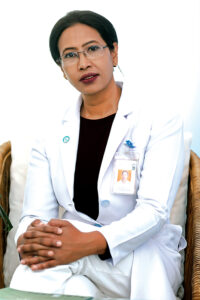
Dr Anjana Dangol
Professor of Gynaecology, Chief of the Education and Training Division, Dhulikhel Hospital
Dr Anjana Dangol is a professor of Gynaecology and Chief of the Education and Training Division at Dhulikhel Hospital where she combines clinical excellence with a deep commitment to community health. Inspired by the transformative power of healing and the struggles she witnessed in underserved areas, Dr Anjana pursued medicine to serve and empower others.
Her identity as a woman has both challenged and strengthened her, shaping her compassionate, patient-centered approach. Through outreach, mentorship and advocacy, she is helping to redefine healthcare in Nepal ensuring it is more inclusive, equitable and rooted in empathy and service to the most vulnerable.
What inspired you to pursue working in the medical field, and how has being a woman shaped your journey in this field?
From a very young age, I was deeply moved by the power of healing. I grew up in community where access to health care was limited. I witnessed how a single doctor could make profound difference in a family and community. That sense of purpose to serve, to care and to empower drew me to pursue my career in medicine. I wanted to become a gynaecologist, so I chased my dream. Now, I am professor in gynaecology working in Dhulikhel Hospital. Being a woman, in this field has been both a challenge and strength.
While facing challenges rather than being discouraged, I took it as an opportunity. I worked hard and built trust through empathy and always chose to lead with compassion. I feel my identity as woman has made me more adjusted in my profession and given opportunity to balance social dimensions of care which is as critical in clinical expertise.
Have you faced any unique challenges as a woman in Nepal’s healthcare system?
As a woman in Nepal’s healthcare system, I have faced cultural and professional challenges, especially witnessing the silent suffering of rural women like those with uterine prolapse. At Dhulikhel Hospital, under Dr Ram K. M. Shrestha’s visionary leadership, we have reached the unreached through 18 outreach centers. I travelled to villages, built trust, and helped break the silence through awareness camps and training. We must also address the challenge of retaining graduates in Nepal by creating job opportunities. To young doctors: Nepal needs you; not just in cities but in remote areas where your voice, care and advocacy can truly transform lives.
How do you think women doctors are changing the way healthcare is delivered in Nepal?
Women doctors and healthcare leaders in Nepal are playing a transformative role. Their presence has brought greater focus on care, mental wellbeing, and outreach to underserved populations. Many are leading efforts to establish better rural health centers, mobile clinics and specialized services in remote areas where care was previously inaccessible. As role models and mentors, they are also inspiring more young women to join the medical field, gradually addressing gender imbalance. By combining clinical expertise with empathy and strong leadership, women in healthcare are helping ensure that healthcare delivery in Nepal becomes more equitable, responsive and holistic.
What role do mentorship and representation play for young women entering the medical profession today?
As a professor of gynaecology and chief of the Education and Training Division at Dhulikhel Hospital, I have seen how essential mentorship is in shaping future healthcare professionals. It is more than academic support, it is about creating a safe, empowering space where students discover their voice and potential while staying rooted in their communities.
We mentor undergraduate to PhD-level students across medicine, dentistry, nursing and physiotherapy, helping them navigate structural and cultural challenges with confidence. Mentorship enables them to make informed decisions in clinics, operating rooms, research labs, and policy spaces. At Dhulikhel Hospital, we are committed to building not just clinical skills but leadership. Our graduates are now driving change across Nepal and around the world, and that is the true power of mentorship.
What changes would you like to see for women working in healthcare in Nepal?
Healthcare in Nepal is changing for the better with women now entering fields once limited to men such as orthopedics and cardiothoracic surgery. Yet, leadership roles remain largely inaccessible. It is time to recognise women as not just caregivers but also capable leaders and decision makers. Another key shift needed is adopting a multidisciplinary, patient-centered approach. Too often, professionals stay confined within narrow scopes. Now, the world is getting closer, and collaboration is vital. My journey in minimally invasive surgery and urogynaecology has grown through global partnerships. These connections not only shape individual careers but also strengthen institutions through shared knowledge and innovation.
What advice would you give to the next generation of girls dreaming of becoming doctors and healthcare leaders?
To the next generation of girls dreaming of becoming doctors, believe in your passion and never let anyone tell you what you can or cannot achieve. Medicine is not just a profession; it is a lifelong commitment to learning, compassion and resilience. There will be challenges along the way, especially as a woman, but let those challenges shape you, not stop you. Surround yourself with mentors who inspire you, support each other as women, and always remember why you started. Your empathy, strength, and intelligence are exactly what the world of healthcare needs. Keep moving forward, you belong here. Nepal needs you.
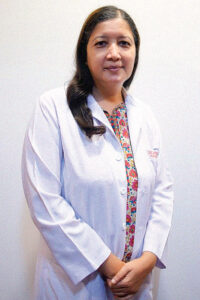
Dr Indira Paudyal
Head Glaucoma Specialist, Tilganga Institute of Ophthalmology
Dr Indira Paudyal is a dedicated ophthalmologist whose passion for medicine was shaped by early experiences witnessing the stark inequalities in healthcare access across Nepal. As a woman in medicine, she has navigated cultural and systemic barriers to become both a healer and a leader. Driven by empathy and a belief in the power of mentorship and representation, Dr. Indira is helping reshape healthcare in Nepal by making it more inclusive, compassionate and empowering for future generations of women doctors.
What inspired you to pursue working in the medical field, and how has being a woman shaped your journey in this field?
From a young age, I dreamed of becoming a doctor. Growing up in Nepal and visiting rural villages, I saw how lack of access to healthcare deeply affected people’s lives. A visit to my great-grandmother who was blind left a lasting impact. I later realized she may have simply had cataracts, something that could have been treated if care had been available.
Living abroad as a child showed me the stark contrast in healthcare access, and that experience fueled my determination to serve. As a woman and now an ophthalmologist, I feel a deep empathy for the underserved. My childhood belief that “doctors can do anything” still inspires my commitment to healing and helping others.
Have you faced any unique challenges as a woman in Nepal’s healthcare system?
As women in Nepal, we face unique challenges, especially in medicine. While many women are skilled and dedicated doctors, leadership roles are still largely dominated by men. Cultural expectations make work-life balance difficult, and we often have to work harder to gain the same recognition.
Becoming a doctor and stepping into leadership as a woman has been both rewarding and tough. I have had to prove myself while building a strong, supportive team. Mentorship, collaboration, and clear results have helped me grow in this role. Still, women are underrepresented, it is common to see only 2 or 3 women in a room of 15 leaders. But with persistence and support, we can change that and create more space for women at the top.
How do you think women doctors are changing the way healthcare is delivered in Nepal?
Women doctors play a key role in patient education, community outreach, and empathetic care, especially in Nepal where many still hesitate to seek treatment. During outreach camps like cataract surgeries in rural areas, seeing a woman lead the medical team sends a powerful message. It shows families and young girls what is possible. Our presence makes healthcare more inclusive and approachable, especially in villages where women often lack opportunities. Representation truly matters.
What role do mentorship and representation play for young women entering the medical profession today?
I mentor medical students, and I always tell them that the path we walk – especially in a developing country like ours – is not easy. That is why we must stay focused and committed, not just for ourselves, but to pave the way for others. We have a responsibility to be role models and to pass on what we have learned. I always remind my students: If I do not teach them, how will they learn and if they do not teach others, how will everyone else learn? Sharing knowledge and supporting each other is how we grow, both as individuals and as a community.
What changes would you like to see for women working in healthcare in Nepal?
There should be gender equity in hiring and promotions. Even small changes like simply acknowledging women’s contributions can make a big impact. One of the biggest barriers to progress is societal perception. People need to see and recognise the value women bring. This recognition not only uplifts individual women but also inspires entire communities. Most importantly, it helps women feel respected and empowered to lead.
What advice would you give to the next generation of girls dreaming of becoming doctors and healthcare leaders?
Women in healthcare often bring a strong sense of empathy which is exactly what patients need. It is not just about treatment, it is about truly understanding and caring for people. Women tend to connect deeply with patients making their care more compassionate. As leaders, women are focused and thoughtful. They weigh different outcomes carefully and aim to make fair, balanced decisions. Their ability to multitask and think holistically makes them effective in leadership roles. In a world that has long been male-dominated, women are now working equally alongside men to promote gender equality. If given more opportunities, women will not only rise, they will lead with impact.