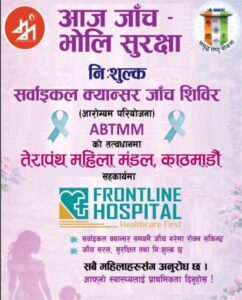
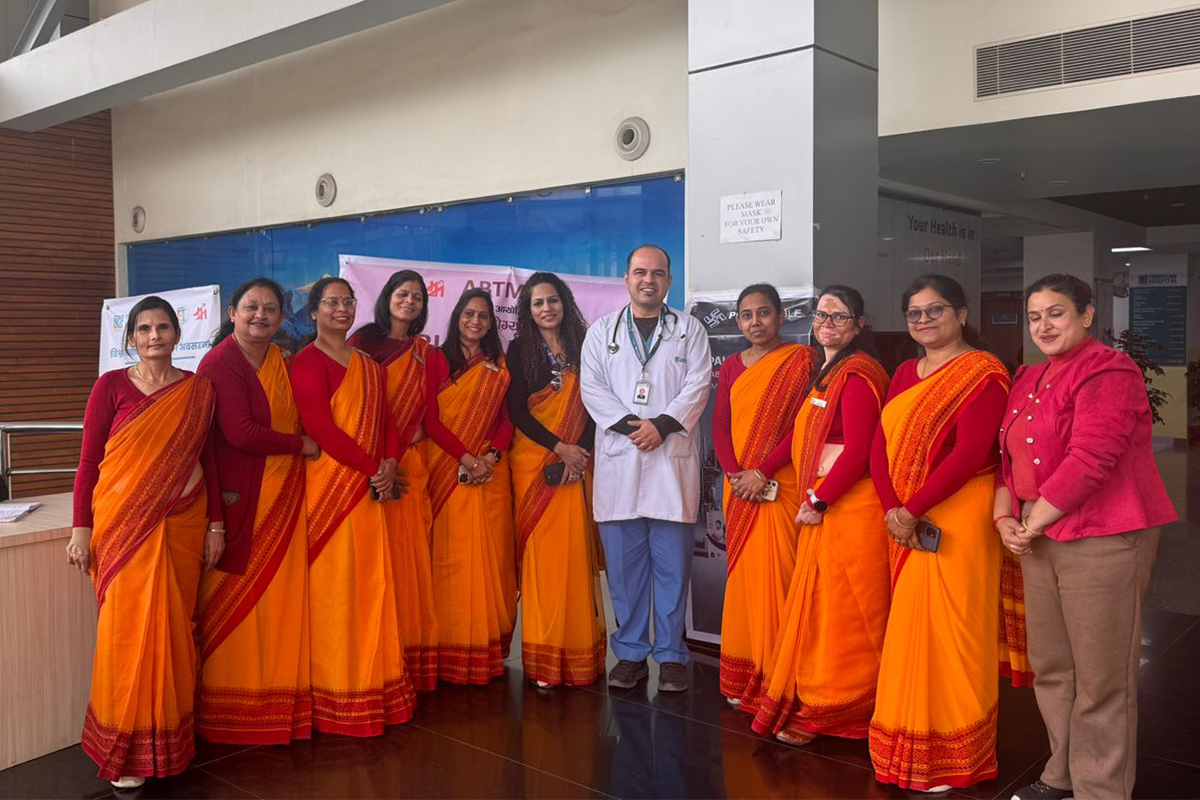
Kathmandu, 5 February 2026 — Terapanth Mahila Mandal (TMM) Kathmandu organised a cervical cancer awareness programme on 4 February 2026, offering free cervical cancer screening to hundreds of women across Nepal. In Kathmandu alone, around 351 women underwent free testing at Prastuti Griha, Thapathali; Frontline Hospital; and Chunikhel.
The initiative was also extended beyond the capital, with free testing conducted in Biratnagar, Nepalgunj and Birgunj. In Biratnagar, 100 women participated in the screening, while 70 women were tested in Nepalgunj and 35 women in Birgunj.
The programme in Kathmandu was attended by Dr Chang, a breast cancer specialist from China, who was the chief guest at the event. Addressing the gathering, Dr Chang emphasised the importance of early detection and regular screening in reducing cancer-related deaths among women.
For many participants, the programme marked a crucial opportunity for preventive healthcare. Mamata Bhansali, 45, who attended the screening in Kathmandu, said, “I am glad such awareness campaigns are being run by the organisation. I last had this test seven years ago.” Another participant, Sunita Mahato, shared her experience, saying, “This is the first time I am going for such a test. I am very nervous.”
A Wider Campaign for Women’s Health
According to Sangeeta Bothra, President of TMM Kathmandu, the cervical cancer awareness drive was part of a larger campaign conducted in around 239 locations across Nepal and India. “I am grateful that the organisation has taken up such an important issue and reached so many women,” she said.
Cervical Cancer: A Major Health Concern in Nepal
Cervical cancer remains one of the most pressing health challenges for women in Nepal. It is the second most common cancer among Nepali women and one of the leading causes of cancer-related deaths. Each year, over 2,000 women are diagnosed with cervical cancer in the country, and an estimated 1,300 to 1,500 women lose their lives to the disease.
The majority of cervical cancer cases are caused by persistent infection with the human papillomavirus (HPV), yet the disease is largely preventable through HPV vaccination and regular screening. Despite this, screening coverage in Nepal remains low due to limited access, lack of awareness and social stigma, particularly in rural and marginalised communities.
Health experts stress that early detection significantly improves survival rates, making community-based initiatives such as TMM’s free screening programme vital in reducing the national burden of cervical cancer.