
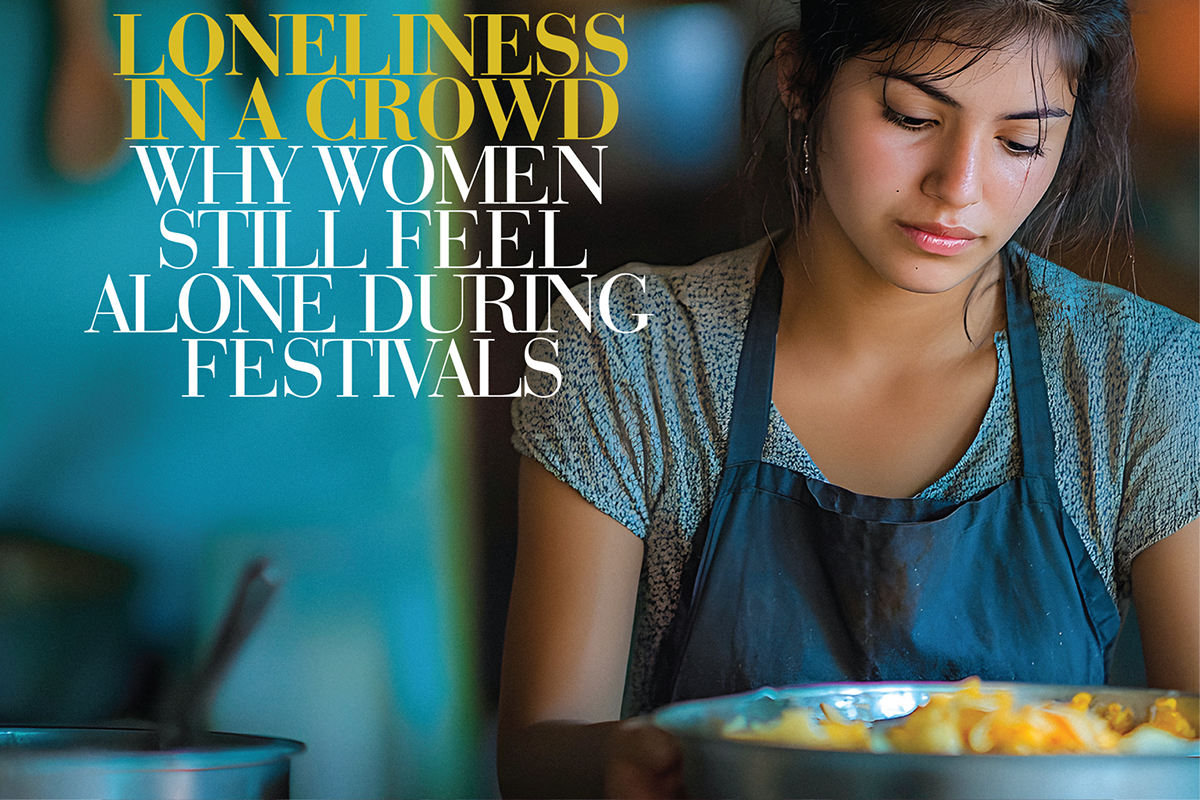
Have you ever felt alone in a crowded room, carrying conversations, food trays, and everyone’s comfort, but never once asked how you are?
Festivals promise togetherness. Streets fill with lights, homes with laughter, and our social feeds with smiles. Yet beneath the surface of music and color, many women know a different reality, the quiet space where exhaustion, unspoken expectations, and even loneliness live.
This hidden experience isn’t bound to a single year or a single festival. It repeats, often invisibly, in celebrations everywhere. And because it is rarely named, it quietly continues making one feel lonely.
Changing Times: Festivals in a New Light
Festivals don’t exist in a vacuum. As our lives change, families living across borders, work follows us on our phones, and younger generations rethinking rituals, celebrations feel different from what they did even a decade ago. Traditions still bring comfort and belonging, but they now unfold against a backdrop of shifting values and faster rhythms.
Many women share that this year’s festival season has felt heavier and more layered. There is joy, yes, but it is threaded with fatigue from economic uncertainty, rising costs, and the lingering weight of collective stress; the aftershocks of the pandemic, recurring natural disasters, social upheavals, and even the grief of lives lost during the recent Gen Z protests. Some notice that their hearts are no longer in every ritual; others admit they go through the motions mainly to preserve family harmony, carrying smiles that don’t always match how they feel inside.
These subtle changes matter. They show how festivals hold both continuity and quiet transformation, and how women especially navigate the pull of tradition while carrying modern pressures and private emotions that older generations rarely named.
The Hidden Work of Festivals: Emotional Labor in Action
Consider the days leading up to a big festival. Someone, most often a woman, is quietly anticipating needs; stocking the kitchen, arranging transportation, preparing clothes, and thinking through who might be left out. This anticipatory care means holding in mind everyone’s comfort long before anyone else starts celebrating.
During the festival itself, surface acting, like putting on a pleasant face regardless of inner feelings, becomes almost second nature. You might be fasting but still smiling for photographs, or carrying grief from a recent loss while leading a ritual with practised cheer. Even a simple family lunch can demand hours of hidden coordination and constant emotional presence to keep the atmosphere harmonious.
You can see these patterns play out in almost every home during festival season. A niece dashes in and out of the house on endless errands, picking up forgotten groceries, hanging decorations, and stirring pots on the stove, yet still feels she must post cheerful updates as if none of it is tiring. Meanwhile, brothers and cousins return from cities or abroad and dive into the fun, but mostly wait to be asked before helping, leaving the quiet planning and coordination to others.
These are not isolated incidents; they illustrate what many of us know but rarely name; the unequal distribution of emotional labour. Women often function as the emotional anchors of family celebrations, ensuring that everyone else feels welcome and cared for, while their own needs stay invisible.
The weight is not only physical. It lingers emotionally, creating what psychologists call role overload, the strain of juggling multiple expectations without adequate support. Over time, this can lead to burnout, anxiety, and a deep, quiet loneliness that feels almost contradictory amid the noise of celebration.
Recognising these patterns does not mean giving up festivals. It means seeing them more fully. By naming the invisible work of anticipatory care, surface acting, and emotional load, we can begin to share it more fairly, making celebration not just something women provide, but something they can genuinely experience.
Why This Matters for Mental Well-being
When the festival lights fade, the quiet aftermath often reveals what was hidden. The long days of hosting and smiling may leave behind insomnia, anxiety, and emotional burnout. Emotional labor is not just “part of the ritual”, it lingers in the body and mind. When we suppress our own discomfort for the sake of harmony, we don’t heal; we simply postpone the toll.
In our culture, hospitality and sacrifice are celebrated as virtues. Yet when they leave no space for rest or honest expression, they become sources of isolation. Many women describe feeling strangely alone in a crowded room, wondering if their exhaustion makes them ungrateful or weak. Naming this reality is more about honoring everyone’s emotional well-being than about rejecting tradition.
What Women and Communities Can Do Differently
The good news is that conversations are beginning to shift. Younger generations and reflective families alike are questioning long-standing expectations and making space for care. Here are some ways to lighten the invisible load for future celebrations:
Share the work early and openly. Rotate who leads the organizing and meal prep. Let siblings, cousins, and all genders contribute not only when asked but as equal partners.
Build rest into the plan. Schedule quiet hours, allow shorter visits, and encourage simple moments of stillness so that celebrations nourish rather than deplete.
Keep listening and learning. Be open to the reflections of younger family members and friends. Their willingness to question old patterns helps everyone find more balanced ways to celebrate.
The festival season is beautiful, rich with color, memory, and connection. Yet what truly matters is whether our celebrations make space for honesty, rest, and mutual care.
When we acknowledge the emotional labour behind each gathering and commit to sharing it, joy stops being a performance and becomes a genuine sense of belonging. This is the kind of celebration that nourishes us deeply, fully without leaving parts of ourselves behind.
_Dr Bhawana Shrestha
Bhawana Shrestha is currently a Research Fellow at the Academy of Future Education, Xian Jiaotong- Liverpool University, China, where she specialises in social-emotional learning, education, and well-being. She is also the Co-founder of My Emotions Matter, an initiative that focuses on emotional intelligence across different life stages.