How Nepal’s Gen Z Rose Against Power, Established An Interim Government And Continues To Remain on Close Vigil Of Meeting The Movements Goals
In the spring of unrest, Nepal’s streets became a battlefield for a generation. Without a single leader to rally behind, the country’s young Gen Z and even younger participants rose in a wave of defiance that shook the foundations of a century-old political order. What began as outrage over a sweeping government ban on social media quickly transformed into a wider demand for systemic change. Driven by calls to end corruption, dismantle nepotism, and reform political governance, the movement has become a defining moment in Nepal’s modern history.
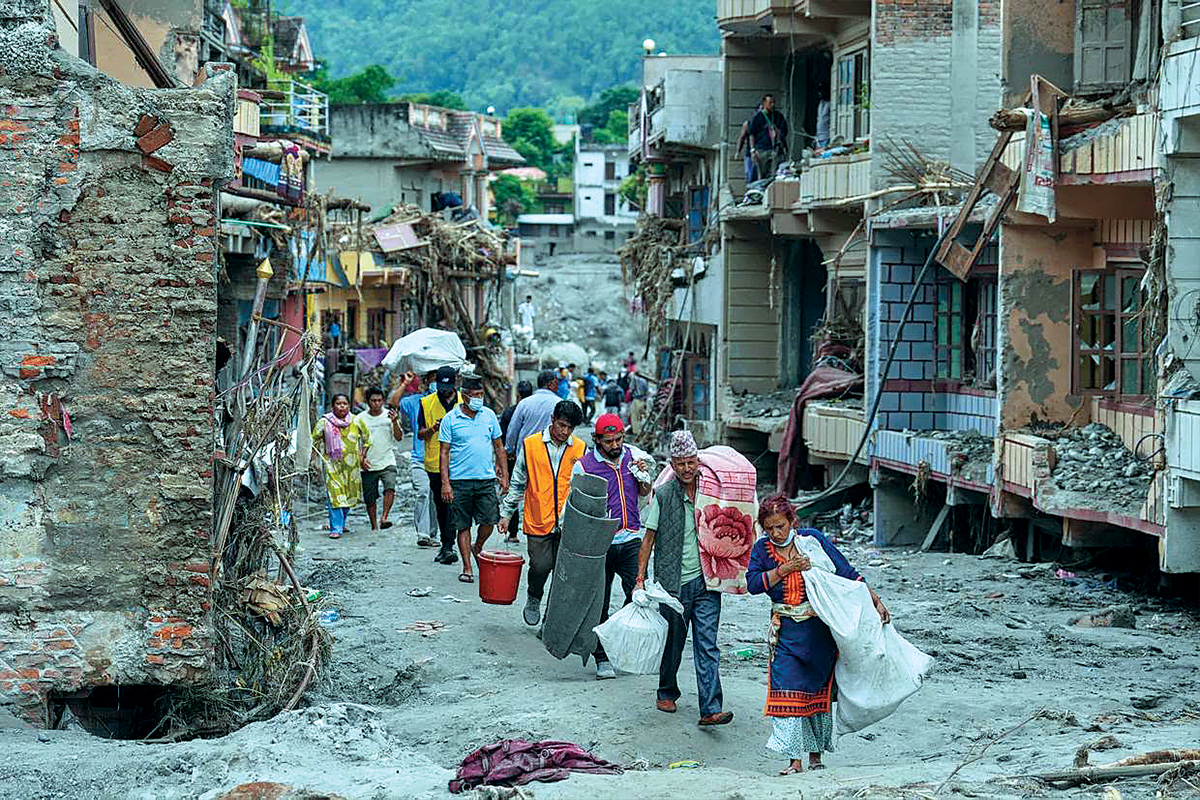
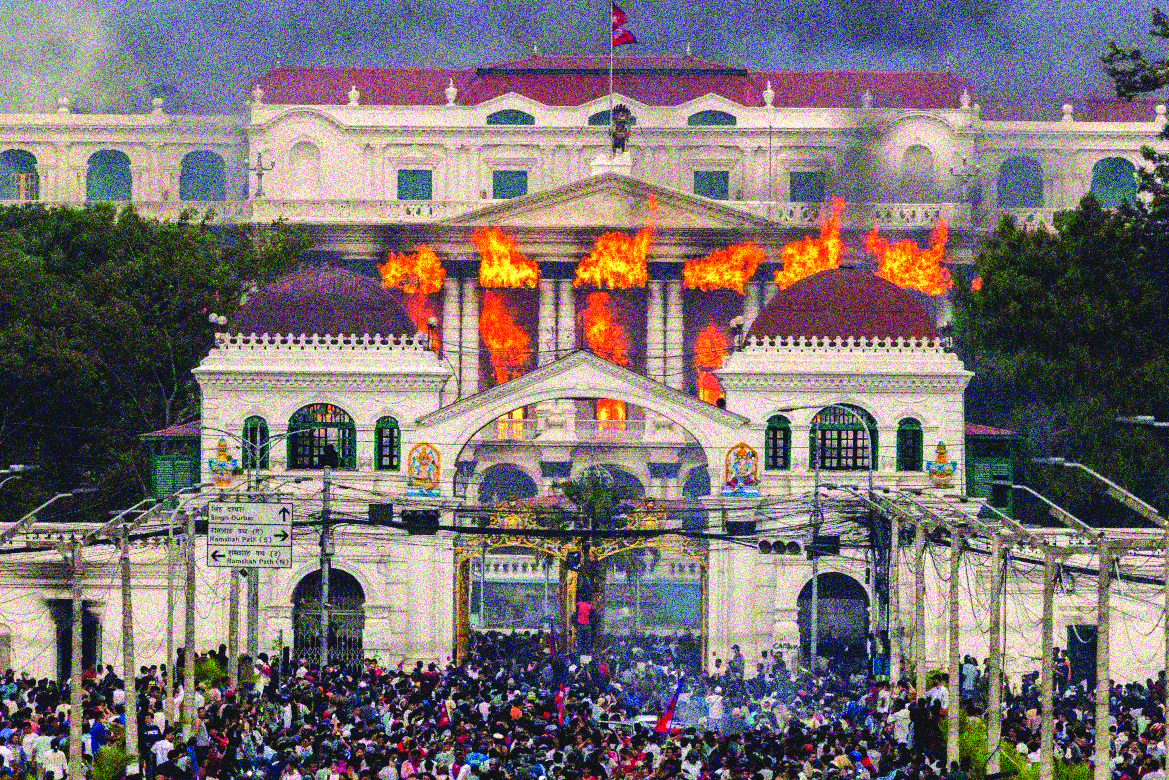
In two days of protests, the government collapsed, yet, the victory came at an enormous cost. What started as a peaceful protest had turned ugly and violent with outside infiltration, arson, looting and vandalism. The protests claimed 74 lives, left over 2,100 injured, and saw some of Nepal’s most symbolic institutions including the Parliament, the Supreme Court, and Singha Durbar engulfed in flames. Across the country, more than 300 government offices were damaged, and the largest private media house was set ablaze. The economic toll is staggering: up to three trillion Nepalese rupees, nearly half the nation’s annual GDP.
Gen Z didn’t just fight a government. They fought history. And in doing so, they may have rewritten the country’s future; with courage, with grief, and with a fire that refuses to fade.
In the cover story, we explore the voices of the change, a representation if Gen Z who played pivotal roles during the movement whether on the frontlines or working behind the scenes.

KISHORI KARKI
FROM LAW TO LIFELINE
On a day that would redefine Nepal’s history, 25-year-old law student and content creator Kishori Karki found herself riding pillion on a stranger’s motorbike through Kathmandu’s smoke-filled streets. Tear gas hung in the air, sirens pierced the city’s chaos, and yet, Kishori’s focus was fixed on one task, saving a life.
She had seen a young protester collapse after being struck in the head by a rubber bullet. Using a Pathao rider’s bike, she rushed the injured youth to the hospital. The next day, that same motorcycle — parked outside a police station — was burned to ashes.
When Kishori posted about it online, support poured in. Within hours, she had raised enough funds to buy a new bike and return it to the rider. “That,” she says softly, “was the real spirit of Gen Z. Compassion in the middle of chaos.”
On the Frontlines of Fear
Kishori remembers the turning point vividly. “Silence was no longer an option,” she says. “We were tired of corruption, censorship, and the hopelessness of youth forced to leave Nepal just to live with dignity.”
The protests that followed were both inspiring and brutal. “Watching children and young people lose their lives broke something in me,” she admits. “Their families remain in grief. Their pain drives everything I do.”
Her own courage — broadcast through social media — made her a national symbol of resilience. But Kishori insists the movement’s power came not from individual fame but collective purpose.
“People say Gen Z is leaderless. They are wrong. Our leaders are the victims, the wounded, and the ones who never came home.”
Digital Defiance
For Kishori, social media has never been a distraction, it is a weapon. Even as platforms were blocked, VPNs and underground channels kept the protest alive. “Within seconds, our voices reached people across Nepal and abroad,” she says. “We didn’t need permission to speak.”
Through viral reels, emotional testimonies, and digital memorials, the Gen Z protest built a new kind of political consciousness, unfiltered through party lines or power brokers.
“Older generations call us reckless,” Kishori says. “But recklessness is staying silent while your country collapses.”
The Aftermath
Kishori still struggles with what she saw: the blood, the loss, the betrayal. But she remains unbroken. “Freedom,” she says, “means living with dignity in our own country, not running away from it.”
When asked what message she would send to the world, she doesn’t hesitate: “Don’t be blinded by fake influencers, be the real Gen Z that wipes the tears and blood of victims’ families.”

ISHIKA PANT
STRATEGIST BEHIND THE SCREENS
Justice here isn’t just delayed — it’s selective, skewed, and often denied.
When the first videos of police clashes appeared online, Ishika Pant, 24, was miles away from the frontlines, grounded at an airport watching chaos unfold on her phone. The founder of Project Abhaya, a youth-led initiative empowering marginalised girls through civic education and technology, Ishika was used to organising quietly. But that night, as she saw young people shot for raising their voices, she felt something break. “I couldn’t stay still anymore,” she says. “Corruption, silence and fear had suffocated us long enough.”
The Making of a Digital Resistance
Ishika’s strength lay not in confrontation but coordination. She helped mobilise hundreds through VPN networks, Discord servers and encrypted chats when social media was banned. “We refused to disappear,” she says. “Even if they shut down our platforms, they couldn’t silence our purpose.”
Through Project Abhaya, she trained youth to use digital storytelling as protest — combining data, design and civic engagement to track corruption and amplify unheard voices. “Art, fashion, memes — it all became part of the revolution,” she explains. “Each TikTok, each reel was an act of defiance.”
Between Hope and Horror
What shook Ishika most wasn’t the online hate or surveillance but the deaths. “Students in uniform, unarmed protesters — their bodies became symbols of everything broken in this country,” she says.
Her voice hardens. “Justice here isn’t just delayed, it’s selective, skewed, and denied to those who need it most.”
Despite the chaos, Ishika says the Gen Z movement taught Nepal something profound: that youth can organise without hierarchy, speak without permission, and act without waiting for approval.
A New Kind of Power
“Older generations think we are idealists,” Ishika says, smiling faintly. “But idealism is what drives revolutions.” She recalls how viral hashtags — #GenZProtest, #WeWorkWePayYouEnjoy, #SayNoToCorruption — united a nation of digital natives. “The movement wasn’t about vanity,” she says. “It was about visibility. Even introverted kids were out there shouting for justice.”
Her definition of freedom echoes across her generation: “Freedom is visibility; the right to be seen, to choose, to participate without fear.”
And when asked what message she would send to governments everywhere, her answer is measured, but sharp: “Listen to the voices of youth. We are not your future, we are your present.”
KARAN RAI
YOUNGEST VOICE IN THE SMOKE
When I saw my brother’s bloody shoes, I knew silence had died.
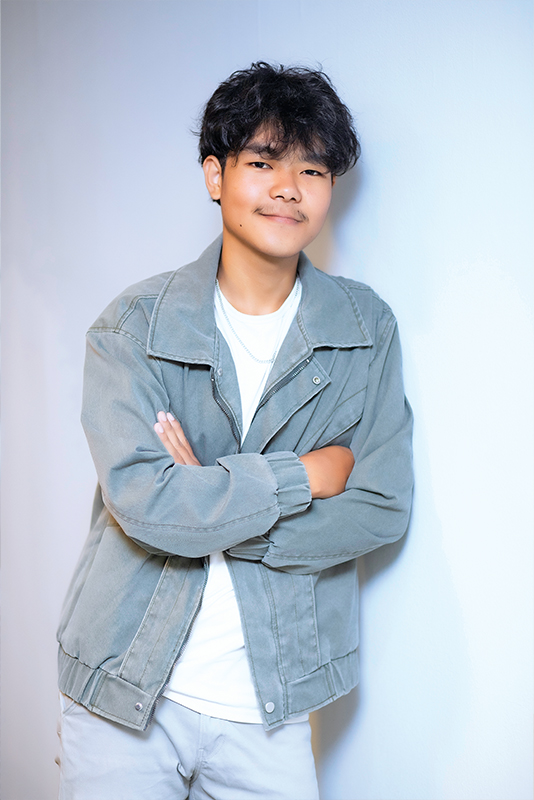
Eighteen-year-old Karan Kulung Rai had never been to a protest before. He grew up in Chheskam, Solukhumbu, a quiet village far from Kathmandu’s politics. But when he saw the first livestreams of police firing tear gas into crowds, he packed a small bag, told his mother he’d be safe and joined the march.
“I always knew corruption existed,” he says. “But seeing it destroy young lives, that changed everything.”
A Witness to Chaos
Karan’s story embodies the moral clarity of Gen Z’s uprising. “I saw a man shot right in front of me,” he recalls. “He was my brother; not by blood, but by cause.” He helped lift the wounded into an ambulance, hands trembling, shoes soaked in blood. “That’s when I realised — silence was no longer an option.” The viral photo of those bloody shoes became one of the movement’s defining images.
Faith, Fear, and Fire
Despite his youth, Karan’s reflections are painfully mature. “Freedom,” he says, “means being able to speak without fear regardless of caste, class or background. Equity over equality.”
He spent the days after the protests helping clean the streets, clearing debris and graffiti, trying to reclaim the dignity of what had been lost. “We fought for a better Nepal,” he says quietly. “We didn’t cause the violence.”
Karan rejects the notion that Gen Z acted recklessly. “Older generations grew without awareness or access to truth,” he says. “We grew up online. We have seen the world. We know what justice should look like.”
A Generation Tested
The images of teargas and fire may fade but the emotional scars linger. “The hardest part,” Karan admits, “was the misinformation — people twisting our story. They didn’t see the grief behind our anger.”
Still, he holds faith that his generation will finish what it began. “Now is the moment,” he says. “We must fight the corruption that steals our future.”
The Unbroken Line
In the weeks since the protests, the streets have quieted, but the undercurrent remains. Karan now plans to pursue higher education. As dusk falls over Kathmandu, he scrolls through photos from that day — faces masked, fists raised, hearts unafraid. “When I saw my brother’s bloody shoes,” he says, “I knew silence had died. And a generation had begun.”
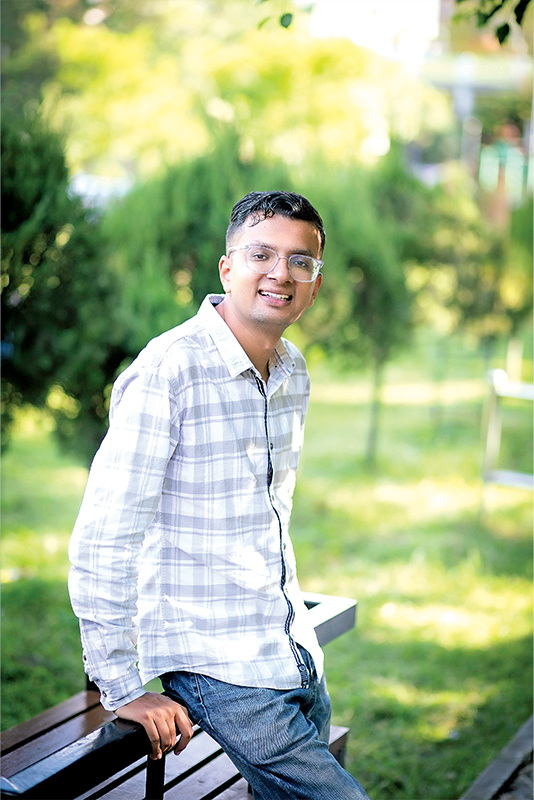
SAMAYA KHADKA
LATE ENTRANT MASTERING NEGOTIATIONS
They lost their lives fighting against corruption, and that loss makes me feel a responsibility to build something better.
When Samaya Khadka first heard about the protests that would soon redefine Nepal’s political landscape, he wasn’t planning to join them. The 25-year-old CEO of Sharing Opportunities – a social enterprise linking young people to jobs and internships – had long been focused on empowering youth through education and leadership training, not street activism.
“I actually got involved just a week before the movement,” he recalls. “Some of my friends came from political backgrounds and I didn’t realise how big it had become until then. But once I understood what was at stake, I couldn’t stay away.”
That late entry turned into a defining moment. Within days, Samaya was helping to set agendas for dialogue, and soon after, he found himself in a meeting with army officials, negotiating safety measures for the protesters. “It was surreal,” he says. “We were young, but we were taken seriously because the whole country was watching.”
The Weight of Sacrifice
For Samaya, the cost of revolution isn’t abstract. It carries names and faces, friends and strangers who didn’t make it home. “Still, I feel those lives could have been saved,” he says softly. “Every time I see their photos, I feel heavy. They lost their lives fighting against corruption, and that loss makes me feel a responsibility to build something better, to make sure they didn’t die in vain.”
That sense of duty continues to drive him. “If I can’t change everything, at least I can help place the right people in the right positions,” he adds. “A better Nepal means a government that’s efficient, accountable and human.”
When Resistance Meets Chaos
But not all moments during the movement inspired pride. As protests grew, so did the smoke, the fear and the uncertainty. “On the second day, I was asking myself- is this what we wanted?” Samaya says. “We never wanted destruction or looting. Seeing public property destroyed made me question if everyone on the streets really stood for the same cause.”
He draws a clear line between genuine activism and opportunistic violence. “There will always be people who turn peaceful protests into vandalism,” he says. “They feed on chaos, not justice. It’s painful to watch them distort what we fought for.”
The Movement Within the Movement
The Gen Z uprising prided itself on being leaderless, a symbol of decentralised democracy. But inside that ideal, Samaya saw fractures. “Since it was leaderless, some individuals started coming forward with personal agendas,” he says. “They wanted credit, not change.” The lack of coordination made unity difficult. “We had disagreements; some wanted to amend the constitution, others didn’t,” he explains. “It was hard to bring everyone to the same table. But even with those cracks, the spirit of what we stood for stayed strong.”
The Digital Dilemma
Social media had both fueled and complicated the revolution. It was where solidarity was born but also where misinformation thrived. “During the time of crisis, misinformation spread super-fast,” Smaya recalls. “Before sharing anything, we had to pause, think and check. I relied on fact-checking tools and verified sources, and I asked others to do the same.”
He emphasises that the digital generation’s strength lies in discernment. “We have the tools but we also have the responsibility to use them wisely,” he says.
Bridging the Generational Divide
One of the biggest challenges wasn’t on the streets, but between generations. “Lots of Gen Z were driven by frustration and hope,” Samaya says. “We were looking for change, for a voice in shaping our future. But the older generation often dismissed us as ‘too young to know better.’”
He pauses, then adds, “Some respected our energy but others acted as if age gave them all the answers. It didn’t. If anything, their inaction created the problems we are trying to solve.”
Hope Between Uncertainty and Aftermath
As the interim government governs under the shadow of expectation, Samaya is both pragmatic and hopeful. “History tells us that once the momentum fades, systems return to old habits,” he says. “But I hope
Gen Z continues to work as a watchdog, a system of checks. Even if there’s only a 1% chance, we must take it.”
He doesn’t romanticise the struggle but believes in persistence. “Maybe we’ll bring a revolution again, not just on the streets but in ministries, in policy, in accountability. Change doesn’t stop when protests end, it starts there.”
In a generation defined by disillusionment, Samaya remains a rare optimist, one who believes that revolution isn’t just about defiance but design. He speaks not with the rage of a protestor, but with the clarity of a builder. And in his calm, the future of Nepal’s youth finds both reason and resolve.

PURNIMA KARKI
VOICE OF REASON IN A TIME OF RECKONING
Real freedom isn’t about shouting the loudest. It’s about listening deeply — to the poor, the marginalised, the forgotten. Only then can our generation say we truly changed something.
When 24-year-old Purnima Karki first walked into the protest zone, she wasn’t carrying a banner or a bullhorn, just a quiet conviction that something had gone terribly wrong. “I remember feeling — if not us, then who?” she says, her tone calm but unwavering.
A criminal law student and media professional, Purnima had long balanced intellect with empathy. But when the government’s decision to regulate social media threatened livelihoods and speech, she knew she could no longer stay silent.
“People in power didn’t realise that for small businesses, creators and families abroad, social media isn’t luxury, it’s survival,” she says. “That decision wasn’t just about control; it was about disconnecting a generation.”
Bridging Awareness and Action
As the National Ambassador for Law Awareness Society, Purnima has long believed that change begins with understanding. Through her documentary series Yatra Nepal Ko, she travels across rural districts uncovering stories of resilience and inequality. Her roles as International Director of Pathway Global Alliance and Executive Director of VFY Talks allow her to connect young voices globally, yet her heart remains firmly rooted in Nepal’s grassroots.
“Protest doesn’t have to be destructive,” she says. “It can be educational, artistic, even compassionate. Our revolution wasn’t about chaos, it was about clarity.”
Digital Activism, and Peaceful Power
In an age when image often overshadows intent, Purnima sees creative expression as resistance. “Fashion, art and media aren’t distractions; they are languages of reform,” she explains. “When I wear black for justice or post a poem on freedom, it’s not for attention. It’s to remind people that activism has many faces.”
The Power of Connection
The Gen Z protest became one of Nepal’s most rapid movements in history with an interim government announced in less than 48 hours. For Purnima, that speed was proof of a generational shift. “Social media gave us our megaphone,” she reflects. “Hashtags became movements. Lives turned into testimonies. For the first time, power felt people’s presence, not just their votes.”
Yet, amid the euphoria, she remains mindful of internal fractures. “Some people sought fame instead of reform,” she admits. “But that’s the test of every movement – to stay true when the cameras turn away.”
A Call for Compassionate Leadership
As Nepal waits for what comes after the interim government, Purnima’s question is simple: will youth continue to be watchdogs or drift back into silence? “Real freedom,” she says softly, “isn’t about shouting the loudest. It’s about listening deeply to the poor, the marginalised, the forgotten. Only then can our generation say we truly changed something.”
And if she could speak to those in power? “Power still rests with the people who believed in you,” she says. “They stayed silent waiting for you to act right.”
At a time when chaos defined headlines, Purnima became a quiet constant — a reminder that revolutions don’t always need rage; sometimes, they just need reason.
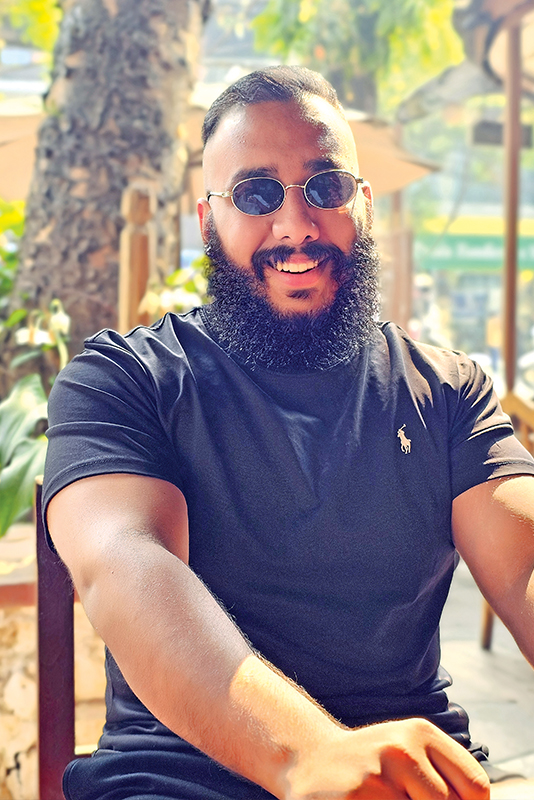
IRFAN KHAN
PRESERVING WHAT POWER TRIES TO ERASE
Don’t wait for leaders. Become one. Speak truth even when it shakes the room. That’s how history begins, one brave voice at a time.
At 25, Irfan Khan is a man of few words, his art speaks louder. His studio in Kathmandu, splattered with paint and protest posters, tells the story of an artist who found purpose in rebellion.
“Every painting I sell becomes food or medicine for animals,” he says. “It’s my small way of giving back.” But when his country needed help, he stepped beyond the canvas.
“What pushed me onto the streets was rage, pure rage,” Irfan says. “We pay massive taxes, yet leaders live in luxury. Corruption isn’t hidden here, it’s celebrated. I couldn’t watch in silence.”
A Revolution in Real Time
During the protests, Irfan’s social media became an unfiltered newsroom. His videos showed what national channels often ignored — the wounded, the arrested, the fallen. “Social media gave me the power to reach thousands instantly,” he says. “I could tell stories the system tried to bury.”
From hashtags like #JusticeForNepal to #EndCorruption, the online sphere became a digital battlefield. Artists, students, and professionals turned into activists overnight. “It wasn’t just my voice,” Irfan says. “It was all of ours, multiplied.”
The Price of Protest
But the cost was heavy. Irfan still remembers the chaos — tear gas, panic, screams. “I saw young people fall beside me,” he says, his voice low. “Their blood is the price of our awakening.”
When asked what he feels for those who lost their lives, his words sharpen: “They were us. Students, workers, dreamers. Their sacrifice must never become someone else’s political currency.”
The Shadows Within
Every movement faces its own contradictions. Irfan is candid about the internal disputes that followed. “Some people turned the protest into personal branding,” he says. “We can’t let ego hijack a revolution born from pain.” He also critiques the silence of convenience, especially among influencers who chose neutrality. “Many with platforms stayed comfortable,” he says. “Convenience is the enemy of conscience.”
After the Uprising
As Nepal transitions from interim government to whatever comes next, Irfan’s question lingers: Will Gen Z remain vigilant or retreat into comfort? “We must stay watchdogs,” he says. “The system changes faces, not its nature.”
He looks around his studio – unfinished portraits, protest sketches, a wall of slogans. “Freedom isn’t a day’s work,” he says. “It’s a lifelong duty.” For Irfan, activism and art are inseparable. “Art is my protest,” he says. “It preserves what power tries to erase.”
And his message to the next wave of youth? “Don’t wait for leaders. Become one. Speak truth even when it shakes the room. That’s how history begins, one brave voice at a time.”
His words echo the rhythm of a movement that refuses to fade, a generation that may not hold power yet, but holds the conscience that defines it.

BHAWANA RAUT
CATALYST FOR CHANGE
”Our generation grew up seeing corruption, injustice, and manipulation normalised — and that’s exactly why we refuse to normalise it anymore.”
At the heart of this movement also stands Bhawana Raut, 26, a voice that has become both a witness and a catalyst for change. For her, activism didn’t begin with this movement; it evolved through the years of watching her country wrestle with broken promises.
“When I saw a new generation taking to the streets, demanding a government that listens and acts responsibly, it reignited something in me,” Bhawana says. “It felt like a reminder that our fight wasn’t over, it was evolving.”
The Moment That Changed Everything
Bhawana had been vocal for years – attending protests, writing about accountability, and challenging power through social media. But nothing could have prepared her for the day when the state turned its guns on its own youth.
“On the very first day, when the government opened fire on unarmed students, something inside me shifted,” she recalls. “The anger, the helplessness, and the injustice I witnessed made it impossible to stay silent.”
That moment transformed her from an observer into a frontline participant. The bloodshed wasn’t just physical, it was generational, symbolic of decades of ignored frustration finally erupting.
The Gen Z Way of Fighting Back
To Bhawana, being part of Gen Z means redefining what resistance looks like. It’s no longer limited to the streets or to slogans shouted behind barricades. It’s digital, visual and deeply personal.
“Being part of Gen Z means we don’t just protest on the streets, we protest in every space we occupy,” she explains. “We use our voices, our phones, our art, our humor, and our social media to challenge systems that failed us.”
This generation, hyperconnected and fearless, uses creativity as a weapon and solidarity as armor. Every meme, post, and caption becomes a piece of protest art – a documentation of truth before it’s erased or rewritten.
“Our generation grew up seeing corruption, injustice, and manipulation normalised – and that’s exactly why we refuse to normalise it anymore,” Bhawana says. “We bring creativity, technology, and collective energy to movements.”
When Silence Is Not an Option
Bhawana’s activism can be traced back a decade when she watched Dr Govinda KC wage a lonely war for justice. “It was the first time I saw what moral courage looks like,” she remembers. “I realised then that silence only helps the powerful, not the people.”
Since then, she has turned her art and social media into tools of resistance. “Art and social media are my loudspeakers,” she says. “They carry what the streets can’t always hold.”
Through her visuals and words, she transforms anger into awareness, grief into action. To her, hashtags and heartbeats go hand in hand, both pulsing with the demand for change.
The Pulse of a New Nepal
The Gen Z movement that claimed more than 72 lives may have been met with violence, but it also unveiled something unshakable, a collective conscience unwilling to be silenced. Bhawana stands as one of its many faces, a reminder that resistance doesn’t always roar; sometimes, it speaks through art, through stories, through the unflinching belief that change is possible.
In a country still mourning its young, Bhawana’s voice echoes like a promise: “Our fight was not in vain, and that our generation – wounded but awake – will keep asking, keep creating, and keep demanding the Nepal we deserve.

James Karki
I’m Not a Hero. I’m Just One of Many
Resistance must never lose its humanity. The line between protest and chaos is thin but it’s our job to walk it with conscience.
“I am James Karki, a 23 year old, born and raised in Kathmandu,” he begins. “I am not a politician or a hero, just one of many restless youth who couldn’t stay silent anymore.”
For James, the Gen Z movement wasn’t born out of ideology but exhaustion; exhaustion from watching a generation suffocate under corruption, unemployment, and a system too old to change. The movement wasn’t planned, it erupted… a spark lit by frustration, fanned by courage, and fuelled by grief.
A Day That Changed Everything
September 8. The day when protest became history. Tear gas clouded the streets outside Nepal’s Parliament, and young voices cracked through the smoke. “Then I saw a boy beside me fall, a bullet had torn through him,” James recalls. “Everything went silent. That’s when I realized, this wasn’t just protest anymore. It was Nepal’s youth taking its first real breath in decades.”
The loss of that boy, and many others, reshaped him. “Their courage planted something. Every time I speak now, I remind myself, I am standing on their shoulders.”
Revolutions don’t end when the streets empty
Every movement creates its heroes, and its opportunists. As the protests grew, so did the number of those trying to capitalise on them. “It’s painful,” James admits. “Some of us were running from bullets while others were running for positions. But I have learned that revolutions don’t end when the streets empty. They begin after that, in how we protect what we fought for.”
That vigilance has now become his filter, a way to separate purpose from performance. “I can tell now whose here for the people and whose here for the cameras.”
Walking the Line Between Protest and Chaos
With every image of burning tyres came a question – had the resistance gone too far? “Many nights I would watch videos of fires and shattered glass, wondering if we were losing control,” he says. “But desperation doesn’t always look peaceful.”
Even then, he adds, “resistance must never lose its humanity. The line between protest and chaos is thin but it’s our job to walk it with conscience.”
Different Paths, Same Ocean
The movement’s greatest strength is its leaderless unity, also its test. Rivalries surfaced, egos clashed, and the fight for recognition fractured solidarity. “It did test us,” James admits. “But we were learning in real time. There were moments when egos overshadowed purpose, but also moments when strangers shielded each other from rubber bullets. We were like rivers – different paths, same ocean.”
After the Streets Fell Silent
With an interim government now in place, Nepal stands at a fragile crossroads. “Hope is fragile right now,” he says. “The streets are quieter, but the spirit hasn’t died. We are learning to shift from protest to participation, from shouting outside to sitting inside the system.”
The movement, James believes, is evolving – becoming culture. “Maybe we won’t always be in the streets, but we’ll always be awake.”
Truth in the Age of Algorithms
Social media was both a weapon and a wound. “It gave us power, but also chaos,” James explains. “When the government banned platforms, it ignited us. But misinformation spread just as fast as truth. So, we built small verification teams, people on the ground checking every rumour. It made us slower, but stronger. Because truth, when backed by courage, is louder than propaganda.”
Bridging the Generational Divide
Older generations dismissed them as ‘kids who didn’t understand the world’ but the movement’s persistence proved otherwise. “They said we would get it when we are older,” James says quietly. “But we are already living with theconsequences of their mistakes.”
When parents began joining their children in the streets, the narrative shifted, from youth versus authority to people versus injustice. “They may not fully understand us,” he says, “but they can’t ignore us anymore.”
The Legacy of a Generation
“I want future generations to remember the feelin, the heartbeat of thousands moving as one,” James says. “This wasn’t about politics. It was about people rediscovering their voice.”
Every major shift in Nepal’s history – from 1979 to 2006 – was sparked by youth. “2025 was our chapter,” he reflects. “We didn’t have leaders, we had each other. We didn’t have structure, we had spirit.”
And though politics has since tainted the idealism, James holds on to faith. “If they remember us, let it be this way – not as the kids who burned the streets, but as the youth who lit the light.”